




















Signs Your Houseplant Is Happy and Thriving | Tumbleweed Plants Singapore
Posted on April 09 2026
In this article

Most plant care content focuses on problems — yellow leaves, brown tips, pest infestations, root rot. This makes sense because problems need solving. But it creates a skewed perspective where plant ownership feels like a series of crises rather than a rewarding experience.
The truth is, most houseplants spend most of their time doing well. They are quietly growing, producing new leaves, strengthening their roots, and being exactly what you bought them to be — healthy, beautiful, and alive. Knowing how to recognise the signs of a thriving plant is just as important as diagnosing problems. It tells you that your care is working, that the plant is happy in its spot, and that you should keep doing what you are doing.
The Signs of a Happy Plant
1. New Growth
The single most reliable indicator of plant health. A plant that is producing new leaves, stems, or shoots is actively growing — which means its roots are healthy, it is receiving adequate light and water, and its environment supports life.
What to look for:
- Unfurling new leaves at the growing tips
- New stems or shoots emerging from the base or nodes
- Root tips visible at the drainage holes (healthy white roots reaching for more space)
- Aerial roots appearing on climbing plants (Monstera, Philodendron)
Context: Growth rate varies enormously between species. A Pothos might produce a new leaf every week. A ZZ Plant might produce one new stem every few months. Both are healthy — they simply grow at different speeds.
2. Firm, Turgid Leaves
Healthy leaves feel firm and full — not limp, papery, or mushy. This turgidity comes from adequate water pressure within the plant cells, which indicates a healthy root system actively absorbing water.
What to look for:
- Leaves that hold their natural position (upright, arching, or flat, depending on the species)
- Leaves that feel thick and substantial when gently touched
- No wilting, drooping, or curling
3. Vibrant Colour
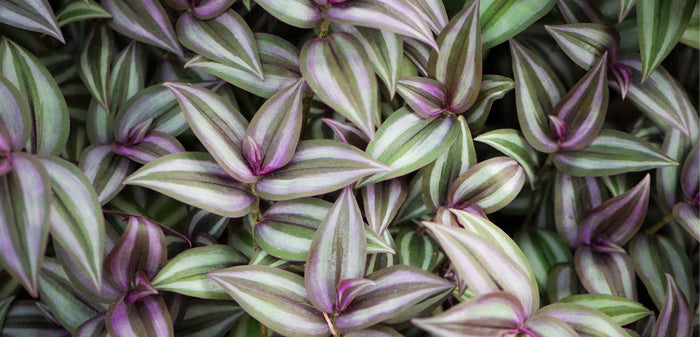
A healthy plant displays the colour it is supposed to have — deep green, silver, pink, purple, or variegated — at its full intensity.
What to look for:
- Rich, saturated green (for green plants)
- Clear, distinct variegation patterns (for variegated plants)
- Vivid colour in coloured varieties (Aglaonema, Tradescantia, Caladium)
- New leaves that are a slightly lighter shade of the mature leaf colour (normal — they darken as they mature)
What fading looks like: Pale, washed-out colour; loss of variegation; green reverting in coloured varieties. These indicate insufficient light.
4. Consistent Leaf Size
New leaves should be approximately the same size as (or larger than) existing mature leaves. This indicates the plant is receiving enough light and nutrients to maintain its standard growth.
What to look for:
- New leaves matching the size of their predecessors
- Gradual increase in leaf size as the plant matures (especially for Monstera, which naturally produces larger leaves over time)
Warning signs: Progressively smaller new leaves suggest declining light, nutrients, or root health.
5. Balanced, Upright Form
A healthy plant grows in a balanced, species-appropriate form. It does not lean dramatically toward light (unless it has not been rotated), does not have long, bare stretches of stem between leaves, and does not look sparse or top-heavy.
What to look for:
- Compact growth with leaves evenly distributed
- Stems that are sturdy and support their own weight
- Symmetrical or balanced form (accounting for natural asymmetry)
6. Active Root System
You cannot see the roots most of the time, but during repotting or when roots are visible at drainage holes, healthy roots tell a clear story.
What healthy roots look like:
- White or light tan colour
- Firm texture (not mushy or slimy)
- Branching network filling the pot
- Root tips actively growing (white, slightly translucent tips)
What unhealthy roots look like: Brown, mushy, foul-smelling, or completely absent.
7. Normal Leaf Shedding
Paradoxically, losing a few leaves is a sign of health — as long as it is the right leaves. Healthy plants shed their oldest, lowest leaves as they produce new growth at the top. This is normal resource reallocation.
What healthy shedding looks like:
- One or two bottom leaves yellowing gradually while the rest of the plant looks vigorous
- The rate of new growth exceeds the rate of leaf loss
- Only old leaves are affected — new and mid-level leaves are healthy
8. Flowering (For Flowering Species)
If your Anthurium, Peace Lily, Hoya, or orchid is producing flowers, it is telling you that conditions are excellent. Flowering requires significant energy — a stressed plant cannot afford to bloom.
Note: Many popular houseplants (Monstera, Pothos, Philodendron, Snake Plant) rarely or never flower indoors. The absence of flowers is not a health concern for these species.
9. Prayer Movements (Calathea, Maranta, Stromanthe)
Calathea and related plants fold their leaves upward at night and lower them in the morning — a circadian rhythm called nyctinasty. Active, consistent prayer movements indicate a healthy, well-hydrated plant.
Warning sign: If your Calathea stops moving its leaves (they stay in one position day and night), the plant is stressed — usually from dehydration, root damage, or very low humidity.
10. Pup and Offset Production
Some plants produce babies — offshoots, pups, or plantlets — when they are healthy and established:
- Spider Plant babies on trailing stolons
- Pilea peperomioides pups from the soil
- Snake Plant pups from the rhizome
- Aglaonema offshoots from the base
A plant producing offspring is a plant that has excess energy to invest in reproduction — a strong indicator of good health.
How to Keep Your Plant Happy

If your plant is showing the signs above, the most important thing is: keep doing what you are doing. Do not change its position, water schedule, or care routine because you think it could be "even better." Plants that are thriving should be left to thrive.
The Maintenance Checklist
- Keep the same watering routine — whatever schedule has been working, maintain it
- Do not move it — the plant has adapted to its current light conditions
- Continue fertilising at the same frequency and concentration
- Rotate quarterly for even growth
- Clean leaves monthly for optimal light absorption
- Repot only when needed — not because you feel like the plant deserves a bigger pot
When "Fine" Becomes "Thriving"
The difference between a plant that is surviving and one that is thriving:
| Surviving | Thriving |
|---|---|
| No new growth for weeks | Regular new leaves |
| Pale or faded colour | Rich, saturated colour |
| Small new leaves | Full-sized or larger new leaves |
| Leggy, stretched form | Compact, balanced form |
| Static — no change | Dynamic — visible progress |
If your plant is surviving but not thriving, the most likely cause is insufficient light. Moving a plant closer to a window often transforms its performance.
Shop Healthy Plants

Browse our indoor plant collection — every plant ships healthy and ready to thrive in your Singapore home. Give it the right conditions, follow the signs above, and enjoy the quiet satisfaction of watching something alive do well under your care.
Healthy plants do not make noise. They do not demand attention. They simply grow — slowly, steadily, beautifully — and most of the time, that is exactly what they are doing. Learn to see the signs of health, and you will realise that most of your plant care journey is not about fixing problems. It is about enjoying success.
Quick summary
Key Takeaways
- The Signs of a Happy Plant
- How to Keep Your Plant Happy
- When "Fine" Becomes "Thriving"
- Shop Healthy Plants
Ready to bring some green into your home?
Browse 250+ hand-picked plants, curated for Singapore homes — delivered to your door.
Browse All Plants →