



















When and How to Prune Your Houseplants | Tumbleweed Plants Singapore
Posted on April 10 2026
In this article

Pruning is the care step most plant owners skip — either because they do not know they should, or because cutting a healthy plant feels wrong. But pruning is not harm. It is direction. Every cut tells the plant where to grow next, and the result is almost always a bushier, healthier, more attractive plant.
Without pruning, many houseplants become leggy — long, bare stems with leaves only at the tips. Others become unruly — vines trailing to the floor and tangling, or branches growing unevenly. Pruning shapes the plant, stimulates new growth at dormant nodes, and removes dead or damaged tissue that drains the plant's resources.
Why Prune
Encourage bushier growth. When you cut a stem, the plant typically responds by producing two or more new growth points below the cut. One leggy stem becomes two or three shorter, leafier stems. Over time, this creates a fuller, more compact plant.
Control size and shape. Indoor plants grow toward light, creating uneven shapes. Pruning redirects growth and maintains a balanced form that suits your space.
Remove dead or damaged foliage. Dead leaves and stems continue to consume the plant's resources. Removing them redirects energy to healthy growth.
Improve air circulation. Dense, overgrown plants trap moisture and restrict airflow, promoting fungal issues. Pruning opens the plant up for better air movement — important in Singapore's humid climate.
Propagation. Every pruned cutting is a potential new plant. Pruning and propagating simultaneously gives you a better-shaped parent plant and free baby plants.
When to Prune

Active growth period. Prune when the plant is actively growing — it recovers faster and responds with vigorous new growth. In Singapore, most tropical houseplants grow year-round, so there is no strict pruning season. However, growth tends to be strongest from March to September.
When you notice problems. Remove dead, damaged, or diseased foliage immediately regardless of season. Do not wait — damaged tissue can spread disease or attract pests.
When the plant looks leggy. If stems are elongated with large gaps between leaves, the plant needs pruning and probably more light.
After flowering. For flowering plants (Peace Lily, Anthurium), remove spent flower stalks after blooming to redirect energy to foliage and new flower production.
How to Prune: General Technique
Equipment
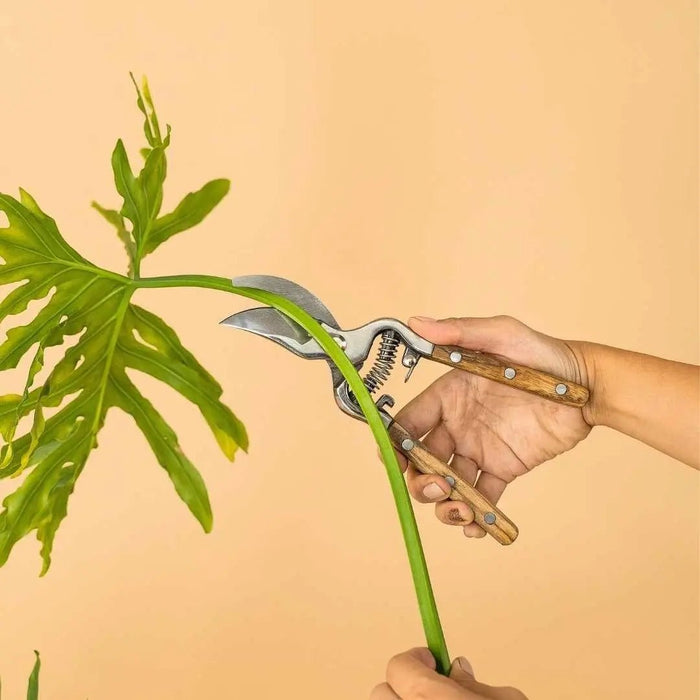
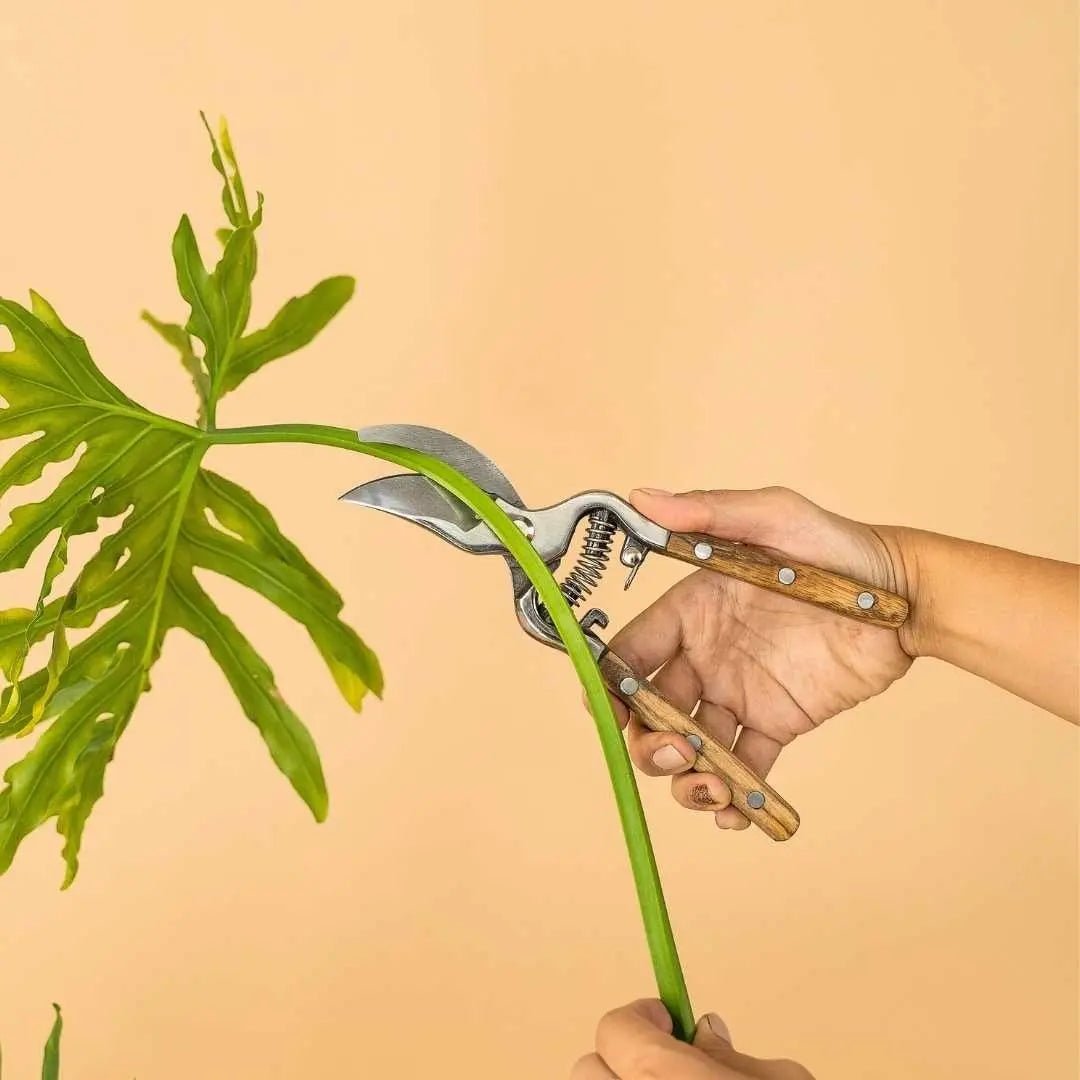
- Clean, sharp scissors or pruning shears — dull cuts crush stems and invite disease
- Rubbing alcohol — sterilise blades before and between plants to prevent disease transmission
- Optional: rooting hormone — for propagating your cuttings
The Basic Cut
- Identify where you want to cut — always cut just above a node (the bump or joint where a leaf meets the stem)
- Cut at a 45-degree angle, 0.5-1cm above the node
- The plant will produce new growth from that node
Why above a node? Nodes contain dormant growth buds. Cutting above a node activates these buds, producing new stems or branches. Cutting between nodes (on bare stem) can cause die-back.
What to Remove
- Dead leaves and stems — yellow, brown, or dried foliage
- Leggy growth — long, bare stems with few leaves
- Damaged leaves — torn, bruised, or pest-damaged
- Crossing or crowded stems — stems that rub against each other or create dense tangles
- Spent flowers — faded blooms on flowering plants
Pruning by Plant Type

Trailing Plants (Pothos, Philodendron, Syngonium)
Goal: Control length and encourage fullness.
Technique: Cut vines at any length you prefer, always just above a node. The vine will branch from below the cut, creating a fuller appearance. Root the cuttings in water for new plants.
How much: Remove up to one-third of the total vine length at a time. Drastic cuts are fine — these plants are resilient.
Bushy Plants (Aglaonema, Peperomia, Calathea)
Goal: Remove damaged leaves and maintain shape.
Technique: Cut individual leaves at the base of their stem (petiole), as close to the soil as possible. For leggy Aglaonema, cut the main stem back to encourage new shoots from the base.
How much: Remove damaged or yellow leaves as needed. For shape control, remove outer leaves that create an unbalanced form.
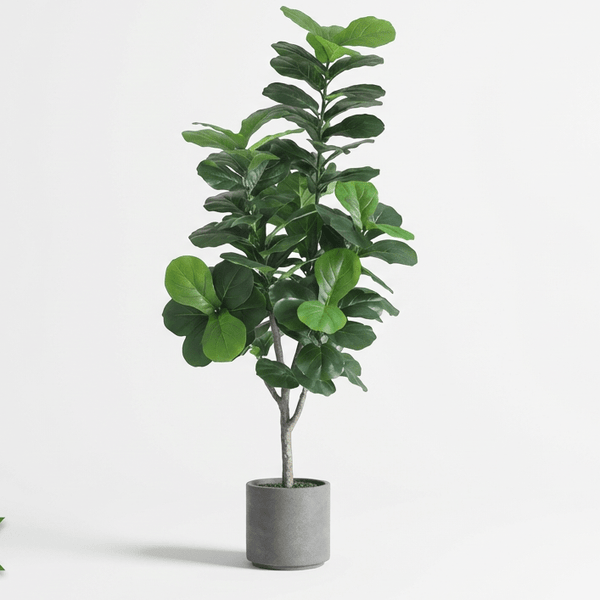
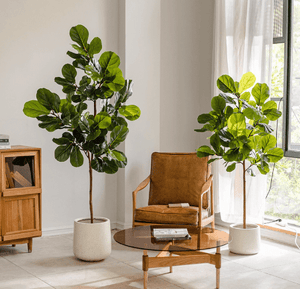
Tree-Form Plants (Rubber Plant, Fiddle Leaf Fig, Dracaena)
Goal: Encourage branching and control height.
Technique: Cut the main stem at the desired height. The plant will produce one or more new branches below the cut. For Dracaena, multiple shoots often emerge, creating a bushier top. Rubber Plant and Fiddle Leaf Fig typically produce 1-2 branches.
Notching (alternative for Fiddle Leaf Fig): Instead of cutting the top, make a small V-shaped notch above a node. This stimulates a new branch at that node without removing the top of the plant.
How much: Cut no more than one-third of the total height at once.
Climbing Plants (Monstera, climbing Philodendron)
Goal: Control size and remove unruly growth.
Technique: Cut stems below a node. Remove aerial roots that are excessively long or unsightly (this does not harm the plant). Redirect growth along moss poles or trellises.
How much: Remove individual stems that are outgrowing their space. Monstera tolerates significant pruning.
Ferns
Goal: Remove dead fronds and maintain shape.
Technique: Cut dead or brown fronds at the base, as close to the crown as possible. Do not cut green fronds unless absolutely necessary — ferns grow slowly and each frond takes weeks to replace.
How much: Remove dead fronds only. Leave all healthy growth.
After Pruning
Water normally. The plant does not need extra water after pruning.
Do not fertilise immediately. Wait 1-2 weeks before fertilising after a significant prune. Fresh cuts are sensitive to fertiliser salts.
Place in good light. Bright indirect light helps the plant produce new growth at cut points. New shoots need light to develop.
Propagate cuttings. Place healthy cuttings in water or soil. Most tropical houseplant cuttings root easily.
Common Pruning Mistakes

Cutting between nodes. Cuts made on bare stem between nodes often die back to the next node anyway. Always cut just above a node.
Using dirty tools. Unsterilised blades transfer fungal and bacterial diseases between plants. Quick wipe with rubbing alcohol between plants prevents this.
Pruning too aggressively. Removing more than one-third of the plant's foliage at once can stress it. If the plant needs major reshaping, do it in stages over several months.
Never pruning at all. Some plant owners fear pruning. The result is leggy, overgrown plants that would be far healthier and more attractive with regular trimming.
Pruning stressed plants. Do not prune a plant that is already stressed from overwatering, pests, or relocation. Address the stress first, let the plant stabilise, then prune.
Shop Plants
Browse our indoor plant collection for healthy plants delivered across Singapore. Every plant benefits from thoughtful pruning — and every cutting is a new plant waiting to grow.
Pruning is the most empowering plant care skill. It transforms you from a passive plant owner — watching and hoping — into an active plant shaper who directs growth, creates fullness, and maintains health. Every cut you make tells the plant: grow here, not there. And the plant listens.
Quick summary
Key Takeaways
- Why Prune
- When to Prune
- How to Prune: General Technique
- Pruning by Plant Type
- After Pruning
- Common Pruning Mistakes
Ready to bring some green into your home?
Browse 250+ hand-picked plants, curated for Singapore homes — delivered to your door.
Browse All Plants →