
















Plant of the Week: Calathea (Prayer Plant) — The Most Dramatic Foliage Plant You'll Ever Grow
Posted on April 16 2026
In this article
Thumbnail image spec: 1200x628px | Alt: "Calathea orbifolia with large silver-striped round leaves in a Singapore HDB home" | Source: Original product photography or Unsplash (search: calathea orbifolia indoor)

---
The Calathea medallion — one of the most striking foliage patterns in the houseplant world, and one that thrives in Singapore's naturally humid climate.
Welcome to Plant of the Week. Each week we spotlight one plant from our collection: why we love it, what makes it unique, and everything you need to grow it well.
This week: Calathea — the plant that moves, the plant that challenges, and the plant that rewards patience with some of the most stunning foliage in the houseplant world.
And here's the good news for Singapore plant owners: calatheas' biggest care challenge — humidity — is one thing our tropical climate provides in abundance.
---
Why We're Obsessed With Calatheas
Walk into any serious plant collector's home in Singapore and you'll find at least one calathea. These plants are the botanical equivalent of a statement piece — you don't just see them, you notice them.
The foliage is unlike anything else in the houseplant world. Depending on the variety, calathea leaves feature:
- Deep green with silver feathering (Calathea ornata 'Pinstripe')
- Dark green with bold white brush strokes (Calathea lancifolia — Rattlesnake Plant)
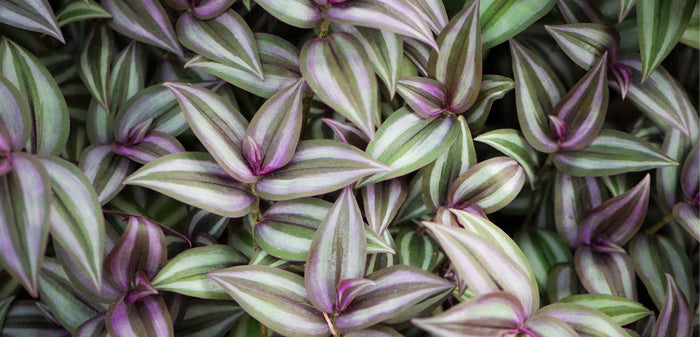
- Purple undersides that flash as the leaves move (Calathea zebrina)
- Deep jewel-green with burgundy undersides and intricate patterns (Calathea medallion)
And they move. Every evening, calathea leaves fold upward like hands pressed together in prayer (which is why the broader family is called "prayer plants"). Every morning, they open again. This daily movement is called nyctinasty — a response to changing light levels — and watching it happen is genuinely delightful.
Alt: Calathea zebrina leaves shown open during the day (left) and folded upward in prayer position at night (right) | Source: Original photography or plant care resource
---
Our Favourite Calathea Varieties

Calathea orbifolia — Large, round leaves with silver and green stripe patterns. One of the most striking and easiest calatheas. Best in medium-bright indirect light.
Calathea ornata 'Pinstripe' — Dark green leaves with fine pink-white lines that look drawn on. The most graphically bold calathea. Needs consistent humidity.
Calathea lancifolia (Rattlesnake Plant) — Long, wavy-edged leaves with dark oval spots on a bright green background and purple undersides. One of the easier calatheas.
Calathea medallion — Large, rounded leaves with a detailed medallion pattern in green, silver, and burgundy. Classic and popular.
Calathea zebrina — Velvety green leaves with dark stripes and rich purple undersides. Needs high humidity to look its best.
| Variety | Leaf Pattern | Humidity Need | Difficulty | Best Singapore Placement |
|---|---|---|---|---|
| Orbifolia | Silver-green stripes, round leaves | Moderate | Easy | East-facing window, away from aircon |
| Ornata 'Pinstripe' | Pink-white lines on dark green | High | Intermediate | Bathroom with window, or humidified space |
| Lancifolia (Rattlesnake) | Oval spots, wavy edges, purple underside | Moderate | Easy | Any bright indirect spot |
| Medallion | Medallion pattern, burgundy underside | Moderate | Intermediate | East or north-facing window |
| Zebrina | Velvety green with dark stripes | High | Intermediate | Bathroom or humid space |
---
Calatheas in Singapore: Your Natural Advantage
Calatheas are rainforest floor plants — they evolved in warm, humid, dappled-light conditions. Singapore's tropical climate naturally matches those conditions outdoors. This means:
- Outdoor humidity is already high: Singapore's ambient relative humidity (75–90%) is within or above the calathea's ideal range. If your calathea lives near an open window or on a sheltered balcony, it will thrive
- Year-round warmth: No risk of cold temperatures damaging your calathea — a common problem for growers in temperate countries
- The main challenge: Air conditioning. Heavily air-conditioned spaces can drop indoor humidity significantly — this is where calatheas struggle in Singapore homes
Singapore placement tips:
- Bathrooms with windows: ideal — high humidity, indirect light, warm temperatures year-round
- Near (but not directly in front of) an east-facing window: excellent
- Away from aircon vents: essential — direct aircon airflow dries leaves rapidly
- Kitchen windowsill: good — cooking adds ambient humidity
---
Calathea Care: The Honest Truth
We're going to be real with you: calatheas are not beginner plants. They are particular about their environment in ways that simpler plants are not. But understanding what they want makes them completely manageable — and the payoff in terms of beauty is worth the extra attention.
Light
Ideal: Medium to bright indirect light
Avoid: Direct sunlight (fades and scorches the patterns), very low light (patterns fade, growth stalls)
Calatheas evolved on the forest floor beneath a canopy, so they're adapted to diffused, filtered light. A north or east-facing window is ideal. A south or west window works if the plant is set back from the glass or filtered with a sheer curtain.
Singapore note: Even through a window, Singapore's mid-afternoon sun can be intense enough to fade calathea patterns. Keep variegated varieties like Ornata and Zebrina away from direct afternoon light.
Water
Frequency: Every 1–2 weeks, when the top inch of soil is dry
Water type: This matters more than most plants
Calatheas are famously sensitive to tap water minerals — specifically fluoride and chlorine. Brown leaf tips and edges are almost always caused by:
- Tap water fluoride
- The soil drying out too much between waterings
Solution: Water with filtered, distilled, or collected rainwater. Singapore's frequent rain makes rainwater collection very practical here — collect from a sheltered outdoor area and store in a container for watering. If you use tap water, let it sit in an open container overnight to let chlorine dissipate (this doesn't remove fluoride, but helps).
Water thoroughly but ensure good drainage. Do not let the plant sit in water.
Humidity
Ideal: 50–70% relative humidity
Minimum: 40%
This is the key factor that separates thriving calatheas from struggling ones. In Singapore, outdoor humidity is ample — but heavily air-conditioned interiors can drop below 40%, causing rapid browning.
Ways to increase humidity in Singapore homes:
- Group plants together (they create a microclimate)
- Place on a tray of pebbles and water
- Use a room humidifier near the plant (most effective in aircon spaces)
- Move to a bathroom with a window — Singapore bathrooms are naturally humid
- Reduce aircon intensity in the room with the calathea
Temperature
Ideal: 65–80°F (18–27°C)
Avoid: Temperatures below 15°C, cold aircon drafts
Singapore's outdoor temperatures are ideal. The concern here is not winter cold but sustained direct aircon airflow.
Soil
Well-draining but moisture-retentive: a mix of potting soil, perlite, and peat or coco coir works well. The goal is soil that stays evenly moist without becoming waterlogged.
---
Troubleshooting Common Calathea Problems
Brown leaf tips:
The most common calathea complaint. Usually caused by fluoride in tap water or low humidity. Switch to filtered water or collected rainwater and increase humidity. In Singapore, this is often the result of direct aircon airflow.
Curling leaves:
The plant is underwatered or in air that's too dry. Water thoroughly and mist or increase humidity.
Yellow leaves:
Can indicate overwatering, low light, or cold stress (including cold aircon air). Check drainage and watering frequency; move away from aircon vents.
Faded patterns:
Too much direct light. Move to a shadier spot or filter the light source.
Leaves staying folded during the day:
This can indicate the plant is stressed — too much light, too cold, or too dry.
Alt: Calathea orbifolia with large, fully open round silver-striped leaves near a window with sheer curtain filtering Singapore's afternoon sun | Source: Original photography or Unsplash
---
A Note on Goeppertia vs. Calathea
If you've been researching and seen the genus name Goeppertia, don't be confused — many plants sold as calatheas were reclassified in 2012. Most species are now technically Goeppertia. However, the trade name "calathea" remains universal in horticulture and in stores, so we use it here.
---
The Bottom Line: Are Calatheas Worth It?
Yes — with one caveat. If you're not willing to use filtered water and manage humidity (especially in air-conditioned rooms), calatheas will frustrate you. The brown-tip problem is real.
But Singapore plant owners have a genuine advantage: our climate already provides the warmth and natural humidity calatheas crave. Place yours away from aircon vents, water with collected rainwater or filtered water, and let Singapore's tropical conditions do the rest.
Calatheas are the plants people point to when guests walk in and ask, "What is that?"
---
Alt: Collection of calathea varieties — Orbifolia, Medallion, and Rattlesnake Plant — displayed together in a Singapore home | Source: Original product photography
---
This week we have several calathea varieties available, including Orbifolia, Medallion, and Rattlesnake Plant — all acclimatised to Singapore's conditions. Browse our full plant collection to see what's available. Need it today? Check same-day delivery across Singapore. All plants ship with care instructions specific to Singapore's climate.
---
Quick summary
Key Takeaways
- Why We're Obsessed With Calatheas
- Our Favourite Calathea Varieties
- Calatheas in Singapore: Your Natural Advantage
- Calathea Care: The Honest Truth
- Troubleshooting Common Calathea Problems
- A Note on Goeppertia vs. Calathea
Ready to bring some green into your home?
Browse 250+ hand-picked plants, curated for Singapore homes — delivered to your door.
Browse All Plants →