




















Croton Care Guide for Singapore | Tumbleweed Plants Singapore
Posted on April 10 2026
In this article

The Croton — Codiaeum variegatum — is the most colourful houseplant you can own. While other plants offer green in various shades, the Croton delivers a painter's palette: red, orange, yellow, pink, purple, and green, often all on the same plant, sometimes all on the same leaf. It is living abstract art — no two leaves are identical, and the colour intensifies with light.
Native to Southeast Asia and the Pacific Islands, the Croton is genetically wired for tropical conditions. Singapore's warm, humid climate is precisely what it evolved in. While Crotons can be finicky about change (they hate being moved), they are remarkably happy once settled in a bright spot with consistent care.
Popular Varieties
Croton 'Petra' — The most common variety. Broad, oak-shaped leaves in green, yellow, red, and orange. The most widely available and a reliable performer.
Croton 'Mammy' — Twisted, curled leaves in red, orange, and green. The contorted leaf shape adds dramatic texture.
Croton 'Gold Dust' — Dark green leaves speckled with bright gold dots. A more subtle colour palette than other varieties.
Croton 'Zanzibar' — Very narrow, grass-like leaves in a mix of red, orange, yellow, and green. Architectural and unusual.
Croton 'Magnificent' — Large, lobed leaves with dramatic yellow veining on a dark green background that turns red and orange with age.
Croton 'Sunny Star' — Narrow leaves with prominent yellow centres and green margins. Bright and cheerful.
Light

Light is the most critical factor for Croton colour. Without adequate light, the spectacular colours fade to plain green.
Bright indirect light — The minimum for good colour. Colours are maintained, growth is steady.
Direct sun (2-4 hours) — Ideal. Morning sun or late afternoon sun intensifies the colours dramatically. Crotons in Singapore actually benefit from some direct sun, unlike most tropical houseplants.
Full shade — Colours fade rapidly. New leaves emerge green and lack the characteristic multi-colour pattern. The plant survives but loses everything that makes it special.
The colour rule: More light = more colour. If your Croton is mostly green, it needs brighter light. As light increases, new leaves will emerge with vivid reds, oranges, and yellows.
Best placement in Singapore: Within 1 metre of a bright window, ideally one that receives morning sun. A balcony or window ledge is ideal. East-facing windows provide gentle morning sun that intensifies colour without scorching.
Watering
Crotons like consistent moisture — not waterlogged, not bone dry.
Schedule in Singapore:
- Water when the top 2-3cm of soil is dry
- Every 5-7 days in naturally ventilated rooms
- Every 7-10 days in air-conditioned rooms
- Increase frequency if the plant is in direct sun (soil dries faster)
Technique:
- Water thoroughly until it drains from the bottom
- Empty saucers promptly
- Keep moisture consistent — wild swings between wet and dry cause leaf drop
Overwatering signs: Lower leaves yellowing and dropping. Mushy stems. Root rot.
Underwatering signs: Leaves wilting and drooping. Crispy leaf edges. Leaf drop.
Critical note: Inconsistent watering is the number one cause of Croton leaf drop. If you water heavily one week and forget the next, expect leaves on the floor.
Soil

A well-draining but moisture-retentive mix:
- 50% potting mix
- 25% perlite
- 15% orchid bark
- 10% worm castings (for nutrients)
The mix should drain freely but retain some moisture — Crotons do not want to dry out completely.
Humidity
Singapore advantage: Crotons love high humidity, and Singapore delivers. Our 70-80% ambient humidity is ideal.
AC rooms (40-50%): Crotons struggle in dry air — leaves may drop, and new growth is less vibrant. In full-time AC environments, supplement with a humidifier or pebble tray. Grouping Crotons with other plants helps create a humid microclimate.
Temperature
Singapore's consistent 24-32°C is perfect. Crotons are cold-sensitive — temperatures below 15°C cause significant stress and leaf drop. Keep away from AC vents.
Fertilising
- Balanced liquid fertiliser at half strength every 4-6 weeks during active growth
- A fertiliser slightly higher in potassium supports colour development
- Reduce to every 8 weeks during slower growth periods
- Do not over-fertilise — Crotons are moderate feeders
Common Problems
Leaf Drop
The Croton's most famous (and frustrating) behaviour. Causes:
Environmental change — Moving the plant to a new location, even within the same room. Crotons despise change and drop leaves in protest. Once placed, leave the Croton alone.
Inconsistent watering — The most common care-related cause. Establish a regular routine and stick to it.
Cold or draft — Cold AC airflow triggers leaf drop. Position away from vents.
Low humidity — Dry air in AC rooms causes gradual leaf loss.
Transport stress — Newly purchased Crotons often drop leaves during the first 2-3 weeks as they acclimate to your home. This is normal and temporary.
Fix: Identify and correct the cause. Be patient — a Croton that has dropped leaves will regrow them once conditions stabilise, but it takes weeks to months.
Fading Colour
Cause: Insufficient light. This is almost always the issue.
Fix: Move to brighter light. Place near a sunny window or provide supplemental grow light. New leaves will emerge with improved colour within weeks.
Brown Leaf Edges
Cause: Low humidity, underwatering, or over-fertilising.
Fix: Increase humidity. Adjust watering for consistency. Flush soil to remove fertiliser salt buildup.
Leggy Growth
Cause: Insufficient light causes the plant to stretch toward the light source.
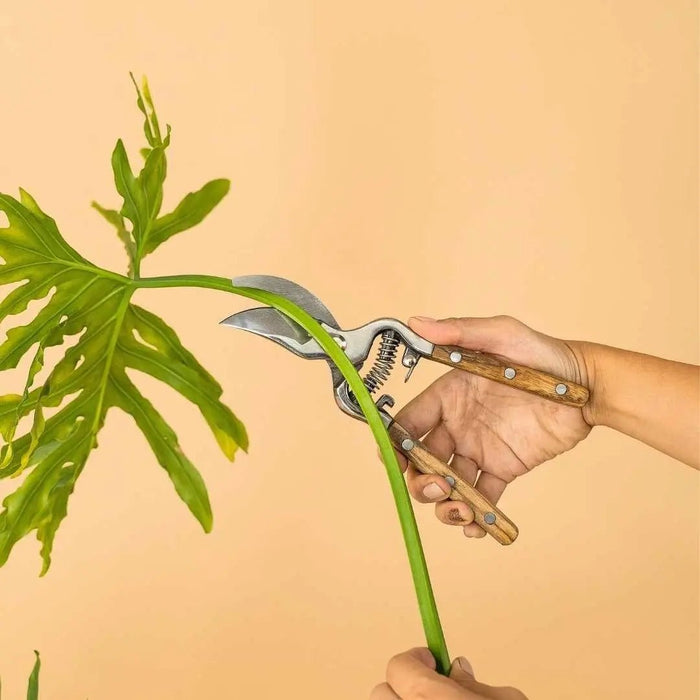
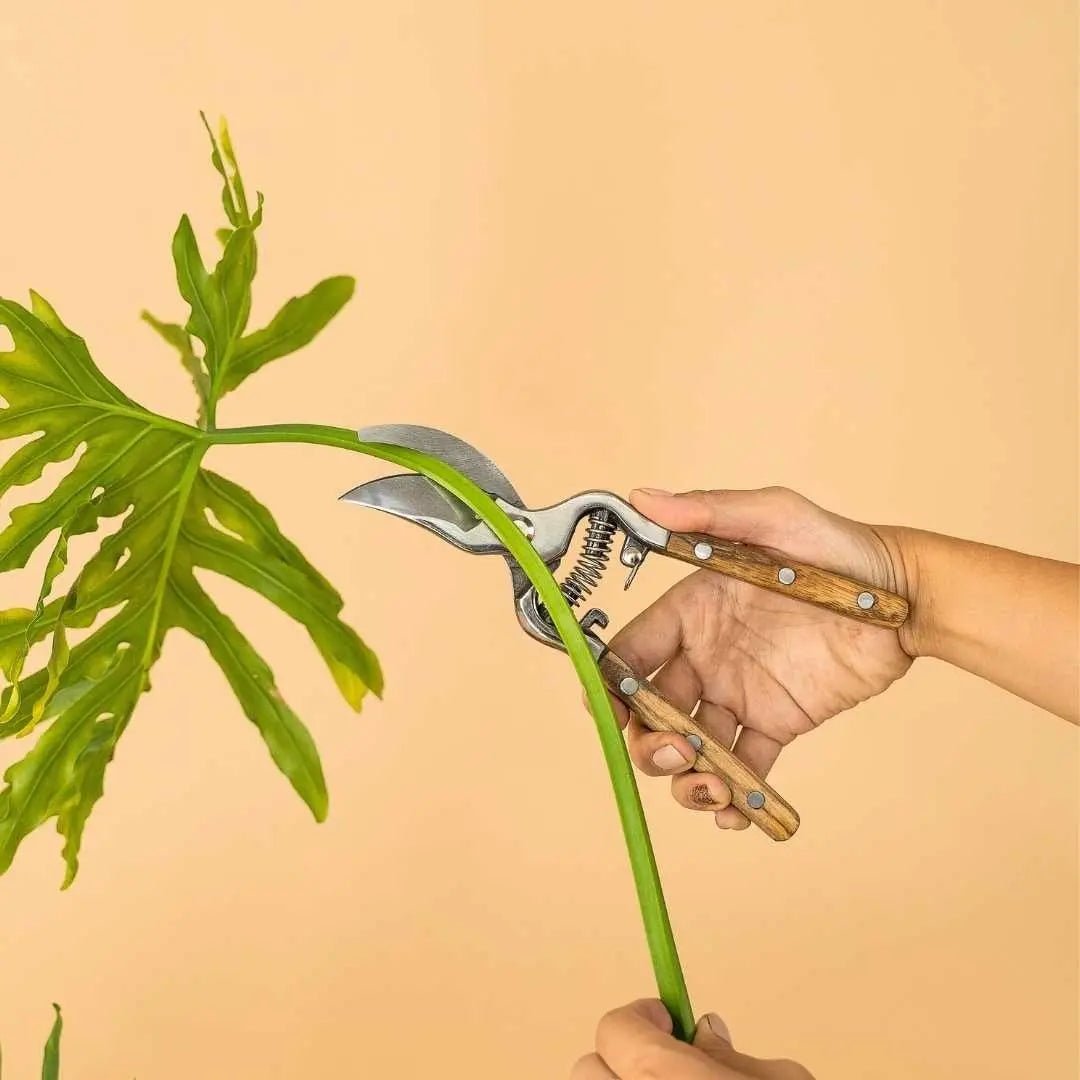
Fix: Move to brighter light. Prune leggy stems to encourage bushier growth. Use the pruned sections for propagation.
Pests
Crotons can attract:
- Spider mites — common in dry, AC environments. Fine webbing on leaf undersides. Increase humidity, wash leaves, treat with neem oil.
- Mealybugs — cottony masses in leaf joints. Treat with rubbing alcohol.
- Scale — brown bumps on stems. Scrape off, treat with neem oil.
Regular leaf inspection (especially undersides) catches pests early.
Propagation
Stem Cutting
- Cut a stem section (10-15cm) with at least 3-4 leaves
- Remove the lowest 1-2 leaves
- Dip the cut end in rooting hormone (recommended — Crotons are slower to root than many houseplants)
- Place in moist, well-draining soil
- Cover with a plastic bag to maintain humidity
- Keep warm and in bright indirect light
- Roots develop in 4-8 weeks
Air Layering
For larger, woodier stems:
- Make a small incision on the stem
- Wrap with moist sphagnum moss and plastic wrap
- Roots form in 6-10 weeks
- Cut below the roots and pot
Note: Croton sap is milky white and can irritate skin. Wear gloves when pruning or propagating.
Styling
Crotons bring colour that no other houseplant matches:
- Bright corner statement — A tall Croton (80-120cm) in a corner near a window adds year-round colour to a room
- Balcony colour — Crotons thrive outdoors in Singapore and add tropical colour to balcony gardens
- Entryway accent — The vivid foliage creates a welcoming, tropical entrance
- Group display — Multiple Croton varieties grouped together create a stunning colour palette
- Neutral pot contrast — Plant in white, cream, or light grey pots to let the foliage colours shine
Design tip: Because Croton foliage is so colourful, keep surrounding decor neutral. A Croton against a white wall in a simple pot is striking. A Croton surrounded by colourful cushions, art, and patterned rugs is visual overload.
Is Croton Toxic?
Mildly toxic. The milky sap irritates skin (can cause contact dermatitis) and causes digestive upset if ingested. Toxic to cats and dogs. Wear gloves when handling, and keep away from pets and children who might chew the leaves.
Shop Croton
Browse our indoor plant collection for Croton varieties delivered across Singapore.
The Croton is not a background plant. It demands attention with colour that no green-only houseplant can match. In Singapore's bright, warm, humid conditions, it delivers that colour generously — reds, oranges, yellows, and pinks that shift and intensify through the seasons and across individual leaves. Give it a bright spot, consistent care, and the respect of not moving it once it is settled, and a Croton will paint your home in colours you never knew a houseplant could produce.
Quick summary
Key Takeaways
- Popular Varieties
- Light
- Watering
- Soil
- Humidity
- Temperature
Ready to bring some green into your home?
Browse 250+ hand-picked plants, curated for Singapore homes — delivered to your door.
Browse All Plants →