















How to Increase Humidity for Houseplants (Methods That Actually Work)
Posted on April 16 2026
In this article

- First: Do You Actually Have a Humidity Problem?
- Method 1: Move Away from Air-Conditioning
- Method 2: Grouping Plants Together
- Method 3: Pebble Trays
- Method 4: Bathroom and Kitchen Placement
- Method 5: Misting
- Method 6: Room Humidifier
- Method 7: Terrarium or Glass Enclosure
- Building a Humidity Strategy for Singapore
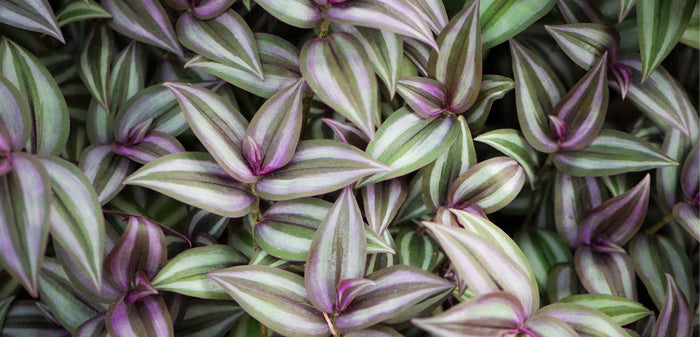
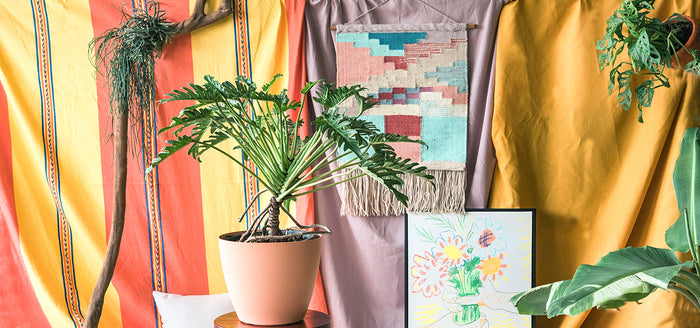
Thumbnail image: 1200×628px — a lush grouping of tropical plants (calatheas, ferns, anthuriums) on a bright Singapore shelf or bathroom windowsill, clearly thriving in a humid environment. Dewy leaves, vibrant colour, lifestyle-forward composition.
---
Humidity is one of the most overlooked aspects of indoor plant care — and one of the most impactful. Most tropical houseplants evolved in environments with 60–80% relative humidity. The average home runs at 30–50%, and in winter with heating on, it can drop to 20–30%.
This gap is responsible for a huge proportion of the "brown tips," "crispy edges," and "drooping despite good watering" complaints that plant owners struggle with.
Singapore perspective: Our situation is genuinely different from what most plant care guides describe. Singapore's ambient humidity — typically 70–90% — means most of your outdoor-facing and unconditioned indoor spaces are already at or above the ideal range for tropical plants. The challenge here isn't raising humidity across the board; it's managing specific microclimates — particularly air-conditioned spaces — where artificial cooling strips moisture from the air and creates pockets of dry stress that your plants don't expect.
Understanding which of your plants are in air-conditioned zones, and addressing those specifically, is the key insight for Singapore plant owners.
---
First: Do You Actually Have a Humidity Problem?
For Singapore growers, rephrase the question: Do your plants have a localized humidity problem?
Signs of humidity stress (relevant even in Singapore if plants are near aircon):
- Brown, crispy leaf tips and edges (especially on calatheas, ferns, anthuriums, and other tropical plants)
- Leaf curling (the plant is reducing exposed surface area to slow moisture loss)
- Slow growth and small leaves on plants that should be growing vigorously in Singapore's warmth
- Rapid soil drying (aircon-chilled, dry air pulls moisture from soil faster)
A hygrometer measures your room's relative humidity. In a non-air-conditioned Singapore room, you'll typically read 70–85% — above the ideal range for most tropical plants. In an air-conditioned bedroom running at 22°C all day, you might read 45–55% — fine for many plants, but below ideal for humidity-sensitive types like calatheas, ferns, and collector anthuriums.
Singapore diagnosis: If your plant is in an unconditioned space and still showing humidity stress, look for other causes (underwatering, cold drafts from open windows near aircon zones). If it's in or near an air-conditioned room, humidity is very likely the culprit.
---
Method 1: Move Away from Air-Conditioning

Cost: Free
Effectiveness: High — often the single most impactful change for Singapore growers
Before investing in any humidity-raising equipment, first address aircon placement. Air conditioners lower humidity, and direct aircon airflow onto plant leaves causes rapid transpiration and physical chill damage — far worse than simply lower humidity.
Practical steps:
- Keep humidity-sensitive plants (calatheas, ferns, anthuriums, aroids) at least 1–2 metres from the nearest aircon unit
- Avoid placing plants directly under ceiling-mounted split units, which distribute cold, dry air widely
- HDB and condo growers: the living room with aircon often isn't the best spot for sensitive plants — a bright bedroom without 24-hour conditioning, or a sheltered balcony, may perform better
Singapore tip: Many growers find that simply moving humidity-sensitive plants from an air-conditioned living room to a corridor, bathroom, or balcony area solves the humidity problem entirely without any equipment.
---
Method 2: Grouping Plants Together
Cost: Free
Effectiveness: Moderate
Plants naturally release moisture through a process called transpiration — water evaporates from leaf surfaces as part of normal metabolic function. When multiple plants are grouped together, they create a localized microclimate where the air between them is measurably more humid than the surrounding room.
Practical tip: Group your humidity-sensitive plants (calatheas, ferns, anthuriums) together in your highest-light zone rather than spreading them throughout the house. In Singapore, grouping on a sheltered balcony or in a bright bathroom or corridor creates particularly effective microclimates, since ambient outdoor humidity boosts the effect.
---
Method 3: Pebble Trays

Cost: $0–$15 (depending on materials)
Effectiveness: Moderate — useful supplement in air-conditioned spaces
A pebble tray is a shallow tray filled with pebbles and water, with the plant pot sitting on top of the pebbles above the water line. As the water evaporates from the tray, it increases humidity in the immediate air around the plant.
How to set one up:
- Find a tray or saucer wider than the plant's pot
- Fill it with pebbles, gravel, or LECA (expanded clay pebbles)
- Add water to just below the top of the pebbles
- Place the pot on top — the bottom of the pot should not touch the water
Refill as needed (in Singapore's heat, this may be every 2–3 days rather than once a week).
Important: The pot must not sit in the water itself. This is a pebble tray, not a water reservoir — direct water contact with the pot leads to root rot.
Realistic effectiveness: Pebble trays raise local humidity by roughly 5–10%. Helpful as a supplement in air-conditioned rooms but not sufficient alone for very humidity-demanding plants like calatheas and ferns.
---
Method 4: Bathroom and Kitchen Placement
Cost: Free
Effectiveness: High for naturally humid spaces — very effective in Singapore
Bathrooms (especially those with showers) and kitchens are naturally more humid than other rooms. In Singapore, where showers are taken daily (often twice) and kitchens produce steam year-round, bathrooms and kitchens can reach 80–90% humidity regularly.
If these spaces have adequate natural light, they're among the best environments for humidity-loving plants in any Singapore home.
Best Singapore bathroom plants: Ferns, calatheas, orchids, pothos, air plants, anthuriums
Best Singapore kitchen plants: Pothos, herbs, spider plants, aloe, peperomia
Singapore-specific advantage: Our bathrooms don't get cold in winter. A Singapore bathroom window spot provides warm, high-humidity conditions year-round — close to optimal for many tropical plants.
The challenge is light — many Singapore bathrooms have frosted windows or face light wells. A frosted-window bathroom still provides useful diffuse light for low-light plants. If there's no window at all, rotate plants in and out on a 2-week cycle.
---
Method 5: Misting

Cost: $5–$15 (spray bottle)
Effectiveness: Low to moderate (short-term only)
Misting involves spraying water directly onto plant leaves with a fine mist spray bottle. It temporarily increases the humidity around the plant and is the most commonly recommended humidity hack in houseplant advice.
The honest assessment: Misting works, but the effect lasts only 20–30 minutes before the water evaporates and humidity returns to ambient levels. For a plant that needs 60% humidity all day, misting twice provides relief for 40 minutes out of 24 hours.
Where misting does help:
- In air-conditioned rooms as a frequent supplement
- For air plants, which absorb water directly through their leaves
- For the surfaces of moss poles, encouraging aerial roots to attach
Where misting can hurt:
- On plants with velvety or fuzzy leaves (African violets, some calatheas, most begonias) — water sitting on these surfaces encourages fungal problems. This risk is heightened in Singapore's warmth, where warm wet leaf surfaces are an excellent fungal environment.
- In poorly ventilated indoor spaces where wet leaves don't dry quickly
Singapore recommendation: In unconditioned spaces, misting is largely unnecessary given ambient humidity. In air-conditioned rooms, it provides small relief but isn't a substitute for a real humidity solution.
---
Method 6: Room Humidifier
Cost: $25–$80
Effectiveness: High — most effective for air-conditioned rooms
A small room humidifier is the single most effective way to raise humidity in an air-conditioned Singapore room. A cool-mist humidifier placed near your plant grouping can maintain 55–70% humidity consistently, counteracting the drying effect of aircon.
Types:
- Ultrasonic humidifiers: Use vibration to create a cool mist. Quiet, energy-efficient, popular for plant rooms. May leave white mineral deposits on leaves and furniture if used with hard water — use filtered water to avoid this. Most practical option for Singapore apartments.
- Evaporative humidifiers: Use a fan and wick to evaporate water. No mineral deposits. Slightly louder.
- Warm mist humidifiers: Less practical in Singapore's already-warm climate; also uses more energy.
For Singapore air-conditioned rooms specifically: A small ultrasonic cool-mist humidifier ($25–$40) near your most humidity-demanding plants in an air-conditioned room is the most cost-effective solution if you run aircon frequently and have calatheas, ferns, or collector aroids.
---
Method 7: Terrarium or Glass Enclosure
Cost: $15–$100+
Effectiveness: Very high for enclosed plants
Closed terrariums create a nearly self-contained water cycle — plant transpiration and water evaporation collect as condensation on the glass walls and return to the soil. Humidity inside a closed terrarium can reach 80–100%.
Ideal terrarium plants:
- Mosses, ferns, small calatheas, air plants
- Miniature tropical plants (small peperomias, nerve plants, small bromeliads)
Closed terrariums require plants that tolerate very high humidity and diffuse light. In Singapore's warmth, closed terrariums can get hot quickly in direct sun — always place in indirect light and monitor temperature.
---
Building a Humidity Strategy for Singapore
| Singapore situation | Recommended approach |
|--------------------|---------------------|
| Non-air-conditioned room, HDB/condo | Usually fine — ambient humidity sufficient for most tropicals |
| Air-conditioned living room, sensitive plants | Move plants 1–2m from aircon + pebble tray |
| Air-conditioned bedroom with calatheas/ferns | Small humidifier near plants |
| Balcony or corridor space | Group plants — ambient humidity + transpiration = excellent microclimate |
| Bathroom with light source | Ideal for ferns, calatheas, orchids — no intervention needed |
| Collector aroids (crystallinum, etc.) | Humidifier or dedicated high-humidity cabinet |
---
Take the guesswork out of humidity management. Browse our plant care accessories — we carry pebble trays, fine-mist spray bottles, hygrometers, and compact ultrasonic humidifiers sized for Singapore apartments and plant shelves. Need humidity-loving plants that thrive in Singapore's climate? Check our full plant collection with same-day delivery across Singapore.
---
Quick summary
Key Takeaways
- First: Do You Actually Have a Humidity Problem?
- Method 1: Move Away from Air-Conditioning
- Method 2: Grouping Plants Together
- Method 3: Pebble Trays
- Method 4: Bathroom and Kitchen Placement
- Method 5: Misting
Ready to bring some green into your home?
Browse 250+ hand-picked plants, curated for Singapore homes — delivered to your door.
Browse All Plants →