
















Peace Lily Care Guide
Posted on April 16 2026
In this article
- Thumbnail Specification
- Hero Image
- Why the Peace Lily Earns Its Place in Any Home
- Peace Lily Profile
- The Story Behind the Name
- Light Tolerance Guide
- Care Guide
- Getting Your Peace Lily to Bloom
- Common Problems — Diagnosis Guide
- Singapore-Specific Care Tips
- Peace Lily Varieties Available at Tumbleweed Plants
- Is the Peace Lily Safe for Pets?
- Our Favorite Peace Lily Moments
- Shop Peace Lilies — Same-Day Delivery in Singapore
Target keyword: `peace lily care` / `peace lily plant`

Monthly search volume: ~30,000–40,000 monthly (one of the most searched houseplants)
Intent: Informational + purchase intent
Pillar: C (Brand/Community — Plant of the Week)
Publish date: Week 3, Day 5
CTA: Link to peace lily product page
Tags: plant of the week, peace lily, spathiphyllum, care guide, low light plants, Singapore indoor plants
---
Thumbnail Specification
| Field | Spec |
|-------|------|
| Dimensions | 1200 × 628 px (Open Graph / social share) or 800 × 800 px (square, Instagram-ready) |
| Primary image | Peace lily in full bloom — white spathe visible, deep green glossy leaves, clean pot |
| Text overlay | "Peace Lily Care Guide" in clean sans-serif; Tumbleweed Plants logo bottom-right |
| Tone | Calm, lush — emphasise the bloom and foliage contrast |
| File format | JPG or WebP, <200 KB |
| Alt text | `"Peace lily in full bloom — care guide from Tumbleweed Plants Singapore"` |
---
Hero Image

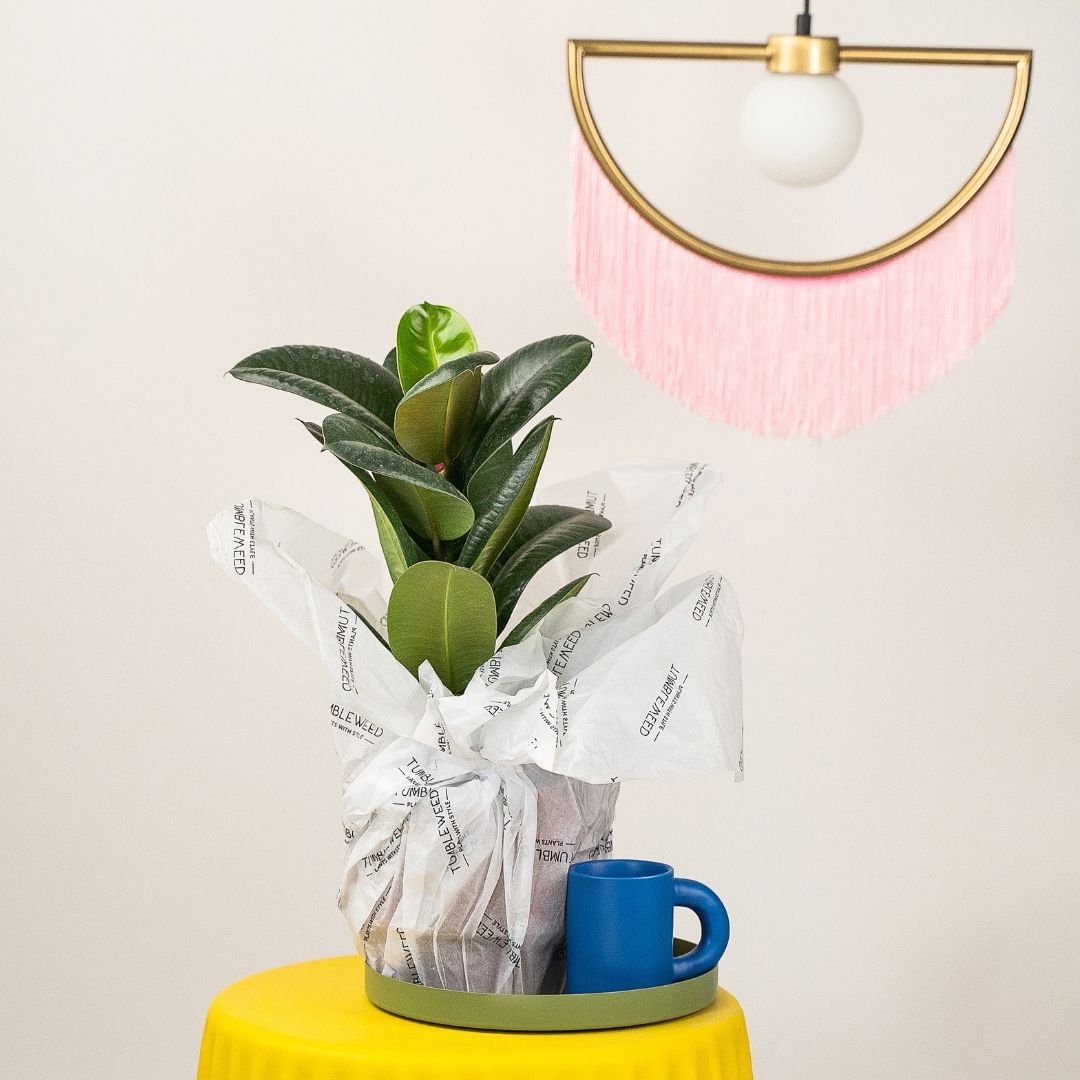
Photo: Peace lily in bloom — styled for Tumbleweed Plants Singapore. Source: internal product shoot or licensed stock (Unsplash: search "peace lily bloom indoor"). Ensure soft, warm natural lighting — avoid harsh flash.
---
Every week we spotlight one plant from our collection — its story, what makes it special, and everything you need to know to grow it well.
This week: the Peace Lily (Spathiphyllum wallisii)
---
Why the Peace Lily Earns Its Place in Any Home
The peace lily does something almost no other low-light plant does: it blooms. White spoon-shaped flowers (technically spathes) emerge on tall stems several times a year, even in rooms with limited natural light. Combined with glossy dark green leaves and the ability to tolerate serious neglect, the peace lily is one of the most versatile and rewarding houseplants available.
It also communicates clearly. When it needs water, it droops visibly — leaves go limp and stems sag. Water it, and within an hour it perks right back up. That drama is actually useful: it's one of the few plants that will remind you to water it.
In Singapore, peace lilies are especially well suited to our climate. Singapore's naturally high humidity (70–90% year-round) is exactly what this tropical plant loves — and our year-round warmth means peace lilies can bloom multiple times annually here, rather than just once in spring as in temperate countries. They're a natural fit for HDB bathrooms, kitchens, and any room with some indirect light.
---
Peace Lily Profile

| Feature | Details |
|---------|---------|
| Scientific name | Spathiphyllum wallisii (and related species) |
| Common names | Peace lily, white sails plant |
| Origin | Tropical Americas and Southeast Asia |
| Size | 1–4 feet tall, depending on variety |
| Light | Low to bright indirect |
| Water | Weekly when dry — drooping is a natural reminder |
| Toxicity | Toxic to cats, dogs, and humans if ingested |
| Blooms | Spring/summer primarily, but year-round in Singapore's climate |
| Singapore suitability | Excellent — thrives in our humidity and warmth |
---
The Story Behind the Name
"Peace lily" refers to the flower's resemblance to a white flag of truce — the white spathe surrounding the spadix (the finger-like central spike) looks like a white flag on a stick. The plant has been associated with peace, purity, and sympathy in Western culture, which is why it's a common choice for condolence gifts and memorials.
Despite the name, it's not a true lily — it belongs to the Araceae family (aroids), making it a relative of monsteras, philodendrons, and pothos.
---
Light Tolerance Guide

Diagram: Peace lily light tolerance zones. Design suggestion: horizontal gradient bar from "Deep shade" to "Bright indirect" with plant silhouette icons showing bloom frequency at each level. Source: create in Canva or commission from a plant illustrator.
Peace lilies are genuinely tolerant of low light — one of the few claims that actually holds up. They'll survive in rooms far from windows and in offices with only artificial lighting.
That said, more light = more blooms. A peace lily in a bright, indirect-light spot will flower frequently. One in a dim corner may bloom rarely or not at all, though it will remain healthy.
Avoid: Direct sun, which scorches the large leaves.
Singapore tip: North-facing HDB rooms and bathrooms with a small window are ideal spots — the plant gets gentle ambient light without any risk of direct tropical sun scorching.
---
Care Guide
Watering Schedule for Singapore
Table/infographic suggestion: 12-month calendar with colour-coded watering frequency (e.g., green = every 7 days, yellow = every 10 days). Note: in Singapore the difference is subtle — humidity stays high year-round — but soil dries faster in air-conditioned rooms.
The peace lily's visible droop is its best feature for care purposes — it tells you exactly when it's thirsty.
Ideal approach: Water when the top inch of soil is dry, or when the plant just begins to droop slightly. Water thoroughly until it drains from the bottom.
Singapore-specific tips:
- In air-conditioned rooms, soil dries faster than expected — check every 5–6 days rather than assuming weekly watering is enough
- In naturally ventilated HDB kitchens and bathrooms, our humidity keeps the soil moist longer — check before watering, don't water on a fixed schedule
- Use filtered or boiled-then-cooled water to avoid fluoride sensitivity (Singapore tap water is treated and peace lilies can develop brown tips from it)
Important: Don't let drooping become severe — deeply wilted peace lilies take longer to recover and repeated severe wilting can cause permanent leaf damage.
Brown tips: Very common, caused by fluoride and chlorine in tap water. Switching to filtered water or leaving tap water out overnight reduces this significantly.
---
Temperature and Humidity
- Ideal temperature: 18–27°C
- Singapore advantage: Our ambient temperature sits perfectly in this range year-round — no heating or cooling adjustments needed
- Air-conditioning caution: Direct aircon airflow blowing on leaves causes cold stress and yellowing. Position peace lilies at least 1–2 metres from aircon units
- Humidity: Singapore's natural humidity is ideal. In heavily air-conditioned offices or rooms, a small pebble tray with water under the pot helps maintain local humidity
---
Soil and Repotting
Peace lilies like slightly moist, well-draining soil. Standard potting mix works well.
They actually prefer being slightly root-bound — don't rush to repot. Signs it's time: roots growing from drainage holes, soil drying out unusually fast, or the plant visibly lifting itself out of the pot.
Repot in any season in Singapore (we don't have a cold dormancy period — year-round warmth means repotting can happen anytime, though avoiding the peak monsoon months reduces transplant shock).
---
Fertilizing
Feed once a month with a balanced liquid fertilizer at half-strength. In Singapore, you can continue light fertilizing year-round (no winter dormancy), but reduce frequency if growth slows.
Yellow leaves after fertilizing: Too much fertilizer. Flush the soil and stop for 4–6 weeks.
---
Getting Your Peace Lily to Bloom
If your peace lily isn't blooming, the most likely reason is insufficient light. Move it to a brighter spot (still indirect — no direct sun) and wait 4–6 weeks.
Singapore bonus: Because our climate is consistently warm and humid, peace lilies here often bloom 2–3 times per year rather than the once typical in temperate climates. If yours isn't blooming at all, light is almost certainly the issue.
Other factors:
- Age — young peace lilies may not bloom in the first year
- Fertilizer — a phosphorus-rich fertilizer (higher P number) can encourage flowering
- Slight root-bound conditions — don't rush to a larger pot; a snug pot often triggers blooming
Some growers use a commercial "bloom booster" in March–April (Singapore's inter-monsoon period, when light levels are typically higher) to trigger flowering.
---
Common Problems — Diagnosis Guide
Infographic design suggestion: 2×3 grid, each cell with a clear symptom label, small plant illustration showing the issue, and a "Fix:" line. Colour-coded by severity (green = easy fix, orange = moderate, red = urgent). Source: create in Canva using plant icons.
Brown leaf tips:
Almost universal in peace lilies. Usually caused by fluoride in tap water (peace lilies are sensitive to it), inconsistent watering, or low humidity. Switch to filtered water and trim brown tips with scissors.
Yellow leaves:
Overwatering, root rot, or (less commonly) nutrient deficiency. Check the soil — if soggy, let it dry out and check roots. In Singapore, overwatering is the #1 culprit — our humidity already keeps the environment moist.
No flowers:
Insufficient light. Move closer to a window.
Black or mushy stems at the base:
Root rot from overwatering. Remove from pot, cut away damaged roots, repot in fresh soil.
Drooping despite wet soil:
Overwatering / root rot. The roots can't deliver water if they're rotting. Check and treat root rot.
---
Singapore-Specific Care Tips
HDB bathrooms and kitchens are ideal spots for peace lilies. The combination of:
- Natural ambient humidity from cooking and showering
- Indirect light from a small window or skylight
- Protection from direct tropical sun
...creates near-perfect peace lily conditions. Many Singapore plant owners keep their peace lily in the bathroom year-round without any supplemental care.
HDB living rooms work well if you keep the plant away from the aircon airflow. Position near a north or east-facing window for gentle morning or ambient light.
Offices with only fluorescent or LED lighting can sustain peace lilies (they're one of the few plants that genuinely tolerate artificial light), though blooming will be rare without natural light.
---
Peace Lily Varieties Available at Tumbleweed Plants
Image suggestion: Use your Shopify product photos, cropped consistently to square format. Label each with variety name and a 1-line description. Source: internal product photos.
Browse and shop our peace lily range at tumbleweedplants.com — available in multiple sizes from starter plants to large, established floor specimens.
---
Is the Peace Lily Safe for Pets?
No — peace lilies contain calcium oxalate crystals that are toxic to cats, dogs, and humans. Ingestion causes mouth irritation, drooling, vomiting, and difficulty swallowing. Keep out of reach of pets and children.
Looking for a flowering plant that's safe for pets? Consider the Boston fern, spider plant, or African violet — all non-toxic options with similar aesthetic appeal.
Browse our pet-friendly plant collection →
---
Our Favorite Peace Lily Moments
[PLACEHOLDER: If you have customer photos, staff favorites, or a particularly beautiful specimen in your shop, this is where to share it. A photo of a peace lily in full bloom with a short caption creates connection. Tag @tumbleweedplants on Instagram and we may feature your plant here.]
---
Shop Peace Lilies — Same-Day Delivery in Singapore
Browse our peace lily collection — available in multiple sizes from 4-inch starter plants to large, established floor specimens.
> Same-day delivery across Singapore — order before 12pm. Shop now →
Every peace lily ships with a detailed care card. Our live arrival guarantee means your plant arrives healthy or we make it right.
---
Do you own a peace lily? How often does yours bloom here in Singapore? Share your experience in the comments.
---
Next week's Plant of the Week: The Rubber Plant — bold, easy, and dramatically underrated.
---
Quick summary
Key Takeaways
- Thumbnail Specification
- Hero Image
- Why the Peace Lily Earns Its Place in Any Home
- Peace Lily Profile
- The Story Behind the Name
- Light Tolerance Guide
Ready to bring some green into your home?
Browse 250+ hand-picked plants, curated for Singapore homes — delivered to your door.
Browse All Plants →