















Understanding Humidity for Indoor Plants in Singapore
Posted on April 09 2026
In this article

Singapore is one of the most humid places on earth — average outdoor humidity hovers between 70% and 90% year-round. For tropical plant lovers, this should be paradise. And outdoors, it is. But the moment you step inside a typical Singapore home or office — with the air conditioning running — humidity can drop to 40-50%, sometimes lower. This gap between outdoor and indoor humidity is the source of many common plant problems.
Understanding humidity, how it affects your plants, and how to manage it in your specific space is one of the most valuable skills in indoor gardening.
What Is Humidity and Why Do Plants Care?
Humidity is the amount of water vapour in the air. Relative humidity (RH) — the measurement you will see on hygrometers and weather reports — is the percentage of water vapour in the air relative to the maximum the air can hold at that temperature.
Plants care about humidity because it directly affects transpiration — the process by which water evaporates from leaf surfaces through tiny pores called stomata. This is how plants "breathe" and how they draw water from roots through the stems to the leaves.
Low humidity = faster transpiration. Water evaporates from leaves quickly. The plant loses moisture faster than roots can replace it. Result: brown leaf tips, crispy edges, wilting despite moist soil.
High humidity = slower transpiration. Water stays on and around the leaves longer. The plant retains moisture efficiently. Result: lush, hydrated foliage. But too much humidity with poor air circulation can promote fungal and bacterial diseases.
Humidity Levels in Singapore Homes

Without AC (Windows Open)
Humidity: 65-85% RH
This is close to outdoor conditions. Most tropical houseplants thrive. Moisture-loving species like Calathea, ferns, and Alocasia are in their element.
Risk: High humidity with poor ventilation can promote fungal issues (powdery mildew, leaf spot) and pest problems (fungus gnats). Ensure air circulation.
With AC Running (Typical)
Humidity: 40-55% RH
Most Singapore homes run AC for significant portions of the day — especially in bedrooms overnight and in home offices. AC removes moisture from the air as a byproduct of cooling, reducing humidity substantially.
Impact on plants: This humidity range is fine for most common houseplants (Snake Plant, ZZ Plant, Pothos, Aglaonema, Philodendron). However, humidity-sensitive species start showing stress — brown tips, crispy edges, curling leaves.
With AC on Full (Cold, Dry)
Humidity: 30-40% RH
In heavily air-conditioned offices or bedrooms set to very low temperatures, humidity can drop to desert-like levels. Most tropical plants struggle here.
Impact on plants: Even tolerant species may develop brown tips over time. Humidity-loving plants suffer significantly — Calathea prayer movements may freeze, fern fronds turn brown and crispy, and Alocasia leaves curl.
How to Measure Humidity
A hygrometer is a small, inexpensive device that measures relative humidity. Digital hygrometers are available for $10-$20 on Shopee or at hardware stores.
Where to place it: Near your plants, at plant height — not near the AC outlet (artificially low) or the bathroom (artificially high). Take readings at different times of day to understand how humidity fluctuates.
What to aim for:
- 50-60% RH: Comfortable for most common houseplants
- 60-70% RH: Ideal for tropical plants, including Calathea and ferns
- 70-80% RH: Paradise for humidity lovers but watch for fungal issues
- Below 40% RH: Problematic for most tropical plants
How to Increase Humidity

Grouping Plants Together
How it works: Each plant transpires moisture into the surrounding air. Grouping plants creates a shared humidity microclimate where the collective transpiration raises the humidity level for all plants in the group.
Effectiveness: Moderate. Raises humidity by 5-10% in the immediate vicinity of the plant cluster.
Best for: A general approach that benefits all plants with zero cost or equipment.
Pebble Trays
How it works: Fill a tray with pebbles or LECA, add water to just below the top of the pebbles, and place the plant pot on top. As the water evaporates, it raises humidity around the plant.
Effectiveness: Low to moderate. Raises humidity by 3-8% in the immediate area. The effect diminishes with distance.
Best for: Individual plants on desks or shelves. Easy, cheap, and low-maintenance.
Important: The pot should sit on the pebbles above the water line, not in the water. Roots sitting in water leads to rot.
Misting
How it works: Spraying a fine mist of water onto and around the plant's foliage.
Effectiveness: Low. The humidity boost is temporary — the mist evaporates within 15-30 minutes. You would need to mist every 30 minutes for sustained benefit, which is impractical.
Best for: A quick refresh, especially for ferns and Calathea on hot days. Not a substitute for sustained humidity solutions.
Caution: Misting leaves wet can promote fungal and bacterial leaf spot if the water does not evaporate quickly. Mist in the morning so leaves dry during the day. Never mist in the evening.
Humidifiers
How it works: An electric device that adds water vapour to the air continuously.
Effectiveness: High. The most reliable method for significantly raising humidity. A small humidifier can raise room humidity by 15-25%.
Best for: Rooms with multiple humidity-loving plants, especially bedrooms with AC running overnight. The best solution for serious Calathea, fern, or Anthurium collections.
Tips:
- Use a cool-mist humidifier (warm mist is unnecessary in Singapore).
- Place near your plants but not directly under the mist stream.
- Clean weekly to prevent mould and mineral buildup.
- Fill with filtered or distilled water to prevent white mineral dust.
Terrariums and Enclosed Environments
How it works: A glass enclosure traps transpired moisture, creating a self-sustaining high-humidity environment.
Effectiveness: Very high. Closed terrariums maintain 80-100% RH internally.
Best for: Ferns, mosses, miniature tropicals, and delicate humidity-sensitive species that cannot survive in open-room conditions.
Matching Plants to Your Humidity
Low Humidity Tolerant (40-50% RH — AC Rooms)
These plants handle typical Singapore air-conditioned environments without complaint:
- Snake Plant
- ZZ Plant
- Pothos
- Aglaonema
- Dracaena
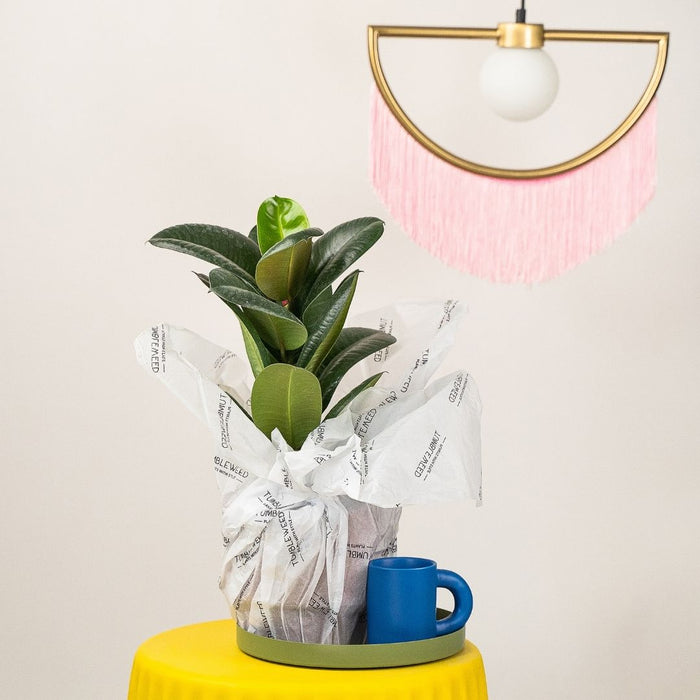
- Rubber Plant
- Spider Plant
- Succulents and cacti
- Peperomia
Moderate Humidity Preferred (50-65% RH)
These plants do well in most Singapore homes but may show occasional brown tips in heavy AC:
- Monstera
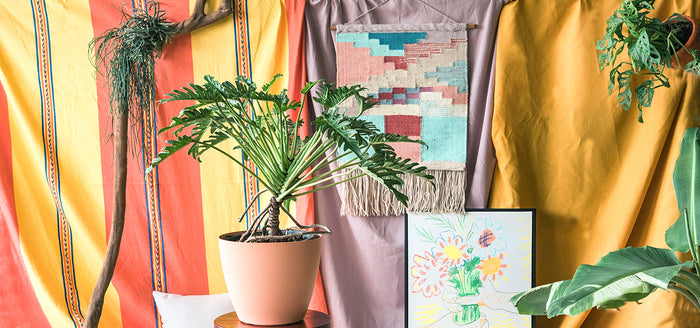
- Philodendron
- Peace Lily
- Syngonium
- Anthurium
- Hoya
High Humidity Required (65%+ RH)
These plants need specific attention to humidity in Singapore's AC interiors:
- Calathea / Maranta / Stromanthe
- Ferns (Maidenhair, Boston, Staghorn)
- Alocasia
- Selaginella
- Many orchids
- Begonia Rex
Signs of Humidity Problems

Too Little Humidity
- Brown, crispy leaf tips and edges — the most common symptom
- Leaf curling — edges roll inward to reduce surface area and conserve moisture
- Dry, papery leaf texture — leaves feel thinner than normal
- Frequent wilting despite adequate watering — moisture is lost through leaves faster than roots can supply it
- Spider mites — these pests thrive in dry conditions and are a reliable indicator of low humidity
Too Much Humidity (With Poor Circulation)
- Fungal leaf spot — dark or light spots on leaves, sometimes with a halo
- Powdery mildew — white powdery coating on leaf surfaces
- Stem rot — soft, darkened stems
- Mould on soil surface — white or green fuzzy growth
- Fungus gnats — small flies around the soil
The Balance: Humidity vs. Air Circulation
High humidity is beneficial only when paired with adequate air circulation. Stagnant, humid air is the perfect environment for fungal diseases and pests.
Solutions for humid rooms:
- A small oscillating fan on low setting creates enough air movement
- Open windows periodically (when the AC is off) to refresh the air
- Ensure plants have spacing — do not pack them so tightly that air cannot circulate between them
Shop Humidity-Loving Plants
Browse our indoor plant collection — each product page includes humidity preferences to help you match plants to your specific growing conditions. Build a collection that thrives in your home's natural environment.
Humidity is not a problem to solve — it is a variable to understand. Once you know the humidity levels in different parts of your home (AC bedroom vs. non-AC living room vs. bathroom), you can place each plant where it will naturally thrive. The right plant in the right spot needs no humidifier, no pebble tray, and no daily misting. It just grows.
Quick summary
Key Takeaways
- What Is Humidity and Why Do Plants Care?
- Humidity Levels in Singapore Homes
- How to Measure Humidity
- How to Increase Humidity
- Matching Plants to Your Humidity
- Signs of Humidity Problems
Ready to bring some green into your home?
Browse 250+ hand-picked plants, curated for Singapore homes — delivered to your door.
Browse All Plants →