




















How to Water Houseplants Correctly: Signs of Overwatering vs. Underwatering
Posted on April 16 2026
In this article
If there is one thing that kills more houseplants than anything else, it's watering — too much, too little, or at the wrong time. The frustrating part? Both overwatering and underwatering can look identical at first: drooping, yellowing leaves and a plant that just looks "off."

This guide explains how to water houseplants correctly, how to tell the difference between overwatering and underwatering, and how to bring a suffering plant back to health.
The Golden Rule of Watering
Water the soil, not the schedule.
Most houseplant guides say "water every 7 days" or "water twice a week." These are rough starting points, not rules. The actual frequency depends on:
- The plant species (succulents vs. tropical plants have very different needs)
- Pot size and material (terracotta dries faster than plastic)
- Season (plants need less water in winter)
- Your home's humidity and temperature
- Whether the plant is actively growing or dormant
The only reliable method: check the soil before you water.
How to Check If Your Plant Needs Water

The Finger Test (Most Reliable)
Stick your finger 2 inches into the soil. If it feels:
- Dry or barely moist → water now
- Slightly moist → wait a day or two
- Wet or soggy → do not water, check for overwatering
The Lift Test
For smaller pots, pick up the pot. A dry pot feels noticeably lighter than a watered one. With practice, you can tell at a glance.
Moisture Meters
For beginners or for plants in difficult-to-check pots, a moisture meter removes all guesswork. Insert the probe into the soil and read the dial. Most tropical houseplants should be watered when the meter reads 3–4 (out of 10). Check out our 3-in-1 Moisture Meter or 4-in-1 Watering Meter to take the guesswork out entirely.
Signs of Overwatering
Overwatering is the most common cause of houseplant death. It doesn't mean you watered too much at once — it means the soil stays wet for too long, suffocating roots and inviting root rot.
Symptoms of overwatering:
- Yellowing leaves, starting with lower/older leaves
- Mushy, soft stems at the base
- Soggy soil that never fully dries out
- A sour or musty smell from the soil
- Brown leaf tips or edges with a yellow halo
- Leaves that drop while still green
- Fungus gnats (they thrive in wet soil)
What to do:
- Stop watering immediately
- Move the plant to a brighter, warmer spot to help the soil dry faster
- If soil is soaked, carefully remove the plant from its pot and inspect the roots
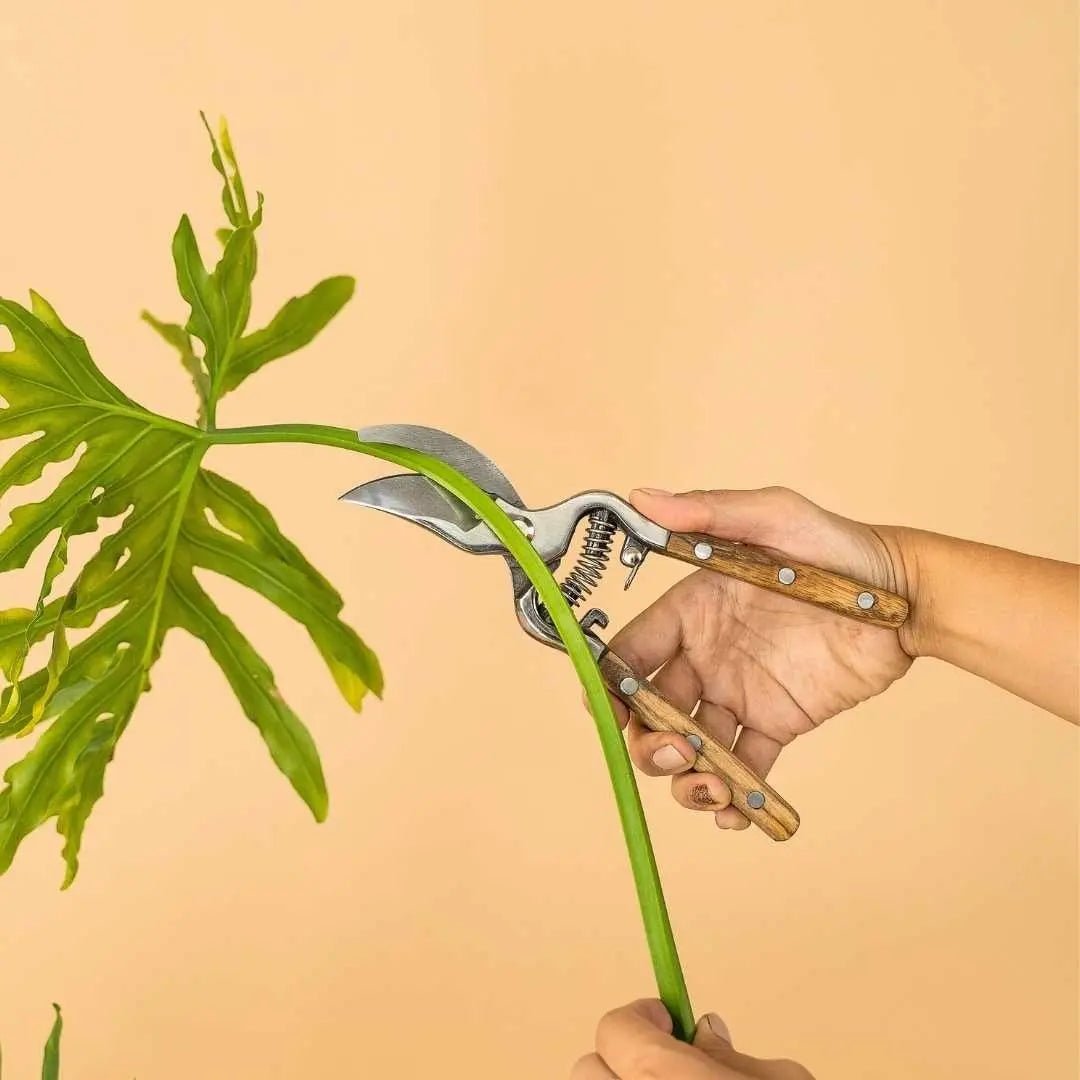
- Trim any black, mushy roots with sterilized scissors
- Repot in fresh, dry potting mix
- Do not fertilize for 4–6 weeks while the plant recovers
Signs of Underwatering

Underwatering is easier to recover from than overwatering. Plants can tolerate drought stress — they evolved with it. Root rot from overwatering is much harder to reverse.
Symptoms of underwatering:
- Wilting or drooping (leaves perk back up quickly after watering)
- Dry, crispy brown leaf tips or edges (no yellow halo)
- Soil that pulls away from the pot edges
- Very lightweight pot
- Leaves curling inward
- Slow or stopped growth
What to do:
- Water thoroughly — water until it runs freely from the drainage holes
- For very dry soil, try bottom watering: set the pot in a tray of water for 20–30 minutes and let the soil absorb moisture from below
- Trim any crispy dead leaves
- Monitor more closely going forward
Overwatered vs. Underwatered: Side-by-Side Comparison
| Symptom | Overwatered | Underwatered |
|---|---|---|
| Leaves | Yellow, soft, may drop | Brown, crispy, curl inward |
| Soil | Wet, soggy, smells musty | Dry, cracked, pulls from pot edges |
| Stems | Soft, mushy at base | Firm but wilted |
| Recovery | Slow (weeks to months) | Fast (hours to days after watering) |
| Root color | Brown/black, mushy | White/tan, firm |
How to Water Correctly

Use the Right Amount
Water deeply but infrequently. When you water, water thoroughly — until water runs out of the drainage holes. This encourages deep root growth. Avoid "sipping" (just a small splash), which only wets the top inch of soil and trains roots to stay shallow.
Water at the Right Time
- Morning is best. Water sits on leaves overnight if watered in the evening, increasing risk of fungal disease.
- Avoid watering on cold, cloudy days when soil takes longer to dry.
Use Room-Temperature Water
Cold tap water can shock tropical plants. Let water sit for an hour or use room-temperature water, especially for orchids, African violets, and tropical aroids like Monstera and Pothos.
Drainage Is Non-Negotiable
Every pot must have drainage holes. No exceptions. Plants sitting in standing water will develop root rot within days to weeks. Always empty saucers after watering.
Watering by Plant Type
Low-water plants (water every 10–21 days):
- Succulents and cacti
- Snake plants (Sansevieria)
- ZZ plants
- Pothos (more drought-tolerant than people think)
Medium-water plants (water every 7–10 days):
- Monstera
- Philodendron
- Spider plant
- Peace lily (will visibly droop when thirsty — a natural reminder)
High-water plants (check every 3–5 days):
Quick-Reference Watering Checklist
- ✓ Check soil moisture before every watering (finger test or moisture meter)
- ✓ Water thoroughly until it drains from the bottom
- ✓ Empty saucers 30 minutes after watering
- ✓ Reduce watering frequency in winter
- ✓ Use room-temperature water for tropical plants
- ✓ Never water on a rigid schedule — check the soil first
- ✓ Ensure every pot has drainage holes
Ready to Build Your Plant Collection?
Knowing how to water is just the start. Browse our collection of easy-to-care-for indoor plants — every listing includes watering instructions specific to that species, so you know exactly what to expect before you buy.
Shop our Best Low Maintenance Plants Bundle — perfect for first-time plant owners learning the ropes.
Quick summary
Key Takeaways
- The Golden Rule of Watering
- How to Check If Your Plant Needs Water
- Signs of Overwatering
- Signs of Underwatering
- Overwatered vs. Underwatered: Side-by-Side Comparison
- How to Water Correctly
Ready to bring some green into your home?
Browse 250+ hand-picked plants, curated for Singapore homes — delivered to your door.
Browse All Plants →