

























Pothos Care Guide: The World's Most Popular Houseplant
Posted on April 16 2026
In this article
Target keyword: `pothos care` / `pothos plant` / `how to care for pothos`

Monthly search volume: ~40,000–55,000 combined (one of the highest-volume houseplant searches)
Intent: Informational + purchase intent
Pillar: C (Brand/Community — Plant of the Week)
Publish date: Week 4, Day 5
CTA: Link to pothos collection
Tags: plant of the week, pothos, epipremnum, care guide, beginner plants, trailing plants
Thumbnail image spec: 1200×628px, landscape. Show a lush golden pothos trailing from a white hanging basket against a light wall, leaves in sharp focus. Bright, airy, tropical feel. Text overlay: "Pothos Care Guide" in clean sans-serif. Alt text: "Golden pothos trailing plant in white hanging basket — Tumbleweed Plants Singapore"
---
Every week we spotlight one plant from our collection — its story, what makes it special, and everything you need to know to grow it well.
This week: Pothos (Epipremnum aureum)
> Singapore plant owners: You've almost certainly already seen pothos growing wild around you. It cascades from HDB corridor railings, trails along balcony fences, and thrives in void decks — a testament to just how suited it is to our tropical climate. If there's one plant that's truly at home in Singapore, it's this one.
---
How One Plant Conquered the World
Walk into any office, any dorm room, any dentist's waiting area — and there's a good chance you'll find a pothos. It cascades from high shelves, trails out of hanging baskets, and winds around window frames in homes from Tokyo to Toronto. No houseplant has a larger global footprint.
The secret isn't glamour. Pothos isn't the rarest plant or the most dramatically beautiful. What it has is a combination of qualities that no other plant quite matches: it grows in almost any light, survives weeks of neglect, propagates effortlessly, and still manages to look lush and alive.
It's the houseplant that makes everyone feel like a plant person.
In Singapore, pothos isn't just popular indoors — it literally grows outdoors year-round without any care at all. Our year-round warmth (26–34°C), high humidity, and consistent rainfall are almost exactly what pothos evolved for in its native French Polynesian rainforest. If you can grow it in Singapore, you can grow it anywhere.
---
Pothos Profile

| Feature | Details |
|---------|---------|
| Scientific name | Epipremnum aureum |
| Common names | Pothos, devil's ivy, golden pothos, money plant |
| Origin | French Polynesia (Mo'orea island) |
| Size | Trails to 30+ feet in ideal conditions; easily kept shorter |
| Light | Low to bright indirect — extremely adaptable |
| Water | Every 1–2 weeks (less in Singapore's humid months) |
| Toxicity | Toxic to cats and dogs if ingested |
| Growth rate | Fast — can grow several inches per month; even faster outdoors in Singapore |
| Singapore suitability | Excellent — grows outdoors year-round, thrives indoors |
---
"Devil's Ivy" — Why It Earned That Name
Pothos earned the nickname "devil's ivy" because it stays green even in dark conditions where most plants would die. It's almost supernaturally resilient.
Botanically, this makes sense: pothos evolved in the understory of tropical rainforests, where light is scarce and irregular. It developed the ability to adapt its photosynthesis to available light — a trait that makes it the rare plant that genuinely tolerates low-light indoor conditions (not just survives them).
In Singapore, you'll sometimes see pothos classified as an invasive species in outdoor green spaces — it grows so vigorously that it can outcompete other plants. Indoors, this means you have a virtually indestructible houseplant on your hands.
---
The Best Pothos Varieties

Pothos comes in dozens of varieties — more than most people realize. Here are the most popular:
Golden Pothos — The classic. Green leaves with golden-yellow variegation. The one most people have had at some point. Extremely common in Singapore homes and offices.
Marble Queen — White and green marbled variegation. More striking than golden pothos; slightly slower-growing due to reduced chlorophyll.
Neon Pothos — Electric lime-green leaves with no variegation. One of the brightest, most cheerful houseplants available.
N'Joy Pothos — Sharp white and deep green patches (not marbled — clearly defined). Compact growth.
Manjula Pothos — Ruffled, broadly variegated leaves in white, cream, and green. Rarer and slower-growing.
Pearls and Jade — Smaller leaves with white edges and gray-green centers. Compact, elegant.
Baltic Blue — Fenestrated (split) leaves as it matures, similar to a small monstera. Deep blue-green color.
Jessenia — Green with chartreuse-yellow variegation, similar to golden but with more green.
---
Care Guide
Light
Pothos tolerates more light variation than almost any other popular houseplant.
- Low light (far from windows): The plant survives but grows slowly. Variegated varieties may revert to solid green (less light = less energy = chlorophyll fills in the white/yellow areas)
- Medium indirect light: Ideal for balanced growth and variegation
- Bright indirect light: Fastest growth, most vibrant color; some direct morning sun is fine
- Avoid: Prolonged harsh direct sun, which scorches leaves
Rule of thumb: The more variegated the variety, the more light it needs to maintain its pattern.
> Singapore tip: East-facing windows (morning sun until about 10am) are ideal. West-facing windows in Singapore deliver intense afternoon sun that can scorch leaves — use a sheer curtain to diffuse. North-facing HDB units still get enough ambient tropical light for pothos to thrive.
---
Watering
Water when the top 1–2 inches of soil are dry. In bright light, this might be every 7 days; in low light, every 14+ days.
Signs of underwatering: Leaves wilt or curl, soil very dry, lighter pot weight
Signs of overwatering: Yellow leaves (lower ones first), mushy stems, soil stays wet for more than 2 weeks
Pothos is more tolerant of underwatering than overwatering. When in doubt, wait another few days.
> Singapore tip: Our high ambient humidity (70–90% on most days) means the potting mix stays moist longer than in cooler, drier climates. During the northeast monsoon (November–January) when humidity peaks, you may only need to water once every 10–14 days even in bright light. Always check the soil rather than watering on a fixed schedule.
---
Soil and Pot
Standard well-draining potting mix works well. Add perlite (20–30%) if you tend to overwater.
Any pot with drainage holes works. Terracotta dries faster (good if you overwater). Hanging baskets show off the trailing habit best.
> Singapore tip: In our humid climate, terracotta pots are highly recommended — they allow the soil to breathe and dry faster, reducing the risk of root rot. Avoid sealed ceramic or plastic pots without good drainage in Singapore's humidity.
---
Fertilizing
Feed every 2–4 weeks with a balanced liquid fertilizer at half-strength. In Singapore, because we have no winter dormancy period, you can fertilize year-round — though you may slow to once a month during the wetter monsoon months when growth naturally slows slightly.
---
Pruning and Training
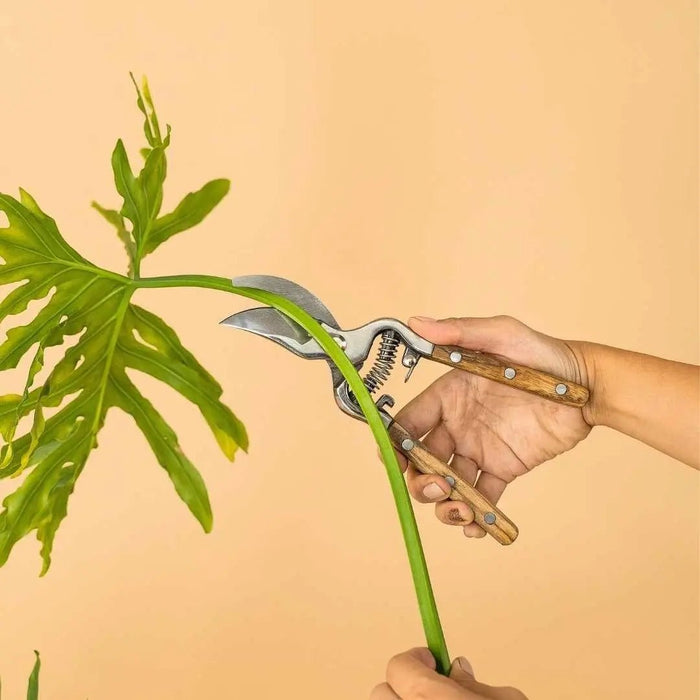
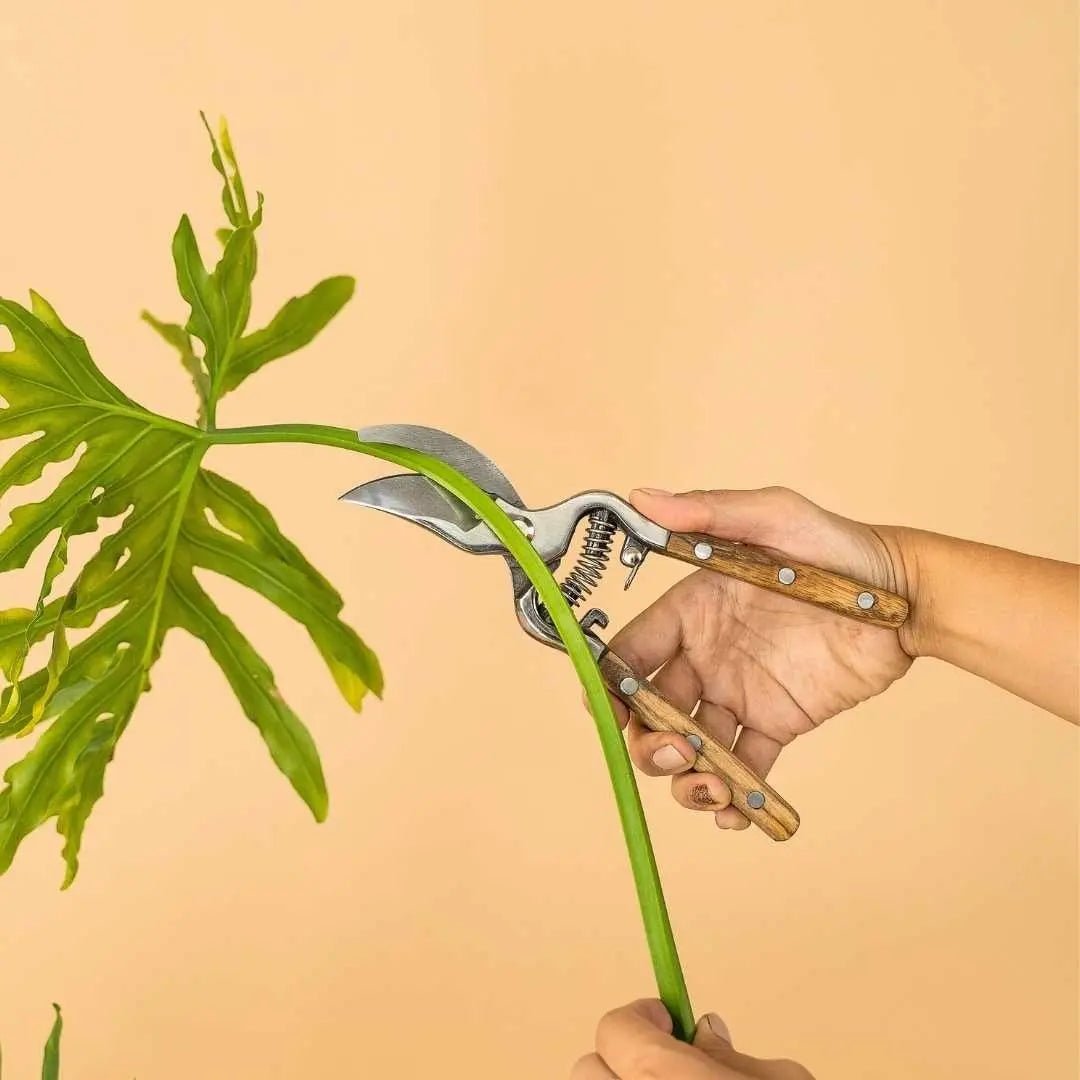
- To keep bushy: Pinch or trim long trailing stems back to a node. This redirects energy to producing new growth and side branches.
- To trail dramatically: Let it grow. A single pothos stem can reach many feet.
- To climb: Provide a moss pole or wooden stake. Pothos will attach aerial roots and produce progressively larger leaves as it climbs — mature leaves can be significantly larger than juvenile trailing ones.
> Singapore display idea: A pothos allowed to grow along a HDB corridor wall or balcony railing creates a lush tropical privacy screen — completely natural, zero maintenance, and thriving in our outdoor climate year-round.
---
Propagating Pothos

Pothos is one of the easiest plants to propagate — a cutting in a glass of water will root in 2–4 weeks.
How to do it:
- Cut a stem just below a node (the small brown bump where leaves attach)
- Remove leaves from the bottom 2 inches
- Place in water with the node submerged
- Set in bright indirect light
- Change water every 5–7 days
- Once roots are 1–2 inches long, pot in moist potting mix
One plant can produce dozens of new plants within a season.
> Singapore tip: Propagation works even faster in our climate — roots can appear in as little as 1–2 weeks in warm Singapore temperatures. If you place your propagation jar on a warm, bright windowsill (not direct sun), you'll have rooted cuttings ready to pot in no time. This makes pothos cuttings a popular gift among Singapore's plant community.
---
Common Problems
Yellow leaves: Almost always overwatering. Check soil — if consistently wet, reduce watering frequency and ensure drainage. This is the most common issue for Singapore plant owners, given our naturally humid conditions.
Brown leaf tips: Low humidity or inconsistent watering. Ironically, indoor air-conditioning (which most Singapore homes run heavily) can dry the air significantly — this is the main cause of brown tips on pothos in Singapore. Try misting occasionally or placing a small tray of water nearby.
Leggy growth / long gaps between leaves: Insufficient light. Move closer to a window.
Fading variegation: Not enough light for the chlorophyll to express properly. Move to a brighter spot.
Root rot: Overwatering + poor drainage. Remove plant, trim rotted roots, repot in fresh soil. More common during Singapore's monsoon months when the air is already saturated — reduce watering significantly during heavy rain periods.
---
Our Favorite Way to Display Pothos
A long, trailing pothos mounted on a high shelf with strands draping down is one of the most dramatic and low-effort plant displays possible. The longer you let it trail, the more impressive it becomes — some people have pothos trailing across entire walls.
For a more structured look, train it up a moss pole — the leaves will grow larger and more dramatic with height.
> Singapore display tip: Pothos looks spectacular trailing from HDB kitchen windows — our consistent warmth means you can keep them partially outdoors (sheltered from direct rain) and they'll reward you with thick, lush growth. Many Singapore plant owners have pothos cascading from their kitchen window ledges as a living green curtain.
---
Perfect for First-Time Singapore Plant Owners
If you're new to keeping plants in Singapore, pothos is the ideal starting point. It tolerates:
- Air-conditioning (dry, cool indoor air) and the transition when you open windows to humid outdoor air
- Irregular watering that comes with busy HDB/condo life
- The high-heat periods during Singapore's inter-monsoon dry spells
- Low-light HDB layouts where windows face north or into airwells
It's genuinely difficult to kill a pothos in Singapore. If you can keep this plant alive, you'll have the confidence to try everything else in our collection.
---
Shop Pothos
Browse our pothos collection — we carry golden, marble queen, neon, njoy, and more. Available in 4-inch starter pots and larger established hanging baskets.
Looking for a beginner kit? Our beginner plant bundle pairs a pothos with two other easy-care plants and a guide.
Need it today? Check our same-day delivery collection — pothos is frequently available for same-day delivery across Singapore.
Have cats or dogs? Pothos is toxic to pets — browse our pet-friendly plant collection for safe alternatives.
---
Which pothos variety is your favorite? And how long is your longest trail? Share photos in the comments — we'd love to see them.
---
Next week's Plant of the Week: The Monstera Deliciosa — the plant that defined a decade of interior design.
---
Quick summary
Key Takeaways
- How One Plant Conquered the World
- Pothos Profile
- "Devil's Ivy" — Why It Earned That Name
- The Best Pothos Varieties
- Care Guide
- Propagating Pothos
Ready to bring some green into your home?
Browse 250+ hand-picked plants, curated for Singapore homes — delivered to your door.
Browse All Plants →