
















Dieffenbachia Care Guide for Singapore | Tumbleweed Plants Singapore
Posted on April 10 2026
In this article
Dieffenbachia — commonly called Dumb Cane — is one of the most popular foliage houseplants in the tropical world. Its large, patterned leaves come in an extraordinary range of variegation: cream splashes, green speckles, white centres, chartreuse margins, and combinations that look hand-painted. It grows fast, looks impressive, and handles indoor conditions with minimal fuss.

The common name "Dumb Cane" comes from its toxicity: the sap contains calcium oxalate crystals that cause intense irritation and temporary inability to speak if the plant material contacts the mouth or throat. This is worth knowing but should not deter you from growing Dieffenbachia — with basic precautions (keep away from children and pets, wear gloves when pruning), it is a safe and rewarding houseplant.
Popular Varieties
Dieffenbachia 'Camille' — Compact, with large cream-centred leaves edged in green. One of the most common and attractive varieties.
Dieffenbachia 'Tropic Snow' — Larger variety with cream and green variegation. Can grow to 120-150cm. A statement plant.
Dieffenbachia 'Compacta' — Smaller, bushier growth habit. Dense foliage. Good for desks and shelves.
Dieffenbachia seguine — The classic species. Large, bold leaves with irregular cream and green patterning.
Dieffenbachia 'Reflector' — Unique camouflage-like patterning with dark green, light green, and cream spots.
Light
Dieffenbachia is adaptable but has preferences:
Bright indirect light — The ideal. Produces the most vibrant variegation, largest leaves, and most compact growth.
Medium light — Very acceptable. Growth slows slightly and variegation may be less pronounced, but the plant remains healthy.
Low light — Tolerated better than many variegated plants. Growth slows, leaves may be smaller and greener (less variegation). But the plant survives.
Direct sun — Avoid. Direct sun scorches the large, thin leaves, causing brown patches. Even brief afternoon direct sun can cause damage.
Key point: Dieffenbachia is one of the better choices for medium-light rooms — it maintains its attractive appearance in conditions that would cause other variegated plants to lose their patterns.
Watering
Straightforward — Dieffenbachia likes even moisture without waterlogging.
Schedule in Singapore:
- Water when the top 2-3cm of soil is dry
- Every 5-7 days in naturally ventilated rooms
- Every 7-10 days in air-conditioned rooms
Technique:
- Water thoroughly until it drains from the bottom
- Empty saucers promptly
- Do not let soil dry out completely — Dieffenbachia shows drought stress quickly
Overwatering signs: Yellow lower leaves, mushy stems, root rot, stems collapsing at the base.
Underwatering signs: Drooping leaves, curling edges, brown crispy tips.
Soil

Standard well-draining mix:
- 60% potting mix
- 25% perlite
- 15% orchid bark or coco coir
Good drainage prevents the root rot that Dieffenbachia is susceptible to in dense, waterlogged soil.
Humidity
Singapore's 70-80% humidity is excellent. Dieffenbachia is a tropical plant from Central and South American rainforests — it loves our humidity.
AC rooms: The 50-60% humidity is adequate. Dieffenbachia handles lower humidity better than Calathea or ferns. Some leaf edge browning may occur in very dry AC conditions.
Temperature

Singapore's year-round 26-32°C is within ideal range. Dieffenbachia prefers 18-30°C. Keep away from cold AC drafts — cold air causes leaf yellowing and drop.
Fertilising
- Balanced liquid fertiliser at half strength every 3-4 weeks during active growth
- Dieffenbachia is a moderate feeder — it responds well to regular fertilising with visibly larger leaves
- Reduce to every 6-8 weeks during slower growth
- Flush soil every 2-3 months to prevent salt buildup
Pruning

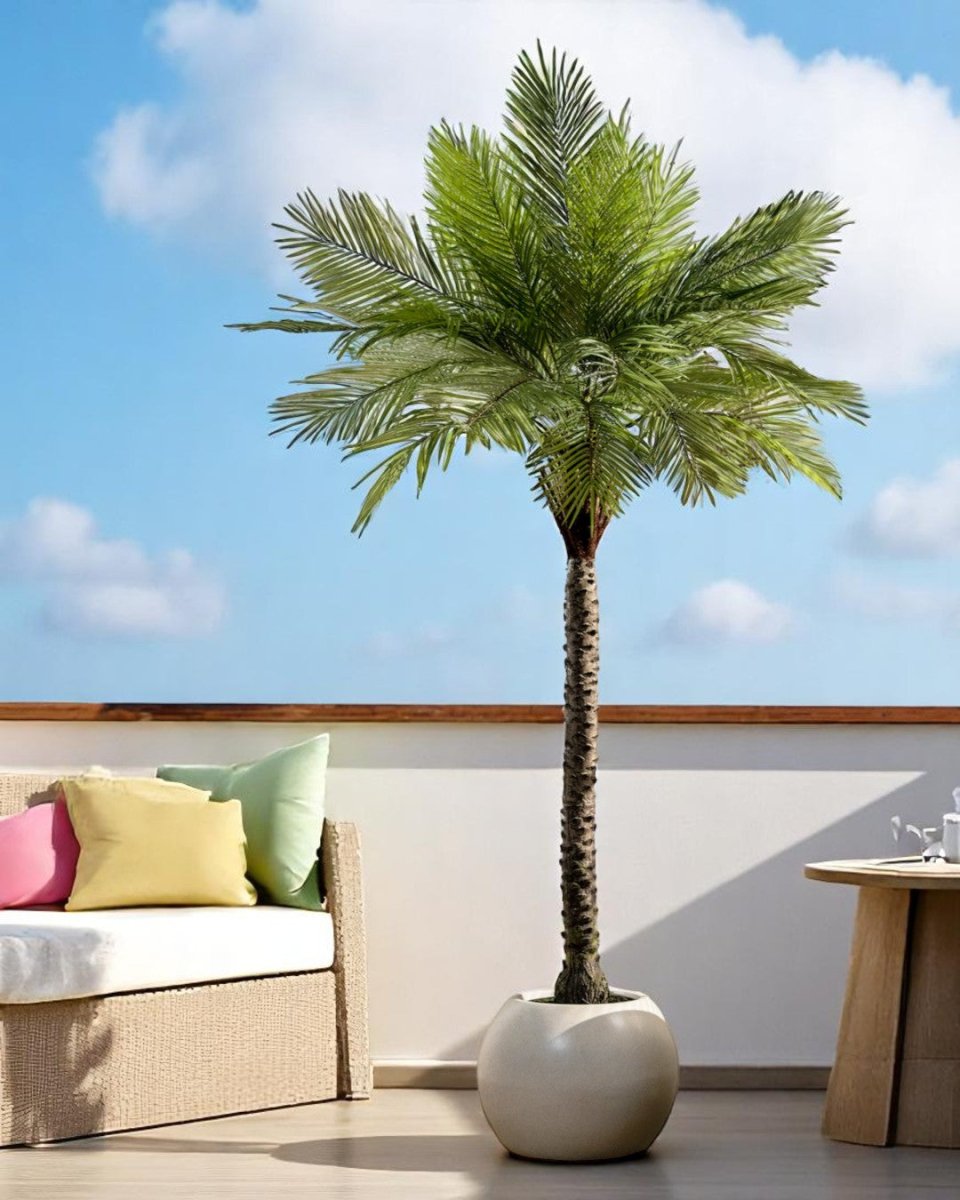
Dieffenbachia grows from a central cane (stem). Over time, lower leaves naturally fall off, leaving a bare stem with a tuft of leaves at the top — the "palm tree" effect.
To maintain a full, bushy appearance:
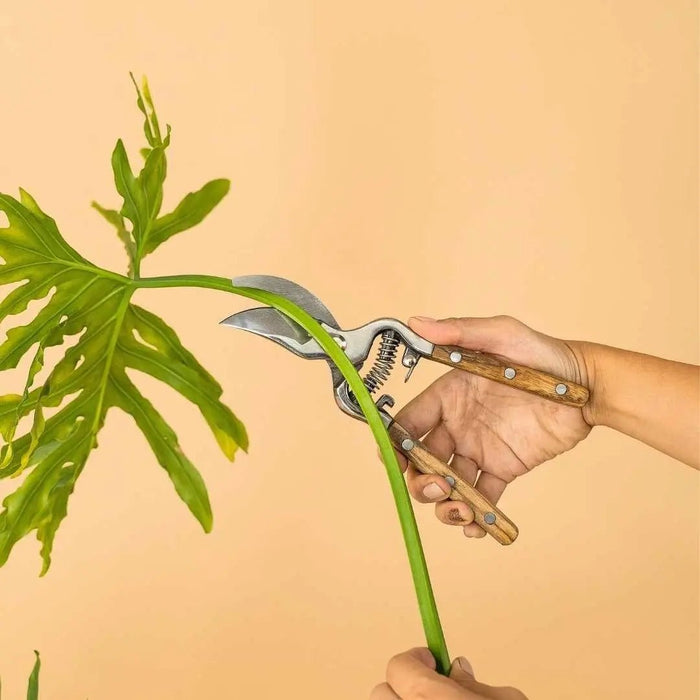
- Cut the main stem at the desired height (just above a node)
- The stump will produce 1-2 new shoots from dormant buds below the cut
- The cut top section can be propagated (see below)
When to prune: When the plant becomes leggy or top-heavy. In Singapore, year-round growth means you can prune any time.
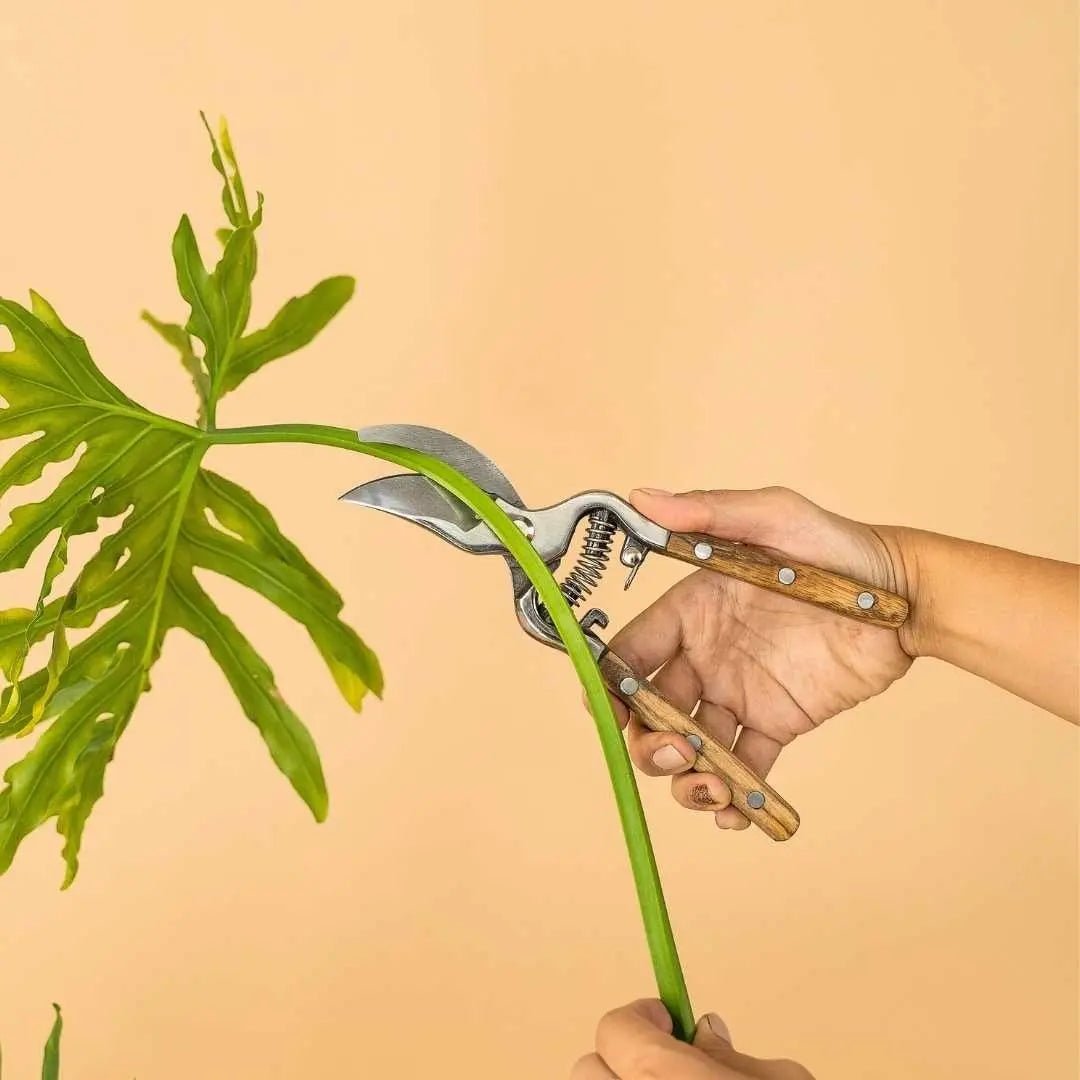
Sap warning: Wear gloves when pruning. The milky sap causes skin irritation and is toxic if it contacts eyes or mouth. Wash hands and tools after pruning.
Propagation
Stem Cutting (Top Cut)
- Cut the top section (with leaves) from the main stem
- Let the cut end dry for an hour
- Place in water or moist soil
- Roots develop in 3-5 weeks
- Transfer to a pot when roots are established
Cane Cutting
- Cut the bare stem into sections (each 5-8cm long with at least one node)
- Lay the sections horizontally on moist soil, half-buried
- New shoots emerge from nodes in 3-6 weeks
- Pot individually when shoots are 10cm tall
This is an excellent way to turn one leggy Dieffenbachia into several new plants.
Common Problems
Yellow Lower Leaves
Natural process: Dieffenbachia naturally drops its oldest, lowest leaves as it grows. One or two yellow lower leaves periodically is normal.
Multiple leaves yellowing: Overwatering (most common), cold drafts, or root-bound stress.
Leggy Growth (Bare Stem)
Cause: Natural growth pattern — Dieffenbachia is a cane plant that sheds lower leaves over time.
Fix: Prune the top and propagate. Or accept the tree-like form — many people find the exposed cane attractive.
Brown Leaf Tips and Edges
Cause: Low humidity, tap water chemicals, over-fertilising, or inconsistent watering.
Fix: Increase humidity, use filtered water, reduce fertiliser, maintain consistent watering.
Drooping
Cause: Usually underwatering. Can also indicate root rot (if soil is wet and plant still droops).
Fix: Water if dry. Check roots if soil is wet.
Pests
- Mealybugs — Common in leaf joints. Treat with rubbing alcohol.
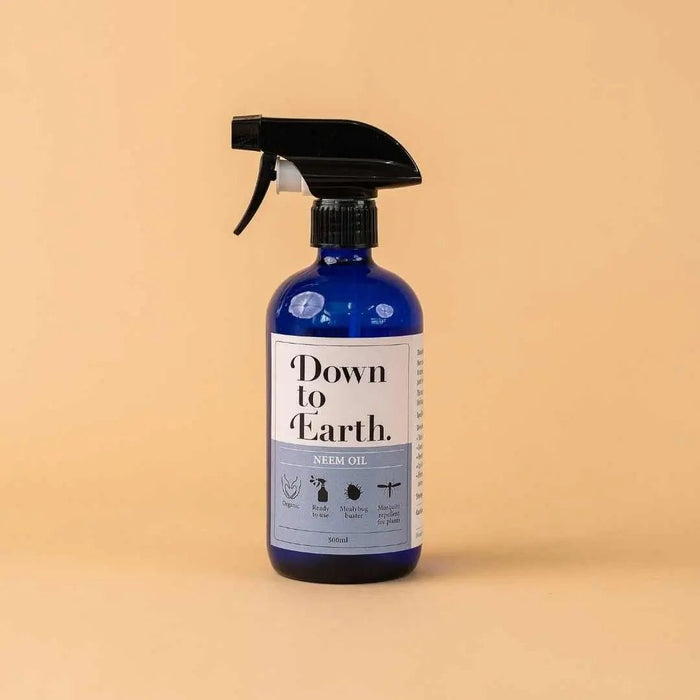
- Spider mites — In dry AC rooms. Wash leaves and treat with neem oil.
- Scale — On stems and leaf undersides. Physical removal + neem oil.
Toxicity — Important
Dieffenbachia is toxic to humans and pets. All parts contain calcium oxalate crystals:
If ingested: Intense burning and swelling of the mouth, tongue, and throat. Difficulty speaking and swallowing. Drooling and pain. Symptoms are immediate and usually resolve within hours but can be severe.
Skin contact with sap: Irritation, redness, and itching.
Eye contact with sap: Severe pain and temporary vision issues. Rinse immediately with water.
Precautions:
- Keep out of reach of children and pets
- Wear gloves when pruning or repotting
- Wash hands after handling
- If ingested, contact poison control or seek medical attention
Perspective: Dieffenbachia is widely grown in millions of homes worldwide. The toxicity is a known risk that is easily managed with basic precautions. It is not uniquely dangerous — many common houseplants contain calcium oxalate.
Styling
Dieffenbachia's large, patterned leaves make it a natural feature plant:
- Floor plant — Larger varieties (Tropic Snow) at 100-150cm make impressive corner or living room plants
- Table plant — Compact varieties (Camille, Compacta) on console tables or side tables
- Office plant — Handles the lower light of office interiors well
- Grouped display — Multiple varieties together showcase the range of leaf patterns
Pot choice: Simple, neutral pots — the variegated foliage provides plenty of visual interest.
Shop Dieffenbachia
Browse our indoor plant collection for Dieffenbachia and other tropical foliage plants delivered across Singapore.
Dieffenbachia is the plant for people who want big, dramatic leaves without big, dramatic care requirements. Its variegated foliage rivals anything in the Alocasia or Calathea world, but it tolerates lower light, handles occasional missed waterings, and grows fast enough to fill a corner within months. In Singapore, where our humidity and warmth match its tropical origins, Dieffenbachia is one of the easiest statement plants you can grow. Respect the sap, keep it from curious pets and toddlers, and enjoy one of the most visually rewarding houseplants in the tropical catalogue.
Quick summary
Key Takeaways
- Popular Varieties
- Light
- Watering
- Soil
- Humidity
- Temperature
Ready to bring some green into your home?
Browse 250+ hand-picked plants, curated for Singapore homes — delivered to your door.
Browse All Plants →