






















Rubber Plant Care Guide: How to Grow Ficus Elastica in Singapore
Posted on April 08 2026
In this article
- How Much Light Does a Rubber Plant Need?
- How to Water a Rubber Plant in Singapore
- Best Soil Mix for Rubber Plants
- How to Prune a Rubber Plant for Bushiness
- How to Propagate a Rubber Plant
- Common Rubber Plant Problems and Solutions
- Fertilising Your Rubber Plant
- Humidity and Temperature for Rubber Plants in Singapore
- Quick Rubber Plant Care Summary
- Grow a Stunning Rubber Plant at Home
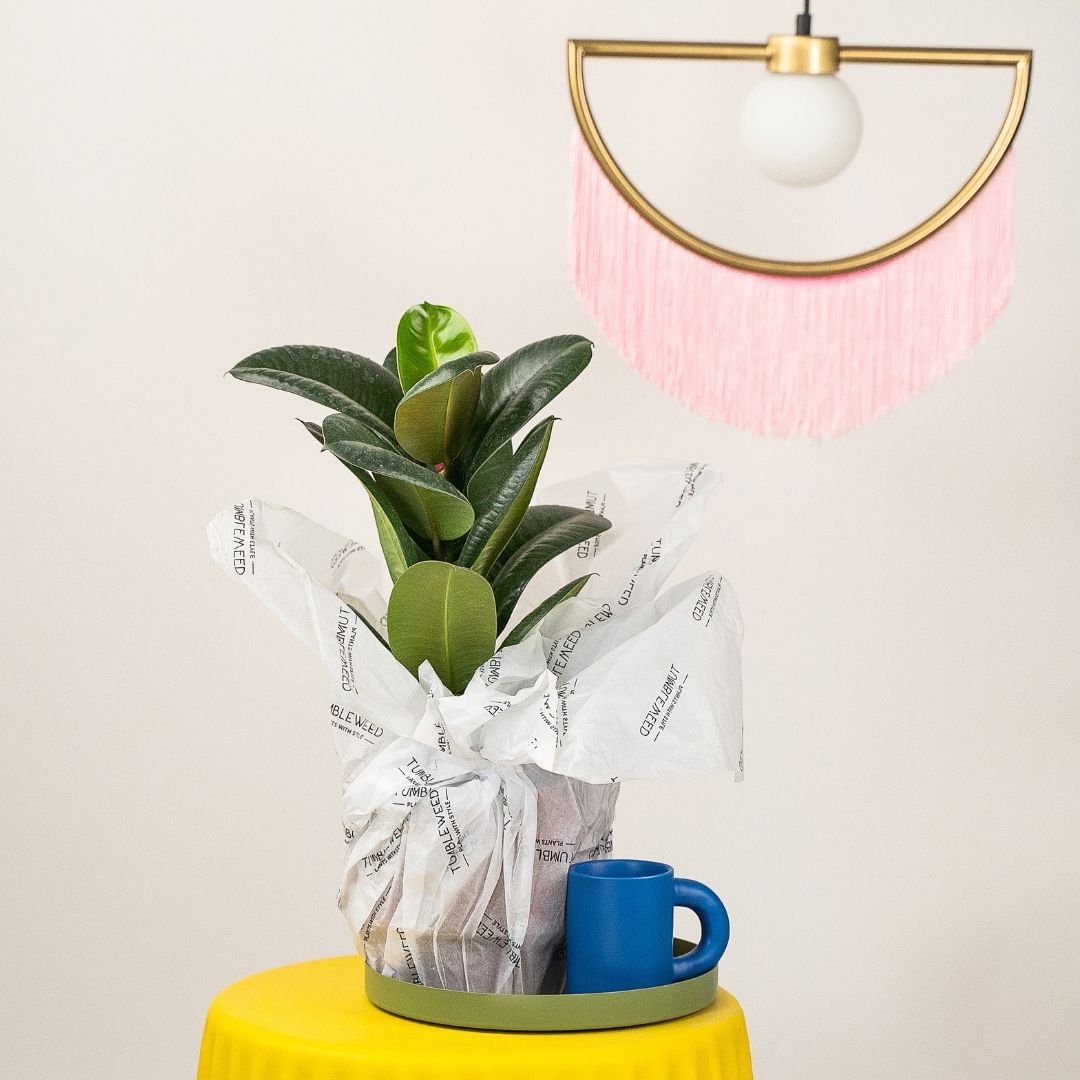
The rubber plant — Ficus elastica — is one of those rare houseplants that manages to be both striking and low-maintenance. With its thick, glossy, dark green leaves (or burgundy, or variegated, depending on the cultivar), it brings a bold, architectural presence to any room.

Better yet, it's a fantastic fit for Singapore's climate. Originally from the tropical forests of South and Southeast Asia, the rubber plant feels right at home in our warm, humid environment. If you give it the basics — decent light, sensible watering, and the occasional prune — it'll reward you with lush, steady growth for years.
Here's your complete guide to rubber plant care in Singapore.
How Much Light Does a Rubber Plant Need?
Rubber plants are adaptable when it comes to light, but they have a clear preference: bright, indirect light.
Light placement guide
- Ideal: Near a north- or east-facing window with plenty of ambient brightness. The plant will grow steadily and maintain its rich leaf colour.
- Good: A few metres back from a west- or south-facing window, or filtered through a sheer curtain. Some gentle direct morning sun is fine and even beneficial.
- Tolerable: Medium-low light conditions. The plant will survive but growth will slow noticeably, and new leaves may be smaller and further apart.
- Avoid: Prolonged direct afternoon sun, which can scorch the leaves. Also avoid very dark corners — while rubber plants tolerate lower light better than many ficuses, they'll become leggy and weak without adequate brightness.
Variegated rubber plants need more light
If you own a Ficus elastica 'Tineke' or 'Ruby' (the gorgeous cream and pink variegated varieties), be aware that they need more light than the standard dark green type. The variegated sections of the leaves contain less chlorophyll, so the plant needs brighter conditions to photosynthesise effectively. Without enough light, new growth may revert to plain green.
How to Water a Rubber Plant in Singapore

Rubber plants prefer a moderate, consistent watering routine — not too wet, not too dry.
Watering guidelines
- Let the top 3–5 cm of soil dry out between waterings. Stick your finger in the soil to check.
- Water thoroughly when it's time, allowing water to flow freely from the drainage holes.
- Empty the saucer afterwards. Rubber plants do not like sitting in standing water.
- Typical frequency in Singapore: Every 7–10 days in a well-lit spot, potentially every 10–14 days in lower light or air-conditioned rooms.
Seasonal adjustments
Singapore doesn't have dramatic seasons, but you may notice your rubber plant's water needs shift slightly:
- Warmer, sunnier months: The plant is more active and may need water closer to the 7-day mark.
- Northeast monsoon (November–February): Slightly cooler and cloudier. The plant may use water a little more slowly.
- Air-conditioned rooms: Lower humidity means the top layer of soil dries faster, but the deeper soil stays moist longer. Check deeper in the pot before watering.
Signs of watering problems
Overwatering:
- Yellowing lower leaves
- Soft, mushy leaf bases
- A musty smell from the soil
- Root rot (dark, mushy roots when you unpot)
Underwatering:
- Drooping, curling leaves
- Dry, crispy leaf edges
- Leaves losing their glossy sheen
- Soil pulling away from the pot edges
Best Soil Mix for Rubber Plants
Rubber plants need a potting mix that retains some moisture but drains well. They don't like to sit in soggy soil, but they also don't want to dry out completely the way succulents do.
Recommended mix
- 60% quality potting soil (peat or coco coir-based)
- 20% perlite for drainage and aeration
- 20% orchid bark or coarse coco chips for structure
This creates a mix that holds enough moisture for the plant's needs while allowing excess water to drain through quickly — essential for preventing root rot in Singapore's humid conditions.
Repotting
- Repot every 1–2 years, or when you see roots emerging from the drainage holes or circling the surface of the soil.
- Choose a new pot 2–5 cm larger in diameter than the current one.
- Best time to repot: Any time of year in Singapore, though the plant recovers fastest during its most active growth period (March–October).
- Don't fertilise for 4–6 weeks after repotting to let the roots settle.
How to Prune a Rubber Plant for Bushiness

Left to its own devices, a rubber plant will grow as a single tall stem — which can be dramatic but also leggy. If you'd prefer a bushy, fuller plant, strategic pruning is the answer.
Why prune?
When you cut the main growing tip of a rubber plant, the plant responds by activating dormant lateral buds below the cut. This results in branching — instead of one straight stem, you get two or more branches, creating a fuller, bushier shape.
How to prune step by step
- Choose where to cut. Look at your plant and decide how tall you want it. Identify a spot on the stem above a leaf node (the point where a leaf attaches to the stem).
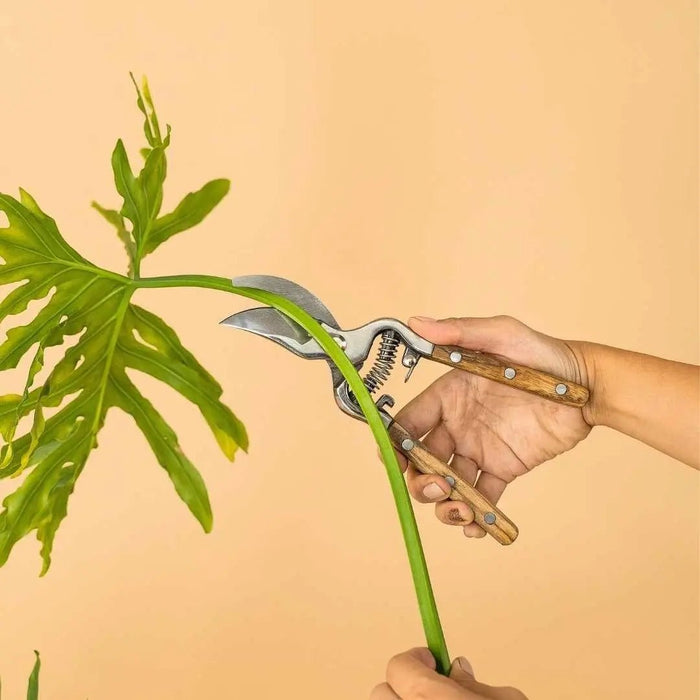
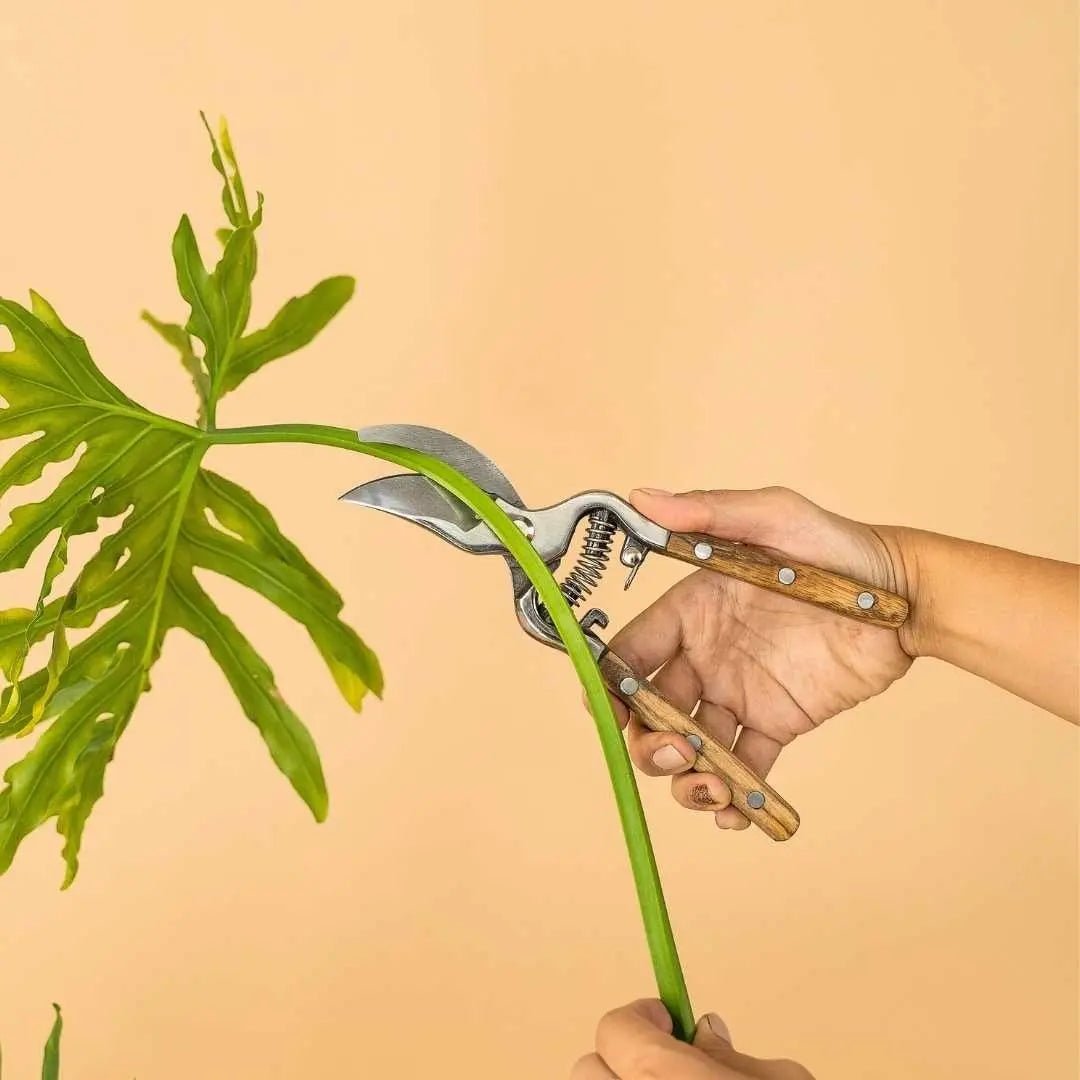
- Use clean, sharp tools. A pair of sharp secateurs or a razor blade, sterilised with rubbing alcohol. Rubber plants produce a sticky white latex when cut — it can irritate skin, so wear gloves if you're sensitive.
- Make a clean cut just above a leaf node, at a slight angle. The node is where the new branches will emerge.
- Deal with the latex. The plant will "bleed" milky sap. This is normal and harmless. You can dab the cut end with a damp cloth to help it stop. The sap also stains floors and furniture, so protect surfaces.
- Wait and watch. Within 2–6 weeks, you should see one or more new growth points emerging near the cut. In Singapore's warm conditions, this response is usually faster than in cooler climates.
Additional pruning tips
- Prune during the active growing season (March–October) for the fastest recovery and branching response.
- Don't throw away the top cutting! You can propagate it (see below).
- For a very bushy plant, you can prune multiple times as the new branches grow. Each cut will encourage further branching.
- Remove any dead, damaged, or yellowing leaves at any time. This keeps the plant tidy and directs energy to healthy growth.
How to Propagate a Rubber Plant
Rubber plants are straightforward to propagate from stem cuttings. It's a great way to multiply your collection or make use of a pruned top section.
Stem cutting propagation
- Take a cutting with 2–3 leaves and at least one node. Cut just below a leaf node with a sterile blade.
- Remove the lower leaf to expose the node that will be submerged.
- Let the cut end dry for an hour or two. This helps the latex seal and reduces the risk of rot.
- Root in water or soil:
- Water: Place the cutting in a jar of clean water with the node submerged. Change the water every 3–4 days. Roots should appear in 3–6 weeks.
- Soil: Dip the cut end in rooting hormone (optional but helpful) and plant in moist perlite or a light potting mix. Cover with a clear plastic bag to maintain humidity, and keep in bright indirect light.
- Pot up once roots are 5–8 cm long.
Air layering (for larger plants)
Air layering is an excellent method for propagating a large, mature rubber plant without cutting it down first.
- Choose a spot on the stem where you'd like roots to form.
- Make a shallow cut about one-third into the stem, roughly 2–3 cm long. Insert a small piece of toothpick to keep the wound open.
- Wrap the wound with a generous handful of damp sphagnum moss, then cover the moss with cling film and secure both ends with tape or string.
- Keep the moss moist by occasionally injecting water through the cling film with a syringe or opening it to spray.
- Wait 4–8 weeks until you see a healthy cluster of roots through the cling film.
- Cut below the new root ball and pot up the rooted section.
Air layering takes patience, but it produces a much larger, more established new plant than a small stem cutting.
Common Rubber Plant Problems and Solutions
Why is my rubber plant dropping leaves?
Leaf drop is the most common complaint, and it's usually triggered by environmental stress:
- Sudden change in conditions — moving the plant to a new spot, bringing it home from the nursery, or turning on/off the air conditioning. Rubber plants are sensitive to change and may drop a few leaves in protest. They'll usually stabilise within a few weeks.
- Overwatering — Check the soil. If it's consistently wet and the roots feel mushy, you're watering too much.
- Underwatering — Severe drought can also cause leaf drop.
- Cold draughts — Air conditioning vents blowing directly on the plant can cause stress. Move the plant away from direct airflow.
- Too little light — Chronic low light weakens the plant over time, leading to gradual leaf loss.
Why is my rubber plant leggy?
A leggy rubber plant — with long bare stems and leaves only at the top — is almost always a light issue. The plant is stretching toward insufficient light.
Solution:
- Move to a brighter location.
- Prune the leggy stems to encourage branching (see the pruning section above).
- Rotate the plant regularly so all sides receive even light.
Brown spots on rubber plant leaves
- Sunburn: Irregular brown, dry patches, usually on the side facing the window. Relocate or add a sheer curtain.
- Fungal infection: Brown spots with a yellow halo, sometimes soft and mushy. Remove affected leaves, improve air circulation, and reduce watering.
- Chemical burn: Brown leaf tips from over-fertilising or mineral buildup from tap water. Flush the soil and ease off fertiliser.
Pests
Rubber plants in Singapore are occasionally bothered by:
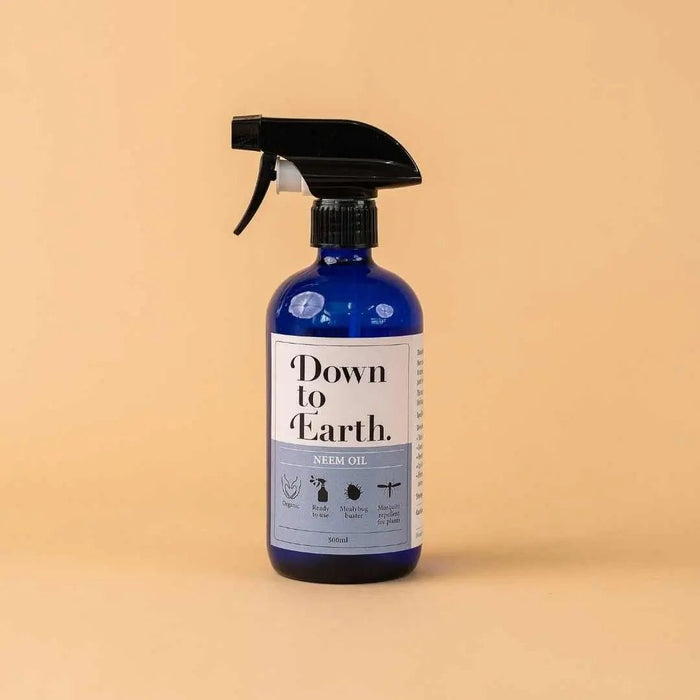
- Mealybugs: White, cottony clusters in leaf joints. Wipe with rubbing alcohol or treat with neem oil.
- Scale insects: Small brown bumps on stems and leaf undersides. Scrape off with a fingernail and treat with insecticidal soap.
- Spider mites: Fine webbing on undersides of leaves, usually in dry conditions (air-conditioned rooms). Wipe leaves with a damp cloth and increase humidity.
Inspect your plant regularly — catching pest infestations early makes them far easier to manage.
Fertilising Your Rubber Plant
Rubber plants are moderate feeders. During the active growing season, feed with a balanced liquid fertiliser (NPK 10-10-10 or similar) diluted to half strength, once a month.
Alternatively, scatter slow-release fertiliser pellets (like Osmocote) on the soil surface every 3–4 months.
Reduce or stop fertilising if the plant is in very low light, recovering from stress, or has just been repotted.
Humidity and Temperature for Rubber Plants in Singapore
Singapore's climate is essentially ideal for rubber plants:
- Temperature: 25–32°C — perfect. Rubber plants are comfortable anywhere above 15°C.
- Humidity: 60–80% — exactly what they like. No special humidity measures needed in most Singapore homes.
The only exception is heavily air-conditioned rooms, where humidity can drop below 50%. If your rubber plant lives in such a space, consider grouping it with other plants, using a pebble tray, or wiping its leaves with a damp cloth weekly to keep them hydrated and dust-free.
Quick Rubber Plant Care Summary
Grow a Stunning Rubber Plant at Home
The Ficus elastica is one of the most rewarding indoor plants you can grow in Singapore. It's tolerant, handsome, and responds beautifully to a little attention — especially pruning, which transforms a single-stemmed sapling into a bushy, architectural showpiece.
Whether you're after the classic dark green variety, the dramatic near-black Ficus elastica 'Burgundy', or the pastel-toned 'Tineke' and 'Ruby', there's a rubber plant to suit every taste and space.
Browse our Ficus collection at tumbleweedplants.com to find your perfect rubber plant — delivered right to your door across Singapore. Happy growing!
Quick summary
Key Takeaways
- How Much Light Does a Rubber Plant Need?
- How to Water a Rubber Plant in Singapore
- Best Soil Mix for Rubber Plants
- How to Prune a Rubber Plant for Bushiness
- How to Propagate a Rubber Plant
- Common Rubber Plant Problems and Solutions
Ready to bring some green into your home?
Browse 250+ hand-picked plants, curated for Singapore homes — delivered to your door.
Browse All Plants →