





















Fiddle Leaf Fig Care Guide Singapore: How to Grow Ficus Lyrata Indoors
Posted on April 09 2026
In this article
# Fiddle Leaf Fig Care Guide Singapore: How to Grow Ficus Lyrata Indoors | Tumbleweed Plants Singapore

The fiddle leaf fig (Ficus lyrata) is one of the most coveted indoor plants in the world — and one of the most challenging to keep happy. Its large, violin-shaped leaves and tall, sculptural form make it the ultimate statement plant for living rooms, offices, and Instagram feeds alike. But its reputation as a dramatic diva is well-earned: fiddle leaf figs can be picky about light, watering, and placement.
The good news for Singapore plant parents is that our warm, humid climate provides a natural advantage. Here is everything you need to know about keeping a fiddle leaf fig thriving in your Singapore home.
Light: The Most Critical Factor
Getting light right is the single most important thing for fiddle leaf fig success.
What They Need
Fiddle leaf figs need bright, consistent light — more than most indoor plants:
- Ideal: Bright indirect light for 6+ hours daily. Near (within 1 metre of) an east or south-facing window.
- Acceptable: A few hours of gentle, direct morning sun through an east-facing window.
- Risky: West-facing windows — the afternoon sun can be too intense and scorch leaves.
- Avoid: Low light, interior rooms without windows, and dim HDB corridors.
Signs of Light Problems
- Dropping lower leaves: Usually insufficient light. The plant sacrifices lower leaves it cannot sustain.
- Leaning dramatically: The plant stretches toward the nearest light source.
- Slow or no growth: Not enough light energy for new leaf production.
- Brown scorch marks: Too much direct sun.
The Rotation Rule
Fiddle leaf figs grow toward light and can become lopsided. Rotate the pot a quarter turn every 2 weeks for even growth.
Watering: The Second Critical Factor

After light, watering is where most fiddle leaf fig problems originate.
The Golden Rules
- Consistency is everything: Fiddle leaf figs hate erratic watering more than almost any other plant. Develop a routine and stick to it.
- Check before watering: Insert your finger 3-5cm into the soil. Water when the top layer is dry but the deeper soil is still slightly moist.
- Water thoroughly: When you water, soak the soil completely until water drains from the bottom.
- Never let it sit in water: Empty saucers promptly.
Schedule for Singapore
- Air-conditioned rooms: Every 7-10 days
- Non air-conditioned rooms: Every 5-7 days
- Rainy season: You may be able to stretch to every 10-14 days as ambient humidity increases
Common Watering Mistakes
- Overwatering: Leads to root rot, the number one fiddle leaf fig killer. Symptoms: brown spots starting from the leaf edges, yellow drooping leaves, mushy stem base.
- Underwatering: Causes leaf curling, crispy brown edges, and lower leaf drop.
- Inconsistency: Alternating between drought and flooding stresses the plant and causes leaf drop.
Humidity
Fiddle leaf figs are tropical plants that appreciate humidity:
- Singapore advantage: Our ambient 70-90% humidity is ideal
- Air-conditioned rooms: May drop to 40-50%. Mist leaves or use a humidifier.
- Leaf dust: Wipe leaves with a damp cloth monthly. This maintains the leaf's ability to photosynthesise and absorb humidity.
Soil and Potting
Soil Mix
Well-draining soil that retains some moisture:
- 60% quality potting mix
- 20% perlite
- 20% bark chips
Pot Selection
- Always use pots with drainage holes
- Choose a pot only 5-7cm larger in diameter than the root ball
- Heavy pots help stabilise tall fiddle leaf figs and prevent toppling
- Avoid decorative pots without drainage — or use the pot-in-pot method
Repotting
- Every 1-2 years for young, growing plants
- When roots circle the bottom or grow from drainage holes
- Best done during a period of active growth
- After repotting, do not fertilise for 4-6 weeks to let roots recover
Fertilising
- Type: Balanced liquid fertiliser (10-10-10) or a fiddle leaf fig-specific formula
- Frequency: Every 2-4 weeks during active growth
- Strength: Half the recommended dose to avoid salt buildup
- Skip: During any period when the plant is stressed or not producing new growth
Pruning and Shaping
Encouraging Branching
A single-stemmed fiddle leaf fig can be encouraged to branch:
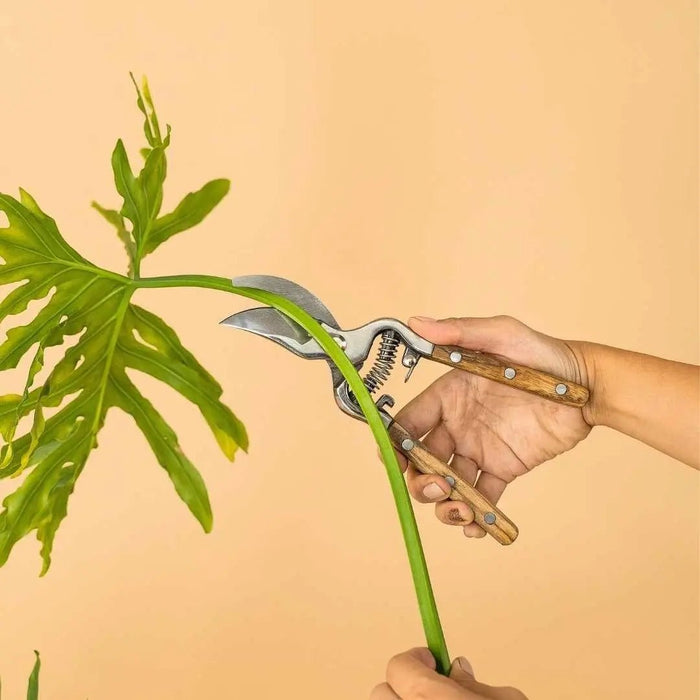
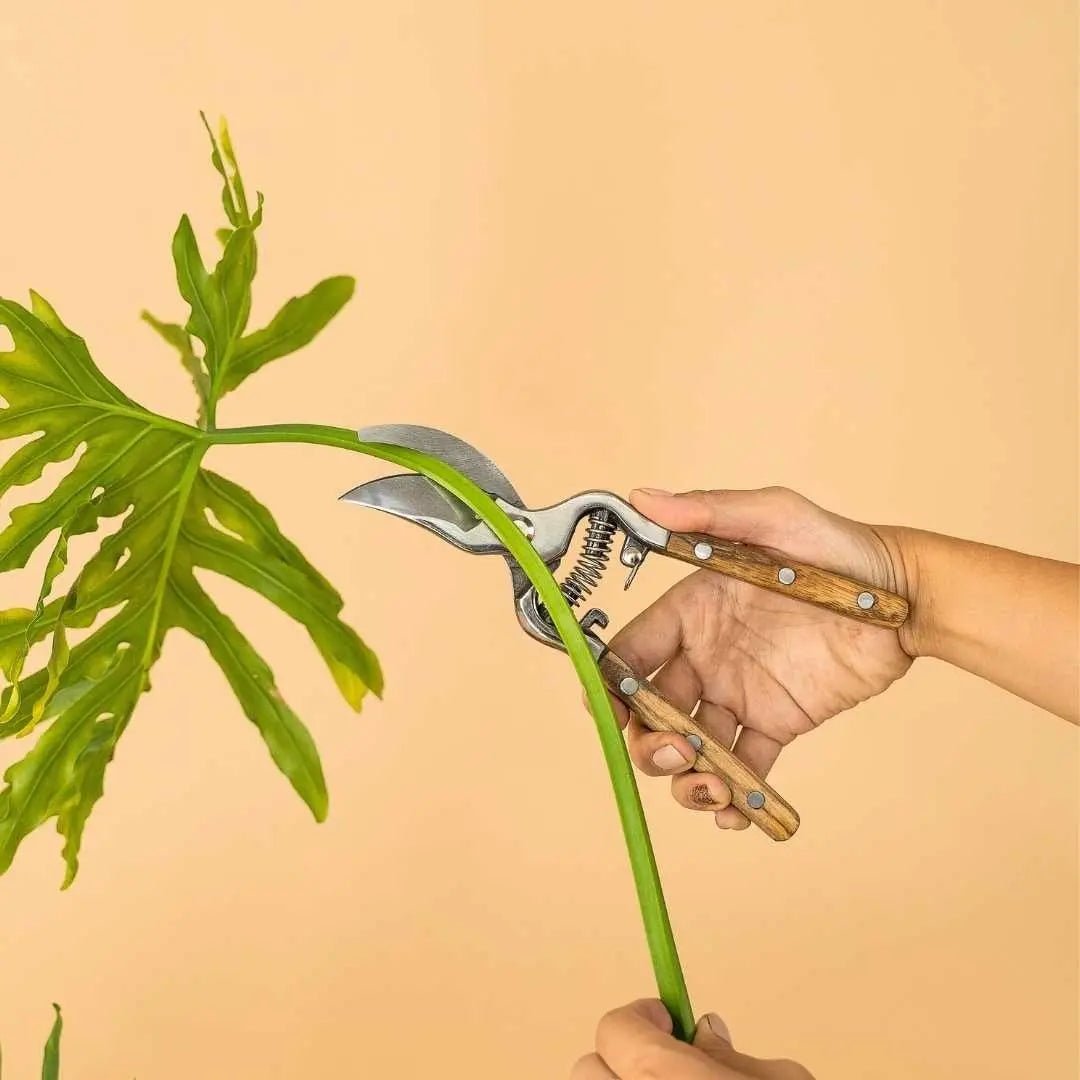
- Using clean, sharp secateurs, cut the main stem at your desired branching point
- The cut should be made just above a leaf node
- New branches typically emerge just below the cut within a few weeks
- Multiple branches may form, creating a bushier, tree-like shape
Notching
A less drastic alternative to cutting:
- Make a small notch (about 1/3 through the stem) just above a node where you want a branch
- This disrupts the flow of growth hormone and can stimulate lateral bud development
- Not always successful, but avoids removing the growing tip
General Maintenance
- Remove any brown or damaged leaves by cutting at the stem
- Clean leaves monthly to remove dust
- Stake or support tall, top-heavy plants
Common Problems in Singapore
Brown Spots on Leaves
The most common complaint. Causes differ by appearance:
- Brown spots from the edge inward: Usually underwatering or low humidity
- Brown spots starting anywhere with yellowing: Overwatering or root rot
- Tan/light brown with dark edges: Bacterial infection. Remove affected leaves, reduce watering, improve air circulation.
- Tiny red-brown dots: Edema — the plant absorbing water faster than it can transpire. Usually harmless.
Leaf Drop
Some leaf drop in response to change is normal. Fiddle leaf figs are notorious for dropping leaves after being moved. Possible causes:
- Relocation: Give the plant 2-4 weeks to acclimate to a new position
- Draft or temperature change: Keep away from direct aircon vents
- Watering change: Maintain consistency
- Light change: Sudden reduction in light triggers leaf drop
Pests
- Scale: Brown bumps on stems and leaves. Treat with neem oil.
- Mealybugs: White cottony clusters. Treat with rubbing alcohol.
- Spider mites: Fine webbing on leaves. Increase humidity and treat with insecticidal soap.
The Fiddle Leaf Fig Personality
Be prepared for your fiddle leaf fig to react to changes:
- New home: May drop a few leaves in the first month. This is normal. Resist the urge to overcompensate with more water or fertiliser.
- Seasonal shifts: Growth may slow during rainier, cloudier months and accelerate during brighter periods.
- After repotting: May pause growth for a few weeks as it adjusts. Do not panic.
The key is patience and consistency. Once a fiddle leaf fig is settled in a spot it likes, it can grow rapidly and magnificently — producing massive, glossy leaves that make it the centrepiece of any room.
Placement in Singapore Homes
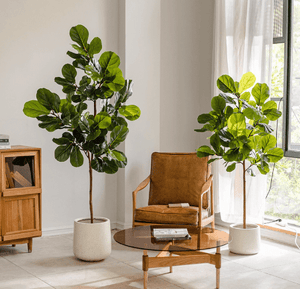
- Living room: Near a bright window, ideally east-facing. Makes a stunning floor plant.
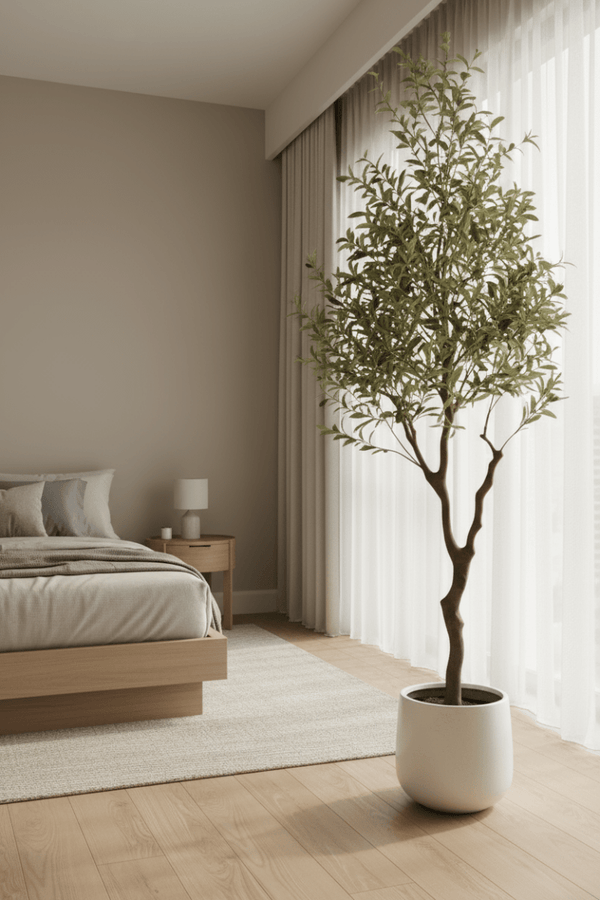
- Bedroom: Works if the room has a bright window. The plant adds a calming, natural presence.
- Office: Needs a window-adjacent spot. Not suited for interior cubicles.
- Avoid: Bathrooms (usually too dark), kitchens (temperature fluctuations from cooking), hallways (too dim).
Browse statement plants at Tumbleweed Plants with delivery across Singapore.
Quick summary
Key Takeaways
- Light: The Most Critical Factor
- Watering: The Second Critical Factor
- Humidity
- Soil and Potting
- Fertilising
- Pruning and Shaping
Ready to bring some green into your home?
Browse 250+ hand-picked plants, curated for Singapore homes — delivered to your door.
Browse All Plants →