





















Fiddle Leaf Fig Care Guide for Singapore
Posted on April 09 2026
In this article

The Fiddle Leaf Fig — Ficus lyrata — is the plant that launched a thousand Instagram accounts. Its large, violin-shaped leaves and tall, sculptural form make it the single most popular statement plant in interior design. It has appeared in more home decor magazines, hotel lobbies, and Pinterest boards than any other houseplant of the last decade.
But the Fiddle Leaf Fig has a reputation for being difficult. Brown spots, dropping leaves, and general pickiness have earned it the nickname "the plant that tests marriages." In Singapore, though, our warm, humid climate gives us a natural advantage. The challenges that torment growers in dry, cold climates are less severe here — though the Fiddle Leaf Fig still demands more attention than a Pothos or Snake Plant.
Light
Light is the most important factor for Fiddle Leaf Fig success. Get this right and most other care becomes easier.
Ideal: Bright indirect light for at least six hours daily. Within one to two metres of a large east-facing or north-facing window. The plant should cast a soft shadow — that level of brightness.
Acceptable: A few hours of direct morning sun (east-facing window). Many Fiddle Leaf Figs actually thrive with some direct sun in Singapore, as long as it is morning light, not the intense afternoon west-facing exposure.
Problematic: Low light. Fiddle Leaf Figs do not tolerate shade as well as Monstera or Philodendron. In low light, growth stalls, new leaves are small and pale, and the plant becomes vulnerable to overwatering because the soil dries slower.
Avoid: Prolonged direct afternoon sun, especially through west-facing windows. This scorches the large leaves.
Rotate weekly. Turn the plant a quarter turn every week to prevent one-sided growth. Fiddle Leaf Figs lean aggressively toward their light source.
Watering

The second most critical factor — and the most common source of problems.
The rule: Water when the top five centimetres of soil feel dry. In Singapore, this typically means every seven to ten days in bright conditions.
Technique:
- Water thoroughly until liquid drains from the bottom
- Empty the saucer within 30 minutes
- Use room-temperature water
- Water the soil, not the leaves
Consistency is key. Fiddle Leaf Figs dislike dramatic swings between wet and dry. Try to maintain a regular schedule rather than alternating between flooding and drought.
Signs of overwatering:
- Dark brown spots, especially on lower leaves (starting at edges or centre)
- Yellowing lower leaves
- Soft, mushy leaf base
- Root rot (brown, slimy roots)
Signs of underwatering:
- Light brown, dry, crispy spots (usually starting at edges)
- Drooping leaves that feel firm (not soft)
- Curling leaves
Soil
Well-draining but moisture-retentive:
- 50% potting soil
- 25% perlite
- 15% orchid bark
- 10% charcoal
The soil should drain freely but hold enough moisture that it does not dry out within two days.
Humidity

Fiddle Leaf Figs prefer 50-65% humidity — easily achieved in most Singapore homes, even with AC. Unlike Calatheas, they do not demand exceptionally high humidity.
If your home is heavily air-conditioned (below 50% humidity):
- Group with other plants
- Use a pebble tray
- Occasional misting (morning only)
Fertilising
Feed during active growth with balanced liquid fertiliser at half strength every two to four weeks. A formula slightly higher in nitrogen (e.g., 3-1-2 ratio) promotes the lush foliage that makes this plant spectacular.
Stop fertilising if the plant shows stress or after repotting.
The Brown Spot Diagnostic

Brown spots are the number one Fiddle Leaf Fig complaint. Different types of brown spots have different causes:
Dark Brown Spots Starting at Edges
Cause: Root rot from overwatering.
Pattern: Spots start at leaf edges or base, spread inward. Spots are dark brown to black, may look wet or mushy.
Fix: Reduce watering. Check roots — trim mushy ones. Repot in fresh, well-draining soil if rot is advanced.
Light Brown, Dry, Crispy Edges
Cause: Underwatering or low humidity.
Pattern: Edges become dry, papery, and light tan to brown. Leaf may curl.
Fix: Water more consistently. Boost humidity if the room is heavily air-conditioned.
Tan/Brown Spots in the Middle of Leaves
Cause: Sunburn.
Pattern: Bleached or light brown patches on the parts of the leaf closest to the sun. Often on upper leaves.
Fix: Move away from direct sun or add sheer curtains.
Small Brown Dots with Yellow Halos
Cause: Bacterial infection.
Pattern: Small, irregular brown spots surrounded by yellow. Can appear anywhere on the leaf.
Fix: Remove severely affected leaves. Improve air circulation. Avoid getting water on foliage. In severe cases, treat with a bactericidal spray.
Red-Brown Spots on New Leaves
Cause: Oedema — cell damage from irregular watering.
Pattern: Tiny reddish-brown spots on young, developing leaves.
Fix: Improve watering consistency. Not usually harmful — cosmetic only.
Pruning and Shaping
Fiddle Leaf Figs grow as either a bush (multiple stems from the base) or a tree (single trunk with a canopy at the top). You can shape yours:
To encourage a tree form:
- Allow the main stem to reach your desired trunk height
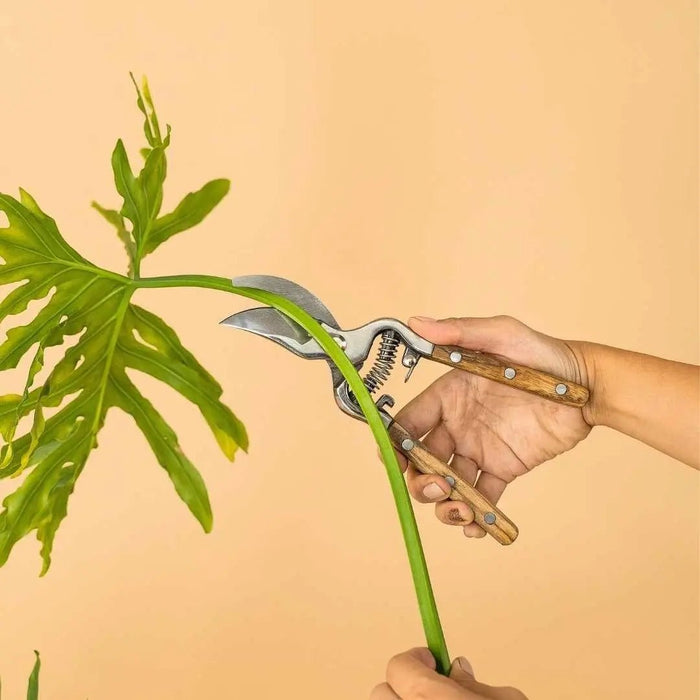
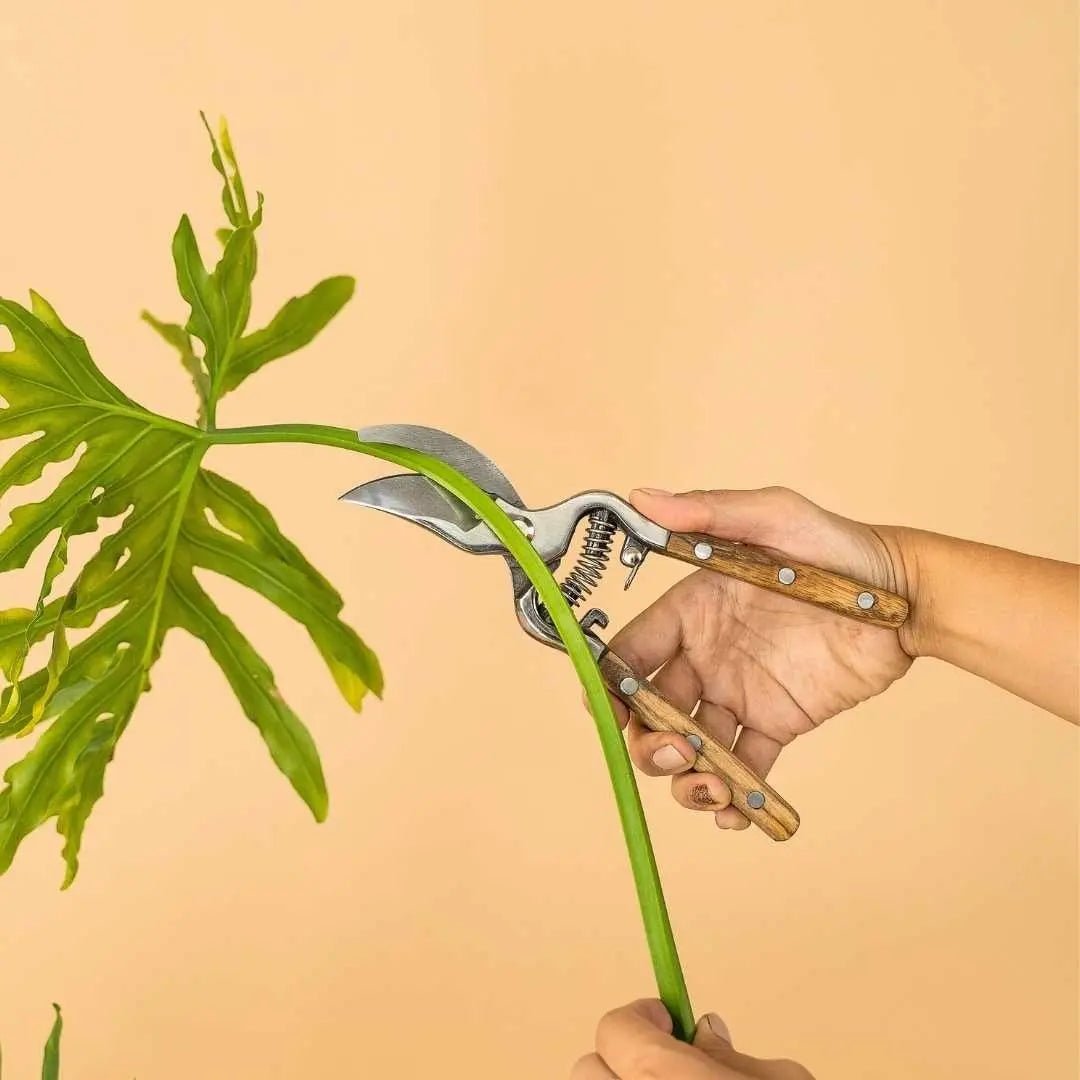
- Pinch or cut the growing tip (apical meristem) at the top
- The plant will branch below the cut, creating a canopy
- Remove any lower leaves from the trunk section for a clean tree silhouette
To encourage bushiness:
- Cut the stem at the desired height
- The plant produces multiple branches below the cut
- Repeat on branches for a denser crown
Notching: A technique to encourage branching without cutting the top. Make a small cut (1-2mm deep) above a node on the trunk. This disrupts the hormone flow that suppresses branching and can trigger a new branch at that point. Success rate is moderate — not guaranteed but worth trying.
Propagation
Fiddle Leaf Figs propagate through stem cuttings, though they are slower to root than many aroids.
- Cut a stem section with two to three leaves and at least one node
- Remove the lowest leaf
- Allow the cut to dry for one to two hours (the milky sap needs to stop)
- Place in water with the node submerged, or in moist soil/sphagnum moss
- Keep in bright indirect light
- Roots develop in four to eight weeks (slower than Pothos or Monstera)
- Transfer to soil when roots reach 5-8cm
Air layering is the preferred method for propagating mature specimens — it produces a larger plant faster than stem cuttings.
Common Problems
Leaf Drop
The most dramatic Fiddle Leaf Fig issue. Common causes:
- Relocation stress: Moving the plant triggers leaf drop. Let it acclimatise for two to four weeks.
- Overwatering: Soggy soil causes lower leaves to drop.
- Underwatering: Prolonged drought causes leaf shedding.
- Cold drafts: AC vents blowing directly on the plant.
- Low light: The plant sheds lower leaves it cannot support.
Leaning
Fiddle Leaf Figs lean toward their light source. Rotate weekly. For severe leaning, stake the trunk with a bamboo pole.
Small New Leaves
Insufficient light or nutrients. Move to a brighter spot and resume fertilising.
Pests
- Spider mites: Fine webbing on leaf undersides. Common in dry, air-conditioned rooms. Treat with neem oil.
- Mealybugs: White cottony masses. Treat with isopropyl alcohol.
- Scale: Brown bumps on stems. Scrape off and treat with horticultural oil.
Styling
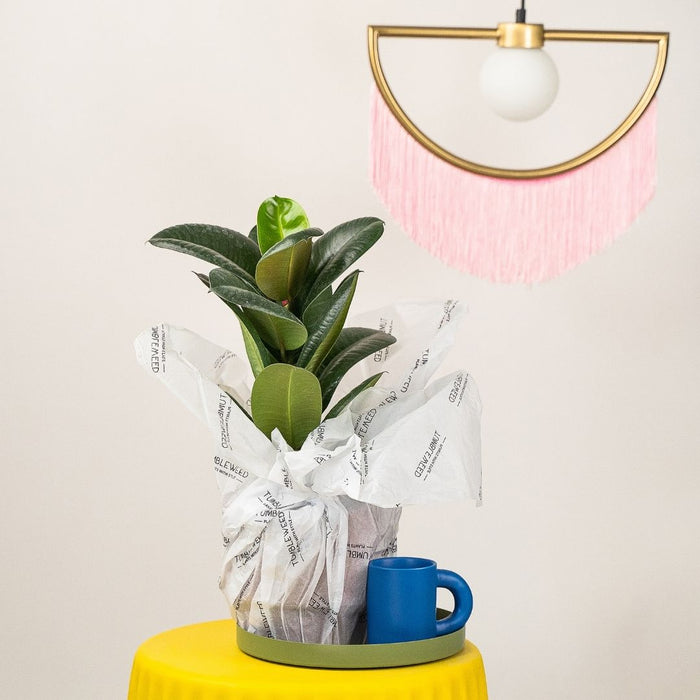
The Fiddle Leaf Fig is a statement piece — treat it as such:
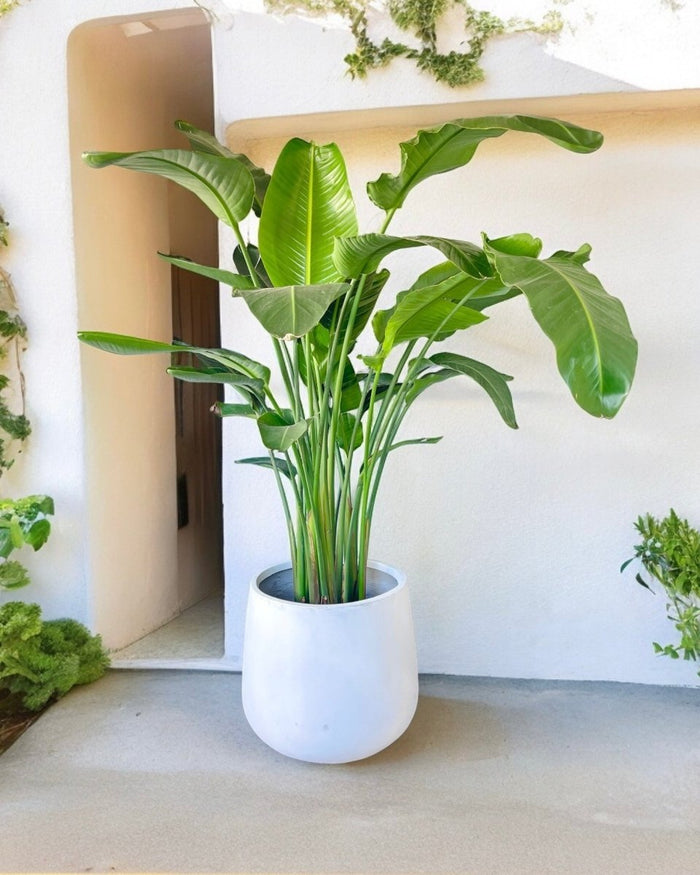
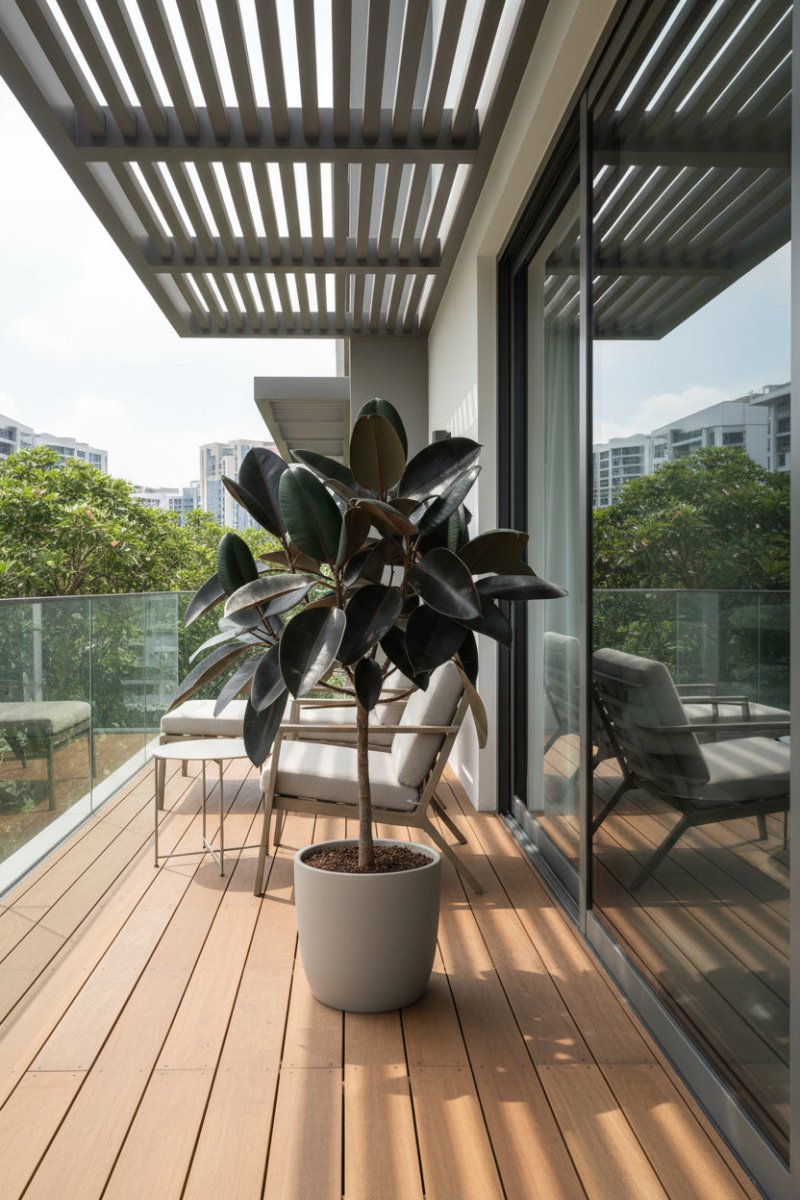
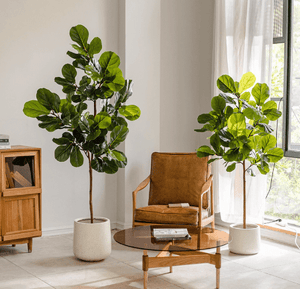
- Floor plant in a corner: A 1.5m tree-form Fiddle Leaf in a minimalist pot anchors any room.
- Paired: Two matching Fiddle Leaf Figs flanking a doorway or window create a formal, balanced entrance.
- Woven basket pot cover: The classic Instagram styling — a large woven basket adds warmth to the architectural plant.
- Near a mirror: Place beside a floor mirror to visually double the plant and reflect light back to it.
Shop Fiddle Leaf Fig
Browse our Ficus collection for Fiddle Leaf Figs and other statement Ficus varieties. We deliver healthy, well-established plants across Singapore.
The Fiddle Leaf Fig demands more from you than a ZZ Plant — but it gives back more too. Those extraordinary violin-shaped leaves, the tree-like stature, the undeniable design impact. Meet its needs for light, consistent water, and a stable spot, and you will have a plant that transforms any room from ordinary to magazine-worthy.
Quick summary
Key Takeaways
- Light
- Watering
- Soil
- Humidity
- Fertilising
- The Brown Spot Diagnostic
Ready to bring some green into your home?
Browse 250+ hand-picked plants, curated for Singapore homes — delivered to your door.
Browse All Plants →