















Understanding Potting Mix: What's Actually in Your Plant's Soil (And Why It Matters)
Posted on April 16 2026
In this article
Thumbnail image: 1200×628px — flat-lay of potting mix ingredients arranged in distinct piles (perlite, coco coir, orchid bark, potting mix) on a wooden surface with labelled small scoops or bowls. Clean, educational, bright natural light.

---
Most plant owners buy a bag of potting mix, use it for everything, and wonder why some plants struggle. The issue isn't always watering or light — it's often the soil. Different plants evolved in radically different soil environments, and a one-size-fits-all mix doesn't serve them equally.
Understanding what's in potting mixes — and what each ingredient does — lets you choose the right mix for your plants, or amend a standard mix to serve them better. This guide covers the major ingredients and the recipes that work.
In Singapore, soil choice matters even more than in temperate climates. Our year-round warmth and high humidity mean plants grow actively all 12 months, consuming soil structure faster than in seasonal climates. HDB and condo growers also work within the constraints of balconies and indoor spaces where drainage is critical — a waterlogged pot on a tiled floor is a real problem. Getting the mix right from the start saves you from the most common plant failure here: root rot in poorly draining soil.
---
First: Potting Mix vs. Garden Soil vs. Potting Soil
Garden soil (topsoil): Dug from the ground. Dense, heavy, often full of microorganisms and organic matter. Should never be used in containers — it compacts severely in pots, eliminating air pockets that roots need, and often harbors pests and pathogens. In Singapore's heat and humidity, garden soil in pots deteriorates and compacts even faster than in cooler climates.
Potting soil: A marketing term, often interchangeable with potting mix. May contain soil or may be entirely soilless. The label matters more than the term.
Potting mix: A blended substrate designed for container growing. The best potting mixes are entirely soilless — made from peat, coco coir, perlite, bark, and compost rather than actual mineral soil. Soilless mixes are lighter, better-draining, and more sterile than soil-containing products. For Singapore growers, a good quality potting mix amended with extra perlite is almost always the right starting point.
---
The Key Ingredients and What Each Does

Peat Moss
Properties: Acidic, highly moisture-retentive, slow to decompose, lightweight
Found in: Most standard potting mixes (often 30–60% of the blend)
Peat moss is the backbone of most commercial potting mixes. It holds moisture well, is relatively light, and provides good structure for roots. The downsides: it's acidic (pH 3.5–4.5), depletes slowly but does degrade over time (becoming hydrophobic and dense in old containers), and has sustainability concerns (peat bogs take thousands of years to form).
Good for: Most tropical houseplants, moisture-loving plants
Coco Coir
Properties: Neutral pH, moisture-retentive but with better drainage than peat, sustainable byproduct of coconut processing
Found in: Increasingly common in modern potting mixes, often as a peat replacement
Coco coir is derived from coconut husks — and Southeast Asia, including Singapore, is one of the world's largest producers. It holds moisture similarly to peat but drains slightly better and maintains structure longer without compacting. Neutral pH makes it more versatile than peat for pH-sensitive plants.
Good for: General tropical plants, plants that want moisture retention with good drainage. Particularly good value in Singapore given local availability.
Perlite
Properties: Volcanic glass, completely inert, improves drainage and aeration, holds no nutrients, very light
Found in: Most quality potting mixes; sold separately for amending
The white pellets in potting mix. Perlite is expanded volcanic glass that creates air pockets in the soil, improving drainage and preventing compaction. It holds no water itself but prevents the surrounding media from becoming waterlogged.
Adding perlite to a standard mix is the single most effective way to improve drainage. In Singapore, where overwatering (or simply heavy rainfall on balcony plants) is a common problem, bumping up the perlite ratio is almost always worthwhile. A mix of 70% potting mix + 30% perlite works well for most tropical houseplants.
Good for: Everything — especially important for plants prone to overwatering. Critical for balcony container plants in Singapore's rainy season.
Vermiculite
Properties: Expanded mica mineral, holds moisture and nutrients, improves aeration but less drainage than perlite
Found in: Seed-starting mixes, some potting mixes
Vermiculite is sometimes confused with perlite but behaves differently. It retains more water (good for moisture-loving plants and seed germination) but doesn't improve drainage as effectively. Better for rooting cuttings and seed starting than for mature container plants that need good drainage.
Good for: Seed starting, rooting cuttings, moisture-loving plants
Orchid Bark / Wood Chips
Properties: Very coarse, excellent drainage and aeration, slow-decomposing, no nutrient value
Found in: Orchid mixes, chunky tropical mixes, aroid mixes
Orchid bark is fir or pine bark processed to specific particle sizes. It creates a very chunky, fast-draining substrate that holds almost no water itself. Essential for orchids (which need their roots to dry between waterings) and popular in "chunky" aroid mixes for monsteras, philodendrons, and anthuriums.
Singapore note: Orchids are a deeply familiar plant here — Singapore's national flower is an orchid hybrid — and orchid bark is readily available. Chunky aroid mixes using orchid bark are excellent for the monstera, philodendron, and anthurium collections common in Singapore homes.
Good for: Orchids, aroids, plants that want fast drainage and airflow around roots
Worm Castings / Compost
Properties: Nutrient-rich, slow-release fertilizer, improves soil biology, holds some moisture
Found in: Premium potting mixes, organic blends
Worm castings are the digested output of earthworms — essentially concentrated, biologically active compost. Small additions (10–20% of the mix) provide slow-release nutrients and introduce beneficial microorganisms. Doesn't dramatically affect drainage or structure.
Good for: Adding to mixes for plants that are heavy feeders, or as a slow-release fertilizer supplement. In Singapore's year-round growing season, plants consume nutrients continuously — worm castings help maintain fertility between fertilizer applications.
Sand (Horticultural/Coarse)
Properties: Heavy, improves drainage, inert
Note: Use coarse horticultural sand, NOT fine beach sand or play sand
Coarse sand improves drainage but adds significant weight. Often used in cactus and succulent mixes. The main downside: it's heavy, making large pots harder to move. Perlite achieves similar drainage improvement with a fraction of the weight, which is why perlite has largely replaced sand in modern mixes.
Good for: Cactus and succulent mixes when combined with other components
---
Potting Mix Recipes for Common Plant Types
Standard Tropical Mix (Pothos, Philodendron, Peace Lily, Dracaena)
- 60% quality potting mix (peat or coco coir based)
- 30% perlite
- 10% worm castings (optional, for nutrients)
Singapore note: With our year-round warmth, these plants grow constantly and appreciate the extra nutrients from worm castings. Increase perlite to 35–40% for balcony plants exposed to tropical rain.
Chunky Aroid Mix (Monstera, Pothos, Syngonium, Anthurium)
- 40% potting mix
- 30% perlite
- 20% orchid bark
- 10% worm castings
This mix drains very quickly and provides excellent airflow around roots — ideal for plants that are prone to root rot or that appreciate drying out slightly between waterings. Particularly valuable in Singapore where ambient warmth and occasional overwatering can combine to cause root rot in compacted mixes.
Cactus and Succulent Mix
- 50% potting mix (or use a commercial cactus mix as the base)
- 40% perlite or coarse sand
- 10% fine gravel or grit (optional)
The goal: a mix that dries out quickly and completely. Singapore growers: cacti and succulents can struggle in our humidity, particularly on indoor windowsills. An extremely fast-draining mix is essential — err toward 50% perlite for indoor Singapore conditions.
Orchid Mix
- 80% medium orchid bark
- 10% perlite
- 10% sphagnum moss (optional, for moisture retention)
Orchids are epiphytes — they grow on trees in the wild with their roots exposed to air. They need a bark-based mix, not soil. Singapore's warm, humid conditions are ideal for many orchid species — with the right mix, dendrobiums and phalaenopsis can thrive on a shaded balcony.
Moisture-Loving Mix (Ferns, Calatheas)
- 50% potting mix
- 20% coco coir
- 20% perlite
- 10% worm castings
More moisture-retentive than the standard mix, but still with enough perlite to prevent true waterlogging. Calatheas and ferns love Singapore's natural humidity — this mix lets them access moisture while maintaining good aeration.
---
Signs Your Mix Needs Changing

Soil repels water (hydrophobic): Old peat-based mixes degrade and become water-repellent. Water runs off the surface or pools without absorbing. Fix: soak the pot in water for 30 minutes, or repot with fresh mix.
Mix stays wet for weeks: Too much moisture retention for the plant's needs. Amend with additional perlite, or repot with a faster-draining mix. In Singapore, a mix that stays wet for more than 5–7 days is a root rot risk.
White crust on soil surface: Mineral deposits from fertilizer or hard water. Flush thoroughly or remove the top inch of soil and replace.
Plant has been in the same mix for 2+ years (Singapore): In our tropical climate, plants grow more actively and roots consume soil structure faster than in temperate climates. Singapore growers should consider refreshing mix every 18–24 months rather than the 3-year guideline for cooler climates.
Fungus gnats appearing: Often a sign of organically rich, moist soil — common in Singapore's humidity. Adding perlite to the top layer of soil and allowing it to dry more between waterings usually resolves this.
---
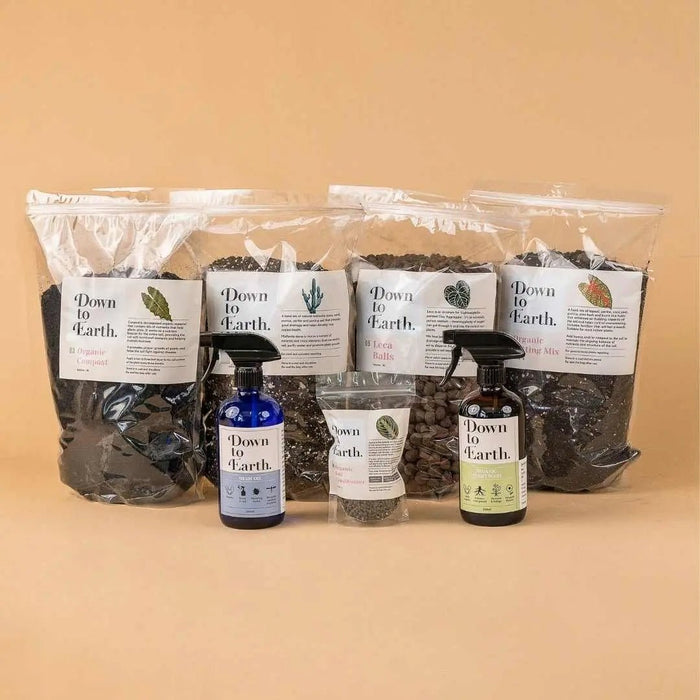
Getting the soil right is the foundation of good plant care. Browse our potting supplies collection — we carry quality perlite, coco coir, orchid bark, and pre-mixed formulations designed for specific plant types. Not sure which plants to start with? See our full plant collection with same-day delivery available across Singapore.
---
Quick summary
Key Takeaways
- First: Potting Mix vs. Garden Soil vs. Potting Soil
- The Key Ingredients and What Each Does
- Potting Mix Recipes for Common Plant Types
- Signs Your Mix Needs Changing
Ready to bring some green into your home?
Browse 250+ hand-picked plants, curated for Singapore homes — delivered to your door.
Browse All Plants →