
















Begonia Care Guide: Colourful Foliage Plants for Every Singapore Home
Posted on April 08 2026
In this article
Few plant groups offer the sheer diversity of colour, texture, and pattern that begonias do. From the metallic-spotted Tiger Paws to the chocolate-and-mint swirls of Mint Chocolate Chip, begonias are a collector's dream — and thankfully, they're well-suited to Singapore's tropical conditions. Whether you're in an HDB flat with decent indirect light or a bright condo with generous natural light, there's a begonia for your space.

Quick Facts
Why Begonias Thrive in Singapore

Begonias are tropical plants, and Singapore's warmth and humidity suit them well. Our year-round temperatures of 25–32°C are within the comfort zone of most begonia varieties. The main adjustment for Singapore growers is managing the interplay between our high ambient humidity and air-conditioning — begonias like humidity, but not the kind that stays static on their leaves without air movement.
Begonias are also remarkably adaptable in terms of light tolerance, making them one of the more versatile foliage plants for HDB and condo interiors.
Light Requirements
Begonias thrive in bright indirect light. They don't want harsh direct sun (which scorches their decorative leaves) but they do need a good level of ambient brightness to maintain their vibrant colours and patterns.
In Singapore homes:
- East-facing windows — ideal; warm morning light is perfect
- North-facing rooms with bright ambient light — works well
- Rooms with reflected light (e.g., near white walls or glass panels) — often sufficient
- Avoid south or west-facing spots with direct afternoon sun — too intense for most begonias
In lower-light conditions, begonias will survive but their colouring tends to become less vivid. If you notice your begonia's leaves becoming predominantly green and losing their distinctive patterns, more light is usually the answer.
Watering: The Middle Path

Begonias have a specific watering rhythm that differs from both succulents and tropical aroids. They want to partially dry out between waterings — but not completely.
The rule: let the top 2–3cm of soil dry out, then water thoroughly. In Singapore's heat, for indoor plants in air-conditioned rooms, this typically means watering every 5–8 days. For plants in warmer spots or on balconies, more frequent watering may be needed.
Critical watering rules for begonias:
- Never let the pot sit in water — begonias are susceptible to root rot in soggy conditions
- Water at the base, not from above — wet leaves invite fungal issues, particularly in Singapore's humidity
- Do not mist the foliage — this is one of the most common mistakes with begonias. Leaf spot and powdery mildew are encouraged by moisture sitting on leaves
Humidity: 50–70% — More Forgiving Than You'd Think
Unlike maidenhair ferns or some aroids, begonias are moderately humidity-tolerant and don't require extremely high humidity to thrive. The 50–70% range is comfortable, which means Singapore's indoor environments with moderate air-conditioning are generally adequate.
If you're running heavy air-conditioning (24–25°C or lower for extended periods), group your begonias together or place a pebble tray nearby to maintain local humidity. Avoid placing them directly under aircon vents where cold, dry air blows directly onto the foliage.
Importantly: high humidity with poor air circulation can cause fungal issues. If you're in a very humid spot (like a bathroom), ensure there's some gentle airflow.
Soil: Light and Well-Draining
Begonias have relatively fine, fibrous root systems and dislike heavy, compacted soil. Use a light, well-draining mix:
- 50% quality potting mix
- 30% perlite
- 20% coco coir
Avoid heavy garden soil. The mix should feel airy and free-draining — if you squeeze a handful and water pools, it's too dense.
Repot every 12–18 months or when roots emerge from drainage holes. Don't over-pot begonias (using a container much larger than the root ball) — they prefer a snug fit and are more prone to root rot in oversized pots with too much moisture-holding soil.
Rhizomatous vs Rex-Type Begonias
Rhizomatous begonias grow from a fleshy rhizome (a horizontal stem at or just below the soil surface). They're generally the most forgiving in terms of watering and humidity. Tiger Paws and Mint Chocolate Chip are rhizomatous types — excellent for beginners.
Rex begonias are famous for their spectacular, highly patterned leaves in metallic silvers, purples, reds, and greens. They're slightly more demanding — more sensitive to overwatering and require more consistent indirect light to maintain their vivid colouring.
Both types do well in Singapore, but rhizomatous varieties are more forgiving for first-time begonia growers.
Popular Varieties in Singapore

Tiger Paws (Begonia boweri 'Tiger Paws') — Compact, with small leaves patterned in deep brown and bright green resembling a tiger's paw markings. Hardy rhizomatous type. Excellent for shelves and windowsills.
Mint Chocolate Chip — Rhizomatous begonia with rich chocolate-brown leaves featuring bright green spotting. The contrast is striking. One of the easiest begonias to grow.
Regal Minuet — Rex-type with large, dramatic leaves in deep burgundy and silver. More of a showpiece plant — a little more demanding but spectacularly beautiful when thriving.
Feeding
Feed monthly with a balanced liquid fertiliser (20-20-20 NPK) diluted to half strength. In Singapore's year-round tropical climate, begonias are always in growth mode, so regular feeding supports consistent leaf production.
For rex begonias, a fertiliser with slightly higher potassium (the third number) encourages the vibrant colouring in the leaves.
Flush the soil with plain water every 2–3 months to prevent fertiliser salt accumulation.
Propagation
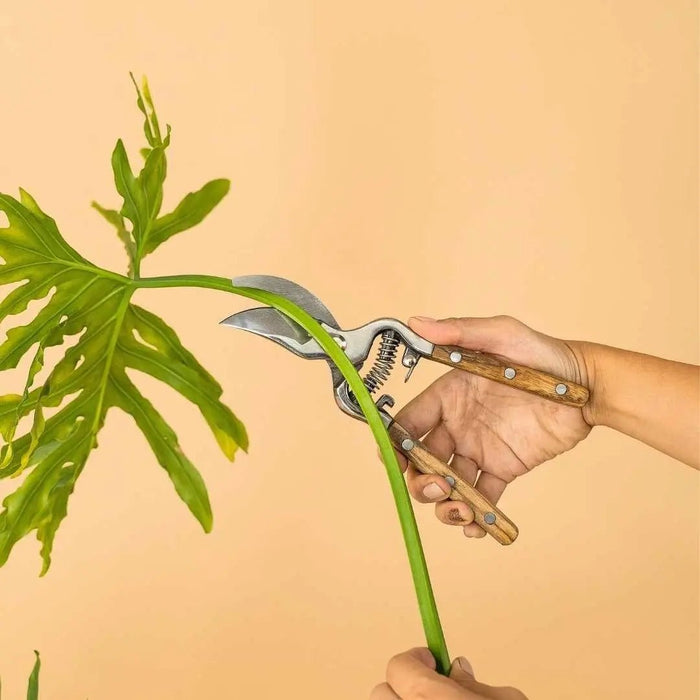
Begonias are among the easiest plants to propagate, making them great candidates for building a collection or sharing with friends.
Leaf cuttings (for rhizomatous and rex types):
- Take a healthy leaf with its stem
- Place the stem in moist perlite or well-draining mix
- Keep in a bright, humid spot
- New plantlets emerge from the base of the leaf stem in 3–6 weeks
Division (for rhizomatous types):
- When repotting, divide the rhizome into sections ensuring each has at least one growing point
- Pot separately in fresh mix
Common Problems
Powdery mildew (white powder on leaves) — Fungal issue caused by poor air circulation combined with high humidity. Improve airflow, avoid misting leaves. Treat with diluted neem oil.
Leaf spot (brown or black spots on foliage) — Caused by water sitting on leaves. Always water at the base. Remove affected leaves.
Root rot — Overwatering or heavy, poorly draining soil. Let soil dry more between waterings; repot in lighter mix.
Leggy growth — Insufficient light. Move to a brighter spot.
Faded leaf colour — Insufficient light or nutrients. Increase light and feed monthly.
---
Explore the full range of begonias — from beginner-friendly Tiger Paws to collector pieces: Shop Begonias
Get yours delivered today: Same-Day Plant Delivery Singapore
Quick summary
Key Takeaways
- Quick Facts
- Why Begonias Thrive in Singapore
- Light Requirements
- Watering: The Middle Path
- Humidity: 50–70% — More Forgiving Than You'd Think
- Soil: Light and Well-Draining
Ready to bring some green into your home?
Browse 250+ hand-picked plants, curated for Singapore homes — delivered to your door.
Browse All Plants →