















How to Choose the Right Potting Mix
Posted on April 16 2026
In this article
- Why Potting Mix Matters
- Standard Potting Mix — The Default Choice
- Cactus and Succulent Mix
- Orchid Mix / Bark-Based Medium
- African Violet Mix
- Seed Starting Mix
- Moisture-Retentive Mix
- Perlite, Vermiculite, Coco Coir — What Are They?
- Choosing Potting Mix by Plant
- One Mix That Works for Most Plants
- Shop Plants & Supplies
Target keyword: `best potting mix for houseplants` / `what soil for indoor plants`

Monthly search volume: ~8,000–12,000 combined
Intent: Informational + purchasing decision support
Pillar: B (Care & Educational)
Publish date: Week 5, Day 1
CTA: Link to potting mix products if sold; otherwise plant collection
Tags: potting mix, potting soil, houseplant soil, cactus mix, orchid mix
---
> Thumbnail spec: 1200×628px (social/OG) and 800×800px (square, for Instagram). Show a flat-lay of potting mix components — perlite, orchid bark, coco coir — on a neutral background with small potted plants. Overlay text: "Potting Mix Guide" in clean sans-serif. Warm earthy tones. Source suggestion: photograph your actual nursery stock or sourced supplies.
---
Walk into any garden center and the soil aisle is overwhelming: potting mix, garden soil, cactus mix, orchid bark, perlite, vermiculite, coco coir. Which one does your plant actually need?
The short answer: most houseplants do fine in standard potting mix, but specific plant types perform significantly better in mixes tailored to their needs. This guide cuts through the confusion.
> Singapore tip: In our tropical climate (26–34°C, 70–90% humidity year-round), soil retains moisture significantly longer than in temperate countries. Mixes recommended elsewhere may be too water-retentive for Singapore conditions. When in doubt, go chunkier and faster-draining — your plants will thank you.
---
Why Potting Mix Matters
Soil does three things for a plant:
- Anchors roots and supports the plant physically
- Retains water and nutrients between waterings
- Provides air — roots need oxygen, which means good drainage is as important as water retention
The wrong soil — too dense, too moisture-retentive, or wrong pH — can cause root rot, nutrient lockout, or poor growth regardless of how well you water and fertilize.
Critical: Never use outdoor garden soil in pots. It compacts under repeated watering, blocks air from reaching roots, and may contain pests or pathogens unsuitable for indoor growing.
Singapore-specific note: Root rot is the number one plant killer in Singapore homes. Our humidity means even well-draining mixes stay moist longer than expected — always err toward faster-draining soil here.
---
Standard Potting Mix — The Default Choice

Best for: Most tropical houseplants (pothos, philodendron, monstera, peace lily, rubber plant, ZZ plant, snake plant)
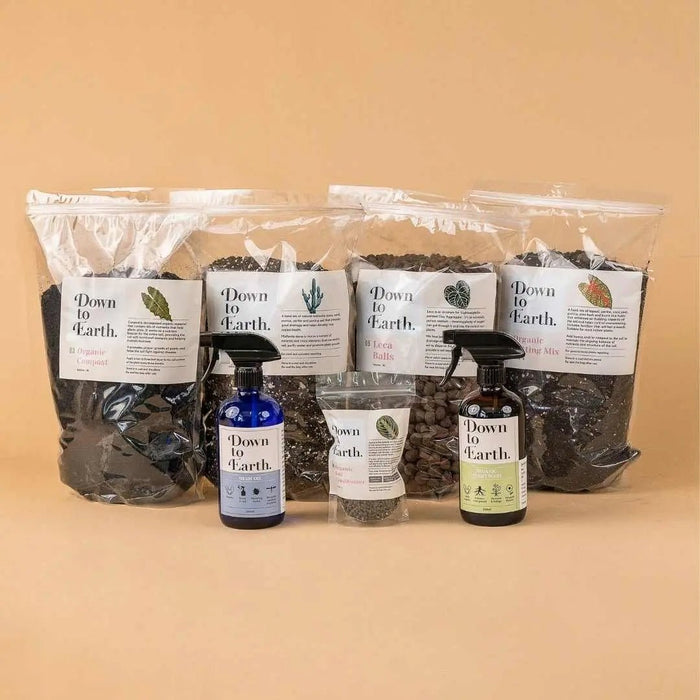
Standard houseplant potting mix contains a blend of:
- Peat moss or coco coir (moisture retention)
- Perlite or vermiculite (drainage and aeration)
- Bark or compost (nutrients and structure)
Most commercial brands are suitable. Look for mixes labeled "indoor" or "houseplant" rather than "garden" or "vegetable."
Improvement: Adding 20–30% perlite to any standard mix improves drainage and aeration — a useful tweak if you tend to overwater or have plants that prefer drier roots.
> Where to buy in Singapore: Perlite and orchid bark are widely available at Toh Garden (Khatib), Far East Flora (Thomson Road), Chin Ling Nursery, and most HDB-area plant nurseries. Coco coir blocks are common at Lazada/Shopee local sellers and rehydrate easily.
---
Cactus and Succulent Mix
Best for: Cacti, succulents, echeveria, aloe, haworthia, sedum, agave, snake plants, ZZ plants
Cactus mix is essentially standard potting mix with more inorganic material (perlite, coarse sand, grit) to prevent water retention. Succulents evolved in arid environments with fast-draining, nutrient-poor soil — sitting in moisture-retentive standard mix leads quickly to root rot.
DIY option: Mix standard potting soil 50/50 with perlite or coarse horticultural sand. Avoid fine sand (like beach or play sand) — it actually reduces drainage rather than improving it.
> Singapore tip for succulents: Singapore's humidity is the enemy of succulents. Use the driest possible mix — aim for 60–70% perlite/grit. Place in your most ventilated spot, ideally with airflow. Many Singapore plant lovers find that succulents do better on a breezy balcony than indoors with the aircon.
---
Orchid Mix / Bark-Based Medium
Best for: Phalaenopsis (moth orchids), dendrobiums, epidendrums, most epiphytic orchids
Orchid roots are adapted to cling to tree bark in their natural habitat — they need air around them at all times. Standard potting soil smothers orchid roots and causes rapid rot.
Orchid mix is composed primarily of:
- Bark chips (fir, pine, or douglas fir)
- Sometimes perlite, charcoal, or sphagnum moss
How to use: Replace orchid mix every 1–2 years, or when bark starts to decompose and no longer provides good structure and drainage.
> Singapore orchid note: Singapore is the orchid capital of Southeast Asia — our national flower is the Vanda Miss Joaquim. Orchid bark is widely available locally, including at Toh Garden and specialist orchid nurseries in Mandai and Lim Chu Kang. In our humid climate, orchids in bark often need even less watering than guides suggest.
---
African Violet Mix
Best for: African violets (Saintpaulia), some begonias, episcia
African violets need a loose, lightweight mix that retains moisture but never becomes waterlogged. They're sensitive to heavy soils and prefer slightly acidic conditions.
Commercial African violet mixes are specifically calibrated for this. Alternatively, mix:
- 1 part standard potting mix
- 1 part perlite
- 1 part vermiculite
---
Seed Starting Mix
Best for: Starting seeds, rooting cuttings
Seed starting mix is fine-textured, sterile, and low in nutrients (nutrients can burn delicate seedlings and young roots). It's designed for germination and early rooting, not long-term growing.
Do not use seed starting mix as a permanent potting medium — move seedlings or rooted cuttings to standard potting mix once established.
---
Moisture-Retentive Mix
Best for: Ferns, calathea, maranta, peace lily, moisture-loving tropicals
If you have plants that need consistently moist soil and you struggle to water frequently enough, a mix with higher moisture retention helps. You can create this by:
- Using standard potting mix without extra perlite
- Adding coconut coir (coco coir retains more moisture than peat)
- Adding vermiculite (retains moisture better than perlite)
> Singapore context: In Singapore, ferns and calatheas thrive outdoors or in humid bathrooms. Indoors with air-conditioning, they may need more frequent misting or a pebble tray — but rarely need extra moisture retention in the soil itself, as ambient humidity does much of the work.
---
Perlite, Vermiculite, Coco Coir — What Are They?
Perlite: White volcanic glass granules. Improves drainage and aeration. Does not retain water. Add to any mix when better drainage is needed. Widely available at Singapore nurseries and on Lazada/Shopee.
Vermiculite: Expanded mineral. Retains water and nutrients while improving aeration. Use when you want moisture retention alongside drainage improvement (opposite use case from perlite).
Coco coir: Coconut fiber byproduct. Retains moisture while remaining airy. A sustainable alternative to peat moss. Good base ingredient for custom mixes. Especially relevant in Singapore — coco coir is produced locally in the region and widely available.
Activated charcoal: Absorbs toxins and odors, reduces risk of bacterial/fungal growth in soil. Often used in terrariums. Small amounts (10%) added to any mix improve soil health.
Bark / orchid bark: Provides large air pockets and drainage. Used primarily in orchid mixes and as an additive for plants that need very well-aerated roots (aroids like monstera and philodendron benefit from some bark in their mix).
---
Choosing Potting Mix by Plant
| Plant | Recommended Mix |
|-------|----------------|
| Pothos, philodendron, monstera | Standard potting mix + 20% perlite |
| Snake plant, ZZ plant | Standard potting mix + 30–50% perlite |
| Succulents and cacti | Cactus/succulent mix OR 50/50 potting mix + perlite |
| Orchid | Bark-based orchid mix |
| African violet | African violet mix OR standard + perlite + vermiculite |
| Fern, calathea, peace lily | Standard potting mix (no extra perlite) |
| Boston fern | Standard potting mix with added coco coir |
| Air plants | No soil — mount on bark or place in glass/wire display |
---
One Mix That Works for Most Plants
If you want a single all-purpose mix that handles the majority of houseplants well:
General purpose indoor mix:
- 60% standard potting mix
- 30% perlite
- 10% activated charcoal or bark
This drains well enough for overwatering-prone plants while retaining enough moisture for thirsty tropicals. The only plants it doesn't suit: true succulents/cacti (need drier), orchids (need bark-based), and moisture-lovers like ferns (need more retention).
> Singapore note: This 60/30/10 ratio is especially well-suited for Singapore conditions. The extra perlite compensates for our humidity keeping soil moist longer than in temperate climates.
---
Shop Plants & Supplies
Browse our full plant collection at tumbleweedplants.com/collections/all-plants — every plant listing includes the recommended soil type and mix ratio.
Need a desk-sized plant to repot? See our mini plant collection.
Want it delivered today? Check out our same-day delivery options — available across Singapore.
---
Quick summary
Key Takeaways
- Why Potting Mix Matters
- Standard Potting Mix — The Default Choice
- Cactus and Succulent Mix
- Orchid Mix / Bark-Based Medium
- African Violet Mix
- Seed Starting Mix
Ready to bring some green into your home?
Browse 250+ hand-picked plants, curated for Singapore homes — delivered to your door.
Browse All Plants →