
















Peperomia Care Guide for Singapore
Posted on April 09 2026
In this article

If you are looking for a compact, colourful plant that does not demand constant attention, Peperomia deserves a spot in your collection. This diverse genus offers hundreds of varieties — from the Instagram-famous Watermelon Peperomia to trailing varieties perfect for shelves and hanging baskets.
Peperomias are ideal for Singapore apartments: they stay small, tolerate a range of conditions, and add visual variety without taking up precious floor space.
Why Peperomia Works in Singapore
Peperomias originate from tropical and subtropical regions of Central and South America, where they grow as understory plants on forest floors and as epiphytes on trees. This background translates perfectly to Singapore conditions:
- They tolerate (and often prefer) moderate rather than intense light
- They handle humidity fluctuations well
- Their compact size suits apartment living
- They store water in thick leaves and stems, making them forgiving of missed waterings
- Many varieties thrive in the light levels typical of HDB flats
Popular Peperomia Varieties

Peperomia argyreia (Watermelon Peperomia)
The star of the genus. Oval leaves with silver and green stripes that look exactly like watermelon rind. Compact rosette growth habit.
Size: 20-30cm tall
Light: Moderate to bright indirect
Difficulty: Easy
Peperomia polybotrya (Raindrop Peperomia)
Large, glossy, teardrop-shaped leaves that catch and reflect light beautifully. An elegant desk or tabletop plant.
Size: 20-35cm tall
Light: Moderate to bright indirect
Difficulty: Easy
Peperomia tetraphylla 'Hope'
Trailing variety with small, round leaves on delicate stems. Perfect for hanging baskets or trailing off shelves.
Size: Trailing to 30-40cm
Light: Moderate indirect
Difficulty: Easy
Peperomia obtusifolia (Baby Rubber Plant)
Thick, rounded, glossy leaves in deep green or variegated green and cream. Sturdy and reliable.
Size: 20-30cm tall
Light: Low to bright indirect
Difficulty: Very easy
Peperomia caperata (Ripple Peperomia)
Deeply corrugated, heart-shaped leaves in green, red, or silver. Textural and distinctive.
Size: 15-25cm tall
Light: Moderate indirect
Difficulty: Easy
Peperomia prostrata (String of Turtles)
Tiny, round leaves with intricate turtle-shell patterns on delicate trailing stems. A collector's favourite.
Size: Trailing to 30cm
Light: Moderate indirect
Difficulty: Moderate (more sensitive to overwatering)
Light Requirements
Peperomias are remarkably flexible with light — one of their best qualities for Singapore apartments.
Ideal: Bright indirect light. Near a north or east-facing window, or 1-2 metres from brighter windows.
Minimum: Moderate indirect light. Peperomias tolerate lower light better than most colourful plants, though growth slows.
Too much: Direct afternoon sun scorches leaves — look for bleached spots or curling. Morning sun (1-2 hours) is fine.
Variegated varieties (obtusifolia variegata, some caperata types) need brighter light to maintain their colour patterns. In dim light, they may revert to solid green.
Watering

This is where Peperomia's succulent-like nature shines. Their thick leaves store water, making them more drought-tolerant than they appear.
Watering frequency in Singapore:
- Every 7-10 days in most conditions
- Every 5-7 days in dry, air-conditioned rooms
- Allow top 3-4cm of soil to dry between waterings
The golden rule: When in doubt, wait. Peperomias handle underwatering far better than overwatering. A slightly thirsty Peperomia recovers quickly. An overwatered one rots from the roots up.
Overwatering signs:
- Mushy stems (especially at the base)
- Leaves dropping at a touch
- Soil staying wet for over a week
- Foul smell from the pot
Underwatering signs:
- Leaves wrinkling slightly
- Drooping that recovers after watering
- Slower growth
Soil Mix
Peperomias need very well-draining soil — their semi-succulent roots rot easily in dense, wet mixes.
Recommended mix:
- 50% regular potting soil
- 30% perlite
- 20% orchid bark
Alternative: A succulent/cactus mix with added perlite works well.
The key is a mix that dries within 5-7 days in Singapore. If your soil stays wet longer, add more perlite or bark.
Humidity

Singapore's ambient humidity suits Peperomia well. They are less humidity-dependent than plants like Calathea or Alocasia.
In naturally ventilated rooms: No special measures needed.
In air-conditioned rooms: Generally fine. Peperomia tolerates moderate humidity drops better than most tropicals.
Avoid: Misting directly on leaves — the thick leaves can trap water in crevices, promoting fungal issues.
Temperature
Singapore's year-round 25-32°C is within Peperomia's comfort range. Avoid cold air-con drafts directly on the plant.
Fertilising
Peperomias are light feeders. Over-fertilising causes more problems than under-fertilising.
- Use balanced liquid fertiliser at quarter to half strength
- Feed every 4-6 weeks during active growth
- Skip if the plant is not actively producing new leaves
- Flush soil with plain water every 2-3 months
Common Problems
Stem Rot
The most common Peperomia killer in Singapore. Caused by overwatering or dense soil.
Prevention: Well-draining soil, proper pot drainage, and letting soil dry between waterings.
Treatment: If caught early, stop watering and let soil dry completely. For advanced rot, take healthy stem cuttings from above the rot line and propagate in fresh soil.
Leaf Drop
Some leaf drop is normal on older growth. Sudden or excessive leaf drop indicates:
- Overwatering (most common)
- Temperature shock (moved to a much cooler spot)
- Root damage from repotting
Leggy Growth
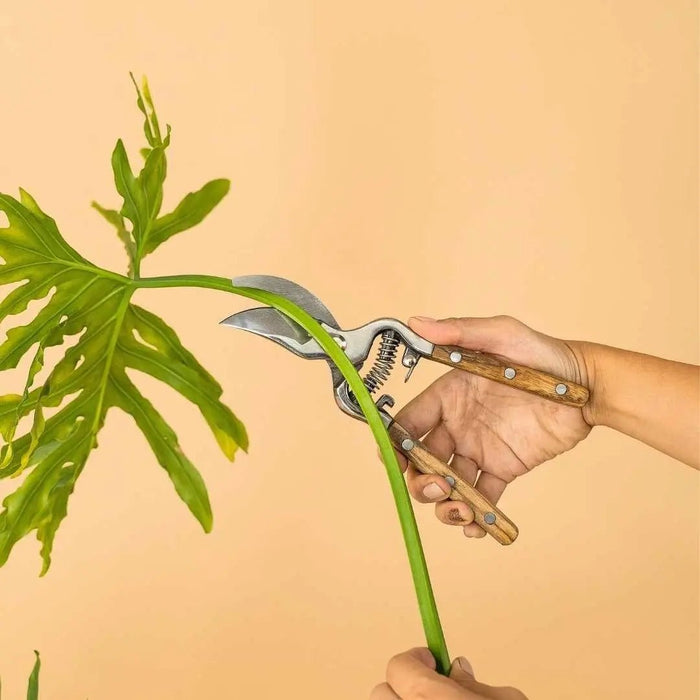
Stems stretching with wide spaces between leaves means insufficient light. Move to a brighter spot. Prune leggy stems to encourage compact growth.
Pests
Peperomia is relatively pest-resistant but occasionally attracts:
- Mealybugs: In leaf axils and undersides. Treat with rubbing alcohol.
- Fungus gnats: Attracted to moist soil. Let soil dry more between waterings. Use yellow sticky traps.
Propagation
Peperomias propagate easily, making them perfect for sharing and expanding your collection.
Stem Cuttings
- Cut a stem with 2-3 leaves just below a node
- Let the cut end dry for a few hours
- Place in moist perlite or water
- Roots appear in 2-4 weeks
- Pot in well-draining mix when roots are 3-5cm long
Leaf Cuttings
Some species (particularly caperata and argyreia) can be propagated from leaf cuttings:
- Cut a healthy leaf with its petiole (stem)
- Insert the petiole into moist perlite or sphagnum moss
- Keep humid (a clear plastic bag or container works as a humidity dome)
- Baby plants emerge from the base in 4-8 weeks
- Pot up when the baby plant has its own roots
Division
Bushy varieties can be divided during repotting:
- Gently separate the plant into 2-3 sections, each with roots
- Pot each section in fresh soil
- Water lightly and keep in indirect light
Styling With Peperomia
Desktop collection: Group 3-5 different Peperomia varieties in matching small pots. The variety of leaf shapes and colours creates a miniature garden effect.
Shelf trailing: Place Hope or String of Turtles on a high shelf and let them cascade.
Terrarium accent: Compact Peperomias work well in open terrariums as accent plants.
Bathroom windowsill: Peperomias suit the moderate humidity and filtered light of most Singapore bathrooms.
Mixed planting: Combine upright and trailing varieties in a single wide planter for a lush, varied display.
Final Thoughts
Peperomia is one of the most rewarding plant genera for Singapore apartment living. Compact, forgiving, and endlessly diverse, they reward minimal care with year-round beauty. Start with a Watermelon or Raindrop Peperomia — two varieties that deliver maximum visual impact with minimal effort — and explore the genus from there.
Browse our Peperomia collection at Tumbleweed Plants.
Quick summary
Key Takeaways
- Why Peperomia Works in Singapore
- Popular Peperomia Varieties
- Light Requirements
- Watering
- Soil Mix
- Humidity
Ready to bring some green into your home?
Browse 250+ hand-picked plants, curated for Singapore homes — delivered to your door.
Browse All Plants →