



















Common Myths About Houseplants Debunked | Tumbleweed Plants Singapore
Posted on April 10 2026
In this article

- Myth 1: Water Your Plants on a Fixed Schedule
- Myth 2: Plants in the Bedroom Are Dangerous Because They Release CO2 at Night
- Myth 3: Misting Increases Humidity for Your Plants
- Myth 4: Adding Ice Cubes Is a Good Way to Water Plants
- Myth 5: You Should Water with Exact Amounts (e.g., "One Cup")
- Myth 6: All Plants Purify Air Equally
- Myth 7: Wilted Plants Are Dead
- Myth 8: Talking to Plants Makes Them Grow Better
- Myth 9: You Should Put Rocks in the Bottom of Pots for Drainage
- Myth 10: Yellow Leaves Always Mean Overwatering
- Myth 11: More Fertiliser Means More Growth
- Myth 12: Succulents Are Indoor Plants
- Shop Plants
The internet is a wonderful source of plant care information — and a terrible one. For every accurate care guide, there are a dozen myths, old wives' tales, and well-meaning but incorrect recommendations that persist because they sound plausible. These myths cause real harm: overwatering from scheduled watering rules, sunburn from light advice based on the wrong climate, and wasted money on products that do nothing.
Here are the most persistent houseplant myths, why they are wrong, and what you should do instead.
Myth 1: Water Your Plants on a Fixed Schedule
The myth: Water every Monday. Water every three days. Water once a week.
The truth: Plants do not follow calendars. Water needs depend on pot size, soil composition, light exposure, temperature, humidity, plant species, and season. A plant in bright light in a small terracotta pot may need water every three days. The same species in a large plastic pot in low light may need water every two weeks.
What to do instead: Check the soil. Insert your finger 2-3cm into the soil. If dry, water. If moist, wait. The soil tells you when to water — your calendar does not.
Myth 2: Plants in the Bedroom Are Dangerous Because They Release CO2 at Night

The myth: Plants release carbon dioxide at night when photosynthesis stops. This makes bedrooms unsafe for sleeping.
The truth: Yes, plants release a tiny amount of CO2 at night through respiration. But the amount is negligible — far less than a sleeping human produces, and far less than a pet in the room. Your partner exhales more CO2 in a single breath than your entire plant collection produces overnight.
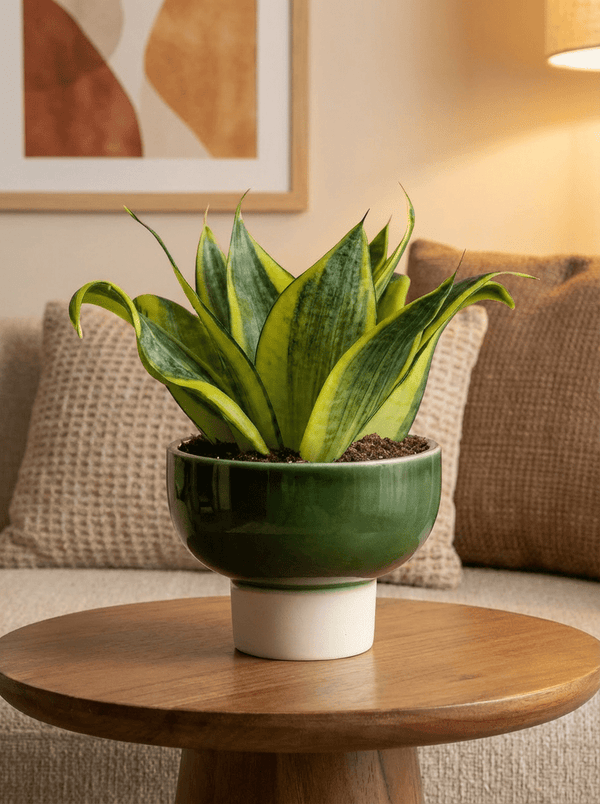
The reality: Some plants (Snake Plant, Aloe Vera) actually release oxygen at night via CAM photosynthesis. Bedroom plants improve air quality, not compromise it.
Myth 3: Misting Increases Humidity for Your Plants
The myth: Misting your plants with a spray bottle increases the humidity around them.
The truth: Misting provides a momentary humidity boost that evaporates within minutes. It does not meaningfully raise the ambient humidity around your plants. In Singapore's AC rooms, misted water evaporates in 5-15 minutes — back to the same dry air.
What actually works: A humidifier, a pebble tray with water, or grouping plants together (their collective transpiration creates a genuine microclimate). In Singapore's naturally humid environment (outside AC rooms), most tropical plants do not need additional humidity at all.
When misting is useful: For cleaning leaves (part of dust removal) and for plants mounted on wood or cork (Staghorn Ferns, mounted orchids) where the root zone benefits from surface moisture.
Myth 4: Adding Ice Cubes Is a Good Way to Water Plants

The myth: Place ice cubes on the soil for slow-release watering, especially for orchids.
The truth: Cold water shocks tropical plant roots. Most houseplants are tropical species adapted to warm, consistent temperatures. Ice directly on roots causes localised cold damage and stress. The amount of water from 2-3 ice cubes is also insufficient for most plants.
What to do instead: Water with room-temperature water, thoroughly, until it drains from the bottom. This is how tropical plants receive water in nature — warm rain, thoroughly, with drainage.
Myth 5: You Should Water with Exact Amounts (e.g., "One Cup")
The myth: Water your plant with exactly one cup, or 200ml, or a specific measured amount.
The truth: The goal of watering is to saturate the root ball evenly, not to deliver a precise volume. The correct amount depends on pot size, soil volume, and how dry the soil is. A measured amount may leave part of the root ball dry or may be too much for a small pot.
What to do instead: Water thoroughly until water drains from the drainage holes. This ensures the entire root zone is saturated. Then let it dry to the appropriate level before watering again. The drainage, not the volume, is what matters.
Myth 6: All Plants Purify Air Equally

The myth: Any houseplant will clean your indoor air.
The truth: Air purification varies enormously by species. NASA's study tested specific plants and found significant differences in their ability to remove specific pollutants. A Peace Lily removes ammonia; a Pothos does not. A Snake Plant works at night; most others do not.
Also true: The amount of air purification from a few houseplants in a real home (with ventilation, air movement, and large air volumes) is modest. Plants contribute to air quality but are not a substitute for proper ventilation or air purifiers.
Myth 7: Wilted Plants Are Dead
The myth: When a plant wilts or droops, it is dying or dead.
The truth: Wilting is often just dehydration — the plant's way of saying it needs water. Most tropical plants recover fully within hours of watering. Peace Lilies, Spathiphyllum, and Pothos are famous for dramatic wilting followed by complete recovery.
When wilting is serious: If the soil is wet and the plant is wilting, this indicates root rot — the roots cannot absorb water. This is the scenario that needs immediate attention.
Myth 8: Talking to Plants Makes Them Grow Better
The myth: Plants grow better when you talk to them.
The truth: There is no scientific evidence that the content of your speech affects plant growth. However, being close enough to talk to your plants means you are paying attention to them — noticing dry soil, pests, new growth, and problems. The attention, not the conversation, is what helps.
What is real: Some studies suggest that vibrations (including sound) may have minor effects on plant growth, but the effects are small and inconsistent. The main benefit of "talking to your plants" is that it keeps you engaged with their care.
Myth 9: You Should Put Rocks in the Bottom of Pots for Drainage
The myth: A layer of rocks or pebbles at the bottom of a pot improves drainage.
The truth: This actually makes drainage worse. Water in soil moves via capillary action, and a layer of rocks creates a "perched water table" — the soil above the rocks stays saturated because water does not transition easily from fine soil to coarse rocks. The root zone ends up wetter, not drier.
What actually improves drainage: Well-draining soil (add perlite) and pots with drainage holes. That is it. No rocks needed.
Myth 10: Yellow Leaves Always Mean Overwatering
The myth: If your plant has yellow leaves, you are overwatering it.
The truth: Yellow leaves are a symptom, not a diagnosis. They can indicate overwatering, underwatering, nutrient deficiency, light stress, natural ageing, temperature shock, or pest damage. Context matters — check the soil, check the light, check the roots before assuming the cause.
The diagnostic approach: Is the soil wet? Possibly overwatering. Is the soil bone dry? Possibly underwatering. Are only the oldest lower leaves yellowing? Probably normal ageing. Are many leaves yellowing at once? Check for root issues.
Myth 11: More Fertiliser Means More Growth
The myth: Fertilise frequently and generously for maximum growth.
The truth: Plants can only use a limited amount of nutrients. Excess fertiliser does not speed growth — it accumulates as salts in the soil, burning roots and leaf tips. Over-fertilising is more harmful than under-fertilising.
What to do: Fertilise at half the recommended strength, at the frequency appropriate for the species. Less is more. In Singapore's consistent growing conditions, a moderate, regular feeding schedule produces the best results.
Myth 12: Succulents Are Indoor Plants
The myth: Succulents are easy indoor plants for any room.
The truth: Most succulents need bright, direct light — far more than a typical indoor room in Singapore provides. Succulents on a dim desk or low-light shelf will stretch, lose their compact form, and eventually weaken.
The reality in Singapore: Succulents do best on sunny balconies, bright windowsills, or under grow lights. If you want a low-maintenance plant for a dim corner, choose a ZZ Plant, Snake Plant, or Pothos instead.
Shop Plants
Browse our indoor plant collection for healthy plants delivered across Singapore — with accurate care information, not myths.
Good plant care is simple once you strip away the myths. Check the soil before watering. Provide appropriate light. Use well-draining soil in pots with drainage holes. Feed moderately. Pay attention. That is it. The myths complicate what should be straightforward — and the plants suffer for it. Trust your observations over your social media feed, and your plants will thrive.
Quick summary
Key Takeaways
- Myth 1: Water Your Plants on a Fixed Schedule
- Myth 2: Plants in the Bedroom Are Dangerous Because They Release CO2 at Night
- Myth 3: Misting Increases Humidity for Your Plants
- Myth 4: Adding Ice Cubes Is a Good Way to Water Plants
- Myth 5: You Should Water with Exact Amounts (e.g., "One Cup")
- Myth 6: All Plants Purify Air Equally
Ready to bring some green into your home?
Browse 250+ hand-picked plants, curated for Singapore homes — delivered to your door.
Browse All Plants →








Comments
0 Comments
Leave a Comment