





















Beginner's Guide to Soil Mixes for Indoor Plants in Singapore
Posted on April 09 2026
In this article
The soil your plant sits in matters more than almost any other factor in its care. The wrong mix can suffocate roots, hold too much water, or drain so fast that the plant stays perpetually thirsty. In Singapore's humid, warm climate, getting the soil right is especially critical — our conditions amplify the consequences of both waterlogged and poorly structured mixes.

This guide breaks down everything you need to know about indoor plant soil mixes, with recipes tailored for Singapore's climate using locally available components.
Why Soil Matters So Much
Think of soil as your plant's home. It provides:
Physical support: Anchors roots so the plant stays upright.
Water management: Holds moisture for root uptake while allowing excess to drain.
Air supply: Maintains pockets of air between particles for root respiration. Roots need oxygen just as much as they need water.
Nutrient delivery: Stores and releases mineral nutrients that roots absorb.
When any of these functions fails, the plant suffers. In Singapore, the most common failure is water management — soil stays too wet for too long, drowning roots and inviting rot.
Understanding Soil Components

Every indoor plant mix is built from a combination of these component types:
Organic Components (Moisture Retention)
Potting soil / regular garden mix: The base of most mixes. Holds moisture and nutrients. Use as a starting point, never alone — it is too dense for most indoor plants.
Coco coir: Coconut fibre that retains moisture while maintaining some structure. A sustainable alternative to peat moss. Widely available and affordable in Singapore.
Peat moss: Traditional moisture-retaining component. Effective but environmentally problematic (slow to renew, carbon-releasing when harvested). Use coco coir instead when possible.
Compost / worm castings: Rich in nutrients and beneficial microbes. Add sparingly (10-15% of mix) for nutrient boost. Retains moisture.
Sphagnum moss: Long-fibre moss that holds many times its weight in water. Used for propagation, orchid mounts, and as a soil amendment for moisture-loving plants.
Inorganic Components (Drainage & Aeration)
Perlite: Lightweight, white volcanic glass beads. Creates air pockets and improves drainage. The most versatile and affordable drainage amendment. Available at every Singapore nursery.
Pumice: Similar to perlite but heavier and does not float. Excellent long-term drainage amendment that does not compact. Slightly harder to find in Singapore.
Orchid bark: Chunky bark chips that create large air pockets and resist compaction. Essential for aroids and epiphytic plants. Widely available.
Horticultural charcoal: Absorbs impurities, prevents odours, and improves drainage. A beneficial addition to any mix. Use coarsely chunked charcoal, not fine powder.
LECA (Lightweight Expanded Clay Aggregate): Round clay pebbles used for semi-hydroponic growing or as a drainage layer. Popular in Singapore's plant community.
Coarse sand: Improves drainage in succulent and cactus mixes. Use horticultural-grade coarse sand, not fine beach sand (which compacts).
Vermiculite: Retains both moisture and nutrients. Useful for seed starting but too moisture-retentive for most Singapore indoor plant mixes.
The Singapore Factor
Singapore's climate affects soil behaviour differently from temperate regions:
Slower drying: High ambient humidity (70-90%) means soil loses moisture to evaporation more slowly. Mixes need more drainage amendments than temperate-climate recipes suggest.
Faster decomposition: Warmth accelerates organic breakdown. Bark and coir decompose faster, compacting over time. Repot or refresh soil more frequently (every 12-18 months).
Year-round microbial activity: Warm, moist soil supports constant bacterial and fungal activity. Good for nutrient cycling, but problematic if soil stays too wet (root rot organisms thrive).
Bottom line: Singapore indoor plant mixes should be chunkier and more airy than what most international guides recommend. Add 20-30% more drainage material than a typical recipe calls for.
Soil Recipes by Plant Type

The Tropical Aroid Mix (Monstera, Philodendron, Alocasia, Anthurium)
Aroids are epiphytic or semi-epiphytic — their roots evolved for air and bark, not dense soil.
Recipe:
- 35% potting soil
- 30% perlite or pumice
- 25% orchid bark (medium chunks)
- 10% horticultural charcoal
Properties: Fast-draining, chunky, well-aerated. Dries within 5-7 days in Singapore.
The Succulent & Cactus Mix
Succulents need the fastest drainage of any indoor plants — doubly so in Singapore's humidity.
Recipe:
- 30% potting soil
- 40% coarse sand or pumice
- 20% perlite
- 10% fine gravel
Properties: Very fast-draining. Dries within 2-3 days. Minimal organic content reduces moisture retention.
The Fern & Calathea Mix
Moisture-lovers that need consistently damp (not wet) conditions.
Recipe:
- 45% coco coir or peat moss
- 25% perlite
- 20% potting soil
- 10% worm castings or compost
Properties: Retains more moisture than other mixes but still drains well. Stays evenly moist for 4-6 days.
The Orchid Mix
Orchids are epiphytes that need roots exposed to air.
Recipe:
- 60% orchid bark (medium to large chunks)
- 20% sphagnum moss
- 15% charcoal
- 5% perlite
Properties: Very chunky, mostly inorganic. Dries quickly. Orchid roots cling to bark pieces.
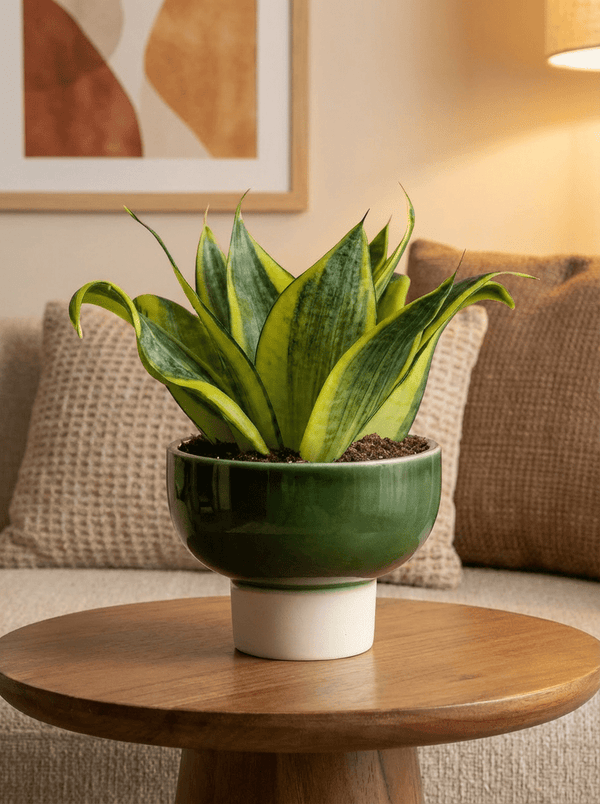
The Snake Plant & ZZ Plant Mix
Drought-tolerant plants that rot easily in wet soil.
Recipe:
- 40% potting soil
- 30% perlite or pumice
- 20% coarse sand
- 10% orchid bark
Properties: Well-draining with moderate moisture retention. Dries within 5-7 days.
The General Houseplant Mix
A versatile mix for Pothos, Spider Plant, Dracaena, Peace Lily, and most common houseplants.
Recipe:
- 45% potting soil
- 30% perlite
- 15% orchid bark
- 10% charcoal or coco coir
Properties: Balanced drainage and moisture retention. Works for the majority of tropical houseplants.
Mixing Tips
Batch Preparation
Mix a large batch of your most-used recipe and store in a sealed container. Having ready-made soil on hand makes repotting quick and spontaneous.
Pre-Moisten Dry Components
Coco coir and peat moss are hydrophobic when completely dry — they repel water initially. Pre-moisten these components before mixing by soaking in water for 30 minutes, then squeezing out excess.
Sterilisation (Optional)
If you are reusing old soil or adding garden compost, sterilise by spreading on a tray and baking at 80°C for 30 minutes. This kills pathogens and weed seeds. Or spread in direct sun for a day.
Test Your Mix
After mixing, water a potful and observe:
- Water should flow through within 10-15 seconds (for aroid/succulent mixes)
- Water should flow through within 30-60 seconds (for moisture-retentive mixes)
- If water pools on top, the mix is too compacted — add more perlite or bark
Where to Buy Soil Components in Singapore

Nurseries
Thomson Road nurseries: The widest in-person selection. Most carry potting soil, perlite, orchid bark, charcoal, and coco coir. Prices are competitive and you can inspect quality before buying.
World Farm: Extensive selection of soil components, often in larger bags for better value.
Far East Flora: Curated range of premixed and individual components.
Online
Shopee and Lazada: Largest selection including specialty items like pumice, LECA, and premium bark. Compare sellers for best prices.
Instagram sellers: Several Singapore-based sellers specialise in aroid mixes and premium components. Often fresher and higher quality than mass-market options.
Budget Sources
Daiso: Basic potting soil and small bags of perlite. Adequate for simple mixes.
NTUC FairPrice / Giant: Basic potting soil. Fine as a base component.
Signs Your Soil Mix Needs Changing
- Water sits on top before absorbing: Soil has compacted. Mix in fresh perlite or repot entirely.
- Soil dries within 1-2 days: Mix has broken down and lost structure. Repot with fresh mix.
- Foul smell from the pot: Anaerobic conditions from compacted, waterlogged soil. Repot immediately.
- White mould on surface: Usually harmless but indicates high organic content and moisture. Improve drainage.
- Soil has pulled away from pot edges: Over-dried or decomposed. Replace entirely.
Final Thoughts

Making your own soil mix might seem like unnecessary effort when premixed bags are available — but the control it gives you over your plants' root environment is worth it. Once you have a few bags of perlite, orchid bark, and potting soil on hand, custom mixing takes five minutes and dramatically improves your success rate.
Start with the general houseplant mix. As your collection grows and diversifies, branch into specialised recipes for aroids, succulents, or ferns. Your plants will notice the difference.
Shop Tumbleweed Plants for healthy plants and visit our plant care blog for more Singapore-specific growing guides.
Quick summary
Key Takeaways
- Why Soil Matters So Much
- Understanding Soil Components
- The Singapore Factor
- Soil Recipes by Plant Type
- Mixing Tips
- Where to Buy Soil Components in Singapore
Ready to bring some green into your home?
Browse 250+ hand-picked plants, curated for Singapore homes — delivered to your door.
Browse All Plants →