
















How to Identify and Treat Common Plant Pests in Singapore | Tumbleweed Plants Singapore
Posted on April 10 2026
In this article

Every indoor plant owner in Singapore will encounter pests. It is not a matter of if — it is when. Our tropical climate, with its warmth and humidity, creates ideal conditions for the insects and mites that feed on houseplants. The good news: the most common indoor pests are well-understood, identifiable, and treatable. The bad news: they are persistent and can spread quickly if you do not catch them early.
This guide covers the pests you are most likely to encounter in Singapore, how to identify them, and how to eliminate them.
Mealybugs
Identification
What they look like: Small (2-4mm), white, cottony, soft-bodied insects. They cluster in leaf joints, along stems, on leaf undersides, and in any protected crevice. A mealybug infestation looks like someone stuck small pieces of cotton wool to your plant.
Damage: Mealybugs suck plant sap, causing yellowing leaves, stunted growth, and leaf drop. They excrete honeydew — a sticky residue that attracts sooty mould (black fungus on leaves).
Treatment
Mild infestation (a few bugs):
- Dip a cotton swab in rubbing alcohol (isopropyl alcohol, 70%)
- Dab each visible mealybug directly — the alcohol dissolves their waxy coating and kills them on contact
- Repeat every 3-4 days for 2-3 weeks (to catch newly hatched bugs)
Moderate to heavy infestation:
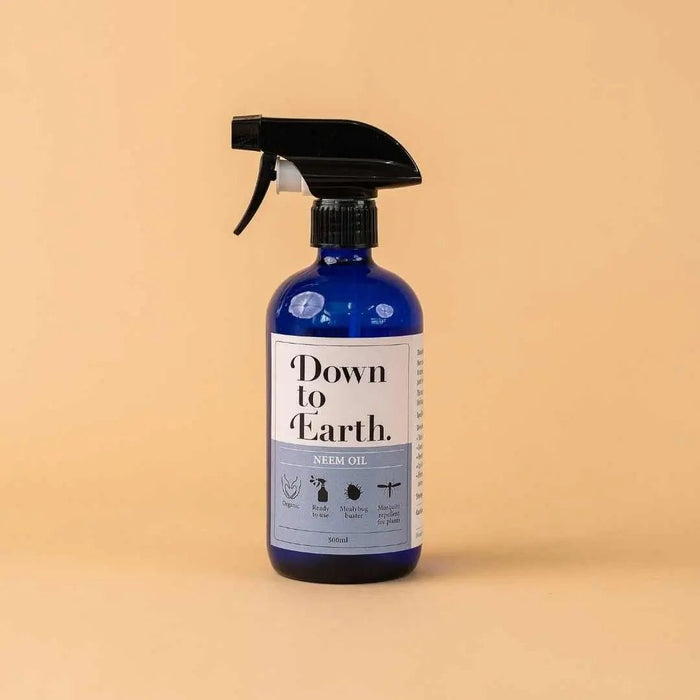
- Spray the plant with neem oil solution (5ml neem oil + 1ml dish soap per litre of water)
- Cover all surfaces — especially joints, undersides, and stems
- Repeat weekly for 3-4 weeks
- For persistent infestations, use insecticidal soap spray
Prevention:
- Inspect new plants before bringing them home (check leaf joints and stems)
- Quarantine new plants for 2 weeks
- Regular inspection of existing plants — catch infestations early
Spider Mites

Identification
What they look like: Tiny (barely visible to the naked eye), red, brown, or yellowish mites. You are more likely to see their damage and webbing than the mites themselves. Fine, silky webbing between leaves and on leaf undersides is the telltale sign.
Damage: Spider mites pierce leaf cells and suck contents, causing tiny yellow or bronze dots (stippling) on leaf surfaces. Heavy infestations cause leaf yellowing, browning, and drop.
Where they thrive: Dry conditions. In Singapore, spider mites are most common in air-conditioned rooms with lower humidity.
Treatment
Step 1: Wash the plant. Take the plant to a shower or sink and spray all leaf surfaces (especially undersides) with a strong stream of water. This physically removes mites and their webbing.
Step 2: Apply neem oil or insecticidal soap. Spray all leaf surfaces thoroughly, focusing on undersides. Repeat every 5-7 days for 3-4 treatments.
Step 3: Increase humidity. Spider mites hate humidity. Group plants together, use a pebble tray, or run a humidifier near affected plants.
Step 4: Isolate. Move infested plants away from healthy ones. Spider mites spread easily.
Prevention:
- Regular leaf washing (weekly wipe with a damp cloth)
- Maintain humidity — especially in AC rooms
- Inspect leaf undersides during routine care
Scale Insects
Identification
What they look like: Small (2-5mm), round or oval, brown or tan bumps attached to stems and leaf undersides. They look like small blisters or barnacles. Soft scale may be slightly raised and waxy; hard (armoured) scale has a firm shell.
Damage: Like mealybugs, scale insects suck sap, causing yellowing, weak growth, and honeydew excretion with resulting sooty mould.
Key feature: Scale insects are immobile once attached. They look like part of the plant, which is why they are often overlooked.
Treatment
Step 1: Physical removal. Scrape scale insects off with a soft brush, toothbrush, or your fingernail. This is the most effective first step.
Step 2: Alcohol treatment. Dab remaining scale with rubbing alcohol on a cotton swab. This penetrates the waxy/hard shell.
Step 3: Neem oil. Spray the entire plant with neem oil solution to catch crawlers (the mobile juvenile stage that spreads to new locations).
Step 4: Repeat. Treat every 7-10 days for 3-4 cycles. Scale has a life cycle — you need to catch new crawlers as they emerge.
Prevention:
- Inspect new plants carefully (check stems and leaf undersides)
- Regular plant inspection — scale is easy to miss until the infestation is established
Fungus Gnats
Identification
What they look like: Small (2-3mm), dark, mosquito-like flies hovering around the soil surface and flying up when the plant is disturbed. The adults are annoying but harmless to plants. The larvae (in the soil) are the problem.
Larvae: Translucent, worm-like, 5-8mm long, living in the top layer of moist soil. They feed on organic matter and sometimes on fine root hairs.
Where they thrive: Consistently moist soil. In Singapore, overwatered plants and peat-heavy soil mixes are fungus gnat magnets.
Treatment
Step 1: Let soil dry. Fungus gnat larvae need moist soil. Allow the top 3-5cm of soil to dry between waterings. This alone eliminates most infestations.
Step 2: Yellow sticky traps. Place small yellow sticky traps near the soil surface. These catch adult gnats and reduce the breeding population.
Step 3: Bottom watering. Water from below (place the pot in a tray of water and let it absorb upward). This keeps the top soil dry while hydrating roots.
Step 4: Soil drench (for severe infestations). Drench soil with a diluted hydrogen peroxide solution (1 part 3% hydrogen peroxide to 4 parts water). This kills larvae without harming roots.
Step 5: Neem oil soil drench. Add neem oil solution to your watering water. It kills larvae over time.
Prevention:
- Do not overwater — the number one prevention measure
- Use well-draining soil with perlite and bark
- Avoid leaving standing water in saucers
Thrips
Identification
What they look like: Very small (1-2mm), slender, elongated insects. Colour ranges from translucent to black. Difficult to see without close inspection. They often hide in flower buds and leaf folds.
Damage: Thrips scrape leaf surfaces and suck the released fluids. Damage appears as silvery streaks or patches on leaves, often with tiny black dots (thrip excrement). Severe infestations cause distorted, stunted new growth.
Treatment
Step 1: Wash. Spray the plant with water to dislodge thrips.
Step 2: Neem oil or insecticidal soap. Spray all plant surfaces every 5-7 days for 3-4 applications.
Step 3: Blue sticky traps. Thrips are attracted to blue — blue sticky traps catch adults near infected plants.
Step 4: Systemic treatment (severe cases). For persistent infestations, a systemic insecticide (one that is absorbed by the plant) reaches thrips hiding in leaf folds and buds.
Prevention:
- Inspect new plants — thrips are often introduced on new purchases
- Quarantine new arrivals for 2 weeks
- Regular leaf inspection
Aphids
Identification
What they look like: Small (1-3mm), soft-bodied, pear-shaped insects. Usually green, but can be black, brown, or pink. Cluster on new growth — young stems, unopened leaves, and flower buds.
Damage: Sap-sucking causes curled, distorted new growth. Honeydew excretion attracts sooty mould. Aphids reproduce extremely fast — a few can become hundreds within days.
Treatment
Step 1: Blast with water. A strong spray dislodges most aphids. They are weak clingers.
Step 2: Neem oil spray. Apply to all affected areas, especially new growth. Repeat weekly for 2-3 weeks.
Step 3: Insecticidal soap. Effective and safe for repeated use.
Prevention:
- Monitor new growth closely — aphids always target the youngest, softest tissue
- Act immediately when you see the first few aphids — they multiply exponentially
General Pest Prevention Protocol
- Inspect every new plant before bringing it home. Check leaf undersides, stems, joints, and soil surface.
- Quarantine new plants in a separate area for 2 weeks.
- Regular inspection — make it part of your watering routine. Check a few plants closely each time you water.
- Clean leaves monthly. Dust buildup hides pests.
- Maintain good airflow around plants. Stagnant air favours pests and fungal issues.
- Do not overwater. Moist soil attracts fungus gnats and weakens plants, making them more vulnerable to all pests.
Shop Healthy Plants
Browse our indoor plant collection for pest-free, healthy plants delivered across Singapore.
Plant pests are not a failure — they are a fact of indoor gardening. Every plant owner encounters them eventually. The key is early detection and consistent treatment. A mealybug found early is a cotton swab and rubbing alcohol. A mealybug found late is weeks of neem oil treatments and anxious inspections. Check your plants when you water. Look at leaf undersides, not just the tops. Notice the small things — a tiny web, a sticky residue, a cluster of dots that was not there last week. The earlier you catch a pest, the easier the fix. And once treated, your plant recovers — because plants are remarkably resilient, and pests are remarkably beatable.
Quick summary
Key Takeaways
- Mealybugs
- Spider Mites
- Scale Insects
- Fungus Gnats
- Thrips
- Aphids
Ready to bring some green into your home?
Browse 250+ hand-picked plants, curated for Singapore homes — delivered to your door.
Browse All Plants →