
















Alocasia Care Guide for Singapore | Tumbleweed Plants Singapore
Posted on April 09 2026
In this article
Alocasia is the plant genus for people who want drama. The leaves are architectural — large, arrow-shaped, ribbed, and held on tall, slender stems that display them like sculptures. From the velvet-textured Alocasia 'Black Velvet' to the massive, elephant-ear leaves of Alocasia macrorrhiza, this genus offers some of the most visually striking houseplants available.

But Alocasia has a reputation for being finicky. Yellowing leaves, drooping stems, dormancy, spider mites — these are common complaints. The reality is that Alocasia is not difficult in Singapore. Our climate actually gives us an advantage: the warmth and humidity that Alocasia craves come standard here. The challenge is understanding Alocasia's quirks and adjusting your care accordingly.
Popular Varieties
Alocasia 'Polly' (Amazonica) — The most common variety. Dark green leaves with striking white veins and a compact size. A great starter Alocasia.
Alocasia zebrina — Distinctive zebra-striped stems with green, arrow-shaped leaves. The stems are the star of this variety.
Alocasia 'Black Velvet' — Compact, dark, velvety leaves with silver veins. A jewel Alocasia that stays small and looks extraordinary.
Alocasia macrorrhiza (Giant Taro) — The elephant ear. Massive leaves on thick stems. Can grow to 2+ metres indoors with enough light.
Alocasia 'Dragon Scale' — Thick, textured leaves that resemble dragon scales. Silvery-green with dark veins.
Alocasia 'Silver Dragon' — Similar to Dragon Scale but with more pronounced silver colouring and a compact growth habit.
Alocasia 'Frydek' (micholitziana) — Velvety dark green leaves with white veins. A velvet-textured alternative to Polly.
Light

Alocasia needs more light than most people give it. In the wild, many species grow at the edges of forests where they receive bright, filtered light — not deep shade.
Bright indirect light — Optimal. Near an east-facing window or within 1-2 metres of a bright north-facing window. The leaves stay large, the stems stay strong, and the plant maintains its compact form.
Medium indirect light — Acceptable for established plants. New leaves will be smaller, stems may elongate, and growth will be slower.
Low light — Poor results. Alocasia drops leaves in low light, often retaining only one or two at a time. It may enter dormancy (see below). Not recommended.
Direct sun — Morning sun (1-2 hours) is beneficial. Afternoon direct sun scorches the thin leaves, especially on velvet varieties.
Watering
Alocasia likes consistently moist soil — not soggy, not bone-dry. This is where Singapore's humidity both helps and complicates things.
Schedule:
- Water when the top 2-3cm of soil feels dry
- Typically every 5 to 10 days
- More frequently for plants in bright light or terracotta pots
- Less frequently in AC rooms or during a plant's slower growth phase
Technique:
- Water thoroughly, allowing excess to drain
- Empty saucers promptly
- Avoid getting water into the crown (where stems meet the corm) — this can cause rot
Overwatering signs: Yellow lower leaves, mushy stem bases, soggy soil, foul smell from the pot.
Underwatering signs: Drooping, limp leaves that perk up after watering. Dry, crispy leaf edges.
Critical point: Alocasia grows from a corm (a bulb-like underground structure). Overwatering rots the corm, which kills the entire plant. When in doubt, wait another day before watering.
Soil

Fast-draining but moisture-retentive:
- 40% quality potting mix
- 30% perlite
- 20% orchid bark
- 10% worm castings or compost (optional, for nutrients)
The mix should drain quickly after watering but retain enough moisture that it does not dry completely within 2-3 days.
Humidity
Alocasia loves humidity — 60-80% is ideal. Singapore delivers this naturally in non-AC rooms.
In air-conditioned rooms:
- Group with other plants to create a humidity micro-climate
- Use a pebble tray
- Run a small humidifier nearby
- The velvet varieties (Black Velvet, Frydek, Dragon Scale) are more humidity-sensitive than the glossy varieties
Do not mist Alocasia leaves. Water droplets on velvet-textured varieties cause permanent spots. Even on glossy varieties, misting is less effective than maintaining ambient humidity.
Temperature
Alocasia prefers consistent warmth: 20-30°C. Singapore's temperatures are ideal.
Avoid:
- Direct AC airflow (cold drafts cause leaf damage)
- Placement near AC vents or units
- Sudden temperature changes
Fertilising
Moderate feeder:
- Balanced liquid fertiliser at half strength every 3-4 weeks during active growth
- Alocasia responds well to fertiliser when conditions are otherwise good (adequate light, moisture, humidity)
- Stop or reduce fertilising if the plant is struggling or dormant
Understanding Alocasia's Leaf Cycle

This is the single most important thing to understand about Alocasia: it typically maintains only 3-5 leaves at a time. When a new leaf emerges, the oldest leaf often yellows and dies. This is normal — not a sign of poor care.
Many new Alocasia owners panic when a leaf yellows. They change the watering, move the plant, add fertiliser — often making things worse. If the plant is producing a new leaf at the same rate it is losing an old one, it is healthy. A net increase in leaves (more new than lost) means conditions are excellent. A net decrease means something needs adjusting.
Dormancy
In their native habitat, Alocasia goes dormant during cooler, drier periods — dropping all leaves and surviving as a corm underground until conditions improve.
In Singapore, true dormancy is rare (our temperatures do not drop enough to trigger it), but Alocasia can enter a semi-dormant state in response to:
- Insufficient light
- Overwatering and root/corm damage
- Cold damage (from AC or cold water)
- Stress from repotting or relocation
If your Alocasia loses all its leaves:
- Check the corm — if it is firm, the plant is alive
- Reduce watering to bare minimum (the corm stores energy and needs very little water)
- Move to a warm, bright location
- Wait — it can take weeks to months for new growth to emerge
- Do not discard the pot unless the corm is soft and rotten
Common Problems
Yellow Leaves
One yellow leaf at a time (with a new leaf emerging) = normal lifecycle.
Multiple yellow leaves = overwatering, root rot, or insufficient light. Check roots for rot.
Brown, Crispy Leaf Edges
Low humidity (common in AC rooms) or underwatering. Increase humidity and check watering consistency.
Drooping Leaves
Could be overwatering OR underwatering. Check the soil:
- Dry soil + drooping = underwatering. Water thoroughly.
- Wet soil + drooping = overwatering or root rot. Stop watering, check roots.
Spider Mites
Alocasia's number one pest enemy. Spider mites love the dry conditions of AC rooms and feast on Alocasia's thin leaves.
Signs: Tiny yellow dots on leaves, fine webbing on leaf undersides, overall dull or stippled appearance.
Treatment: Spray thoroughly with insecticidal soap or neem oil, focusing on leaf undersides. Repeat every 5-7 days for 3 treatments. Increase humidity to discourage reinfestation.
Prevention: Regular leaf inspection (weekly), maintain humidity, wipe leaves with a damp cloth monthly.
Leaf Spots
Brown or dark spots on leaves can indicate:
- Bacterial infection (wet-looking spots with yellow halos) — remove affected leaves, improve air circulation
- Sunburn (dry, papery spots on sun-exposed areas) — move to less direct light
- Cold damage (dark patches after AC exposure) — relocate away from cold drafts
Styling
Alocasia's dramatic form makes it a natural focal point:
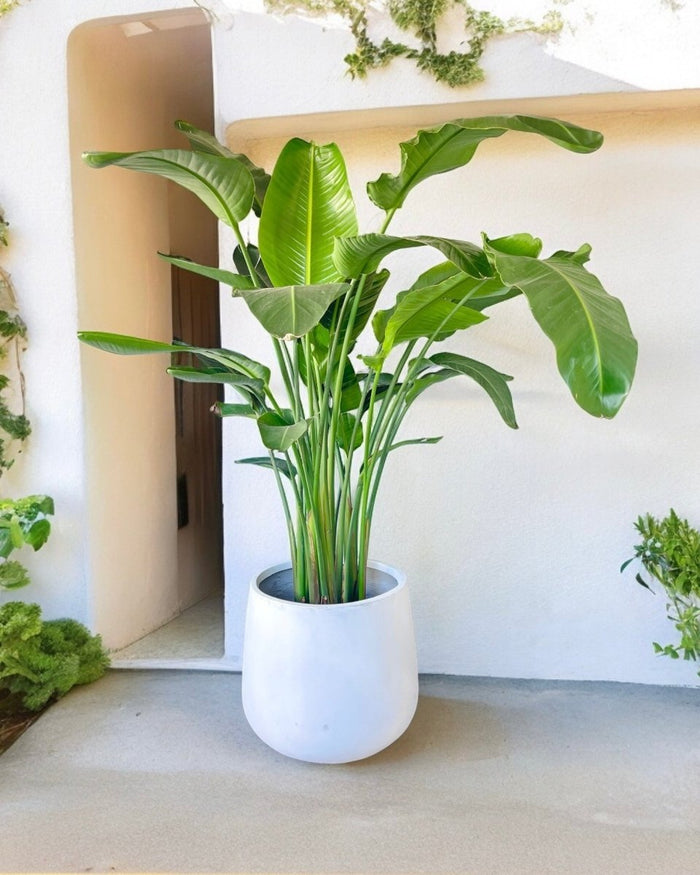
- Statement plant: A medium to large Alocasia in a clean, modern pot — on a plant stand or the floor beside furniture
- Desk feature: Compact varieties (Black Velvet, Silver Dragon) on a desk or side table
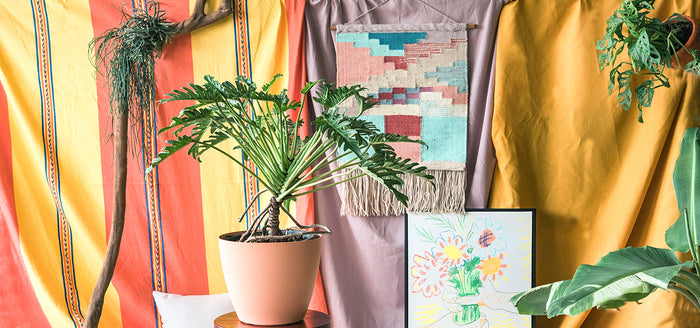
- Tropical grouping: Pair with Monstera, Philodendron, and ferns for a layered tropical corner
Shop Alocasia
Browse our indoor plant collection for Alocasia varieties delivered across Singapore. From the compact Black Velvet to the dramatic Zebrina, we ship healthy, well-established plants ready for your home.
Alocasia is not a background plant. It demands attention — visually, with its sculptural leaves, and practically, with its specific care requirements. But for those willing to learn its language — consistent moisture, good light, high humidity, and patience with its leaf cycle — Alocasia rewards with some of the most extraordinary foliage in the plant kingdom.
Quick summary
Key Takeaways
- Popular Varieties
- Light
- Watering
- Soil
- Humidity
- Temperature
Ready to bring some green into your home?
Browse 250+ hand-picked plants, curated for Singapore homes — delivered to your door.
Browse All Plants →