















The Best Plants for Offices and Workspaces (Including Cubicles With No Windows)
Posted on April 16 2026
In this article

Thumbnail image spec (1200x628px): A tidy Singapore office desk with a pothos trailing from a shelf, a small ZZ plant beside the monitor, and a snake plant in the corner — warm professional setting; text overlay: "Best Office Plants — Tumbleweed Plants Singapore"
---
Adding plants to your workspace isn't just aesthetic. Research consistently shows that plants in work environments reduce stress, lower blood pressure, improve air quality, and increase focus and productivity. The effect is real — but only if the plants survive.
The challenge: most offices are not ideal plant environments. Fluorescent lighting, air conditioning, low humidity, and busy schedules that make consistent watering easy to forget all conspire against the average office plant.
Singapore offices add specific challenges: aggressive air-conditioning (often set below 22°C), the contrast between the cool, dry office interior and the hot, humid outdoors, and buildings that may have limited natural light depending on floor and orientation.
This guide covers the plants that thrive despite those conditions — and which ones to avoid.
---
What Makes a Good Office Plant?
The best office plants share these characteristics:
- Tolerates low or artificial light — most offices lack natural window light
- Forgiving of irregular watering — missed waterings are a reality in busy work environments
- Slow to show stress — you want a plant that stays looking good for weeks, not one that wilts the moment you leave for a long weekend
- Handles cool, dry, air-conditioned air — especially important in Singapore, where office aircon is often set very low
- Non-toxic is a plus — shared office spaces may include people who eat at their desks or have skin sensitivities
With those criteria in mind, here are the best options.
---
The Best Office Plants, Ranked by Light Tolerance

For Offices With No Windows (Fluorescent Light Only)
1. Pothos (Epipremnum aureum)
The most forgiving office plant that exists. Pothos genuinely thrives under fluorescent lighting — it's been tested in NASA studies on air quality and showed good performance even in artificial light environments. It tolerates skipped waterings, won't dramatically wilt if you go away for a long weekend or Singapore public holiday, and looks attractive trailing from a shelf or desk.
Best variety for fluorescent light: Golden Pothos or Marble Queen
2. Snake Plant (Dracaena trifasciata)
Snake plants store water in their leaves and can go 2–4 weeks without water without visible stress. They grow slowly under fluorescent light but stay healthy and upright indefinitely. Their architectural form looks clean and professional on a desk or floor.
Best for: Set-it-and-forget-it situations. Perfect for frequent business travellers.
3. ZZ Plant (Zamioculcas zamiifolia)
ZZ plants tolerate fluorescent light and drought better than almost anything else. Their glossy, deep-green leaves look polished without any leaf cleaning products. Water once a month in a windowless office and they'll stay healthy.
4. Cast Iron Plant (Aspidistra elatior)
True to its name: virtually indestructible. Tolerates deep shade, low humidity, temperature fluctuations, and sporadic watering. Grows very slowly but stays attractive for years with minimal care.
5. Dracaena (various species)
Dracaenas — especially the Corn Plant (D. fragrans) and marginata varieties — tolerate low to medium light well. The main caveat: use filtered water. Dracaenas are fluoride-sensitive and Singapore tap water can cause brown tips over time.
---
For Offices With a Window (Even a North-Facing One)
All of the above, plus:
6. Heartleaf Philodendron
One step more beautiful than pothos, and almost as easy. Trails elegantly from a shelf or desk plant stand. Tolerates north-facing window light well.
7. Peace Lily (Spathiphyllum)
One of the few flowering plants that thrives in lower light. White blooms appear reliably in medium indirect light. The plant dramatically droops when thirsty (a visual watering reminder), then recovers fully once watered.
Important note: Peace lilies are mildly toxic — use caution in offices with food.
8. Chinese Evergreen (Aglaonema)
Bold foliage in green, red, or pink, with excellent low-light tolerance. The darker green varieties (like Aglaonema 'Silver Bay') handle the lowest light. Colorful varieties need more light to keep their pigmentation. A Singapore favourite for office lobbies.
---
For Offices With a Good Window (East or West Facing)
9. Succulents and Cacti
Small succulents and cacti are ideal windowsill plants — they need minimal water (perfect for busy schedules) and sit neatly in small pots. The challenge: they absolutely require natural light. Under fluorescent lights alone, they will slowly decline.
Singapore note: East-facing windows receive morning sun, which is ideal for succulents. Avoid placing directly against west-facing glass in Singapore — afternoon sun through glass can be intense enough to cook a small succulent.
10. Aloe Vera
Aloe thrives in a sunny window and has the bonus of being a useful first-aid plant. The gel inside the leaves soothes minor burns and cuts. Needs watering once every 2–3 weeks.
---
What NOT to Put in a Singapore Office
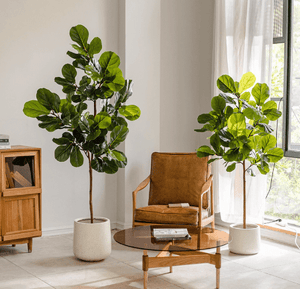
Fiddle Leaf Figs — Dramatic and beautiful but they need consistent conditions, dislike being moved, and drop leaves when stressed. The demands of an office environment (drafts from aggressive Singapore aircon, weekend water gaps, variable light) make them poor choices.
Ferns — Most ferns need high humidity and consistent moisture. Singapore's outdoor air is humid, but the inside of an air-conditioned office often drops to 40–50% RH — far too dry for ferns.
Calatheas — Similar to ferns: too sensitive to low humidity and irregular watering for most air-conditioned Singapore office environments.
Most flowering plants — Orchids, anthuriums, and peace lilies (the exception) need conditions that most offices can't reliably provide.
---
Desk Plant vs. Floor Plant: Choosing the Right Size

For desks:
Keep it small — 4" or 6" pots. You need the desk space, and the plant shouldn't dominate your field of view. Good choices:
- Small pothos or heartleaf philodendron in a 4" pot
- A single succulent or small cactus
- A small ZZ plant
- A compact aglaonema
For windowsills:
Slightly larger — 4" to 6" pots, or a row of small succulents. Avoid placing so close to the glass that they're touching — glass in Singapore can heat up dramatically on a sunny afternoon.
For floor corners:
Large architectural plants work well here. A snake plant, ZZ plant, or pothos in a large hanging basket or floor-level pot can fill an empty corner. These don't need to be near a window if they're pothos or ZZ.
---
Tips for Keeping Office Plants Alive in Singapore
Set a watering reminder. The biggest killer of office plants is forgetting. A simple weekly calendar reminder on Monday morning to check soil moisture takes 30 seconds and saves plants.
Use self-watering pots for frequently forgotten plants. Self-watering inserts and pots with reservoirs extend the time between waterings significantly.
Use filtered water for sensitive plants. Singapore tap water contains fluoride that causes brown tips on dracaenas and other sensitive plants. Keep a small bottle of filtered water at your desk.
Avoid vents. Singapore office aircon vents can create very dry, cold airflow that desiccates foliage quickly. Position plants at least 1–2 metres away from direct vent airflow.
Choose plastic or ceramic for air-conditioned offices. These retain moisture longer, compensating for the drying effect of Singapore's aggressive office aircon.
Acclimate new plants. A plant shipped or purchased in Singapore's outdoor humidity may show stress when first brought into a cool, dry office. Give it 1–2 weeks to adjust before worrying.
---
What Plants Do for Your Workspace

Beyond aesthetics, the presence of plants in a workspace has measurable effects:
- Reduces perceived stress and anxiety
- Improves concentration and task performance
- Reduces noise levels (plants absorb sound)
- Improves air quality (some plants absorb VOCs from synthetic office furniture and equipment)
- Humanises and personalises an otherwise neutral environment
A single well-chosen plant on a desk is enough to see some of these effects. You don't need a full office jungle — though we won't judge if that's where you end up.
---
Quick summary
Key Takeaways
- What Makes a Good Office Plant?
- The Best Office Plants, Ranked by Light Tolerance
- What NOT to Put in a Singapore Office
- Desk Plant vs. Floor Plant: Choosing the Right Size
- Tips for Keeping Office Plants Alive in Singapore
- What Plants Do for Your Workspace
Ready to bring some green into your home?
Browse 250+ hand-picked plants, curated for Singapore homes — delivered to your door.
Browse All Plants →