
























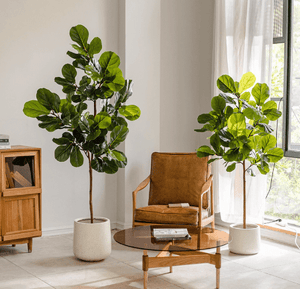





Science-Backed Benefits of Indoor Plants
Posted on April 09 2026
In this article

- Air Purification: The Complicated Truth
- Mental Health and Stress Reduction: Strong Evidence
- Productivity: Promising Evidence
- Sound Absorption: Modest but Real
- Temperature Regulation: Minor Effect
- Microbial Diversity: Emerging Research
- What the Science Does NOT Support
- The Honest Summary
- Shop Plants for Wellbeing
The indoor plant industry loves to make grand claims. "Plants purify your air!" "Plants boost your mood!" "Plants increase productivity by 47%!" Some of these claims are rooted in real research. Others are extrapolated beyond what the science supports. And a few are simply marketing.
This article examines what peer-reviewed research actually says about the benefits of keeping indoor plants — what is well-supported, what is promising but uncertain, and what is overstated.
Air Purification: The Complicated Truth
The NASA Study
The most cited study in plant marketing is NASA's 1989 Clean Air Study, which found that certain houseplants removed volatile organic compounds (VOCs) like formaldehyde, benzene, and trichloroethylene from sealed chambers.
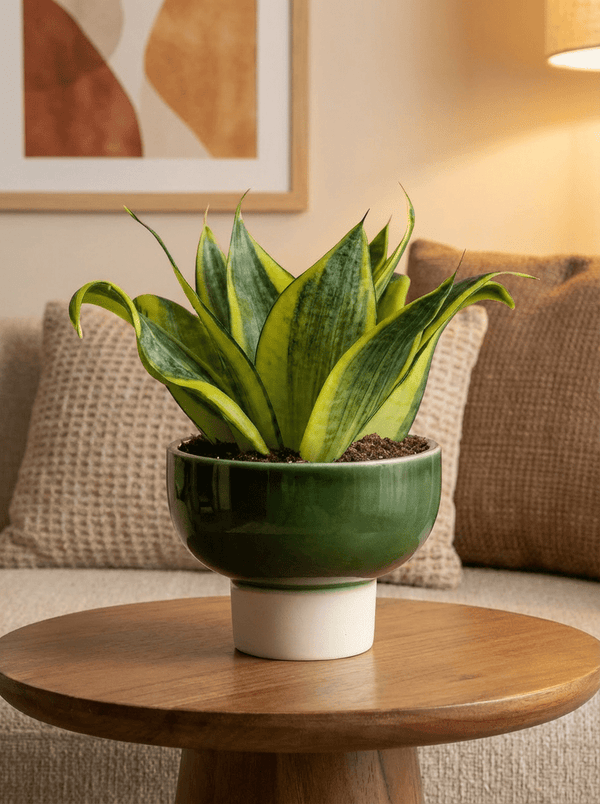
What the study actually showed: In small, sealed experimental chambers, specific plants (including Peace Lily, Snake Plant, Spider Plant, and Pothos) reduced concentrations of certain VOCs over 24-hour periods.
The limitation: A 2019 review by Cummings and Waring in the Journal of Exposure Science & Environmental Epidemiology recalculated the NASA data for real-world conditions. They concluded that you would need 10-1,000 plants per square metre of floor space to match the air-cleaning rate of simply opening a window or running a mechanical ventilation system. In a typical room, the air exchange rate from normal ventilation overwhelms any plant-based filtration.
The Practical Verdict
Plants do absorb some VOCs. This is established science. However, the rate at which typical household quantities of plants clean air is far too slow to meaningfully reduce indoor air pollution on its own.
Plants do produce oxygen and absorb CO2. This is basic photosynthesis. A few plants in a room will not transform your air quality, but they contribute positively to the CO2/O2 balance, particularly in poorly ventilated spaces.
Plants increase humidity through transpiration. This is measurable and beneficial in dry, air-conditioned Singapore interiors. A group of plants can raise local humidity by 5-10%.
Bottom line: Do not buy plants expecting them to replace an air purifier or ventilation system. Buy them for the many other evidence-based benefits — and enjoy the modest air quality improvement as a bonus.
Mental Health and Stress Reduction: Strong Evidence

This is where the science is most convincing.
Stress Reduction
A 2015 study published in the Journal of Physiological Anthropology (Lee et al.) found that interacting with indoor plants (transplanting and touching) reduced physiological stress markers (cortisol levels, sympathetic nervous system activity, blood pressure) compared to computer-based tasks. The effect was statistically significant.
A 2020 systematic review of 42 studies (Soga et al., in Environmental Research) found consistent evidence that exposure to indoor plants reduced stress, anxiety, and negative emotions across various settings.
Mood and Wellbeing
Multiple studies have found that the presence of plants in indoor environments improves self-reported mood, satisfaction, and overall wellbeing:
- A 2011 study (Bringslimark et al.) found that office workers with plants within view of their desk reported higher job satisfaction and lower stress.
- Research by Fjeld et al. (1998) found that office workers in plant-enriched environments reported fewer health complaints (headaches, fatigue, dry skin) than those in plant-free offices.
Attention Restoration
Attention Restoration Theory (Kaplan, 1995) proposes that natural elements (including plants) engage "involuntary attention" — a soft, effortless focus — allowing the directed attention used in work tasks to recover. Multiple studies have supported this framework, finding that brief exposure to plants or nature views restores attention capacity and reduces mental fatigue.
The Singapore Context
In one of the world's most urbanised and work-intensive cities, the stress-reduction benefits of indoor plants are particularly relevant. For people working from home in compact apartments with limited access to outdoor green spaces, indoor plants provide the most accessible form of daily nature exposure.
Productivity: Promising Evidence
The Exeter Study
A 2014 study by Nieuwenhuis et al. (University of Exeter), published in the Journal of Experimental Psychology: Applied, is the most-cited productivity study. It found that enriching a previously lean office with plants increased productivity by 15% on memory-based and other tasks.
Important context: The study compared a "lean" (bare) office to an "enriched" (decorated, including plants) office. The improvement may be attributed to environmental enrichment generally — not exclusively to plants. However, subsequent analyses suggested plants were a significant contributor.
Hospital Recovery
A 2009 study by Park and Mattson found that hospital patients with plants in their rooms had lower systolic blood pressure, lower ratings of pain, anxiety, and fatigue, and more positive feelings compared to patients in rooms without plants. They also required less pain medication post-surgery.
The Practical Application
While the exact percentage improvement varies across studies, the direction is consistent: plant-enriched environments support cognitive performance better than barren ones. For home offices — where environmental control is in the individual's hands — adding plants is one of the simplest, lowest-cost interventions available.
Sound Absorption: Modest but Real

Plants absorb, reflect, and diffract sound waves. Research by Costa and James (2013) found that indoor plants can reduce ambient noise levels by up to 5 decibels in some configurations. This is modest but perceptible — roughly equivalent to the difference between a quiet room and a very quiet room.
Practical impact: A few desk plants will not soundproof your home office. But a room with multiple plants, including floor plants with large leaves, will feel noticeably quieter than the same room without plants.
Temperature Regulation: Minor Effect
Plants cool their environment slightly through transpiration (evaporative cooling). Research suggests indoor plants can reduce room temperature by 1-2°C in some conditions.
Practical impact: Negligible for individual plants. A room densely planted (greenhouse-like) would show measurable cooling. A few houseplants will not affect your AC bill.
Microbial Diversity: Emerging Research

Recent research has explored the relationship between indoor plants and microbial diversity — the variety of bacteria, fungi, and other microorganisms in an indoor environment. Studies suggest that plants introduce and support beneficial microbial communities that may support human immune function.
This is an emerging area. The evidence is preliminary but the direction is interesting: our immune systems evolved alongside diverse microbial environments, and indoor plants may help restore some of that diversity in our sterile modern homes.
What the Science Does NOT Support
"Plants remove all toxins from your home." Overstated. Plants remove some VOCs at rates too slow to meaningfully purify a typical room.
"Specific plants cure insomnia/depression/anxiety." No plant is a medical treatment. Plants contribute to environments that support wellbeing, but they are not medicine.
"You need X number of plants per room for benefits." No study has established a specific threshold. The psychological benefits likely begin with even one or two visible plants.
"Snake Plants produce enough oxygen to breathe in a sealed room." The oxygen output of any houseplant is a tiny fraction of human consumption. You cannot survive in a sealed room with plants alone.
The Honest Summary
| Benefit | Evidence Level | Practical Impact |
|---|---|---|
| Stress reduction | Strong | Measurable reduction in cortisol and blood pressure |
| Mood improvement | Strong | Consistent self-reported improvements across studies |
| Productivity boost | Moderate | 10-15% improvement in enriched vs. lean environments |
| Attention restoration | Moderate | Reduced mental fatigue, improved focus |
| Air purification (VOCs) | Weak at room scale | Negligible unless you have hundreds of plants |
| Humidity increase | Moderate | Measurable 5-10% local increase |
| Sound absorption | Weak to moderate | Perceptible in plant-dense environments |
| Temperature reduction | Weak | 1-2°C in ideal conditions, negligible in practice |
Shop Plants for Wellbeing
Browse our indoor plant collection — and add them to your home for the right reasons. The strongest science says plants make you feel calmer, more satisfied, and more focused. That is enough. You do not need inflated claims about air purification or miracle health benefits to justify a Monstera on your desk.
The science is clear on one thing: having plants around you makes you feel better. Not because of magical properties or pseudoscientific air-cleaning claims, but because humans evolved alongside plants, and their presence triggers deep, measurable responses in our stress systems, our attention, and our overall sense of wellbeing. That is a good enough reason to bring one home.
Quick summary
Key Takeaways
- Air Purification: The Complicated Truth
- Mental Health and Stress Reduction: Strong Evidence
- Productivity: Promising Evidence
- Sound Absorption: Modest but Real
- Temperature Regulation: Minor Effect
- Microbial Diversity: Emerging Research
Ready to bring some green into your home?
Browse 250+ hand-picked plants, curated for Singapore homes — delivered to your door.
Browse All Plants →









Comments
0 Comments
Leave a Comment