















Best Get Well Soon Plant Gifts in Singapore | Tumbleweed Plants Singapore
Posted on April 09 2026
In this article

When someone you care about is unwell, recovering from surgery, or going through a difficult health period, you want to send something that helps. Cut flowers are the traditional choice, but they wilt and need replacing — hardly ideal for someone whose energy is focused on recovery. A plant is a better option: it brightens the space, requires minimal care, and serves as a lasting reminder that someone is thinking of them.
Research supports this. A 2009 study by Park and Mattson found that hospital patients with plants in their rooms reported lower pain, anxiety, and fatigue, and required less pain medication than patients without plants. While your gift may arrive at home rather than a hospital, the principle holds — living greenery supports recovery environments.
What Makes a Good Get Well Soon Plant
Ultra-low maintenance. The recipient is unwell. They do not have the energy for daily watering, misting, or monitoring. The plant needs to survive with minimal care — preferably needing water only every one to three weeks.
Uplifting appearance. A plant with colour, interesting foliage, or a cheerful aesthetic is more mood-lifting than a dark, serious-looking plant. Think bright green, soft pink, or clean white — colours associated with hope and freshness.
Compact and manageable. A massive floor plant is overwhelming for someone who is resting. A small to medium plant that fits on a bedside table, windowsill, or dresser is ideal.
No strong fragrance. People who are unwell can be sensitive to strong smells. Avoid heavily scented plants.
Non-toxic. If the recipient has children or pets at home, choose a non-toxic option.
The Best Get Well Soon Plants

1. Peace Lily (Spathiphyllum)
Why it works: Elegant white blooms symbolise peace and recovery. Air-purifying properties benefit the recovery environment. Thrives in low light (bedroom-friendly). Dramatically droops when thirsty — impossible to accidentally neglect.
Care: Water when it droops. Any light works. About as low-maintenance as a flowering plant gets.
Symbolism: Peace, healing, purity.
2. Pothos (Golden or Neon)
Why it works: Bright, cheerful foliage that grows visibly — giving the recipient something positive to watch during recovery. Virtually unkillable. The neon variety's bright chartreuse colour is especially uplifting.
Care: Water every one to two weeks. Any light.
Symbolism: Resilience, growth.
3. Aglaonema (Pink Varieties)
Why it works: Pink and green foliage is cheerful and visually warming. Extremely low-maintenance. Tolerates the low light of a bedroom. One of the few colourful plants that does not need bright light.
Care: Water every one to two weeks. Low to medium light.
Symbolism: Brightness, hope.
4. Jade Plant (Crassula ovata)
Why it works: Symbolises health and prosperity — meaningful for someone who is recovering. Long-lived and low-maintenance. The thick, sculptural leaves are satisfying to look at.
Care: Water every two to three weeks. Bright light preferred but tolerates less.
Symbolism: Health, prosperity, good fortune.
5. Spider Plant (Chlorophytum comosum)
Why it works: Fast-growing and dynamic — it produces babies on trailing stolons that provide visual interest during recovery. Non-toxic to pets. Air-purifying.
Care: Water weekly. Medium to bright light.
Symbolism: Growth, vitality.
6. Succulents in a Cheerful Pot
Why it works: Compact, no-fuss, and available in cute, colourful arrangements. A small cluster of succulents in a bright pot adds cheer without demanding care.
Care: Water every two to three weeks. Bright light.
Symbolism: Endurance, strength.
7. Lucky Bamboo (Dracaena sanderiana)
Why it works: In Chinese culture, Lucky Bamboo symbolises good health and fortune — particularly meaningful for a recovery gift. Grows in water, needs no soil. Essentially zero maintenance.
Care: Keep the water level topped up. Low to medium light.
Symbolism: Good health, luck, recovery.
Presentation for Get Well Gifts
Keep It Simple
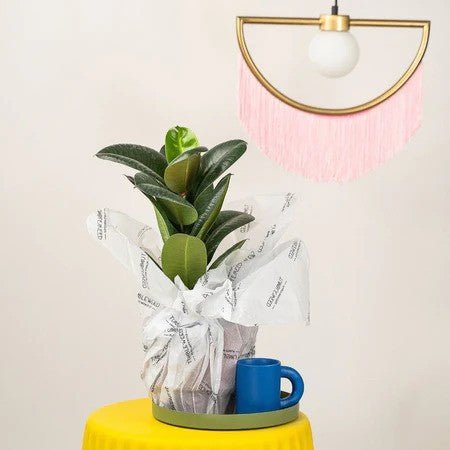
The recipient does not need a complex arrangement that requires assembly or immediate care decisions. The plant should arrive ready to place:
- Already potted in an attractive container with drainage
- Include a saucer or built-in drip tray
- No loose soil, exposed roots, or "assembly required"
Include a Brief Care Card
Three bullet points maximum:
- Water: How often, and how to tell when it is thirsty
- Light: Where to place it
- Reassurance: "This plant is nearly impossible to kill. Focus on getting better — it will take care of itself."
Add a Personal Note
A handwritten note matters more than the plant itself. Keep it genuine:
- "Sending you something green and growing while you recover."
- "This will keep you company. Water it occasionally. Focus on resting."
- "Here is something alive that will grow alongside your recovery."
Avoid overly cheerful or dismissive tones ("You'll be fine in no time!"). Acknowledge their situation and show care.
Delivery Considerations
Deliver to their home. Hospital rooms often have restrictions on plant gifts (soil and water can harbour pathogens). Home delivery is more practical.
Time it well. Send the plant during the recovery period — not necessarily on day one. A plant arriving a few days after surgery or a week into illness shows sustained care.
Include everything needed. The recipient should not need to buy a saucer, find a sunny spot, or figure out care instructions. Everything should be included and self-explanatory.
Plants to Avoid for Get Well Gifts

- Flowering plants that need bright light (orchids) — bedrooms are often too dark
- Fussy plants (Calathea, Maidenhair Fern) — too demanding for someone who is recovering
- Large or heavy plants — logistically challenging and overwhelming
- Heavily scented plants — may cause nausea or discomfort
- Cacti or thorny plants — symbolically inappropriate (sharpness, pain) and practically risky near someone who may be clumsy from medication
Budget Guide
| Budget | Suggestions |
|---|---|
| Under $25 | Small Pothos or Lucky Bamboo in a simple pot |
| $25-$40 | Medium Peace Lily or Pink Aglaonema in a ceramic planter |
| $40-$60 | Jade Plant in a premium pot or a curated succulent arrangement |
| $60-$80 | Large Peace Lily or plant + self-care item (hand cream, tea, candle) |
| $80+ | Curated recovery hamper: plant + comfort items + personal note |
Shop Get Well Plants

Browse our gift-ready plant collection for low-maintenance plants perfect for brightening a recovery. We deliver across Singapore — send a living gift that says "I am thinking of you" every day until they are well again.
A get well plant is not just a gift — it is a presence. It sits on the bedside table during sleepless nights, catches the morning light during slow-to-start days, and grows a little each week alongside the person it was given to. When the recipient is finally well, the plant is still there — a living record of the recovery and the person who cared enough to send something alive.
Quick summary
Key Takeaways
- What Makes a Good Get Well Soon Plant
- The Best Get Well Soon Plants
- Presentation for Get Well Gifts
- Plants to Avoid for Get Well Gifts
- Budget Guide
- Shop Get Well Plants
Ready to bring some green into your home?
Browse 250+ hand-picked plants, curated for Singapore homes — delivered to your door.
Browse All Plants →