



















How Plants Improve Air Quality in Singapore Homes | Tumbleweed Plants Singapore
Posted on April 16 2026
In this article

The idea that houseplants purify indoor air is one of the most widely cited reasons for owning plants — and one of the most misunderstood. The claim traces back to a famous 1989 NASA study that found certain houseplants could remove volatile organic compounds (VOCs) from sealed chambers. Since then, "air-purifying plants" has become a marketing category, with lists of top air-cleaning plants circulating endlessly online.
But the reality is more nuanced than the marketing suggests. Understanding what plants can and cannot do for indoor air quality — especially in Singapore's unique conditions — helps you set realistic expectations while still appreciating the genuine benefits plants provide.
The NASA Study: What It Actually Showed
In 1989, NASA researcher Bill Wolverton published a study examining whether houseplants could remove VOCs (formaldehyde, benzene, trichloroethylene) from sealed test chambers. The results were positive — plants did remove these compounds from the enclosed spaces.
However, critical context is often omitted:
The chambers were sealed. Real homes are not. Singapore homes exchange air through windows, doors, AC systems, and natural ventilation constantly. The sealed-chamber results do not directly translate to real-world conditions.
The plant-to-space ratio was high. The chambers were small. Scaling the results to a typical room would require far more plants than most people own. One study estimated you would need approximately 10-100 plants per square metre to achieve meaningful air purification — essentially a greenhouse, not a living room.
The time frame was extended. VOC removal happened over 24 hours in a sealed space. In a ventilated home, fresh VOCs are continuously introduced while treated air is continuously exchanged.
What Plants Actually Do for Air Quality

Modest VOC Removal
Plants do absorb some volatile organic compounds through their leaves and root microbiome. This effect is real but modest in a normal home setting. A few plants will not meaningfully reduce your formaldehyde levels — but a room full of plants may contribute to slightly lower VOC concentrations over time.
CO2 and Oxygen Exchange
Plants absorb CO2 and release oxygen during photosynthesis. In a well-ventilated Singapore home, this effect is negligible. In a sealed, air-conditioned room with limited fresh air exchange, a group of plants may marginally improve the CO2/O2 balance.
Humidity Regulation
Plants release water vapour through transpiration, adding moisture to the air. In air-conditioned Singapore rooms (which can drop to 50-55% humidity), a group of plants measurably increases local humidity — which is genuinely beneficial for respiratory comfort and skin health.
Microbial Diversity
Recent research suggests that the microbial communities associated with plants (in the soil, on leaf surfaces, and in the root zone) may contribute positively to indoor microbial diversity. A diverse indoor microbiome is associated with better immune health outcomes.
Dust Capture
Plant leaves trap airborne dust and particulate matter on their surfaces. This is a passive filtering effect — the dust settles on the leaves rather than remaining airborne. Regular leaf cleaning removes the captured dust.
Singapore-Specific Considerations
Outdoor Air Quality
Singapore generally has good outdoor air quality, with occasional haze events from regional burning. During haze periods, windows are closed and AC is used exclusively — exactly the conditions where indoor plants have the most potential impact on air quality (sealed space, limited air exchange).
Indoor Pollutant Sources
Common indoor air pollutants in Singapore homes:
- Formaldehyde — From new furniture, laminates, paint, cleaning products
- VOCs — From household products, cooking, new electronics
- CO2 — From occupants breathing in sealed AC rooms
- Particulate matter — From cooking, especially frying and grilling
Air Conditioning
Most Singapore homes use AC heavily, which recirculates indoor air. In these conditions, plants have a relatively longer exposure to indoor pollutants (compared to naturally ventilated homes where fresh air constantly dilutes indoor pollutants).
The Most Commonly Cited Air-Purifying Plants

These plants performed well in the NASA study and subsequent research:
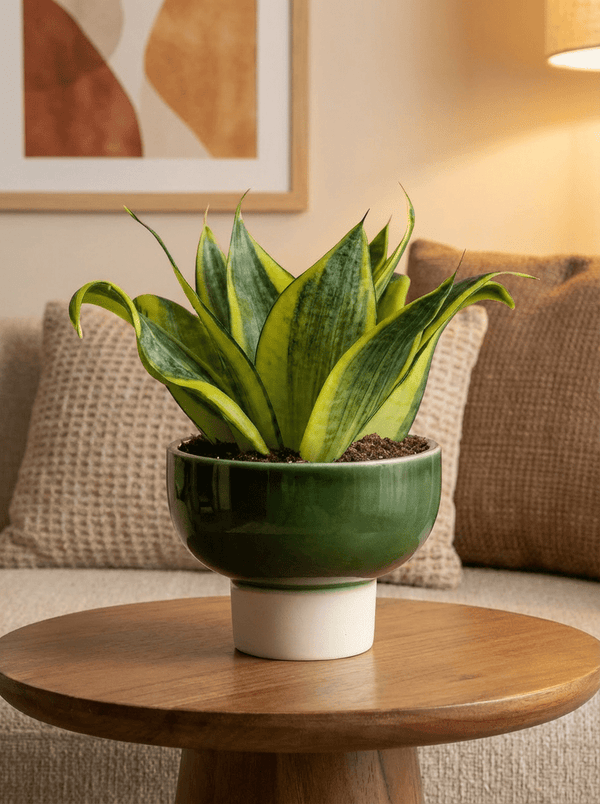
Snake Plant (Sansevieria)
- Converts CO2 to O2 at night (CAM photosynthesis) — unique among common houseplants
- Removes formaldehyde, benzene, and trichloroethylene
- Extremely low maintenance
Peace Lily (Spathiphyllum)
- Showed strong VOC removal in studies
- Effective against formaldehyde, benzene, and ammonia
- Blooms in low light — functional and beautiful
Pothos (Epipremnum aureum)
- Effective against formaldehyde
- Fast-growing — more leaf surface area for air interaction
- Extremely hardy and low-maintenance
Spider Plant (Chlorophytum comosum)
- Strong formaldehyde removal in tests
- Produces plantlets that expand the air-filtering surface
- Non-toxic — safe for all households
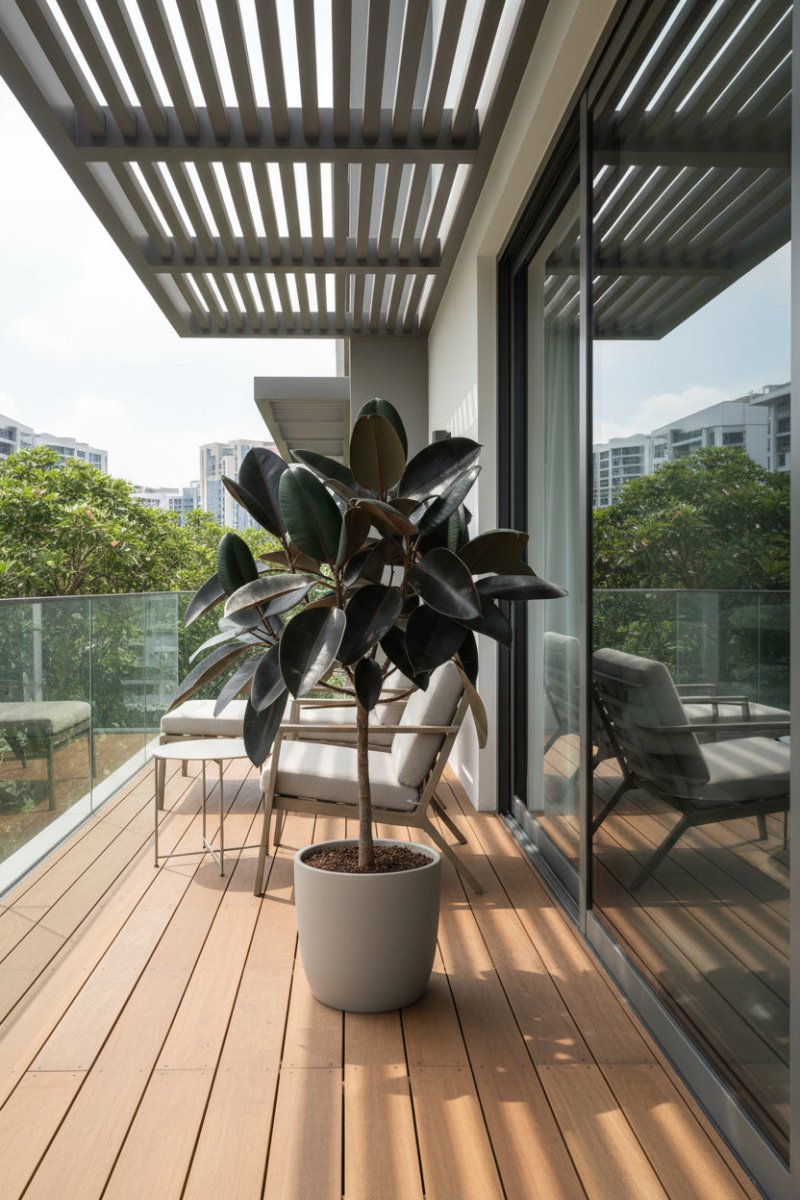
Rubber Plant (Ficus elastica)
- Large, thick leaves with substantial surface area
- Effective formaldehyde removal
- Tolerates various conditions
Boston Fern (Nephrolepis exaltata)
- Strong formaldehyde removal
- Excellent humidifier — high transpiration rate
- Thrives in Singapore's humidity
Dracaena
- Multiple species tested with positive results
- Removes benzene, formaldehyde, and trichloroethylene
- Various sizes available
A Realistic Approach
Plants as Part of a Strategy
Houseplants alone will not solve indoor air quality problems. But they can be part of a multi-faceted approach:
- 1. Ventilation — Open windows regularly to exchange indoor air (when outdoor air quality is good)
- 2. Source reduction — Choose low-VOC paints, furniture, and cleaning products
- 3. Air purifiers — Mechanical air purifiers are far more effective than plants at removing particulates and VOCs
- 4. Plants — Add a genuine, if modest, contribution while providing numerous other benefits
The Real Benefits of Having Plants
Even if air purification is overstated, plants provide substantial proven benefits:
- Stress reduction — Measurable cortisol reduction in plant-filled environments
- Attention restoration — Green environments improve focus and reduce mental fatigue
- Humidity — Meaningful humidity improvement in AC rooms
- Aesthetics — A beautiful, living environment improves mood and satisfaction
- Noise dampening — Plants absorb sound in hard-surfaced rooms
These benefits are well-documented, significant, and do not require the number of plants that meaningful air purification would demand. You need 2-3 plants to feel calmer. You would need 200 to noticeably purify the air.
Shop Plants

Browse our indoor plant collection for plants that make your Singapore home healthier and more beautiful.
The honest answer to "do plants purify the air?" is: a little, but not as much as the marketing claims. The honest answer to "should I have plants for better indoor air quality?" is: have plants, but do not rely on them as your air purification system. Have them because they reduce stress, increase humidity, look beautiful, and make your home feel alive. Have them because the act of caring for living things is good for you. And if they happen to absorb a small amount of formaldehyde from your new IKEA shelf while they are at it — that is a bonus, not the reason. The real air-quality improvement from plants is not chemical — it is psychological. Walking into a room full of green, living things feels cleaner, calmer, and healthier. And in Singapore, where most of us spend the majority of our time in sealed, air-conditioned rooms, that feeling matters.
Quick summary
Key Takeaways
- The NASA Study: What It Actually Showed
- What Plants Actually Do for Air Quality
- Singapore-Specific Considerations
- The Most Commonly Cited Air-Purifying Plants
- A Realistic Approach
- Shop Plants
Ready to bring some green into your home?
Browse 250+ hand-picked plants, curated for Singapore homes — delivered to your door.
Browse All Plants →








Comments
0 Comments
Leave a Comment