

























How to Propagate Houseplants in Singapore | Tumbleweed Plants Singapore
Posted on April 16 2026
In this article

Propagation is the moment plant ownership becomes plant parenting. Buying a plant is acquiring. Propagating is creating. There is genuine satisfaction in cutting a stem from your Pothos, watching roots develop in a glass of water on your windowsill, and planting it as a new, independent plant that you grew from nothing but a cutting and patience.
In Singapore, our warm, humid climate makes propagation easier than in temperate regions. Root development is faster. Success rates are higher. And the year-round warmth means there is no "wrong season" to propagate — you can take cuttings any time.
Propagation Methods
Water Propagation
The most popular method for beginners — and for good reason. You can watch the roots develop in real time.
How to:
- 1. Cut a stem section with at least one node (the bump where a leaf meets the stem) and one or two leaves
- 2. Remove any leaves that would be submerged (submerged leaves rot)
- 3. Place the cutting in a clean glass or jar with room-temperature water
- 4. Position the node below the water line
- 5. Place in bright indirect light
- 6. Change the water every 5-7 days to keep it fresh and oxygenated
- 7. Roots appear in 1-4 weeks depending on the species
- 8. Transfer to soil when roots are 3-5cm long
Best plants for water propagation:
- Pothos — Roots in 1-2 weeks. The easiest plant to propagate.
- Philodendron (heartleaf, Brasil, Micans) — Roots in 1-3 weeks
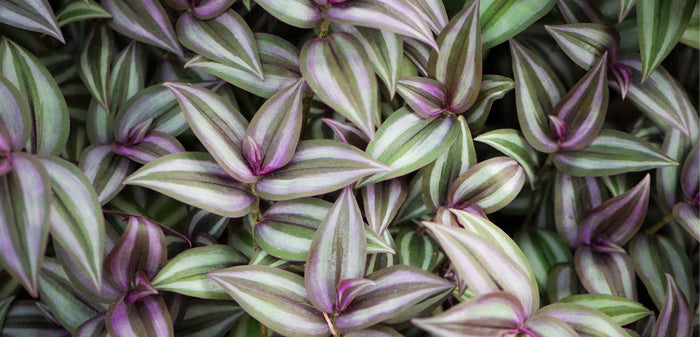
- Tradescantia — Roots in 1 week. Incredibly fast.
- Syngonium — Roots in 1-3 weeks
- Monstera — Roots in 2-4 weeks. Larger cuttings take longer.
- String of Hearts — Roots in 2-3 weeks
Tips for water propagation:
- Use a clear container so you can monitor root development
- Keep water level consistent — do not let the node dry out
- Avoid direct sun on the water (promotes algae growth)
- A few drops of liquid fertiliser in the water can boost root growth
- In Singapore's warmth, roots develop faster than in cooler climates
Soil Propagation
Cuttings go directly into soil. Roots are not visible during development, but this method produces plants that are already adapted to soil conditions — no transplant shock.
How to:
- 1. Prepare a small pot with moist propagation mix (50% perlite, 50% potting soil or sphagnum moss)
- 2. Cut a stem section with at least one node
- 3. Dip the cut end in rooting hormone (optional but improves success rates)
- 4. Make a hole in the soil and insert the cutting with the node buried
- 5. Water lightly and keep the soil consistently moist (not waterlogged)
- 6. Place in bright indirect light
- 7. Cover loosely with a clear plastic bag or dome to increase humidity (especially in AC rooms)
- 8. Roots develop in 2-6 weeks
- 9. New growth appearing above soil indicates successful rooting
Best plants for soil propagation:
- Snake Plant (leaf cuttings) — Cut a leaf into 5-10cm sections, plant right-side up
- Begonia (leaf cuttings) — Place a leaf section on moist soil, pin down the veins
- Succulents (leaf or stem) — Let the cut end callous for 2-3 days before placing on dry soil
- Hoya — Stem cuttings with at least two nodes
- Peperomia — Stem or leaf cuttings in moist soil
Division
The simplest propagation method — you literally separate a plant into two or more plants.
How to:
- 1. Remove the plant from its pot
- 2. Identify natural divisions — separate clumps with their own root systems
- 3. Gently pull or cut the divisions apart
- 4. Plant each division in its own pot with fresh soil
- 5. Water thoroughly and keep in bright indirect light
- 6. The divisions may wilt slightly initially but recover in 1-2 weeks
Best plants for division:
- Snake Plant — Pups (offsets) can be separated from the mother plant
- Peace Lily — Dense clumps divide easily
- Spider Plant — Babies (plantlets) can be cut and potted
- Calathea — Clumps divide at the root level
- Maranta — Separates easily into independent sections
- Ferns — Most ferns can be divided at the root mass
- ZZ Plant — Separate rhizomes during repotting
Air Layering
For large, woody plants where stem cuttings are impractical. You encourage roots to grow on the parent plant before cutting.
How to:
- 1. Choose a node on a healthy stem
- 2. Make a small upward cut or wound at the node
- 3. Wrap moist sphagnum moss around the wound
- 4. Wrap plastic cling film over the moss to hold moisture
- 5. Secure with tape or ties
- 6. Roots grow into the moss over 3-8 weeks
- 7. Once roots are visible, cut below the rooted section
- 8. Plant the rooted cutting in soil
Best plants for air layering:
- Rubber Plant (Ficus elastica)
- Fiddle Leaf Fig (Ficus lyrata)
- Monstera (large specimens)
- Dracaena
Singapore Propagation Advantages

Year-Round Warmth
Root development is temperature-dependent. In cooler climates, propagation is restricted to spring and summer. In Singapore, you can propagate successfully any day of the year. Our consistent 26-32°C is optimal for root cell division.
Natural Humidity
High humidity reduces water loss from cuttings (which have no roots to absorb water). In Singapore's 70-80% ambient humidity, cuttings maintain turgor better and suffer less stress during the rooting period. In temperate climates, propagators must create humidity chambers — in Singapore, the air does the work.
Bright Light
Year-round bright light supports photosynthesis in cuttings that retain leaves, providing energy for root development.
Common Propagation Mistakes
Cutting Below the Node
The mistake: Cutting above the node instead of below it. Roots grow from nodes — if you cut above the node, you have a stem with no node, and it will not root.
Fix: Always identify the node first, then cut 1-2cm below it.
Letting Cuttings Dry Out
The mistake: Leaving cuttings exposed to air for too long before placing in water or soil. The cut end callouses over and root development is delayed or prevented.
Fix: Place cuttings in water or soil within 30 minutes of cutting. Exception: succulent cuttings should be calloused for 2-3 days before planting.
Changing Water Too Rarely
The mistake: Leaving water propagation cuttings in the same water for weeks. Stagnant water becomes oxygen-depleted and can harbour bacteria.
Fix: Change water every 5-7 days. Use room-temperature water.
Too Much Direct Sun
The mistake: Placing cuttings in direct sun to "help them grow faster." Cuttings without roots cannot absorb water to replace what is lost through transpiration in bright conditions.
Fix: Bright indirect light. No direct sun on cuttings.
Transplanting Too Early
The mistake: Moving water-propagated cuttings to soil before roots are adequately developed. Short, thin roots struggle in soil.
Fix: Wait until roots are at least 3-5cm long and beginning to branch before transplanting.
Transplanting Too Late
The mistake: Leaving cuttings in water for months until they develop extensive water roots that struggle to adapt to soil.
Fix: Transplant when roots are 3-5cm. Water-adapted roots take longer to transition to soil the longer they stay in water.
What to Do With Propagated Plants

- Expand your collection — Fill empty spaces in your home with self-propagated plants
- Gift them — Propagated plants make meaningful, personal gifts
- Trade them — Join Singapore plant swap communities and trade your propagations for new varieties
- Sell them — If you are producing consistently, Carousell has an active market for locally propagated plants
- Teach — Propagation is a great activity to share with children, friends, or colleagues
Shop Plants
Browse our indoor plant collection for mother plants to propagate, delivered across Singapore.
Propagation transforms your relationship with plants. You stop being a consumer — buying plants, maintaining plants, replacing plants — and become a grower. Every Pothos in your home can produce ten more. Every Monstera pruning yields cuttings that become gifts. Every Spider Plant baby is a new plant waiting to happen. In Singapore, where warmth and humidity stack the odds in your favour, propagation success rates are high enough that even first-timers get results. Start with a Pothos cutting in a jar on your desk. Watch the roots emerge — white threads reaching into the water, visible and fascinating. When you plant that cutting and it produces its first new leaf, you will understand why propagation is not just a technique. It is the most satisfying thing you can do with a pair of scissors and a glass of water.
Quick summary
Key Takeaways
- Propagation Methods
- Singapore Propagation Advantages
- Common Propagation Mistakes
- What to Do With Propagated Plants
- Shop Plants
Ready to bring some green into your home?
Browse 250+ hand-picked plants, curated for Singapore homes — delivered to your door.
Browse All Plants →