






















How and When to Fertilize Houseplants (Without Burning Them)
Posted on April 16 2026
In this article

Thumbnail image: 1200×628px — a bottle of liquid fertilizer next to a healthy, lush tropical plant in a Singapore home setting; text overlay: "How to Fertilize Houseplants — Singapore Guide"
---
![Hero image: A Singapore home plant corner — lush monstera and pothos on a timber shelf, with a small bottle of liquid fertilizer and a watering can. Bright, warm light. Alt: Fertilizing houseplants in a Singapore home — Tumbleweed Plants care guide.]
Fertilising is the most misunderstood part of houseplant care. Most beginners either never fertilise (leaving plants nutrient-depleted in exhausted potting mix) or fertilise too much and too often (burning roots and causing leaf damage). Both are common; both are avoidable.
In Singapore, fertilising has some important differences from the temperate-climate advice you'll find on most gardening websites:
- There is no winter. Singapore's year-round tropical warmth means plants grow actively all 12 months — and need consistent feeding throughout the year, not just "spring to autumn."
- Plants grow faster here. Our warmth and humidity accelerates growth, which means nutrients get used up more quickly.
- High rainfall can leach nutrients faster. For outdoor or balcony plants, Singapore's frequent rains wash nutrients from pots more rapidly than in drier climates.
This guide covers what fertiliser does, when to use it, how much, and which type to choose — adapted for Singapore conditions.
---
Why Houseplants Need Fertiliser
In the wild, plants access nutrients from decomposing organic matter, soil microorganism activity, and natural mineral weathering. In a container, they're confined to a fixed amount of potting mix.
Fresh potting mix contains enough nutrients to support 2–4 months of growth. After that, the nutrients are depleted by plant uptake and regular watering (which leaches nutrients from the soil). Without replenishment, plants grow slowly, produce smaller leaves, lose their colour, and show visible nutrient deficiency symptoms.
Fertiliser replenishes what the plant uses.
![Image 1: Split image — a nutrient-depleted pothos with small, pale leaves on the left, and a healthy, lush fertilised pothos on the right. Singapore HDB backdrop. Alt: Effects of fertilising vs. not fertilising houseplants in Singapore.]
---
The Three Main Nutrients (N-P-K)

Every fertiliser label shows three numbers, like 10-10-10 or 5-3-3. These represent the percentage by weight of:
N — Nitrogen
Drives leafy, vegetative growth. Nitrogen deficiency shows as overall yellowing, especially in older leaves. The nutrient plants use most.
P — Phosphorus
Supports root development and flower and fruit production. Phosphorus-forward fertilisers ("bloom boosters") are used to encourage flowering plants to bloom.
K — Potassium
Strengthens cell walls, improves stress tolerance, and supports overall plant health.
What the numbers mean in practice:
- A balanced 10-10-10 fertiliser has equal parts of all three nutrients — good for general-purpose use on most foliage plants
- A 5-10-5 fertiliser ("bloom booster") has extra phosphorus — for flowering plants like anthuriums, African violets, and peace lilies
- A 3-1-2 fertiliser (higher nitrogen-to-phosphorus ratio) is good for leafy tropicals focused on foliage growth
---
When to Fertilise in Singapore
This is where Singapore differs most from standard advice.
Most guides from temperate countries say: "fertilise March through September, stop in winter." In Singapore, there is no winter. Plants grow actively year-round.
Singapore fertilising schedule:
- Fertilise monthly throughout the year — no seasonal break needed
- Slightly reduce frequency (every 6–8 weeks) only during Singapore's wettest months (November–January) if plants are growing more slowly due to reduced light on overcast days
- For fast-growing plants (pothos, monstera, philodendrons) that put out new leaves frequently in our climate, monthly feeding is appropriate year-round
Don't fertilise when:
- Newly repotted (fresh potting mix has nutrients; wait 6–8 weeks)
- Newly purchased (let them settle in their new Singapore home first)
- Stressed or sick plants (fix the underlying problem first)
---
How Much to Use

Less than you think. The most common fertilising mistake is using full-strength fertiliser at full frequency.
For most liquid fertilisers: use half the recommended dose on the label. This is gentler, reduces salt buildup risk, and still provides meaningful nutrition.
Singapore note on salt buildup: In Singapore's year-round heat, soil can dry out faster, concentrating any residual fertiliser salts more quickly. Flushing pots occasionally (watering heavily to leach excess salts) is good practice, especially for balcony plants exposed to sun and wind.
---
Types of Fertiliser
Liquid Fertiliser
Most popular and controllable.
Mixed with water and applied at watering time. Takes effect quickly, easy to adjust dose, and washes through on the next watering if you overapply.
Best for: Most Singapore houseplant growers, anyone who wants control over timing and dosage
How to apply: Mix concentrate with water at half the label directions, then water plants normally. Apply to moist soil — applying to dry soil in Singapore's heat can cause rapid fertiliser burn.
Shop liquid fertilisers at Tumbleweed Plants
---
Slow-Release Granular Fertiliser
Convenience-focused.
Small granules mixed into the soil or scattered on the surface. Each granule slowly dissolves over 3–6 months, releasing nutrients gradually.
Singapore note: In our heat and humidity, slow-release granules can break down faster than their rated duration. Check every 2–3 months and top up if plants show signs of nutrient depletion.
Best for: Busy Singapore plant owners who want to fertilise once and not think about it for a season
Shop slow-release fertilisers at Tumbleweed Plants
---
Fertiliser Spikes
Convenient but uneven.
Compressed sticks of fertiliser pushed into the soil. They release nutrients from a single concentrated point rather than evenly through the root zone, which can lead to patchy feeding.
Best for: Very low-maintenance situations; single plants where convenience is the priority
---
Organic Fertilisers (Worm Castings, Fish Emulsion, Compost Tea)
Gentler and soil-building.
Organic fertilisers have lower nutrient concentrations and are slower-acting. Much harder to over-apply. Also improve soil biology over time.
Singapore note on fish emulsion: Very effective but has a strong smell. In Singapore's heat this can be more pronounced — best used for balcony or outdoor plants, or in well-ventilated spaces.
Shop organic fertilisers at Tumbleweed Plants
---
Signs of Nutrient Deficiency

| Symptom | Likely Deficiency |
|---------|------------------|
| Overall yellowing, older leaves first | Nitrogen |
| Purple tint on leaf undersides | Phosphorus |
| Brown leaf edges on otherwise healthy plant | Potassium |
| Yellow leaves with green veins (interveinal chlorosis) | Iron or magnesium |
| Generally pale, slow-growing plant | General nutrient depletion |
If a plant shows deficiency symptoms, start with a balanced fertiliser before trying to correct individual nutrients. General depletion is by far the most common cause.
![Image 2: Close-up of a monstera leaf showing interveinal chlorosis (yellow leaves with green veins) — a sign of nutrient deficiency. Alt: Monstera nutrient deficiency symptoms — fertilising guide Singapore.]
---
Signs of Over-Fertilising
Fertiliser burn shows as:
- Brown leaf tips
- White crusting on soil surface (salt deposit from accumulated minerals)
- Wilting despite moist soil (root damage from salt concentration)
- Rapid yellowing and leaf drop
How to fix fertiliser burn:
- Stop fertilising immediately
- Flush the soil heavily — water 3–4 times in succession, letting it drain completely each time. This leaches excess salt
- If the crust on the soil surface is thick, remove the top inch of soil and replace with fresh mix
- Wait 6–8 weeks before any further fertilising
---
A Simple Fertilising Schedule for Singapore
For most tropical houseplants in Singapore:
Year-round: Fertilise once a month with half-strength balanced liquid fertiliser
Fast-growing plants (monstera, pothos, philodendron): Every 3–4 weeks during vigorous growth phases
Slow-growing plants (ZZ plant, cast iron plant): Every 6–8 weeks is sufficient
Flowering plants (anthurium, peace lily): Switch to a phosphorus-forward fertiliser when flower buds appear
Stressed or recently repotted plants: Skip until the plant settles (6–8 weeks)
---
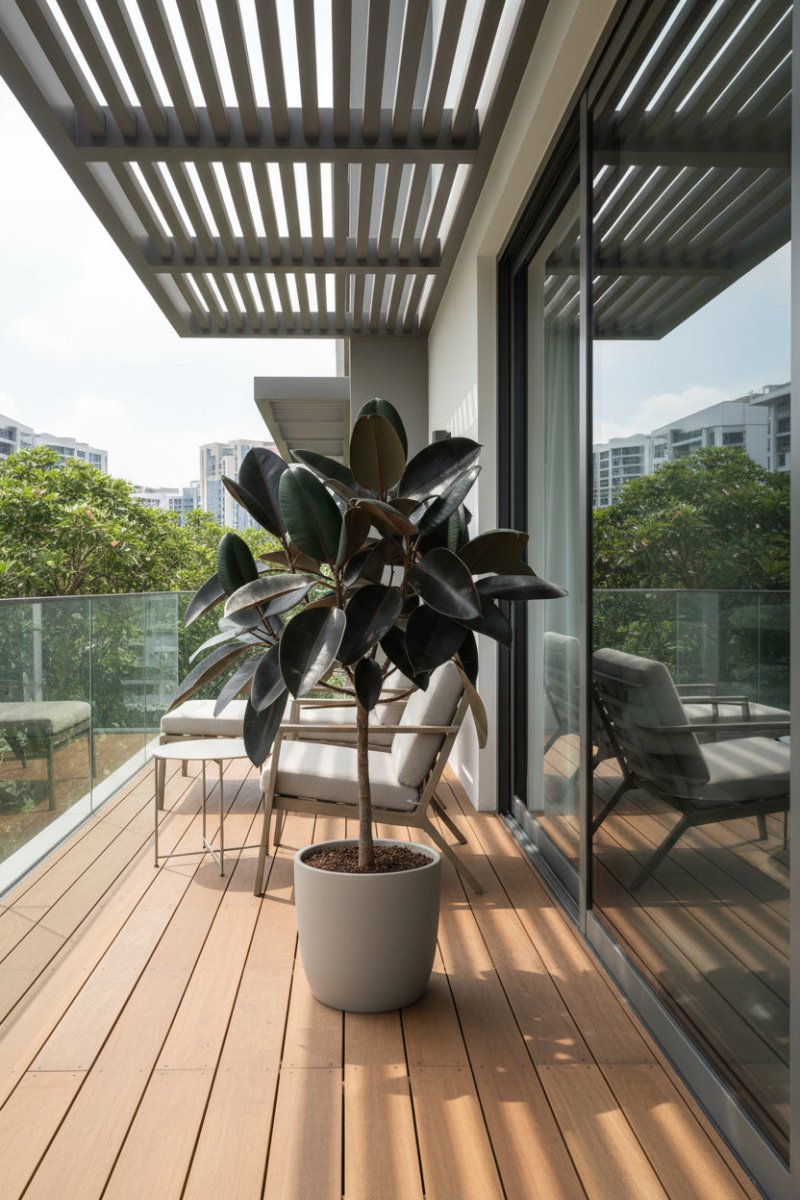
![Image 3: A healthy collection of tropical plants on a Singapore balcony — monstera, pothos, and bird of paradise — representing the result of consistent year-round fertilising. Alt: Healthy fertilised tropical plants on a Singapore balcony.]
Take the guesswork out of feeding. Browse our fertiliser selection at Tumbleweed Plants — we carry balanced liquid fertilisers, bloom boosters, and organic options suitable for every plant type, with dosage guidance tailored for Singapore's year-round growing conditions.
---
Quick summary
Key Takeaways
- Why Houseplants Need Fertiliser
- The Three Main Nutrients (N-P-K)
- When to Fertilise in Singapore
- How Much to Use
- Types of Fertiliser
- Signs of Nutrient Deficiency
Ready to bring some green into your home?
Browse 250+ hand-picked plants, curated for Singapore homes — delivered to your door.
Browse All Plants →