


















How to Fertilize Houseplants: Complete Guide
Posted on April 08 2026
In this article

- Why Houseplants Need Fertilizer
- Understanding Fertilizer Labels: NPK
- Types of Fertilizer
- When to Fertilize
- Singapore Fertilizing Calendar
- Where to Buy Fertilizer in Singapore
- How Much to Use
- Signs of Over-Fertilization
- Signs of Under-Fertilization
- Fertilizing by Plant Type
- Ready to Grow?
- Image Production Checklist
Target keyword: `how to fertilize houseplants` / `best fertilizer for indoor plants`
Monthly search volume: ~10,000–15,000 combined
Intent: Informational — practical care guide
Pillar: B (Care & Educational)
Publish date: Week 3, Day 3
CTA: Link to plant collection; mention fertilizer products if sold
Tags: plant fertilizer, houseplant care, feeding plants, NPK, liquid fertilizer
Thumbnail image spec: 1200×628px, JPG. Flat-lay of fertilizer bottle, watering can, and a healthy monstera leaf on a white background. Overlay text: "How to Fertilize Houseplants — Complete Guide". Alt text: `How to fertilize houseplants guide thumbnail – Tumbleweed Plants Singapore`.
---
Fertilizer is the part of houseplant care most beginners either ignore entirely or overdo. Neither extreme is good: unfed plants grow slowly and look pale; overfed plants get "fertilizer burn" — brown, crispy leaf tips caused by salt buildup in the soil.
Getting fertilizing right isn't complicated once you understand the basics. Here's everything you need to know.
> Singapore note: Unlike temperate regions, Singapore's year-round tropical growing season means most houseplants never go fully dormant. This changes the fertilizing rules significantly — keep reading for our Singapore-specific schedule.
---
Why Houseplants Need Fertilizer
In nature, plants get nutrients continuously from decaying organic matter, rain, and soil microorganisms. In a pot, that system doesn't exist. The small amount of soil in a container depletes nutrients within weeks to months — especially in nursery potting mix, which often contains a starter fertilizer charge that exhausts in 60–90 days.
Fertilizer replaces what the soil loses and gives plants the building blocks for healthy growth: larger leaves, stronger stems, vibrant color, and (for flowering plants) more blooms.
In Singapore specifically: Our tropical climate accelerates everything — including nutrient depletion. High humidity, warmth, and year-round active growth mean nutrients are consumed faster than in temperate countries. Plants grown indoors in Singapore can deplete potting mix nutrients up to 30–40% faster than the same plant in a cooler climate. This is why feeding every 2–3 weeks year-round is often appropriate here, whereas temperate guides say to stop in winter.
---
Understanding Fertilizer Labels: NPK

Every fertilizer has three numbers on the label: N-P-K
- N (Nitrogen) — promotes leaf and stem growth; responsible for green color
- P (Phosphorus) — supports root development and flowering
- K (Potassium) — overall plant health, stress resistance, disease tolerance
A "balanced" fertilizer (10-10-10 or 20-20-20) is suitable for most houseplants. Specialty formulas exist for specific needs:
- High nitrogen (e.g., 3-1-2) — for foliage plants where leaf growth is the priority
- High phosphorus (e.g., 5-10-5) — for flowering plants (peace lily, African violet, orchids)
- Low all-around (e.g., 1-1-1) — for slow-growing or sensitive plants (succulents, cacti)
---
Types of Fertilizer
Overview: Fertilizer Types at a Glance
| Type | Best For | Application | Ease of Use | Control | Singapore Suitability |
|------|----------|-------------|-------------|---------|----------------------|
| Liquid fertilizer | Most houseplants | Dilute in water, apply when watering | Easy | High — dose adjustable | Excellent; fast-acting in warm conditions |
| Granular / slow-release | Low-maintenance setups | Mix into top inch of soil; re-apply every 3–6 months | Very easy | Low — hard to reduce once applied | Good; nutrients deplete faster in tropical heat, may need more frequent re-application |
| Fertilizer spikes | Forgetful plant owners | Push into soil; dissolves slowly | Very easy | Low — uneven release | Adequate; uneven root coverage is the main limitation |
| Organic (worm castings, fish emulsion, seaweed) | Those preferring organic methods | Soil amendment or diluted liquid feed | Moderate | Medium | Excellent for long-term soil health; fish emulsion widely available locally |
---
Liquid Fertilizer
Best for: Most houseplants
How: Dilute in water, apply when watering
Liquid fertilizer is the most popular choice for houseplants because it's easy to control the dose, fast-acting, and simple to stop if something goes wrong. Always dilute to at least half-strength for most houseplants — the label dosage is usually calibrated for outdoor/garden use.
Granular/Slow-Release Fertilizer
Best for: Outdoor containers, low-maintenance setups
How: Work into the top inch of soil; releases nutrients gradually over 3–6 months
Slow-release fertilizers are convenient but harder to adjust — once mixed in, you can't reduce the dose if the plant shows signs of over-fertilization. Good for beginners who want a "set it and forget it" approach outdoors.
Fertilizer Spikes
Best for: Low-maintenance houseplants
How: Push into soil; dissolves slowly
Similar to slow-release granules. The downside: nutrients release unevenly — the area near the spike gets more than other parts of the root zone. Better than nothing for forgetful plant owners.
Organic Fertilizers (Compost, Worm Castings, Fish Emulsion)
Best for: Those who prefer organic methods; excellent for long-term soil health
How: Apply as a soil amendment or diluted liquid feed
Organic options release nutrients slowly and improve soil structure. Fish emulsion and liquid seaweed are popular liquid organic options. They smell stronger than synthetic fertilizers but are gentle on plants.
---
When to Fertilize

Temperate Guide (for reference)
Spring and summer: Fertilize every 2–4 weeks. This is the active growing season — plants are producing new leaves and stems and need the most nutrition.
Fall: Reduce to once a month (September–October), then stop.
Winter: Do not fertilize. Most houseplants slow or pause growth in winter. Fertilizing a dormant plant causes salt to build up in the soil without being used, damaging roots.
Singapore Schedule
Because Singapore sits just 1.3° north of the equator, we have no winter. Temperatures stay between 25–34°C year-round and day length barely changes. This means:
- Most tropical houseplants grow actively all 12 months
- Nutrients deplete faster due to constant warmth and high plant metabolic activity
- You can — and should — fertilize year-round for most species, with only minor adjustments
Key rule: Only fertilize actively growing plants. If a plant is stressed, sick, or newly repotted, skip fertilizer until it recovers.
---
Singapore Fertilizing Calendar
| Month | Action (Singapore) |
|-------|-------------------|
| January–March | Fertilize every 2–3 weeks (full growing season) |
| April–June | Fertilize every 2–3 weeks; increase frequency if growth is rapid |
| July–September | Fertilize every 2–4 weeks; watch for heat stress — reduce if plant looks stressed |
| October–December | Continue every 2–4 weeks; no need to stop or reduce |
Compare this to the temperate reference calendar above, which has a 3–4 month gap in winter — unnecessary for plants in Singapore.
Temperate Reference Calendar
| Season | Action |
|--------|--------|
| Early spring (March–April) | Resume fertilizing — start with one half-strength application |
| Spring–Summer (April–August) | Fertilize every 2–4 weeks |
| Early fall (September) | Reduce to once a month |
| Late fall (October–November) | Final fertilizer application, then stop |
| Winter (December–February) | No fertilizing |
---
Where to Buy Fertilizer in Singapore

You don't need to order specialty fertilizers online — Singapore has excellent local options:
- Far East Flora (Thomson Road and other locations) — wide range of liquid fertilizers, slow-release granules, and organic options. Staff are generally knowledgeable about tropical plant needs.
- World Farm (Neo Tiew Crescent) — one of Singapore's largest nurseries; carries professional-grade fertilizers including high-nitrogen foliage blends and orchid-specific formulas.
- Gardening sections at NTUC FairPrice, Giant, and Mustafa Centre — basic balanced liquid fertilizers widely available for convenience.
- Online via Lazada/Shopee — convenient for specialty organic options like liquid seaweed, fish emulsion, and worm castings.
Look for fertilizers labelled for tropical plants or general "indoor plant" use. Orchid fertilizer is readily available across Singapore and works well for most foliage tropicals at half-strength.
---
How Much to Use
Always dilute liquid fertilizer. Use half the label dose for most houseplants — the full dose is typically calibrated for outdoor gardens.
For sensitive plants (succulents, cacti, ferns, orchids): use quarter-strength.
How to apply:
- Water the plant lightly first — never fertilize bone-dry soil, as concentrated nutrients can burn dry roots
- Mix fertilizer with water per the diluted dose
- Water the plant thoroughly with the fertilizer solution
- Let excess drain from the bottom
---
Signs of Over-Fertilization
- Brown, crispy leaf tips and edges (the most common symptom)
- White crust on the soil surface or pot rim (salt buildup)
- Wilting despite adequate water
- Sudden leaf drop
- Pale or yellowing leaves despite regular feeding
What to do if you've over-fertilized:
- Flush the soil thoroughly — water deeply 3–4 times in succession to leach out excess salts
- Remove any white crust from the soil surface
- Stop fertilizing for 4–6 weeks
- If severe, repot into fresh soil
---
Signs of Under-Fertilization
- Pale green or yellowing leaves (especially older leaves)
- Slow or stopped growth during the growing season
- Smaller-than-normal new leaves
- Loss of variegation (in variegated plants)
---
Fertilizing by Plant Type
Foliage tropical plants (monstera, pothos, philodendron):
Balanced liquid fertilizer (e.g., 20-20-20 or 10-10-10) at half-strength, every 2–3 weeks year-round in Singapore.
Succulents and cacti:
Fertilize sparingly — once every 6–8 weeks during Singapore's drier months (February and July are typically drier). Use a low-nitrogen cactus formula or a balanced fertilizer diluted to 25% of label dose.
Flowering plants (peace lily, African violet, orchid):
Use a fertilizer higher in phosphorus during bloom periods to support flowering. Liquid orchid fertilizer is widely available at Far East Flora and World Farm.
Ferns and moisture-loving plants:
Sensitive to salt buildup. Use half-strength balanced fertilizer every 4–6 weeks; flush soil regularly. Singapore's humidity means ferns stay in active growth, so feeding through the year is fine.
Snake plants and ZZ plants:
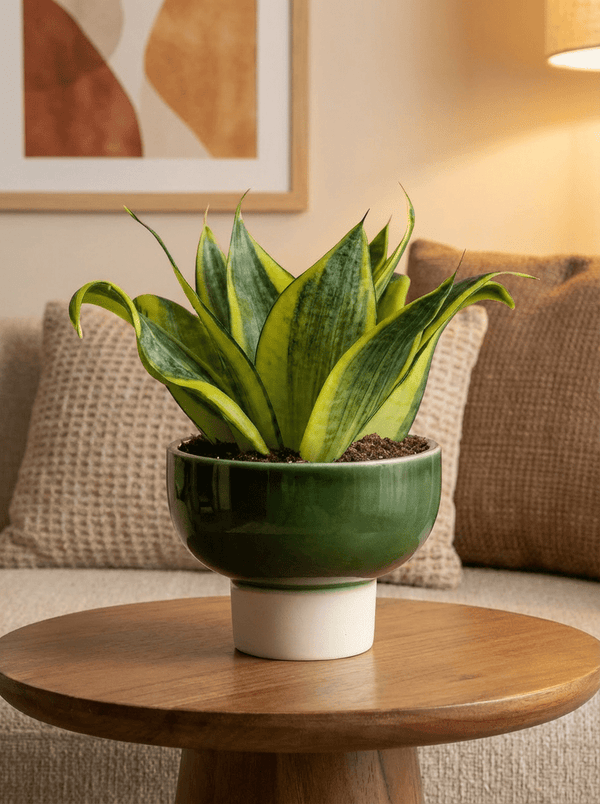
Very light feeders. Once a month is plenty in Singapore. Over-fertilizing causes more harm than under-fertilizing with these species.
---
Ready to Grow?
Every plant in our collection comes with species-specific care guidance including fertilizing recommendations. Browse our indoor plant collection and find the right plant for your space.
Need plants delivered today? We offer same-day plant delivery across Singapore — order before noon and receive your new plant the same afternoon.
Explore our full houseplant care guides for watering, soil, repotting, and more.
Questions about feeding your specific plant? Ask in the comments below.
---
Image Production Checklist
| # | Image | Filename | Dimensions | Status |
|---|-------|----------|------------|--------|
| 1 | Thumbnail (flat-lay: fertilizer bottle, watering can, monstera leaf) | `blog17-thumbnail-fertilize-houseplants.jpg` | 1200×628px | To do |
| 2 | Hero (hands pouring fertilizer into potted monstera, bright light) | `blog17-hero-fertilize-houseplants.jpg` | 1600×900px | To do |
| 3 | NPK ratio diagram (N/P/K columns with icons and example ratios) | `blog17-npk-ratio-diagram.jpg` | 1200×600px | To do |
| 4 | Fertilizer type comparison flat-lay (liquid, granular, spikes, organic) | `blog17-fertilizer-type-comparison.jpg` | 1200×800px | To do |
| 5 | Singapore fertilizing schedule infographic (12-month calendar) | `blog17-singapore-fertilizing-schedule.jpg` | 1200×800px | To do |
Quick summary
Key Takeaways
- Why Houseplants Need Fertilizer
- Understanding Fertilizer Labels: NPK
- Types of Fertilizer
- When to Fertilize
- Singapore Fertilizing Calendar
- Where to Buy Fertilizer in Singapore
Ready to bring some green into your home?
Browse 250+ hand-picked plants, curated for Singapore homes — delivered to your door.
Browse All Plants →