
















Monstera Adansonii Care Guide for Singapore | Tumbleweed Plants Singapore
Posted on April 10 2026
In this article
Monstera adansonii — the Swiss Cheese Plant — is the Monstera deliciosa's smaller, faster-growing cousin. Where the deliciosa is bold and dramatic with large, deeply split leaves, the adansonii is playful and prolific — producing smaller leaves riddled with oval holes (fenestrations) on long, trailing or climbing vines. It grows quickly, propagates easily, and creates a lush jungle effect whether trailing from a shelf or climbing a moss pole.

In Singapore, Monstera adansonii thrives. Our warmth and humidity match its native Central and South American rainforest conditions almost perfectly. With basic care, it rewards you with rapid, satisfying growth.
Varieties
Monstera adansonii (standard form) — The most common. Dark green leaves with oval fenestrations. Fast-growing and widely available.
Monstera adansonii 'Archipelago' — Variegated form with white and green marbled leaves. Rare and significantly more expensive. Slower-growing than the standard form and more light-demanding.
Monstera adansonii (narrow form vs. wide form) — The narrow form has elongated, smaller leaves. The wide form has broader, rounder leaves with larger holes. Both are commonly sold as "adansonii."
Note: Monstera adansonii is often confused with Monstera obliqua, an extremely rare species with paper-thin leaves that are more hole than leaf. If someone is selling "Monstera obliqua" for under $200, it is almost certainly an adansonii.
Light
Bright indirect light — Optimal. Produces the fastest growth, most fenestrations, and largest leaves. Near an east-facing window or within 1-2 metres of a bright window.
Medium indirect light — Good. Growth slows slightly but the plant remains healthy and attractive.
Low light — Tolerated but not recommended. Leaves become smaller, fenestrations reduce, and growth becomes leggy with wide gaps between leaves.
Direct sun — Avoid. The relatively thin leaves scorch easily in direct sunlight. Even morning sun can damage the leaves if prolonged.
Key sign of insufficient light: New leaves are small, have few or no fenestrations, and grow with long gaps between them on the vine.
Watering
Monstera adansonii likes evenly moist soil — it is less drought-tolerant than its larger cousin, the deliciosa, because its thinner leaves lose moisture faster.
Schedule in Singapore:
- Water when the top 2-3cm of soil is dry
- Every 5-10 days in bright conditions
- Every 7-14 days in lower light or AC rooms
- More frequent watering than Monstera deliciosa — the smaller leaves and faster growth mean higher water demand
Technique:
- Water thoroughly until it drains from the bottom
- Empty saucers after 30 minutes
- Do not let the soil dry out completely — the thin leaves curl and crisp quickly when dehydrated
Overwatering signs: Yellow leaves, soft stems, root rot, soggy soil.
Underwatering signs: Curling leaves, crispy brown edges, drooping. Adansonii wilts visibly when thirsty and recovers quickly after watering.
Soil

Airy, well-draining mix that retains some moisture:
- 40% potting mix
- 30% perlite
- 20% orchid bark
- 10% worm castings (optional)
The chunky, well-aerated mix allows roots to breathe while holding enough moisture between waterings. Standard potting soil without amendments stays too wet.
Humidity
Monstera adansonii loves humidity — and Singapore delivers. In non-AC rooms with 70-80% ambient humidity, it thrives without intervention.
In AC rooms (40-55%): The thin leaves may develop crispy edges. Solutions:
- Group with other plants
- Pebble tray
- Humidifier
- Move to a less AC-heavy room
Climbing vs. Trailing

Monstera adansonii is a natural climber — in the wild, it ascends tree trunks toward the canopy. You have two display options:
Climbing (Moss Pole or Trellis)
Providing a vertical support encourages the plant to grow upward, producing larger leaves with more fenestrations. The aerial roots grip the moist moss pole, anchoring the vine and drawing additional moisture.
Benefits: Larger leaves, more fenestrations, faster vertical growth, more mature appearance.
Support options:
- Sphagnum moss pole (keep the moss moist for best results)
- Coco coir pole
- Wooden trellis or plank
- Wire or bamboo frame
Trailing (Hanging or Shelf)
Without support, the vines trail downward — creating a cascading curtain of perforated leaves. This is beautiful but produces smaller, less fenestrated leaves.
Benefits: Dramatic cascading display, easier maintenance, no support structure needed.
Best for: High shelves, hanging planters, macrame displays.
Fertilising
Moderate to heavy feeder (for a houseplant):
- Balanced liquid fertiliser at half strength every 3-4 weeks during active growth
- In Singapore, growth is year-round, so fertilise year-round
- Reduce to every 6-8 weeks if growth slows
- Over-fertilising causes salt buildup and brown leaf tips
Propagation

Monstera adansonii propagates extremely easily — one of the easiest houseplants to multiply.
Water Propagation
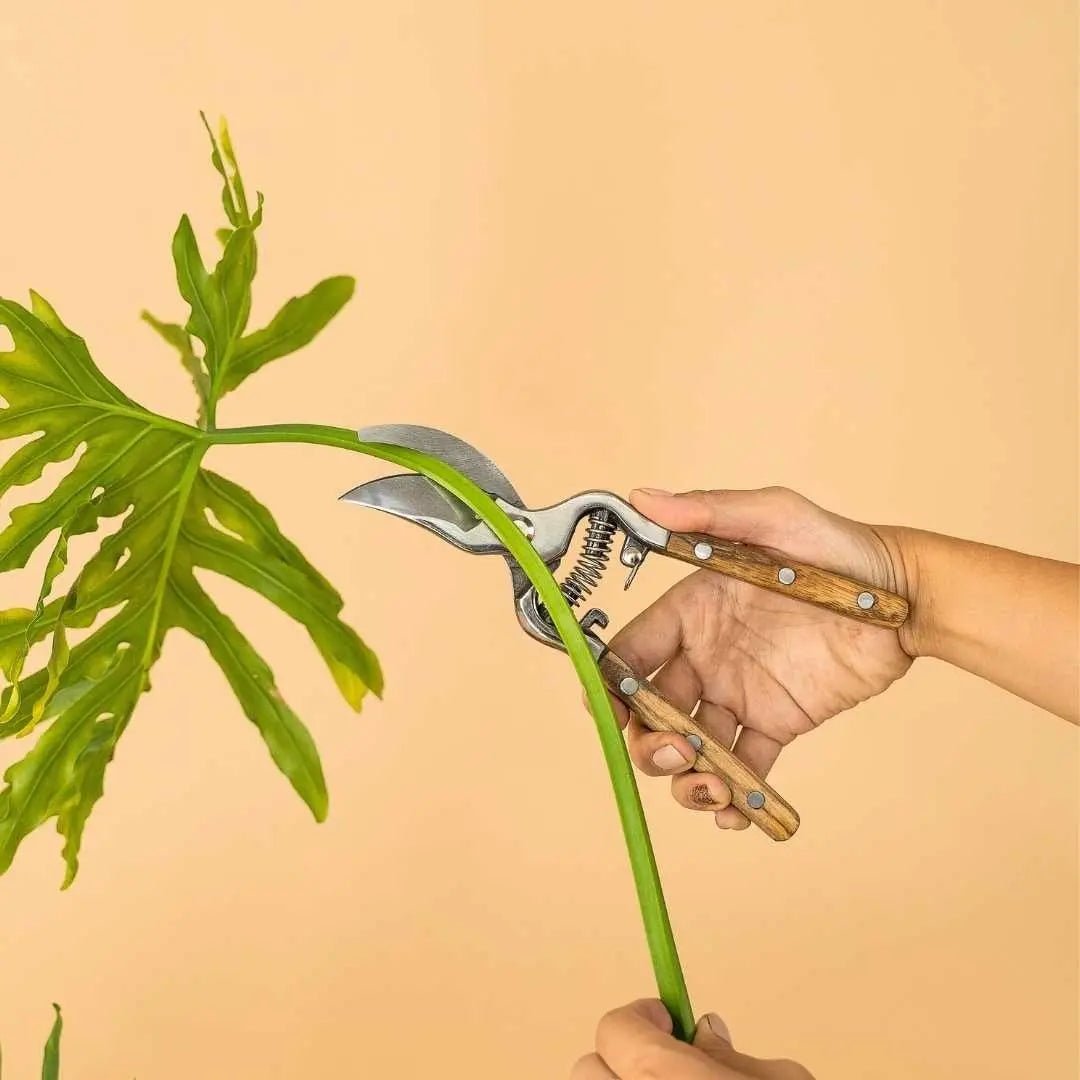
- Cut a vine section below a node (the bump where leaves and aerial roots emerge)
- Include at least one node and one to two leaves
- Place in water with the node submerged
- Roots appear in 1-3 weeks (fast in Singapore's warmth)
- Transfer to soil when roots are 5-8cm long
Soil Propagation
- Cut below a node
- Plant directly in moist, well-draining soil with the node buried
- Keep soil moist (not wet)
- New growth appears in 2-4 weeks
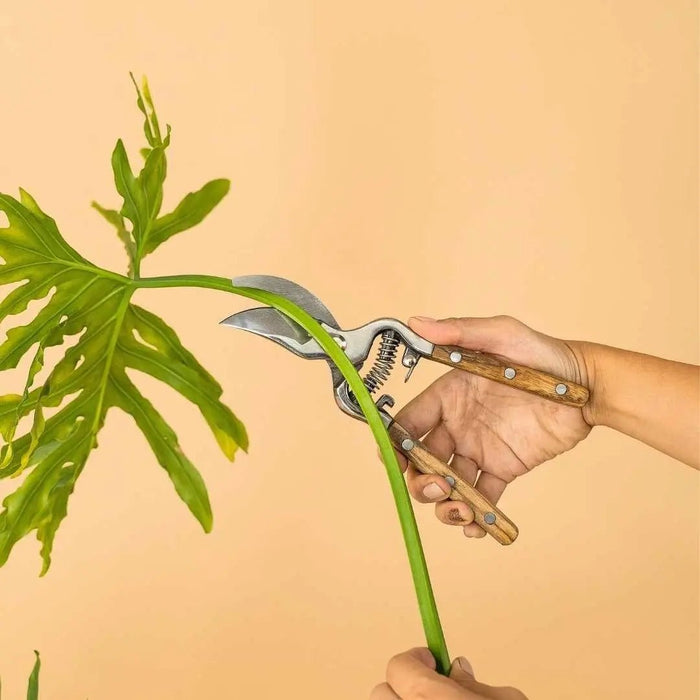
Tip: Propagate regularly to maintain a full, bushy plant. When vines become leggy, cut the long sections and root the cuttings back into the same pot.
Common Problems
Small Leaves With Few Holes
Insufficient light or the plant is trailing instead of climbing. Move to brighter light and/or provide a moss pole.
Yellow Leaves
One yellow leaf occasionally is normal (old leaf drop). Multiple yellow leaves indicate overwatering. Check roots for rot.
Brown, Crispy Leaf Edges
Low humidity (AC rooms) or underwatering. Check soil moisture and increase humidity if needed.
Leggy Growth (Long Gaps Between Leaves)
Insufficient light. Move to a brighter location. Prune leggy sections and propagate.
Curling Leaves
Underwatering (most common) or root rot. Check soil — if dry, water. If wet, inspect roots.
Pests
- Spider mites — check leaf undersides for tiny dots and webbing. Common in dry AC rooms. Spray with insecticidal soap.
- Thrips — silvery streaks on leaves. Treat with neem oil.
- Mealybugs — white cottony masses at leaf joints. Remove with rubbing alcohol.
Styling
Monstera adansonii is one of the most versatile display plants:
- Moss pole climber — a tall pole covered in climbing adansonii creates a dramatic vertical display
- Hanging planter — trailing vines cascade 1-2 metres for a jungle-curtain effect
- Shelf trailer — draped over a bookshelf or kitchen shelf edge
- Trellis frame — trained around a wire hoop or geometric trellis for a sculptural look
- Mixed arrangement — combined with other trailing plants (Pothos, String of Hearts) for varied textures
Shop Monstera Adansonii
Browse our Monstera collection and indoor plant collection for healthy Monstera adansonii delivered across Singapore.
Monstera adansonii is the instant-gratification plant. Where many houseplants reward patience, adansonii rewards you now — with fast growth, easy propagation, and a continuous stream of new leaves, each one emerging with its own unique pattern of holes. Give it a moss pole and bright light, and it will climb. Give it a high shelf, and it will cascade. Either way, it will grow — enthusiastically, generously, and with a visual charm that earns its place in any collection.
Quick summary
Key Takeaways
- Varieties
- Light
- Watering
- Soil
- Humidity
- Climbing vs. Trailing
Ready to bring some green into your home?
Browse 250+ hand-picked plants, curated for Singapore homes — delivered to your door.
Browse All Plants →