













How to Style Plants in a Minimalist Home | Tumbleweed Plants Singapore
Posted on April 10 2026
In this article

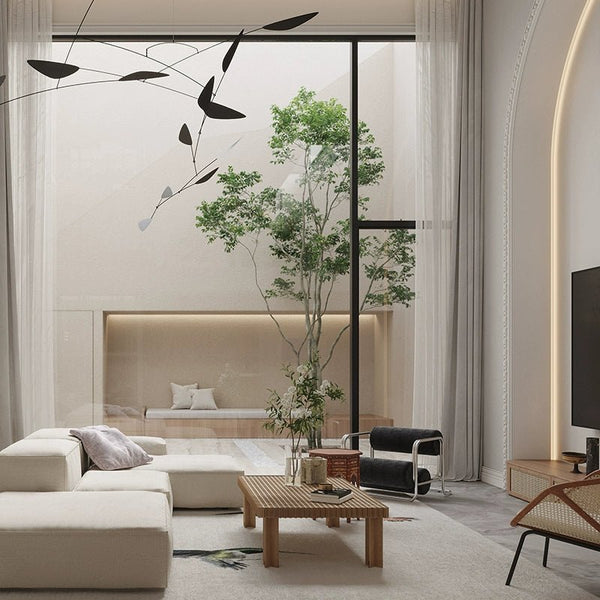
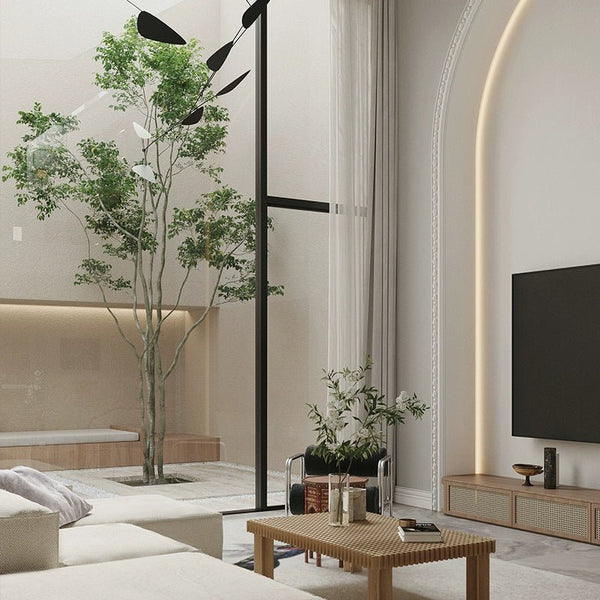
Minimalism and plants might seem like an odd pairing. Minimalism is about reduction — fewer objects, cleaner surfaces, more space. Plants add objects, fill surfaces, and take up space. But the best minimalist interiors are not empty — they are intentional. Every object earns its place by adding function, beauty, or meaning. Plants earn their place on all three counts: they purify air (function), they add organic beauty (aesthetics), and they bring living energy to a space that might otherwise feel sterile (meaning).
The trick is restraint. A minimalist home with twelve plants in mismatched pots is not minimalist — it is cluttered with greenery. A minimalist home with two carefully chosen plants in considered pots is still minimal — the plants enhance the space rather than competing with it.
The Minimalist Plant Principles
Fewer Plants, Greater Impact
One statement plant has more visual impact in a minimal space than five small ones. A single Monstera in a corner says more than a shelf of random plants. Choose fewer plants and give each one room to breathe.
Suggested plant count by room size:
- Small room (under 15 sqm): 1-2 plants
- Medium room (15-25 sqm): 2-3 plants
- Large room (25+ sqm): 3-5 plants
Clean Pot Lines
In minimalist interiors, the pot is as important as the plant. Choose pots with:
- Simple geometric forms — cylinders, cubes, or slightly tapered shapes
- Matte finishes — matte white, matte black, concrete grey, or sand
- No decoration — no patterns, no embossing, no novelty shapes
- Consistent palette — all pots in the same colour or a maximum of two coordinated tones
The pot should frame the plant, not draw attention to itself.
Negative Space Is Essential
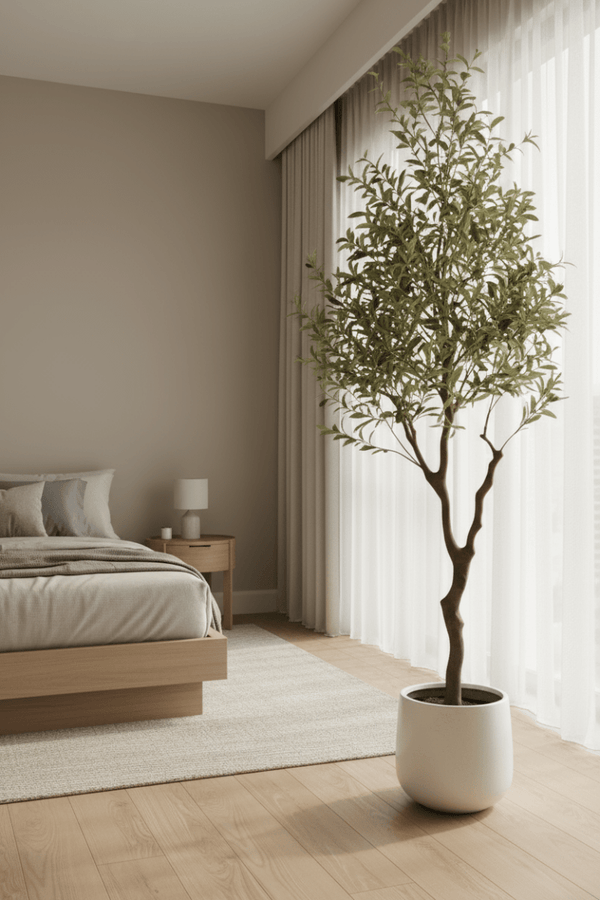
The empty space around a plant is what makes it visible. A plant against a bare wall with space on either side reads as intentional. A plant crammed between furniture and other objects reads as afterthought. Leave breathing room around every plant.
Structural Plants Over Chaotic Plants
Minimalism favours plants with clean, defined forms:
- Upright and architectural — Snake Plant, ZZ Plant, Dracaena
- Symmetrical and structured — Bird of Paradise, Rubber Plant
- Bold and graphic — Monstera, Fiddle Leaf Fig
Avoid (in minimalist contexts): bushy, chaotic, or heavily trailing plants that create visual noise — Boston Fern, overgrown Pothos curtains, or densely bushy Calathea collections.
Best Plants for Minimalist Homes

Snake Plant (Sansevieria)
Why it works: The definitive minimalist plant. Upright, sculptural, and contained. A tall Snake Plant in a white cylinder pot is minimalism expressed in living form.
Best placement: Solo in a corner, flanking a doorway (as a pair), or on a console table.
Pot: Matte white or concrete cylinder.
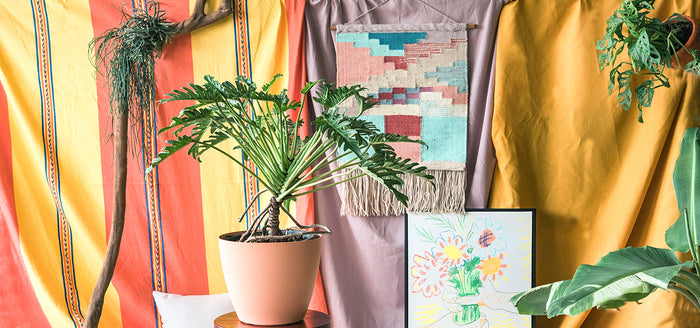
Monstera deliciosa
Why it works: Bold, graphic leaves with a sculptural quality. A single Monstera makes a room feel designed. On a moss pole, it grows vertically rather than spreading.
Best placement: Floor plant beside a sofa or in the corner of a living room.
Pot: Large matte black or white planter.
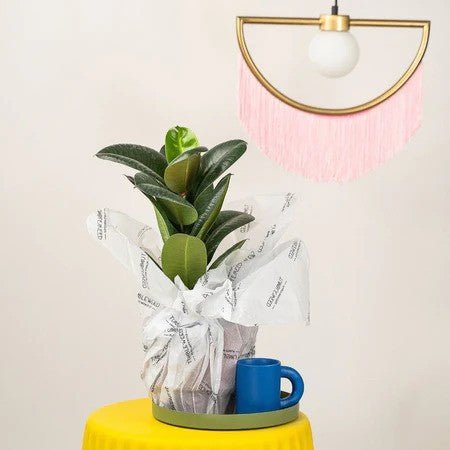
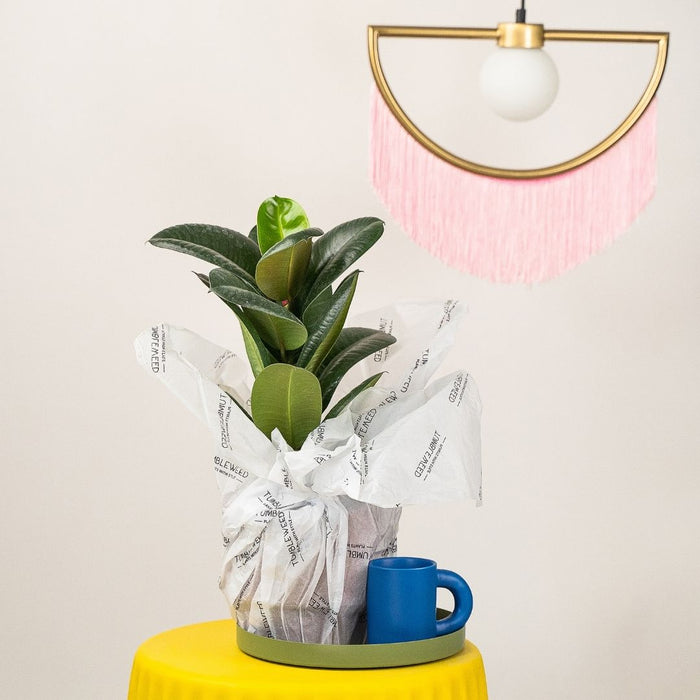
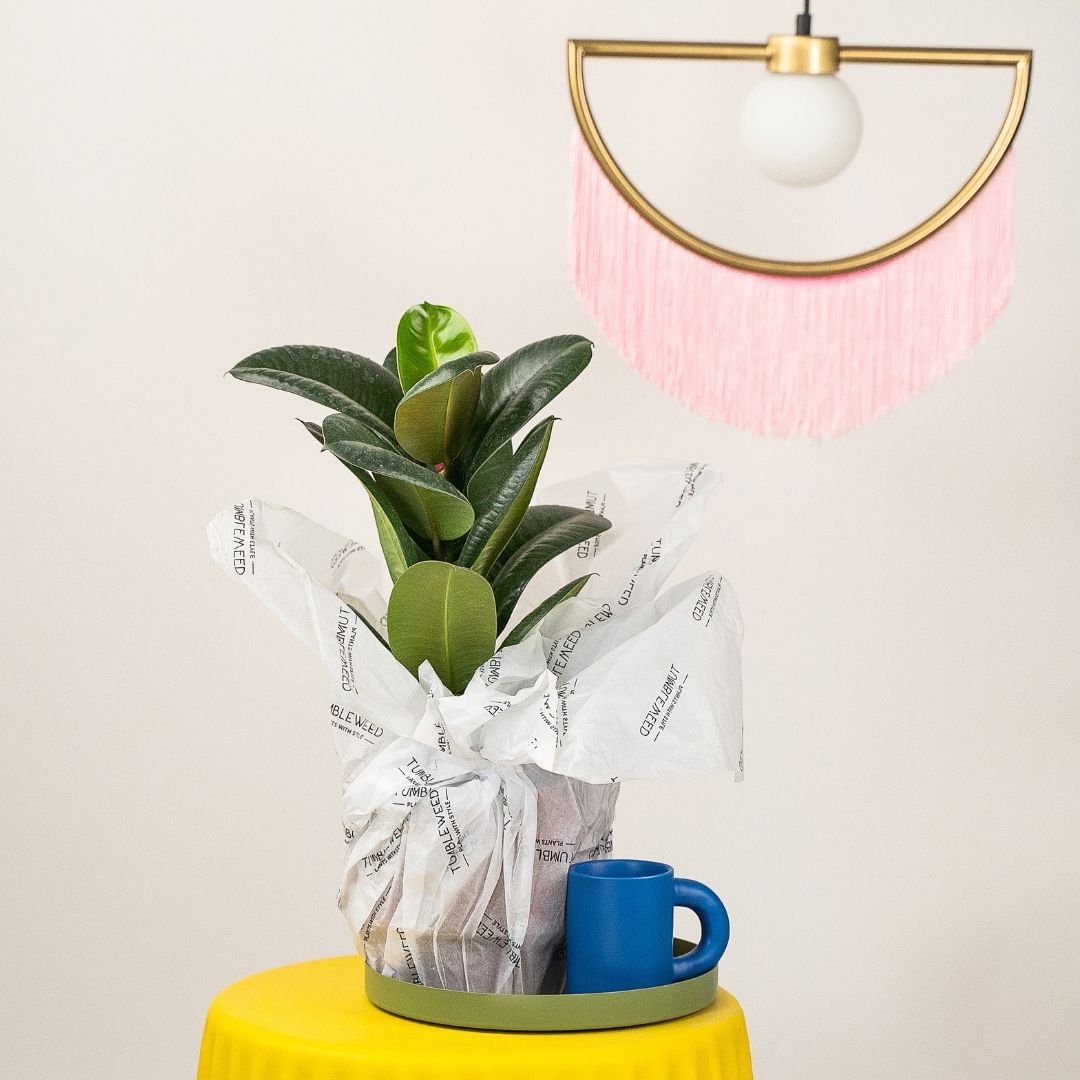
Rubber Plant (Ficus elastica)
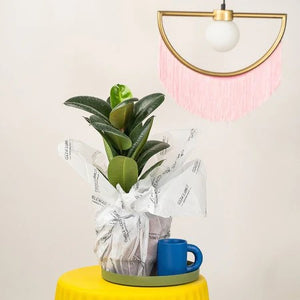
Why it works: Large, glossy leaves in deep green or burgundy. Grows upright with a tree-like form. The 'Burgundy' variety's dark leaves are particularly striking in light, minimal spaces.
Best placement: Floor plant in a living room corner or beside a reading chair.
Pot: Concrete, dark grey, or matte black.
ZZ Plant (Zamioculcas zamiifolia)
Why it works: Glossy, symmetrical stems with architectural precision. Looks permanently polished without any effort. The 'Raven' variety with near-black leaves is especially dramatic.
Best placement: On a side table, console, or low shelf.
Pot: Matte white, grey, or black ceramic.
Fiddle Leaf Fig (Ficus lyrata)
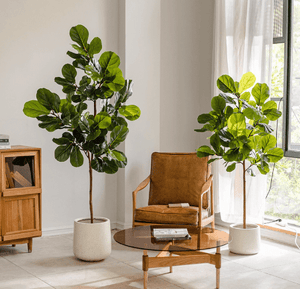
Why it works: Large, bold leaves on a slim trunk create a tree-like silhouette. The scale fills vertical space without consuming horizontal space. A statement plant that instantly elevates a room.
Best placement: Solo floor plant in a well-lit corner.
Pot: Simple basket, concrete, or ceramic in a neutral tone.
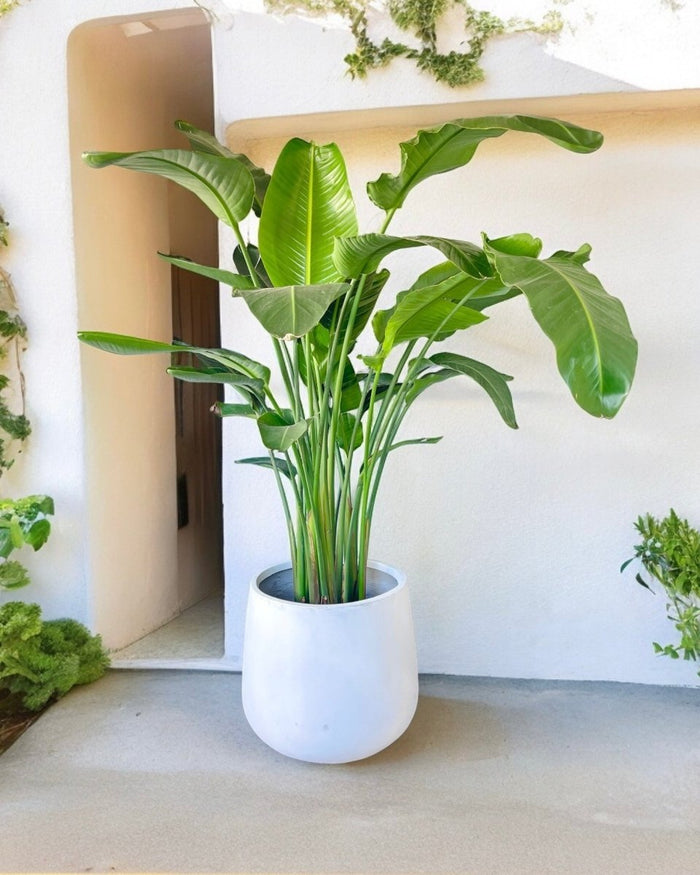
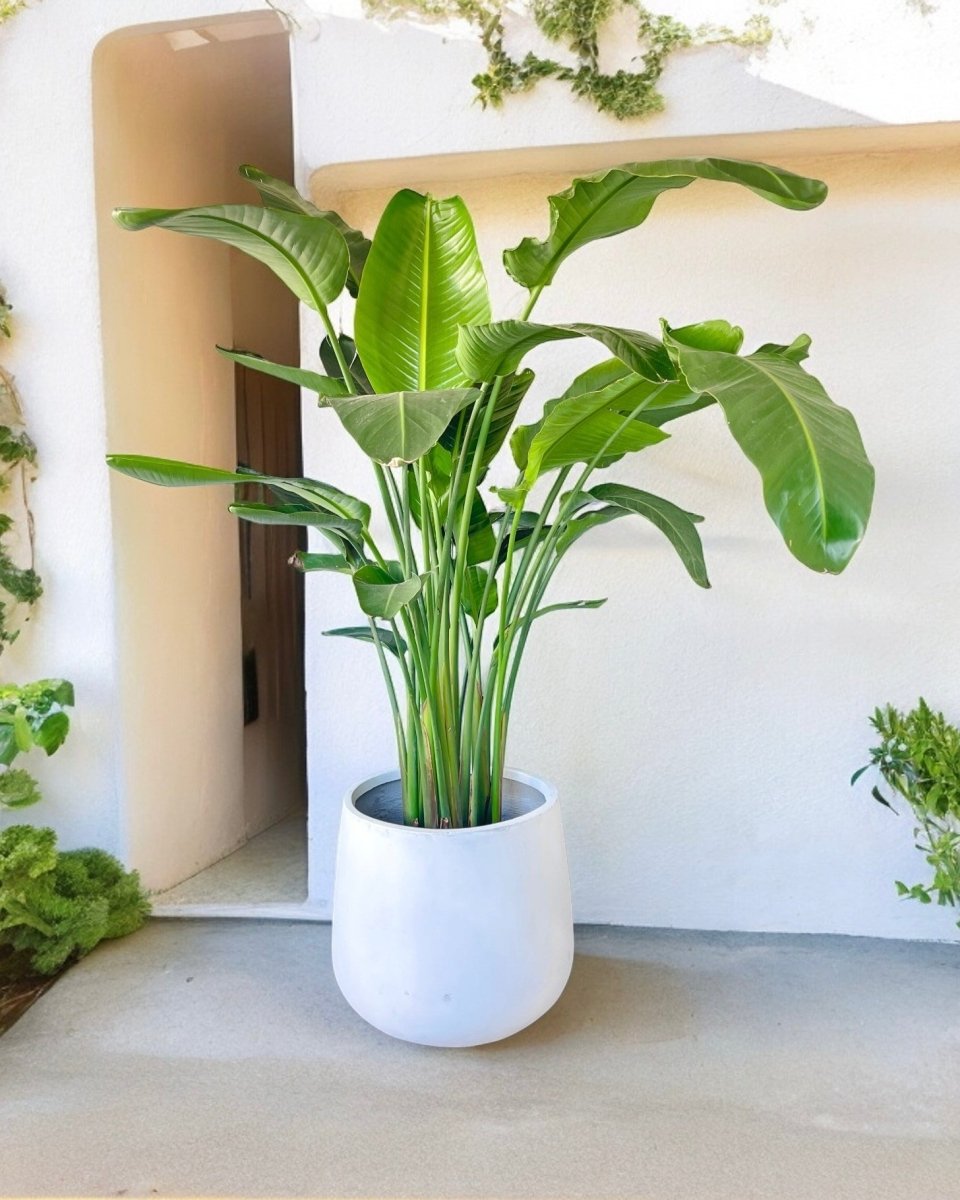
Bird of Paradise (Strelitzia)
Why it works: Dramatic, paddle-shaped leaves that fan upward. Tropical but structured. Adds height and movement without clutter.
Best placement: Large floor plant near a window or glass door.
Pot: Large concrete or matte planter.
Styling Techniques
The Solo Statement
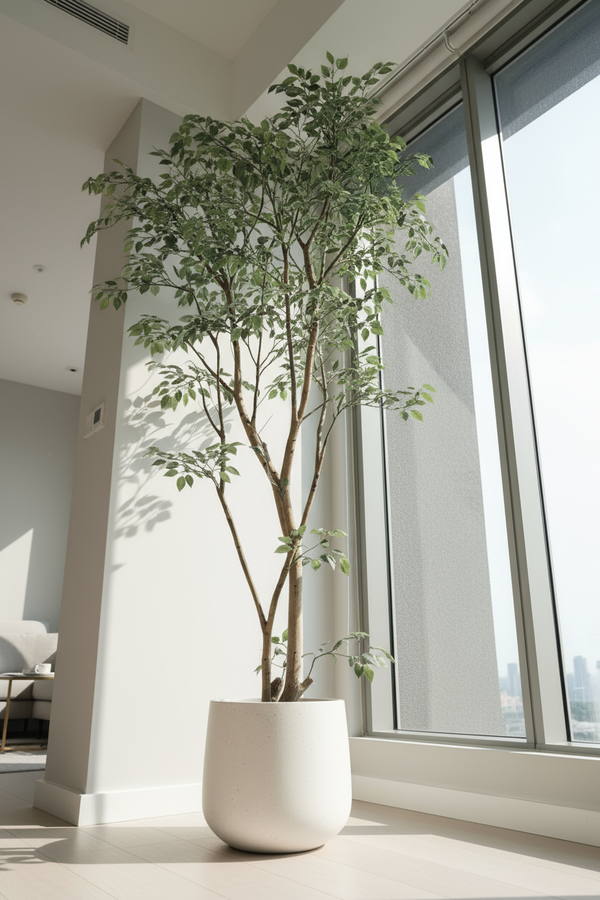
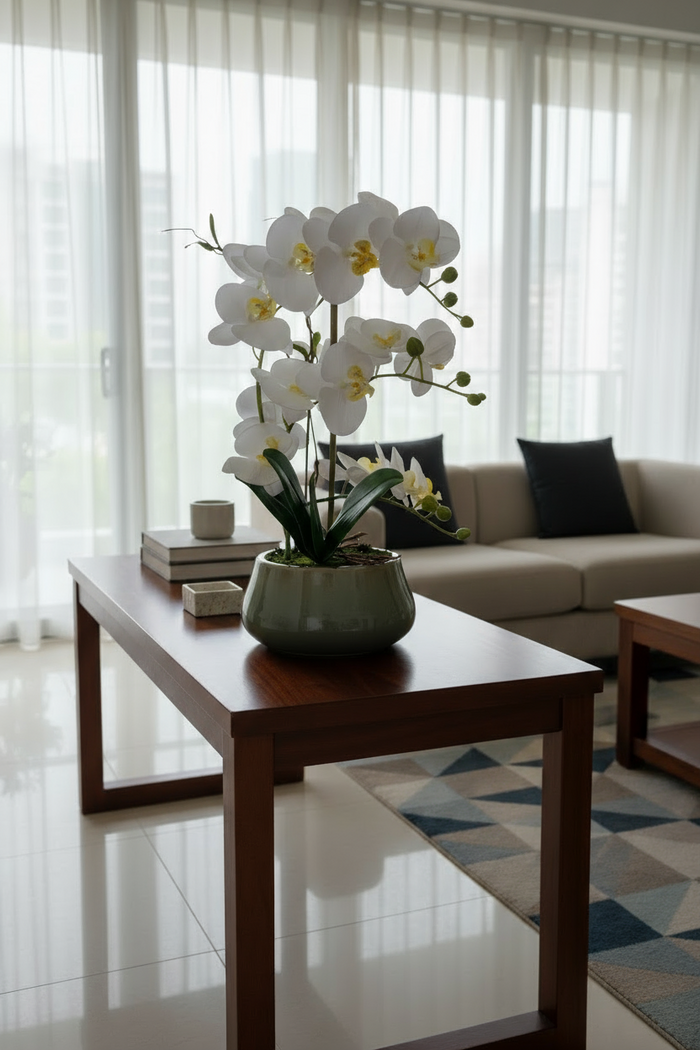
One plant, one pot, one position. A tall floor plant in an empty corner anchors the room. This is the most minimalist approach — a single living element that draws the eye without competing with anything.
The Considered Pair
Two plants of the same species in matching pots, placed symmetrically. Flanking a doorway, a sideboard, or a bed headboard. Symmetry is inherently orderly and aligns with minimalist aesthetics.
The Layered Corner
In a corner with more depth, layer a tall floor plant behind a lower side table with one small plant. Two plants at different heights create depth without clutter. Keep both pots in the same family.
The Shelf Moment
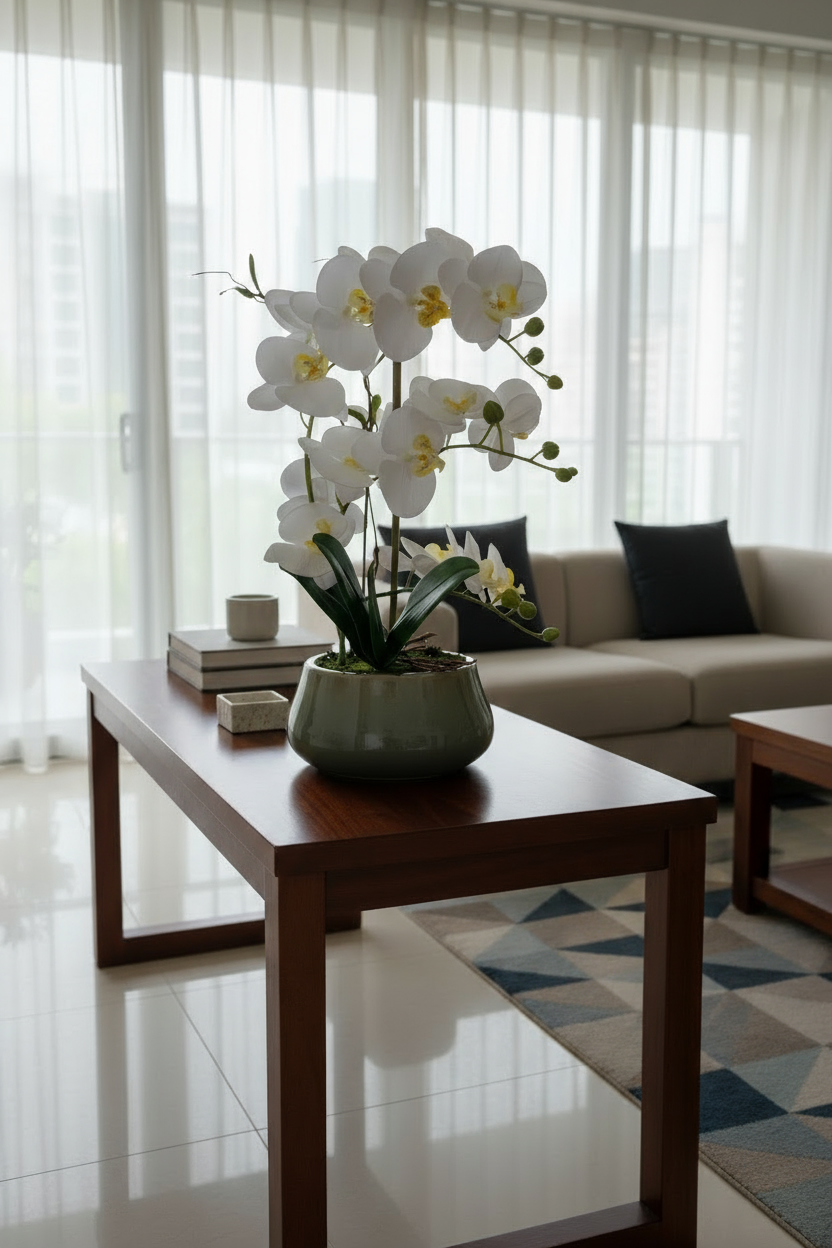
On a minimal shelf (floating or built-in), one small plant alongside one or two other objects (a book, a candle, a small art piece). The plant is part of a curated vignette, not a plant collection.
What to Avoid

Plant collections on display. A minimalist home is not the place for 20 plants on a shelf. If you are a collector, keep most of your collection in a dedicated plant room or area, and display only 2-3 select specimens in the living areas.
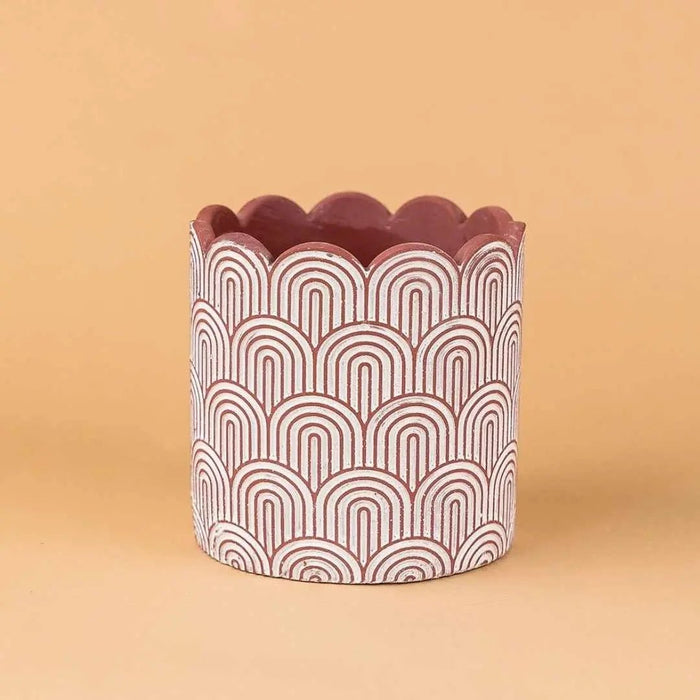
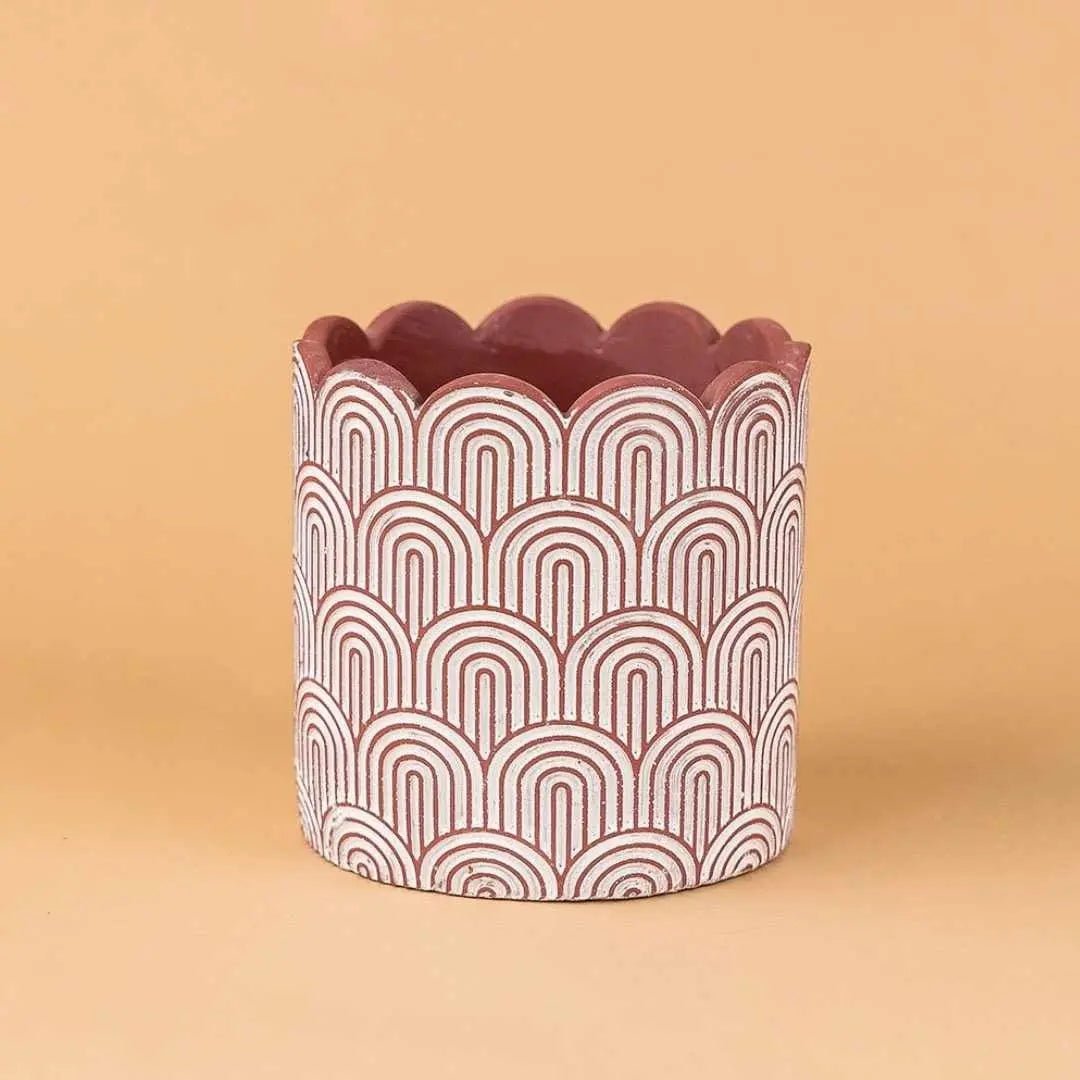
Busy, colourful pots. Patterned, brightly coloured, or novelty pots (animal shapes, face pots) clash with minimalist aesthetics. Save these for eclectic or bohemian spaces.
Trailing plants as curtains. A Pothos trailing from every surface creates a jungle effect — beautiful, but the opposite of minimal. In a minimalist space, keep trailing plants contained or choose upright varieties instead.
Dead or struggling plants. A wilting, brown-tipped plant in a minimalist space is highly visible — there is nothing else to distract from it. Only keep plants you can maintain in good health.
Too many species. In minimalist design, consistency reads as intentional. Three of the same plant variety in matching pots looks more designed than three different species in three different pots.
Singapore Minimalist Home Considerations
HDB and condo sizing. Singapore's compact homes are naturally suited to minimalism — there simply is not space for excess. Choose plants that match your room scale. A massive Bird of Paradise overwhelms a small 3-room HDB living room. A medium Snake Plant fits perfectly.
AC compatibility. Most minimalist-friendly plants (Snake Plant, ZZ Plant, Rubber Plant) handle AC rooms well. These structural plants are also low-maintenance — they do not drop leaves or shed on clean floors.
Light conditions. If your minimalist space has limited natural light (common in north-facing HDB units), stick to proven low-light plants: Snake Plant, ZZ Plant, Aglaonema.
Shop Minimalist Plants

Browse our indoor plant collection for architectural, statement plants delivered across Singapore. From structural Snake Plants to bold Monstera, find the plant that elevates your space without overwhelming it.
In minimalism, every object is a choice. A plant in a minimalist home says: I chose life over emptiness, organic over sterile, growth over stagnation. It earns its place not by filling space but by transforming it — one considered, structural, quietly beautiful plant at a time.
Quick summary
Key Takeaways
- The Minimalist Plant Principles
- Best Plants for Minimalist Homes
- Styling Techniques
- What to Avoid
- Singapore Minimalist Home Considerations
- Shop Minimalist Plants
Ready to bring some green into your home?
Browse 250+ hand-picked plants, curated for Singapore homes — delivered to your door.
Browse All Plants →