













Plant of the Week: Bird of Paradise — Our Favourite Statement Plant Right Now
Posted on April 06 2026
Every week, we spotlight one plant from our collection that the team is genuinely excited about. This week, it is not a subtle choice.
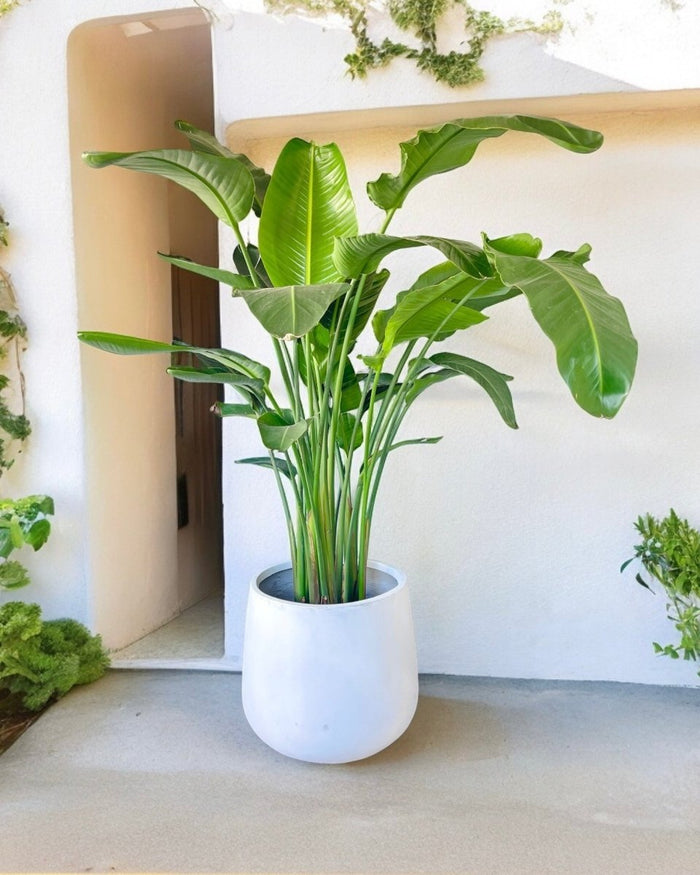
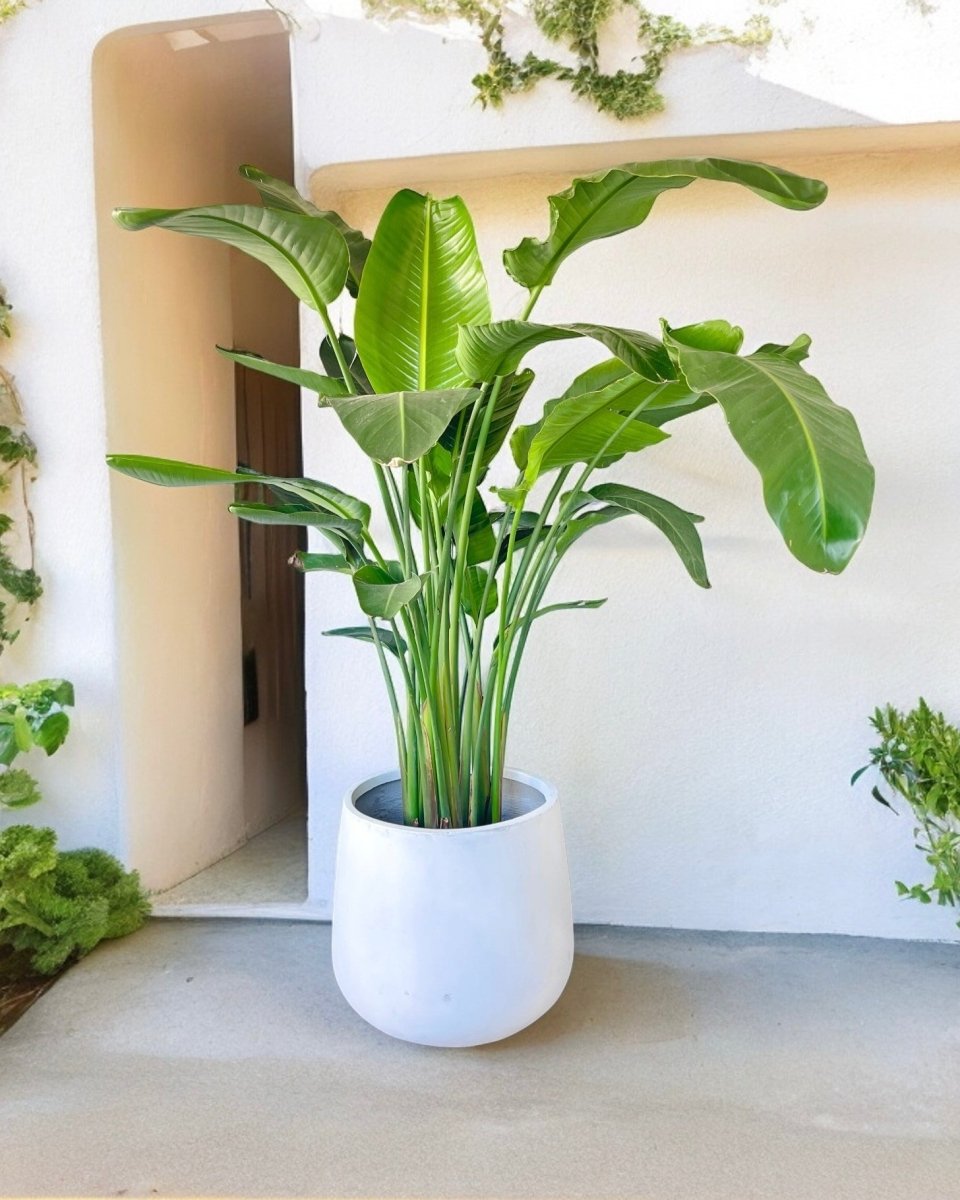
The Bird of Paradise (Strelitzia reginae) is one of the most dramatic, architecturally striking houseplants you can own. If you have ever walked into a beautifully designed room and seen a plant that made you stop and think what is that? — there is a good chance it was a Bird of Paradise.
Here is why we love it, and everything you need to know to care for one.

Why We Are Obsessed Right Now
Our team has been growing Bird of Paradise plants for years, but we are particularly excited about the batch we have in right now. These are healthy, well-established plants with strong root systems — the kind that hit the ground running when you bring them home.
A few reasons this plant has captured our collective attention this spring:
- The scale. A mature Bird of Paradise can reach 5-6 feet indoors. The paddle-shaped leaves are enormous — 18 inches or longer on a well-fed plant. It is genuinely architectural.
- The durability. Despite its exotic appearance, it is surprisingly tough. It handles dry indoor air, some neglect, and the occasional missed watering without drama.
- The payoff. If you can give it enough light, this plant grows fast and becomes a room-defining focal point within a season or two.
Quick Care Facts
| Light | Bright direct or indirect light (4-6+ hours) |
| Water | Every 1-2 weeks; let top 2" dry out |
| Humidity | Average home humidity is fine |
| Temperature | 18-29°C (65-85°F) |
| Soil | Well-draining, rich potting mix |
| Fertilizer | Monthly in spring/summer |
| Toxicity | Toxic to cats and dogs — see our pet-safe plants guide |
Light: The One Thing That Matters Most
Bird of Paradise is a sun-lover. It comes from South Africa, where it grows outdoors in full sun. Indoors, it needs the most light you can offer.
Best placement: South or west-facing window — ideally right next to it. 4-6 hours of direct sun per day is ideal.
Will it survive in lower light? It will survive in bright indirect light, but growth will slow significantly and you are unlikely to ever see it bloom. The more light, the better.
Summer outdoors: If you can put it on a sunny balcony or porch in summer, do it. A summer of outdoor light can supercharge growth for the entire following year.
Watering & Soil
Water thoroughly when the top 2 inches of soil dry out — roughly every 1-2 weeks in spring/summer, every 2-3 weeks in winter.
Bird of Paradise does not like to sit in soggy soil, but it also does not want to be bone dry for extended periods. The balance: consistent moisture with good drainage.
Use a well-draining potting mix. Add perlite if needed (20-30%) to improve drainage. A pot with drainage holes is non-negotiable.
Will Mine Bloom Indoors?
Honest answer: maybe. Bird of Paradise can bloom indoors, but it requires:
- A mature plant (typically 3-5 years old)
- Very bright light — ideally some direct sun
- Slightly root-bound conditions
- A distinct seasonal difference (cooler, drier winters followed by warmer, brighter springs)
Most indoor Bird of Paradise plants never bloom — but the foliage alone is worth it. The flowers are a spectacular bonus, not an expectation.
Styling Ideas

The corner anchor: Place in a bright corner and let it spread. Within a year it will fill the space completely.
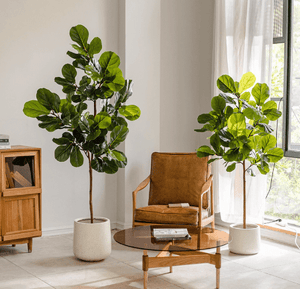
Flanking a sofa or bed: A matched pair of Bird of Paradise plants on either side of a large piece of furniture creates a lush, hotel-lobby feel.
The entryway statement: Positioned next to a bright front door or skylight, it makes an immediate impression.
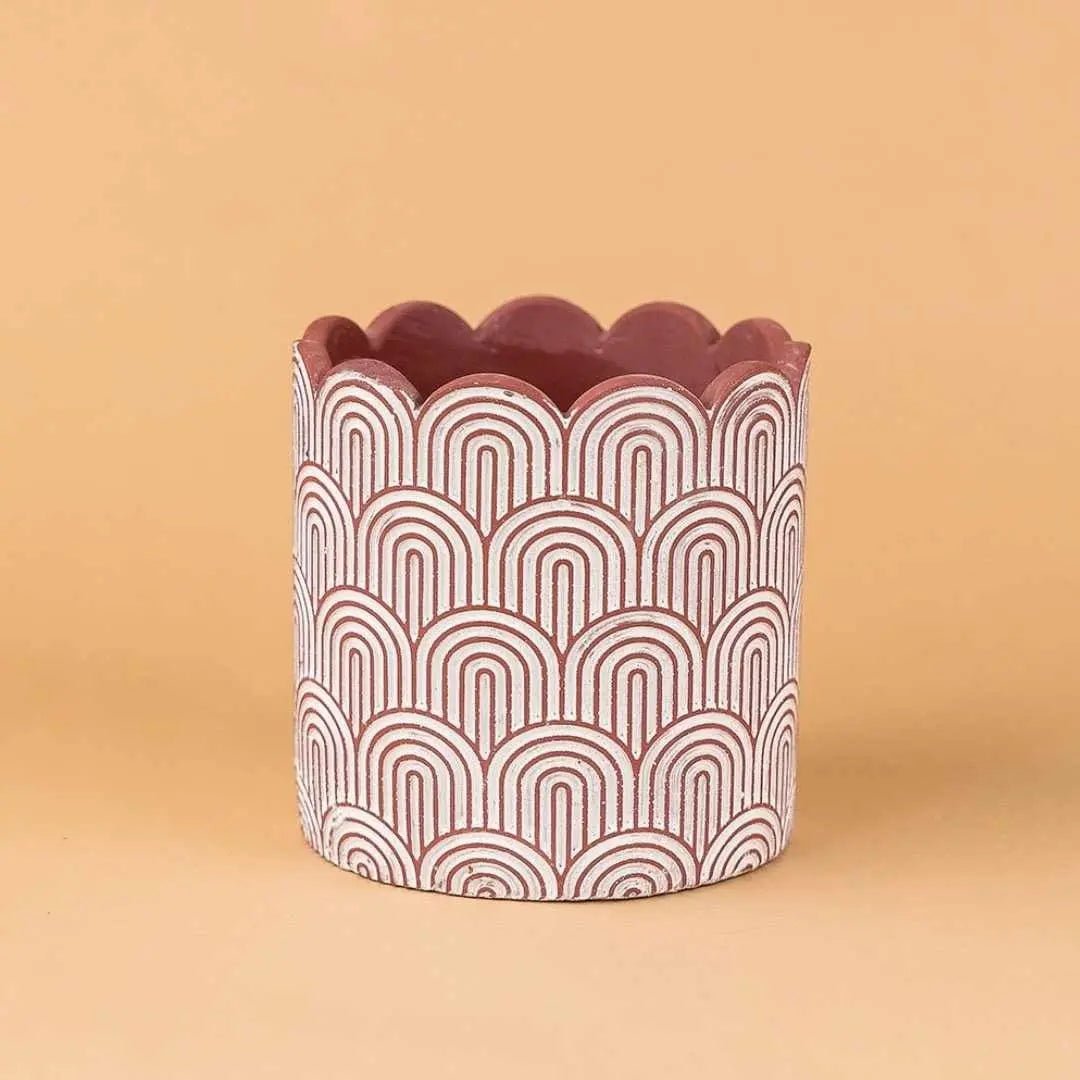
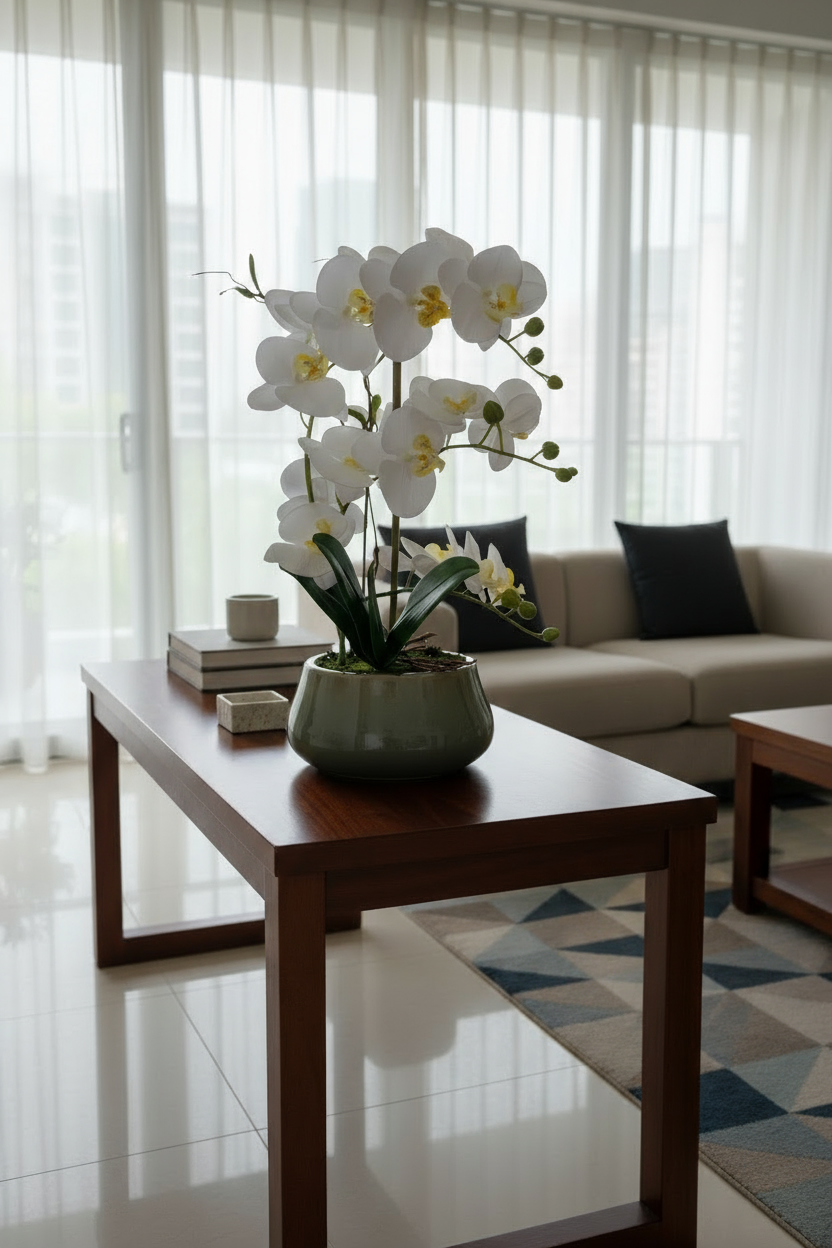
Simple pot, bold plant: The plant is the statement — keep the pot clean and neutral. White, cream, terracotta, or matte black all work beautifully.
Shop the Bird of Paradise
We have a range of Bird of Paradise plants available right now — from baby sizes to statement 1.6m specimens:
- Bird of Paradise (1.1-1.6m) — the full statement plant
- Bird of Paradise Junior — a more compact option
- Bird of Paradise Baby — perfect starter size
- Bird of Paradise Baby Hydro (Self Watering) — lowest maintenance option
- Bird of Paradise + COSMOS Planter Box Set — ready to display
- Bird of Paradise Reginae (1-1.2m) — the classic Strelitzia reginae
Have a plant you want us to feature next week? Let us know.