














Best Air-Purifying Plants for a Healthier Home
Posted on April 16 2026
In this article

Tags: air purifying plants, plants for allergies, houseplants health, clean air plants, indoor air quality, Singapore air quality
Thumbnail image spec (1200×628px):
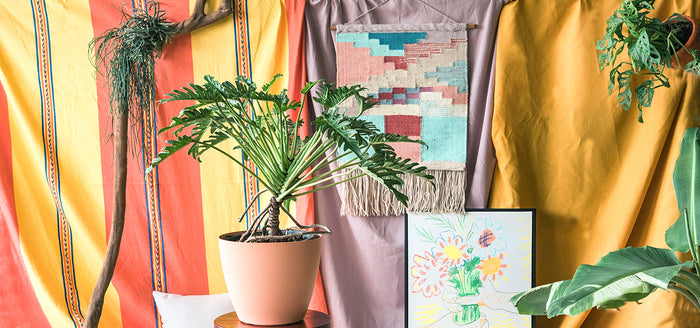
A bright, clean Singapore living room with a group of air-purifying plants — peace lily, snake plant, and spider plant — arranged near a window. Alt text: "Best air-purifying plants for Singapore homes — guide from Tumbleweed Plants". Source suggestions: Unsplash (search "peace lily indoor bright"), your own product photography.
---
Strategic plant placement in your Singapore home can meaningfully improve indoor air quality — if you choose the right species.
Every spring, allergy season sends people searching for natural remedies — and plants often come up. In Singapore, the concern is year-round: our tightly sealed, heavily air-conditioned buildings trap indoor air pollutants just as effectively as temperate-climate homes in winter, and our high humidity creates its own set of air quality challenges.
The relationship between houseplants and indoor air quality is real but nuanced. Some plants genuinely help. Others are actively problematic for allergy sufferers. And many popular claims are somewhere in between.
This guide gives you the honest picture — with Singapore-specific context throughout.
---
The Problem with Indoor Air in Singapore
Before looking at plants, it's worth understanding what you're dealing with. Indoor air quality is often worse than outdoor air — the EPA estimates people spend about 90% of their time indoors, where concentrations of some pollutants can be 2–5 times higher than outdoors.
Singapore-specific indoor air concerns:
- Tight building seals: Modern Singapore HDB and condo units are well-sealed for air-conditioning efficiency, reducing natural ventilation and concentrating indoor pollutants
- VOCs from new furniture and renovation: Singapore's active renovation culture means many homes have elevated VOC levels from new materials
- Mold from humidity: Our high ambient humidity (even indoors) makes mold a particular concern, especially in bathrooms, kitchens, and poorly ventilated rooms
- Dust and dust mites: Year-round warmth and humidity are ideal conditions for dust mite populations
- Haze events: Singapore's periodic transboundary haze from regional fires can spike outdoor particulate levels, driving people indoors with windows closed
Common indoor air pollutants everywhere:
- VOCs (volatile organic compounds) from furniture, paints, adhesives, cleaning products
- Formaldehyde from pressed wood furniture, carpets, and fabrics
- Benzene from tobacco smoke, plastics, and vehicle exhaust
- Mold spores from damp areas
- Pet dander and dust mites — the primary allergens for most allergy sufferers
---
What Plants Can (and Can't) Do

What plants can do:
- Remove low levels of VOCs, formaldehyde, and benzene continuously (NASA study confirmed this, though the practical scale is modest)
- Add humidity to dry air — higher humidity reduces dust mite populations at lower humidity ranges and keeps mucous membranes healthier
- Some plants reduce airborne mold spores (notably English ivy and peace lily)
- Documented psychological benefits: stress reduction, improved mood, better perceived air quality
What plants cannot do:
- Meaningfully reduce pollen (they can't — and some plants actually produce pollen)
- Filter pet dander
- Replace air purifiers for people with serious allergies or asthma
- Remove dust (which settles on their leaves instead)
- Filter outdoor haze particulates (PM2.5) — use a HEPA purifier during haze events
---
Top Air-Purifying Plants for Singapore Homes
Head-to-Head Comparison
| Plant | VOC Removal | Mold Reduction | Singapore Ease | Pet Safe | Ideal Placement |
|-------|-------------|---------------|---------------|----------|----------------|
| Peace Lily | Excellent | Yes | Easy | No | Bathroom, bedroom |
| Spider Plant | Very Good | No | Very Easy | Yes | Any room |
| Snake Plant | Good | No | Very Easy | No | Bedroom, office |
| Areca Palm | Very Good | No | Easy | Yes | Living room |
| Bamboo Palm | Excellent | No | Easy | Yes | Living room |
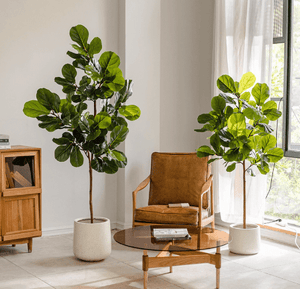
| Rubber Plant | Good | No | Easy | No | Bright room |
| Dracaena | Very Good | No | Easy | No | Any room |
| Boston Fern | Good | No | Moderate | Yes | Bathroom, humid room |
---
Peace Lily (*Spathiphyllum wallisii*)
One of the strongest all-around performers. Removes formaldehyde, benzene, trichloroethylene, and ammonia. Also notably reduces airborne mold spores — a particular benefit in Singapore's humid bathrooms and kitchens.
Singapore advantage: Peace lilies thrive in Singapore's warmth and indirect light. They're one of the few flowering plants that do well in lower-light HDB rooms. They also signal when they need water by wilting dramatically (and recovering quickly) — making them beginner-friendly.
Caution: Peace lilies do produce small amounts of pollen. For highly pollen-sensitive individuals, trimming flowers promptly when they appear prevents pollen release.
---
Spider Plant (*Chlorophytum comosum*)
Pet-safe and one of the most effective plants for removing formaldehyde and carbon monoxide (the latter released by gas appliances — relevant for Singapore homes using gas cooking). Produces no significant pollen. Thrives in most indoor conditions.
Singapore advantage: Spider plants grow actively year-round in Singapore's warmth and produce cascading offshoots (plantlets) you can propagate into new plants. Excellent for high shelves where their trailing growth is displayed to best effect.
Spider plants grow enthusiastically in Singapore's year-round warmth and produce plantlets that make excellent gifts or propagation projects.
---
Dracaena (*Dracaena marginata, D. fragrans*)
Effective at removing benzene, trichloroethylene, formaldehyde, and xylene. Low pollen production. Well-suited to indoor conditions. Multiple varieties to choose from.
Singapore advantage: Dracaenas are extremely heat-tolerant and do not need a cool winter rest period. They grow steadily year-round in Singapore's warm climate with minimal care.
---
Bamboo Palm (*Chamaedorea seifrizii*)
One of the highest-rated plants in NASA's VOC studies. Adds significant humidity to indoor air. Pet-safe — unusual for a highly-rated air purifier.
Singapore advantage: Bamboo palms grow readily in Singapore's tropical conditions. They perform well in indirect light — good news for HDB units without strong direct sun. Their tropical appearance suits Singapore interior aesthetics particularly well.
---
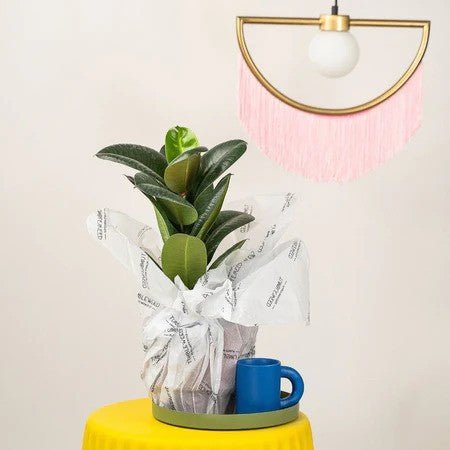
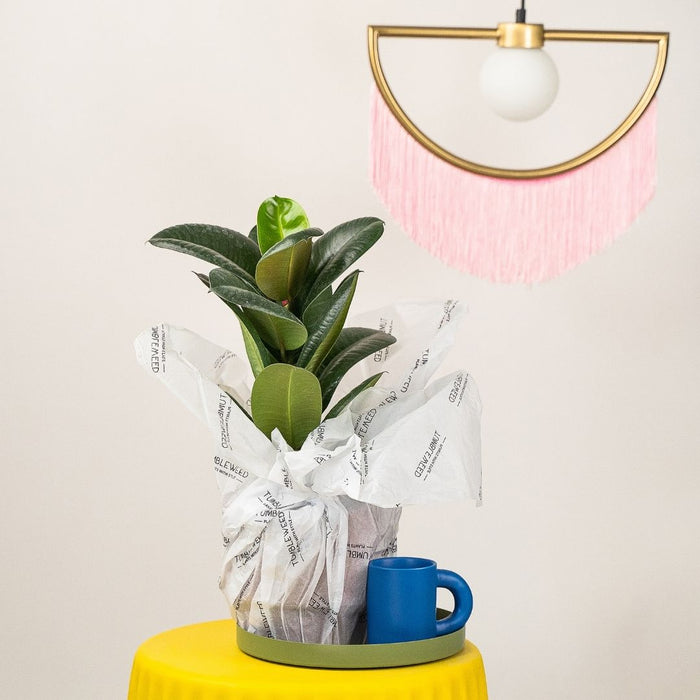
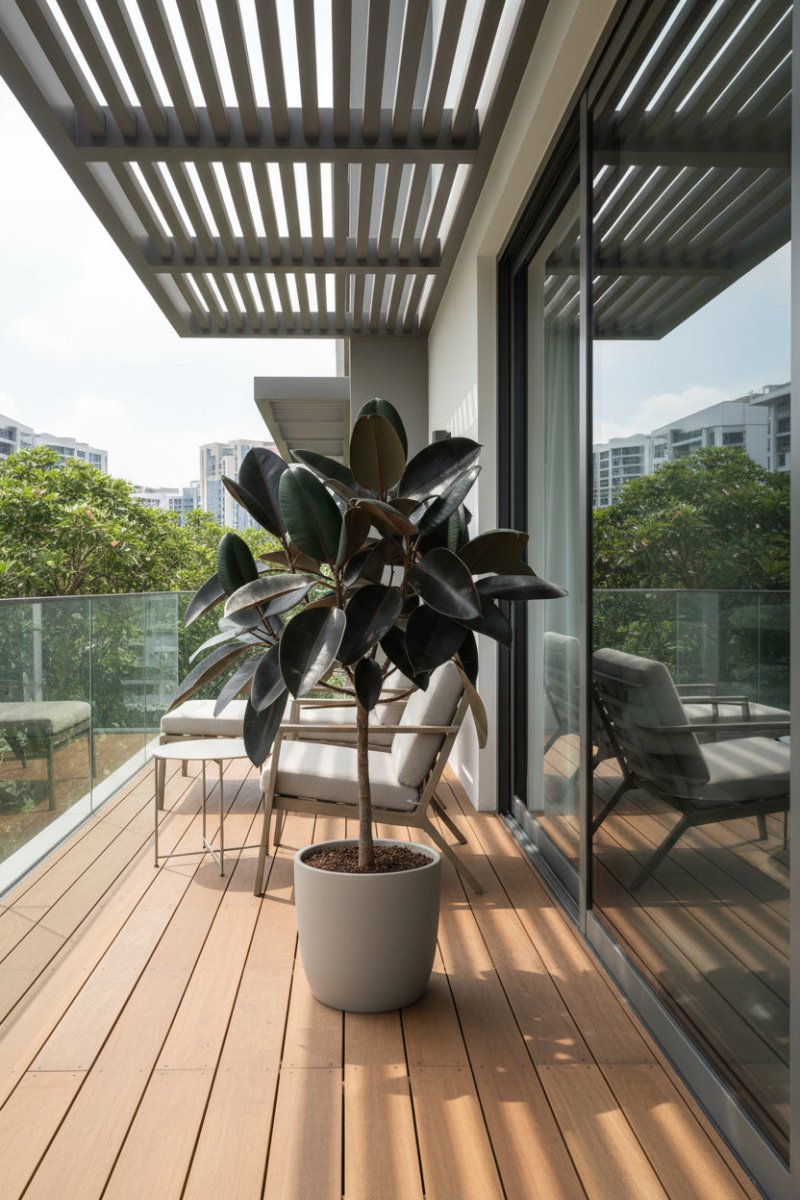
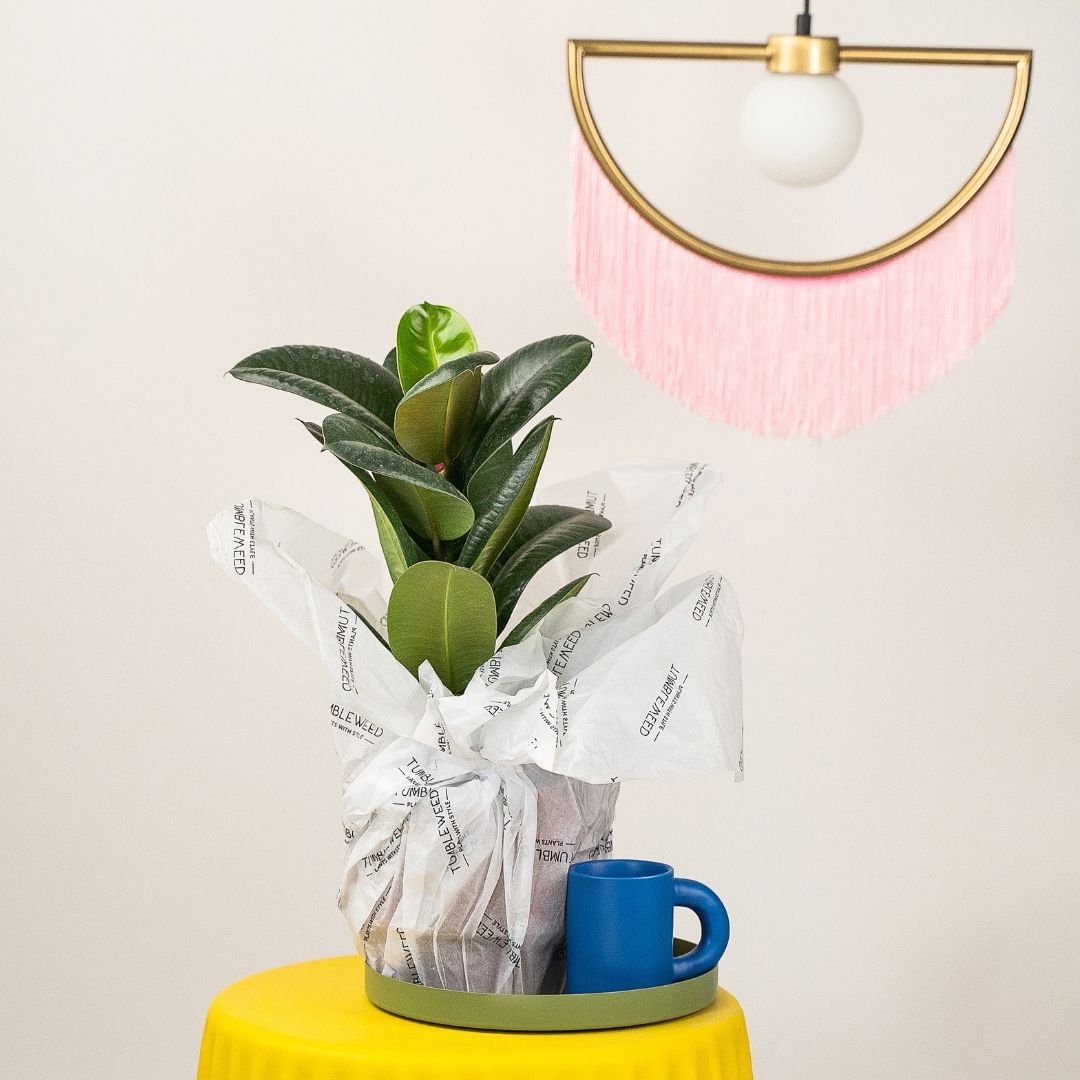
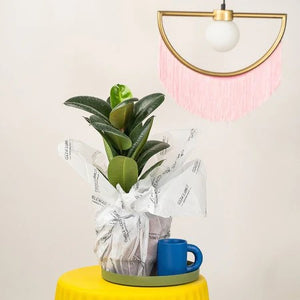
Rubber Plant (*Ficus elastica*)
Large leaves give rubber plants significant surface area for VOC absorption. Effective against formaldehyde. Low pollen production.
Singapore advantage: Rubber plants grow rapidly in Singapore's heat and can become impressive architectural specimens within a few years. Their glossy leaves need regular wiping to maintain their air-purifying effectiveness (dust reduces the active leaf surface area).
---
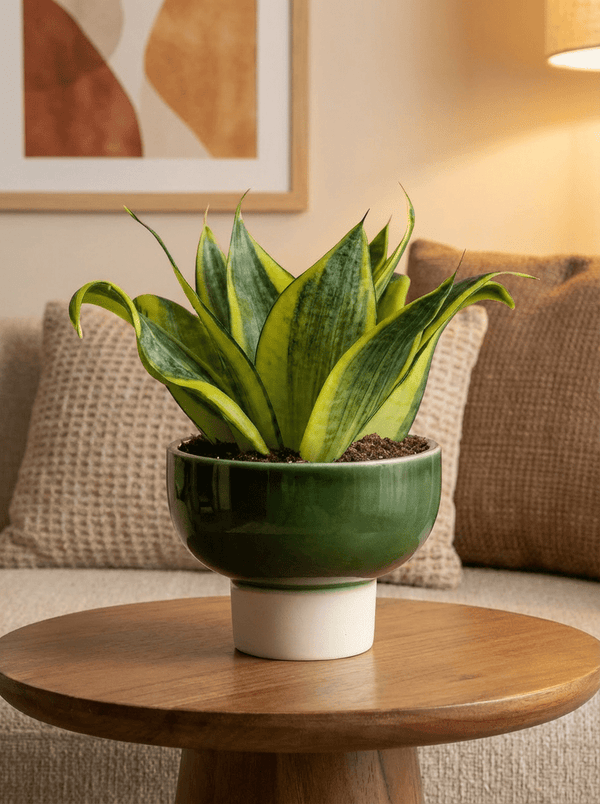
Snake Plant (*Dracaena trifasciata*)
Removes nitrogen oxides (from gas appliances and vehicle exhaust), benzene, and formaldehyde. Very low pollen. Tolerates conditions that would stress most plants — including the neglect that comes with Singapore's busy lifestyle.
Singapore advantage: Snake plants are virtually indestructible in Singapore's year-round warmth. They thrive in low-light HDB rooms and can go 3–4 weeks without watering during monsoon months. Ideal for frequent travelers.
---
Areca Palm (*Dypsis lutescens*)
Releases significant moisture into the air (natural humidifier effect — useful in air-conditioned Singapore interiors where humidity can drop to 40–50%). Pet-safe. Removes VOCs. Scored highly in NASA research for transpiration rate.
Singapore advantage: Areca palms are iconic in Singapore's tropical aesthetic. They grow beautifully in bright indoor positions and on covered balconies. Their golden-green canes and feathery fronds create a lush, resort-like atmosphere.
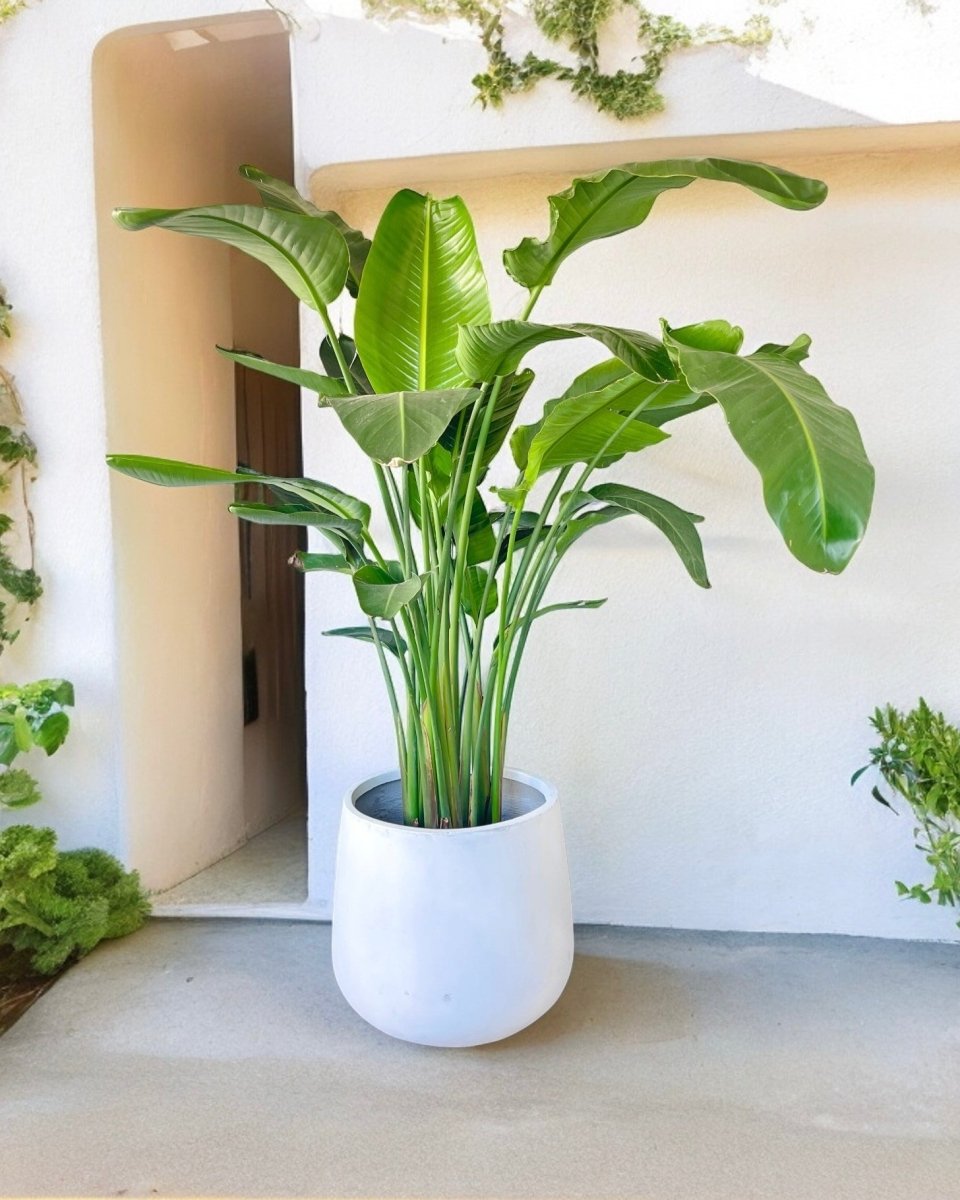
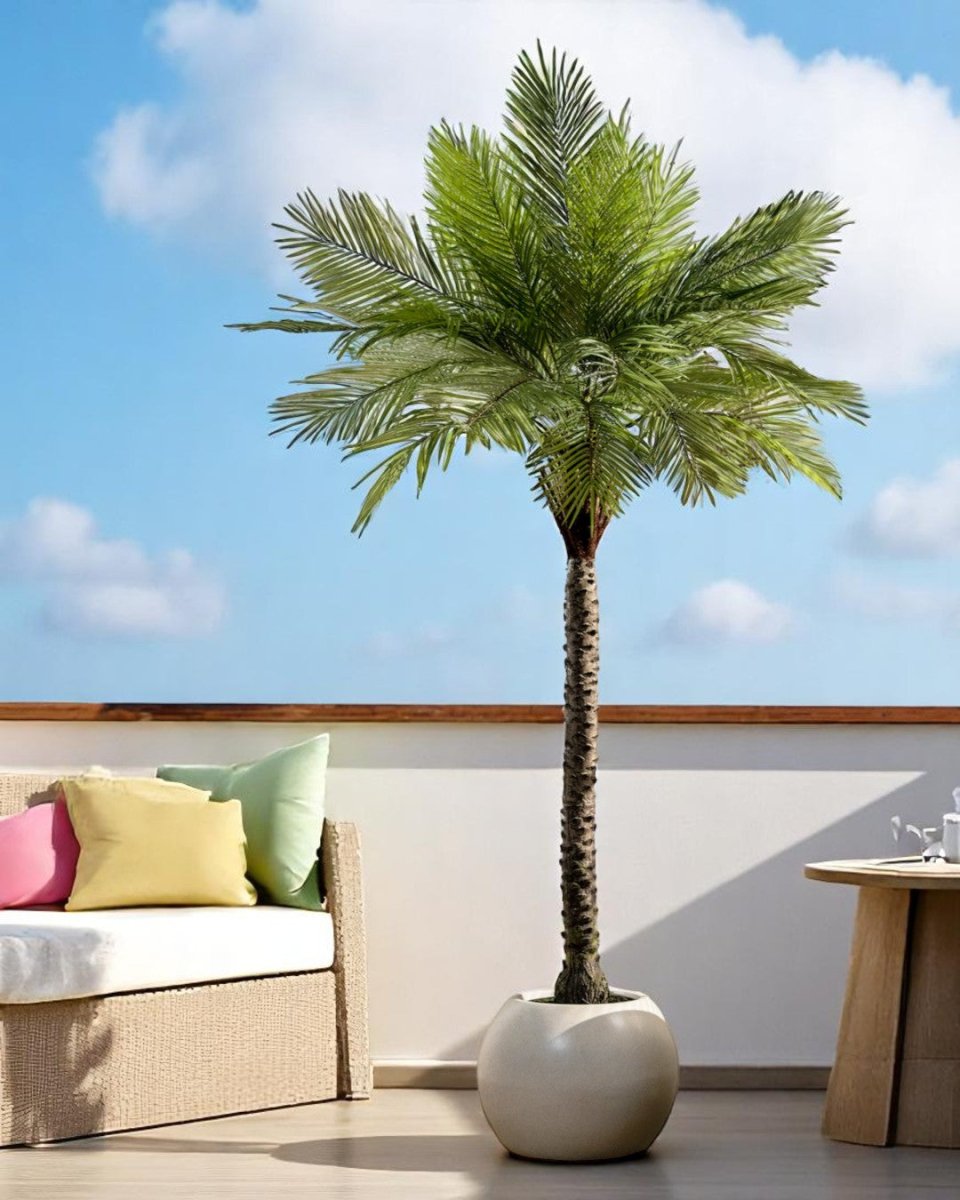
The areca palm — a natural humidifier, VOC absorber, and one of Singapore's most popular statement plants.
---
Boston Fern (*Nephrolepis exaltata*)
The champion humidifier among houseplants. Also removes formaldehyde effectively. Particularly helpful in heavily air-conditioned Singapore spaces where indoor humidity drops below comfortable levels.
Singapore advantage: Boston ferns love Singapore's warmth and humidity — they thrive in bathrooms and humid rooms where other plants struggle. The key challenge in Singapore is ensuring they don't dry out (our air-conditioning can desiccate their fronds quickly).
---
Plants Allergy Sufferers Should Avoid

Some plants are problematic specifically for allergy sufferers:
Flowering Plants with High Pollen
- Chrysanthemums — ranked highly for benzene removal but produce significant pollen
- Gerbera daisies — same issue
- Any heavy-flowering plant with exposed stamens
Alternative approach: Enjoy flowering plants but deadhead (remove) flowers promptly when they open, before pollen is released.
Plants That Can Cause Contact Dermatitis
Some people with sensitive skin or latex allergies react to plant sap:
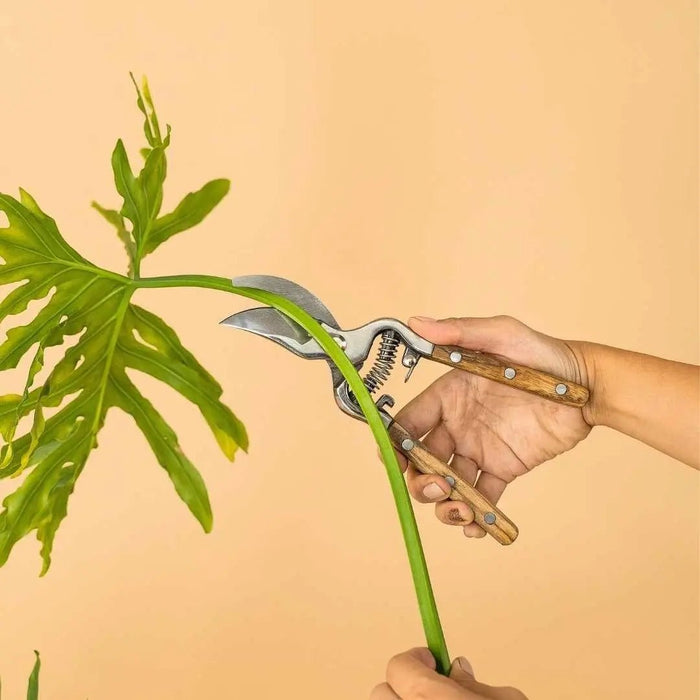
- Rubber plant (Ficus elastica) — milky latex sap; wear gloves when pruning
- Euphorbia — caustic sap
- Peace lily — calcium oxalate crystals; wash hands after handling
Plants Associated with Mold Risk
Any plant that stays consistently wet encourages mold growth in the soil. In Singapore's humidity, this risk is elevated:
- Ferns — require consistently moist soil; soil mold is more common in Singapore's humidity
- Any plant in a pot without drainage — standing water creates mold conditions
Mitigation: Allow soil to dry appropriately between waterings. Use pots with drainage holes. Consider adding a layer of activated charcoal to the soil mix.
---
Practical Setup for Singapore Allergy-Conscious Plant Owners
Choose wisely: Focus on the plants listed above as beneficial. Avoid heavy pollinators.
Keep leaves clean: Dust collects on plant leaves. In Singapore's open-window months, dust accumulates particularly quickly. A dusty plant is a dust trap in your living space. Wipe large-leaved plants monthly with a damp cloth.
Use pots with drainage: Avoid standing water conditions that encourage mold — especially important in Singapore's humidity.
Place strategically: Grouping 3–5 plants in the rooms where you spend the most time (bedroom, living room, home office) provides the most meaningful benefit. For air-quality impact, NASA's research suggests approximately 1 medium-to-large plant per 10 square metres of floor space.
Singapore haze events: During regional haze events, keep windows closed and use a HEPA air purifier. Plants do not filter PM2.5 particles — your HEPA purifier is the right tool for this specific Singapore challenge.
A humidifier and HEPA purifier do more: For serious allergy and asthma sufferers, a good HEPA air purifier + humidifier combination will outperform any number of houseplants for air quality. Plants complement these measures; they don't replace them.
---
Singapore Room-by-Room Air Plant Guide

| Room | Best Air-Purifying Plant | Why |
|------|--------------------------|-----|
| Bedroom | Snake Plant or Peace Lily | Low pollen; snake plant releases O2 at night |
| Living Room | Areca Palm or Bamboo Palm | Statement plant + humidity + VOC removal |
| Bathroom | Boston Fern or Peace Lily | Loves humidity; reduces mold spores |
| Kitchen | Spider Plant | Removes formaldehyde and CO from gas cooking |
| Home Office | Rubber Plant or Dracaena | VOC removal; tolerates air-con environment |
| HDB Corridor Window | Snake Plant or ZZ Plant | Tolerates lower light; minimal maintenance |
---
Our Air-Purifying Collection
Browse our full plant collection at Tumbleweed Plants — all species are selected based on documented research, with notes on pollen production and pet safety.
Looking specifically for pet-safe, low-pollen options? Our pet-friendly plant collection overlaps significantly with the best options for allergy sufferers — bamboo palm, areca palm, and spider plant are all excellent choices.
Need plants delivered to your Singapore home today? We offer same-day plant delivery across Singapore.
---
Quick summary
Key Takeaways
- The Problem with Indoor Air in Singapore
- What Plants Can (and Can't) Do
- Top Air-Purifying Plants for Singapore Homes
- Plants Allergy Sufferers Should Avoid
- Practical Setup for Singapore Allergy-Conscious Plant Owners
- Singapore Room-by-Room Air Plant Guide
Ready to bring some green into your home?
Browse 250+ hand-picked plants, curated for Singapore homes — delivered to your door.
Browse All Plants →