















The Complete Guide to Pet-Safe Houseplants (And the Toxic Ones to Avoid)
Posted on April 16 2026
In this article

Thumbnail image: 1200×628px — a cat or dog sitting peacefully among lush, pet-safe houseplants in a bright Singapore home interior. Warm, reassuring, lifestyle aesthetic. Natural light from a large window.
---
If you share your home with pets, plants require an extra layer of consideration. Many of the most popular houseplants — pothos, philodendrons, peace lilies, ZZ plants — are toxic to cats and dogs. And while most pets instinctively avoid plants, curious kittens, young dogs, and teething puppies don't always exercise that same caution.
This guide covers the most reliably pet-safe houseplants, the most important ones to avoid, and how to navigate plant ownership when you share your space with animals.
For Singapore pet owners: With year-round warmth and no outdoor gardens for most HDB and condo residents, our pets spend all their time indoors alongside our plants. Singapore's thriving pet culture — we're one of the most pet-friendly countries in Southeast Asia — means this question comes up constantly. The good news: many of the most beautiful and easy-to-grow tropical plants are also pet-safe, and they thrive in Singapore's climate year-round.
---
The Pet-Safe Plant List: Non-Toxic to Cats and Dogs
Trailing and Hanging Plants
Spider Plant (Chlorophytum comosum)
One of the most popular non-toxic houseplants. Easy to grow, tolerates low light, and produces baby spiderettes that dangle from the mother plant. The ASPCA lists it as non-toxic to cats and dogs (though cats sometimes chew on the leaves due to mild hallucinogenic compounds — it's safe, just messy). Spider plants thrive in Singapore's indirect light and warm temperatures, growing vigorously year-round.
String of Hearts (Ceropegia woodii)
Non-toxic, delicate, and beautiful. Trails from a hanging basket with heart-shaped leaves on thin purple stems. Needs bright indirect light. In Singapore, place in a spot with morning light but away from the intense afternoon sun.
Swedish Ivy (Plectranthus verticillatus)
Non-toxic trailing plant with scalloped green leaves and white flowers. Easy to grow in indirect light.
Burro's Tail (Sedum morganianum)
A trailing succulent that's non-toxic to both cats and dogs. Needs bright light but is otherwise very low-maintenance. (Note: leaves detach easily — expect some mess.) In Singapore, this does best on a bright balcony with morning sun rather than an indoor windowsill.
---
Large Statement Plants
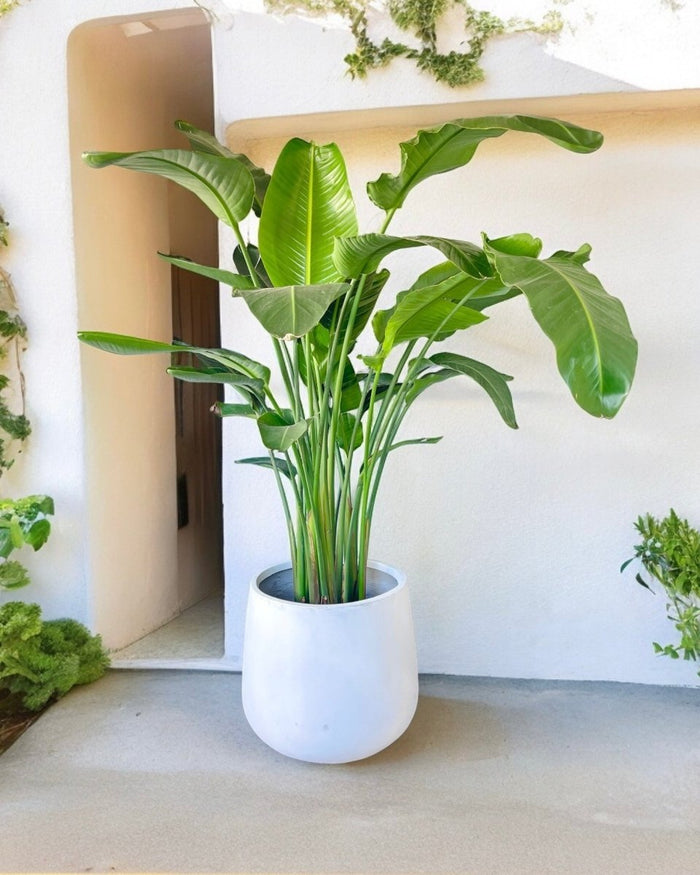
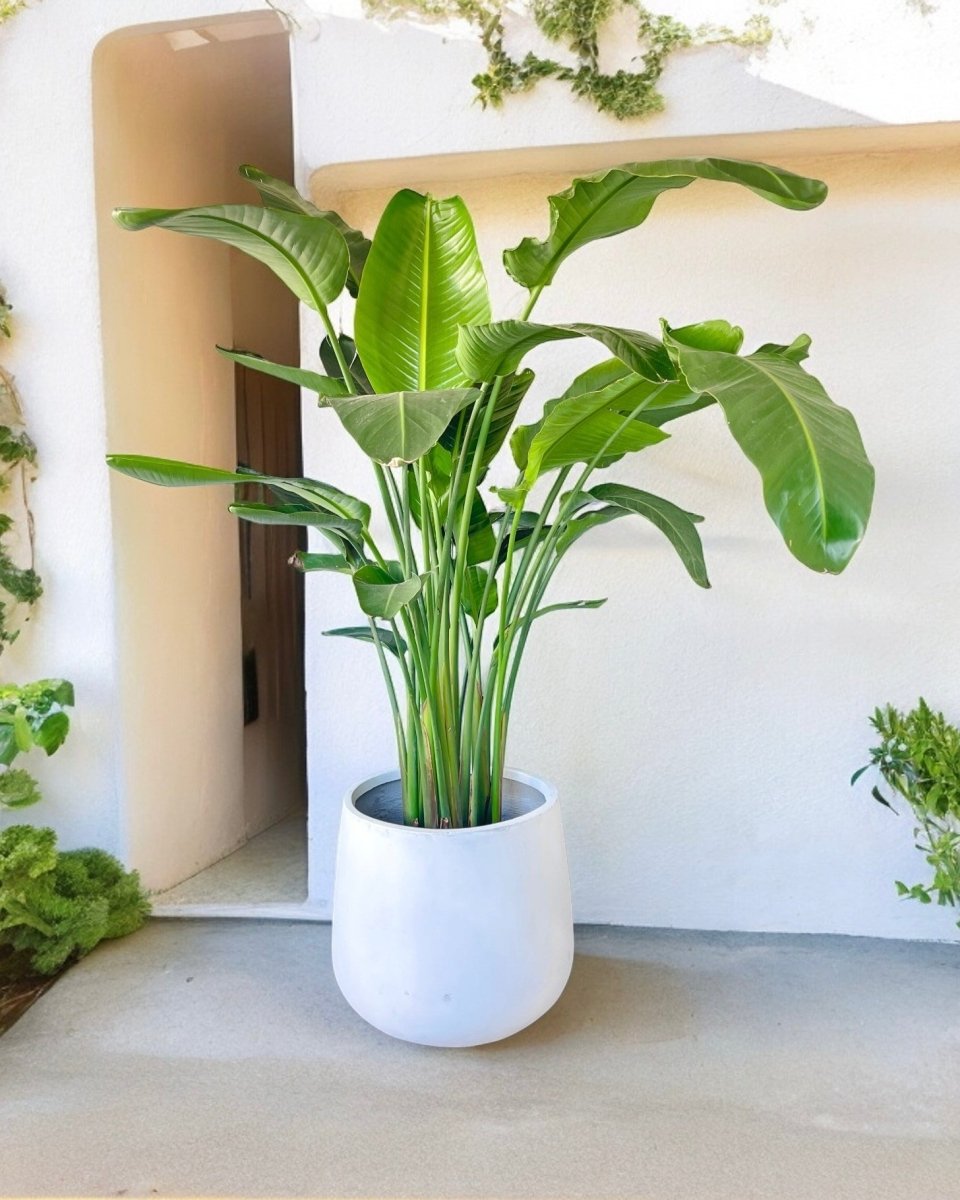
Bird of Paradise (Strelitzia reginae)
Mildly toxic to dogs and cats if ingested in large quantities, but considered low-risk by most vets due to the unpleasant taste and the plant's hardiness. Often placed in the "safe with caution" category. Check with your vet if concerned. Bird of paradise grows exceptionally well in Singapore's warmth and light.
Ponytail Palm (Beaucarnea recurvata)
Non-toxic to cats and dogs. Architectural, slow-growing, and very drought-tolerant. Looks like a miniature palm tree with a swollen trunk base. Thrives in Singapore's bright light and warm temperatures.
Parlor Palm (Chamaedorea elegans)
One of the most popular indoor palms — and non-toxic. Graceful, feathery fronds in a compact, upright form. Tolerates lower light better than most palms. An excellent HDB-friendly large plant.
Areca Palm (Dypsis lutescens)
Non-toxic, with dramatic tropical fronds. Needs more light and water than parlor palm but makes a stunning statement plant. Singapore's warm, humid climate is close to ideal for areca palms.
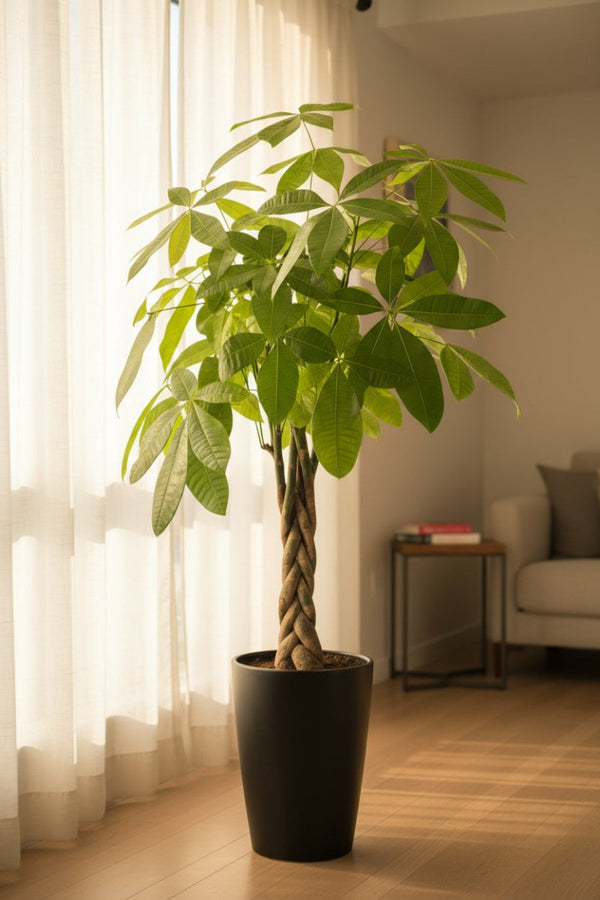
Money Tree (Pachira aquatica)
Non-toxic. Often sold with braided trunks. Associated in feng shui with good fortune — widely loved in Singapore homes. Fairly easy to care for in bright indirect light.
---
Compact and Tabletop Plants
Peperomia (various species)
The entire peperomia genus is considered non-toxic. With over 1,000 species varying in leaf texture, color, and growth habit, there's almost certainly a peperomia that fits your space. Watermelon peperomia, rubber peperomia, and ripple peperomia are all popular and safe. Peperomias are well-suited to Singapore's indirect indoor light.
African Violet (Saintpaulia)
Non-toxic, compact, and one of the few flowering plants that blooms reliably indoors in lower light. Needs east or north window light and consistent moisture.
Boston Fern (Nephrolepis exaltata)
Non-toxic. Lush, full ferns that love humidity. Ideal for a high-humidity Singapore bathroom or a shaded balcony.
Calathea / Goeppertia (various species)
Non-toxic. Some of the most visually stunning foliage plants available, with dramatic patterned leaves. Require humidity and filtered water — both of which Singapore's climate helps provide naturally. Calatheas thrive in Singapore's ambient warmth and can be grown in north-facing rooms or shaded balconies.
Haworthia
Non-toxic succulent with spiky rosette forms. Resembles aloe but without the toxicity. Tolerates lower light than most succulents — a practical advantage for Singapore's often-shaded indoor spaces.
Christmas Cactus (Schlumbergera)
Non-toxic. A flowering cactus that blooms with pink, red, or white flowers. Easy to care for and produces flowers reliably.
---
Herbs (Bonus: Edible and Pet-Safe)
- Basil — safe for cats and dogs (grows prolifically year-round in Singapore's warmth)
- Rosemary — safe for cats and dogs
- Thyme — safe for cats and dogs
- Sage — safe for cats and dogs (in small amounts)
- Cilantro — safe for cats and dogs
Herbs do particularly well on Singapore balconies and kitchen windowsills — year-round growing means you always have fresh herbs on hand.
---
Plants to Avoid in Pet Households

High Toxicity — Keep Out of Reach or Remove
Pothos (Epipremnum aureum) — Toxic to cats and dogs. Contains calcium oxalate crystals that cause oral irritation, vomiting, and difficulty swallowing if chewed. One of Singapore's most popular houseplants — keep elevated and out of reach if you have pets.
All Philodendrons — Same calcium oxalate toxicity as pothos. Toxic to cats and dogs.
Peace Lily (Spathiphyllum) — Toxic to cats and dogs. Causes oral irritation, vomiting, and difficulty swallowing. Also toxic to humans.
Monstera deliciosa — Toxic to cats and dogs (calcium oxalate crystals). Beautiful and popular in Singapore homes — keep on a high shelf or in a room pets don't access.
ZZ Plant (Zamioculcas zamiifolia) — Toxic to cats and dogs.
Aloe Vera — Toxic to cats and dogs if ingested (the gel is not the problem; the latex in the outer leaf is).
Dracaena (all species) — Toxic to cats and dogs. Causes vomiting, lethargy, and loss of appetite in cats; cats are particularly sensitive. Very common in Singapore — be aware if you have cats.
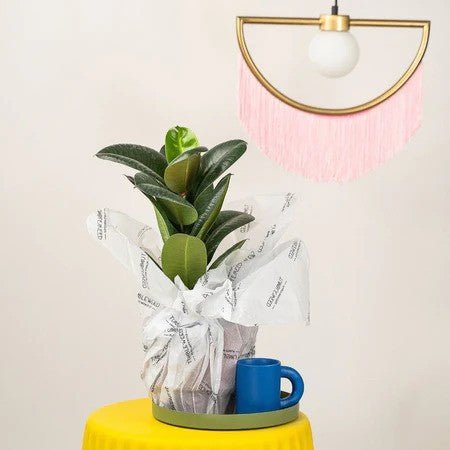
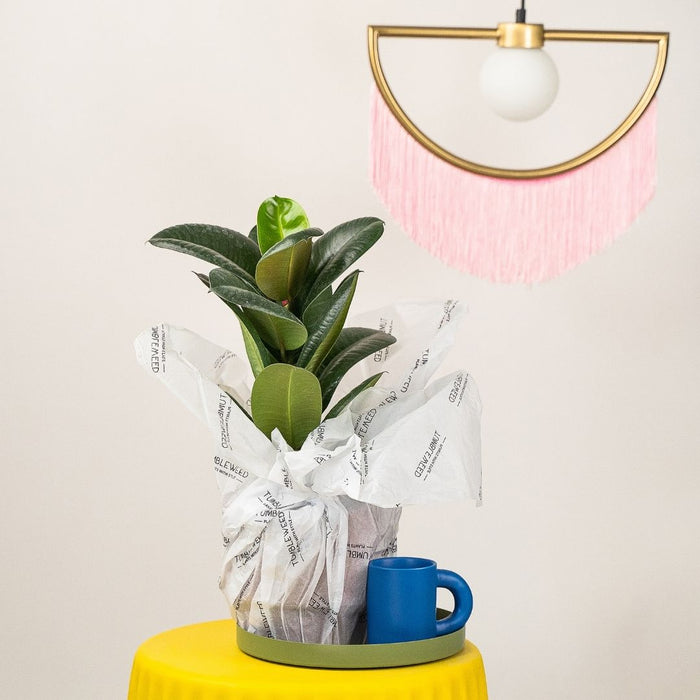
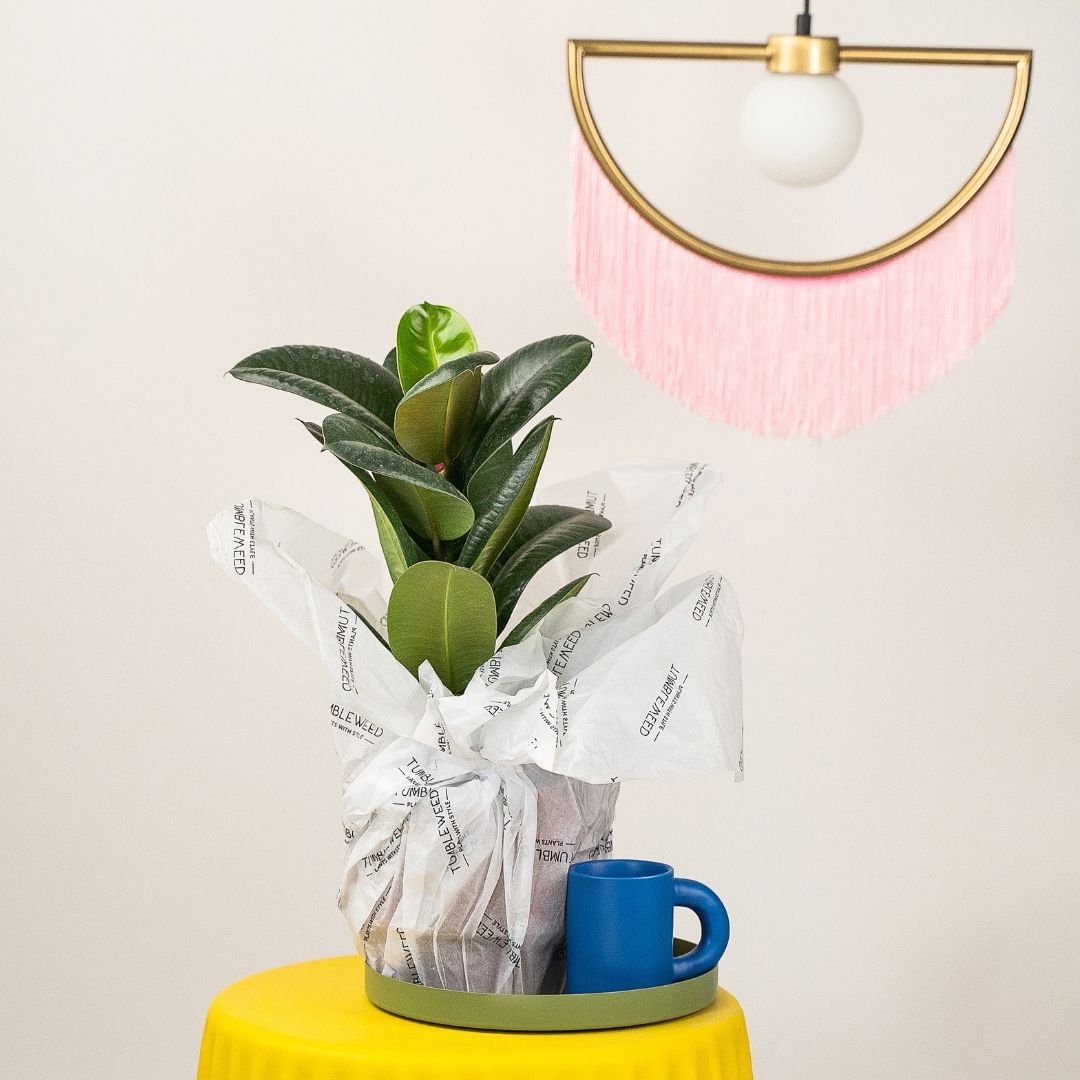
Rubber Plant (Ficus elastica) — Toxic to cats and dogs.
Snake Plant / Mother-in-Law's Tongue (Dracaena trifasciata) — Toxic to cats and dogs (causes nausea and vomiting). Extremely common in Singapore homes and offices — keep elevated if pets are present.
Fiddle Leaf Fig (Ficus lyrata) — Toxic to cats and dogs.
Alocasia — Toxic to cats, dogs, and humans (calcium oxalate crystals). Popular in Singapore but must be kept away from pets and children.
Dieffenbachia (Dumb Cane) — Highly toxic. Causes severe oral irritation. Avoid in any pet household.
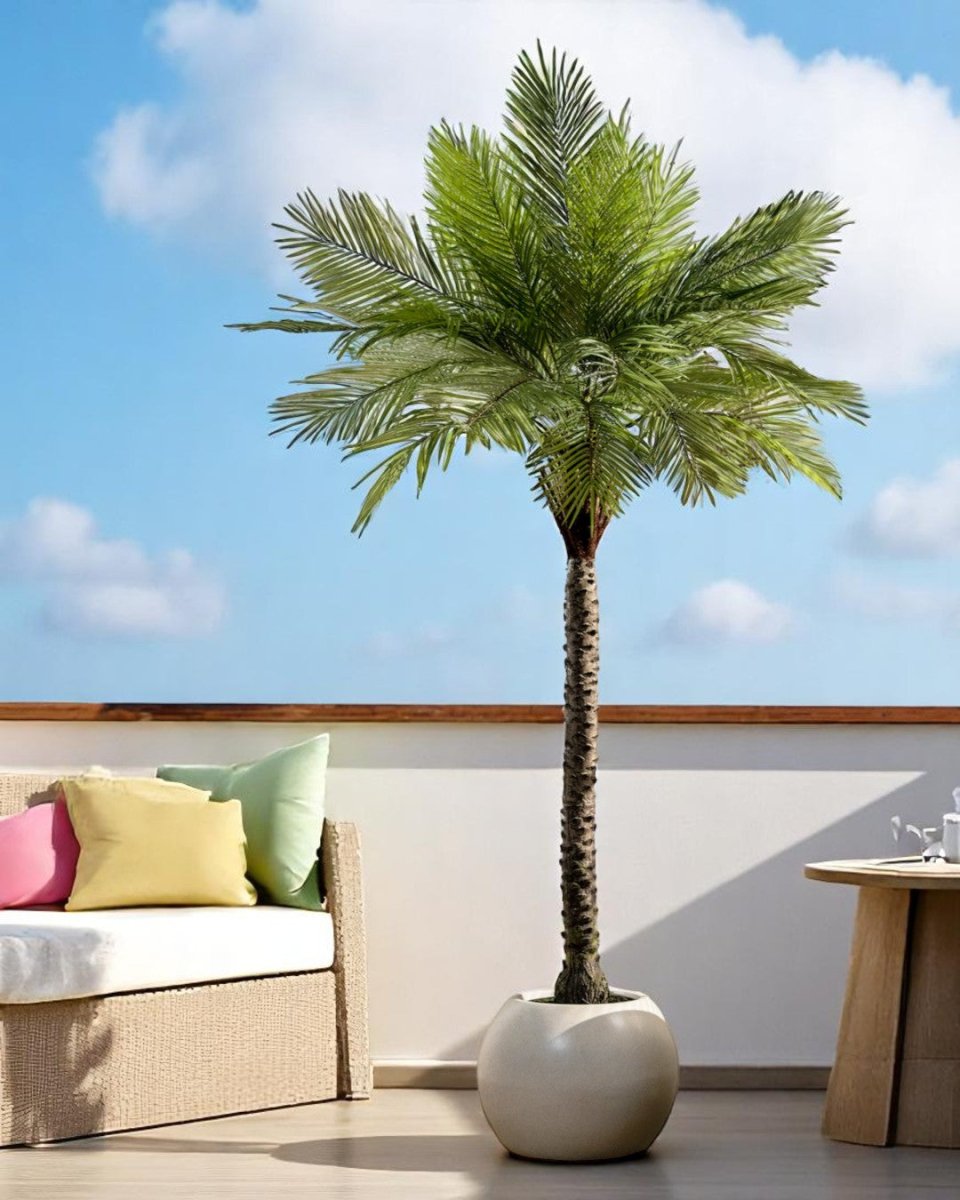
Sago Palm — Extremely toxic. Can be fatal to dogs even in small amounts. Avoid entirely in any household with pets.
---
Practical Strategies for Keeping Pets and Plants in Singapore
Elevate toxic plants. A high shelf, hanging planter, or plant stand out of reach eliminates most risk. In Singapore HDB flats, high kitchen shelves and over-door hanging systems can work well. This works for cats only if the shelf is genuinely inaccessible — cats will often reach shelves most owners think are safe.
Use corridor and balcony placement. In many Singapore homes, the HDB corridor or balcony is a separate zone from the main pet area. Toxic plants can live there while pet-safe plants come indoors. Ensure balconies are safely enclosed if pets might access them.
Use hanging plants strategically. Ceiling hooks in Singapore HDB flats can hold hanging planters high enough to be out of reach for dogs and most cats.
Understand your pet's behavior. Some cats and dogs never touch plants. Others chew on anything green. Know yours before assuming plants are safe where they stand. Singapore's small-flat context means there's less separation between living areas and plant areas than in a landed home.
Train and deter. Citrus peels, aluminum foil around pots, and commercial pet deterrent sprays can discourage pets from approaching specific plants.
Replace rather than risk. If you have a curious chewer, replace high-toxicity plants with non-toxic alternatives. A calathea instead of a pothos. A spider plant instead of a peace lily. Parlor palm instead of dracaena. Our pet-safe plant collection makes it easy to find beautiful, verified-safe options.
---
Emergency: What to Do If Your Pet Eats a Plant in Singapore

- Identify the plant immediately — bring a cutting or a photo to the vet
- Call your vet — don't wait for symptoms to develop. In Singapore, 24-hour emergency vet clinics are available
- ASPCA Animal Poison Control Center: (888) 426-4435 (for international reference; consultation fee may apply)
- AVS (Animal & Veterinary Service) Singapore emergency: Contact your nearest 24-hour vet clinic
Do not induce vomiting unless specifically directed by a veterinarian.
---
We've curated a pet-safe plant collection specifically for Singapore homes with cats, dogs, and kids. Every plant in the collection has been vetted against the ASPCA toxicity database. Browse the full pet-friendly lineup — and if you need plants today, check our same-day delivery in Singapore. Same great plants, zero worry.
---
Quick summary
Key Takeaways
- The Pet-Safe Plant List: Non-Toxic to Cats and Dogs
- Plants to Avoid in Pet Households
- Practical Strategies for Keeping Pets and Plants in Singapore
- Emergency: What to Do If Your Pet Eats a Plant in Singapore
Ready to bring some green into your home?
Browse 250+ hand-picked plants, curated for Singapore homes — delivered to your door.
Browse All Plants →