
















How to Start an Indoor Garden in a Singapore HDB Flat | Tumbleweed Plants Singapore
Posted on April 15 2026
In this article

Over 80% of Singaporeans live in HDB flats. These homes are well-designed, practical, and compact — and for a long time, "compact" seemed like a reason not to have plants. Where would they go? There is no garden. The balcony (if there is one) is small. Counter space is precious.
But the indoor gardening boom has proven that HDB living and plant collecting are not just compatible — they are complementary. Plants solve the exact problems that HDB living creates: they soften hard surfaces, add visual depth to small rooms, bring nature into a high-rise environment, and make spaces feel larger and more alive.
This guide is for the HDB dweller who wants to start — not with one tentative plant on the TV console, but with a deliberate, room-by-room indoor garden that works within the constraints and opportunities of HDB design.
Understanding Your HDB
Before choosing plants, understand what your flat offers:
Light Assessment
Walk through your flat at different times of day and note:
- Which windows get morning sun? (East-facing — gentle, ideal for most plants)
- Which windows get afternoon sun? (West-facing — stronger, hotter)
- Which rooms have indirect light all day? (North-facing — consistent, excellent)
- Which areas are dim? (Interior corridors, rooms with blocked windows)
Light is the single most important factor in plant selection. Choosing plants before understanding your light is like buying furniture without measuring the room.
Humidity Zones
- Bathroom: Highest humidity (if you shower with the door closed)
- Kitchen: High humidity during cooking
- Living room and bedrooms: Moderate (higher with windows open, lower with AC)
- AC rooms at night: Lowest humidity
Airflow
- Naturally ventilated rooms (windows open): Good airflow, higher humidity, warmer
- AC rooms: Lower humidity, cooler, less airflow
- Enclosed spaces: Still air can promote fungal issues — choose resilient species
Room-by-Room Guide

Living Room
The largest space and where most indoor gardens begin.
Opportunities:
- Floor corners for large statement plants
- TV console or sideboard for medium plants
- Floating shelves for small plants and trailing species
- Window area for light-loving plants
Best plants:
- Monstera deliciosa — The classic living room statement. Place near the brightest window.
- Snake Plant — Architectural and thrives anywhere. Perfect for that dark corner.
- Pothos on a high shelf — Trails down, creating visual flow.
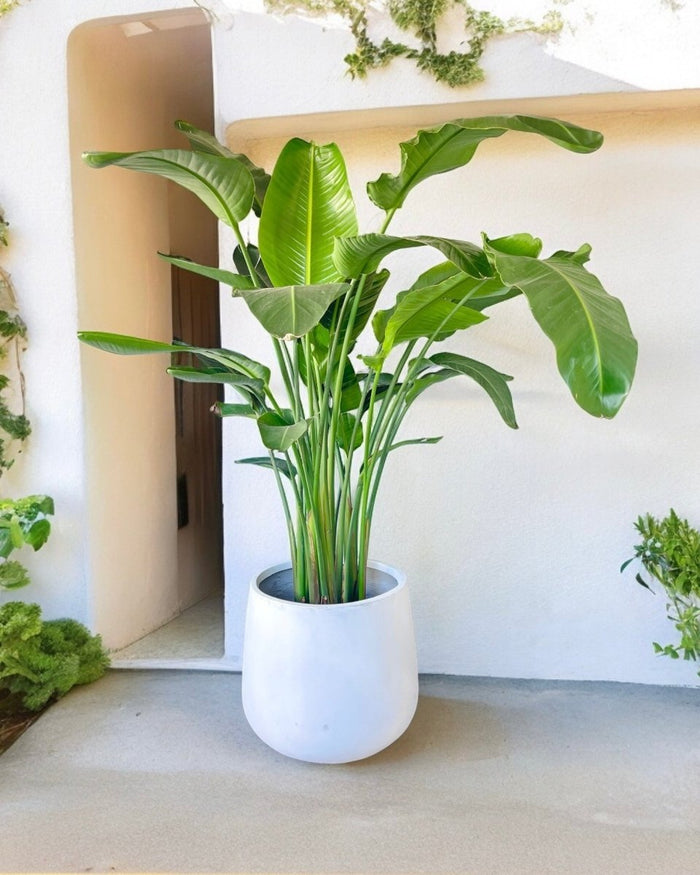
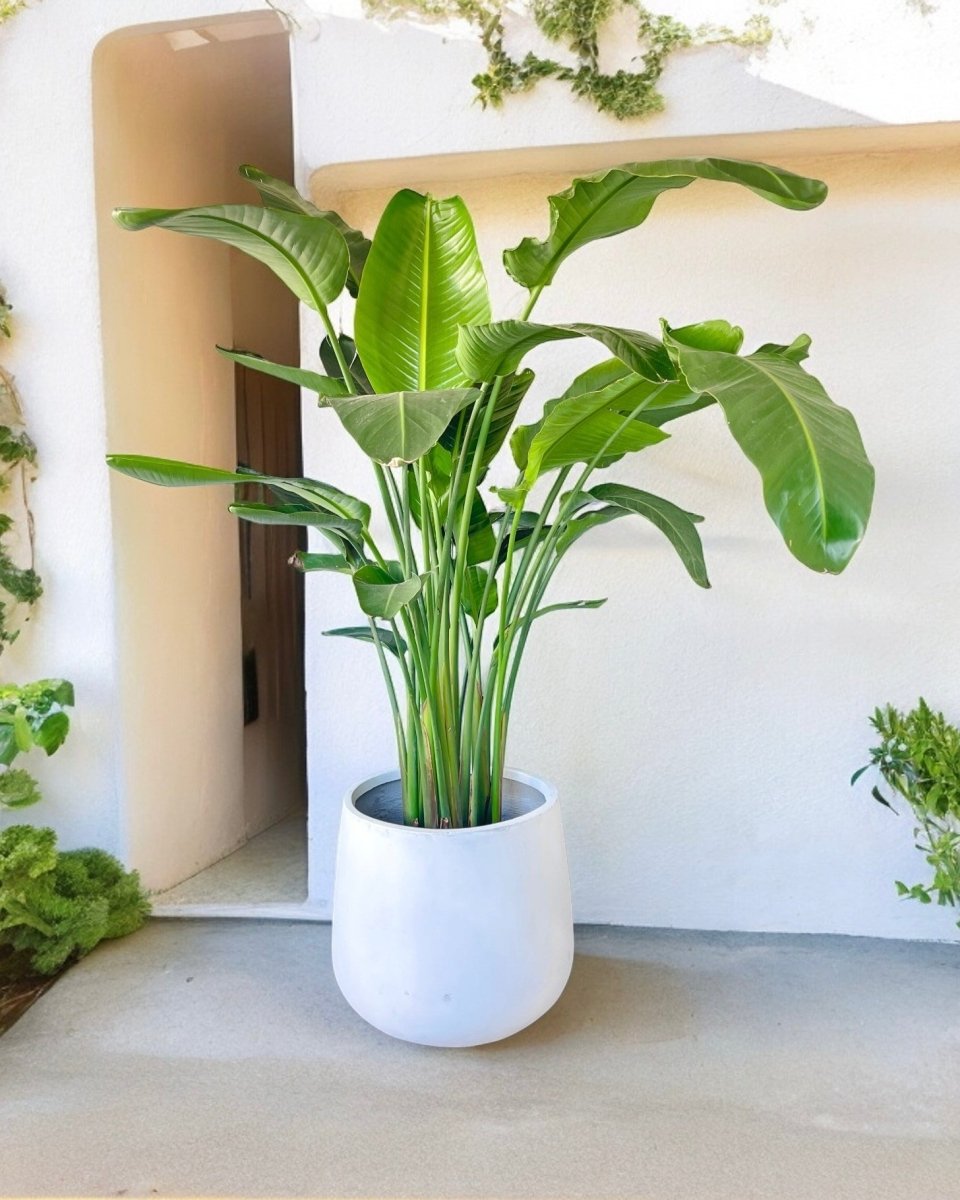
- Bird of Paradise — If you have a bright corner and want drama.
- Aglaonema — Colourful accent on a side table.
Space-saving tip: Use vertical space. A tall plant stand, wall-mounted planters, or a dedicated plant shelf takes advantage of height without consuming floor space.
Bedroom
A personal retreat that benefits from calming greenery.
Best plants:
- Snake Plant — Releases oxygen at night, tolerates low light and AC
- Pothos — Trails from a shelf above the headboard
- Peace Lily — Blooms in low light, air-purifying
- ZZ Plant — Glossy, architectural, maintenance-free
Placement: Nightstand, dresser top, corner floor position, or wall-mounted planter.
Kitchen
Often overlooked but excellent for plants.
Best plants:
- Herbs on the windowsill — Basil, mint, pandan, chives
- Pothos on top of cabinets — Trails down, using dead space
- Peperomia — Compact, fits beside the spice rack
- Spider Plant — Hanging above the sink if space allows
Bathroom
If your bathroom has a window (even small), it can support plants.
Best plants:
- Ferns — Love the humidity from showers
- Pothos — Thrives in bathroom humidity and lower light
- Spider Plant — Hanging from the shower rod bracket or mounted shelf
- Air Plants — No soil, no mess, absorb shower moisture
No window? Skip live plants or use a very low-light species (Snake Plant, ZZ) and rotate it to a brighter room periodically.
HDB Corridor
The space outside your front door — shared but often personalised.
Best plants:
- Snake Plant — Tolerates the variable conditions
- ZZ Plant — Survives the indirect light and occasional neglect
- Aglaonema — Adds colour to the corridor
- Spider Plant — Hardy and forgiving
Note: Be mindful of HDB regulations — plants should not obstruct the corridor or create trip hazards. Keep pots against the wall and proportional to the space.
Balcony / Service Yard
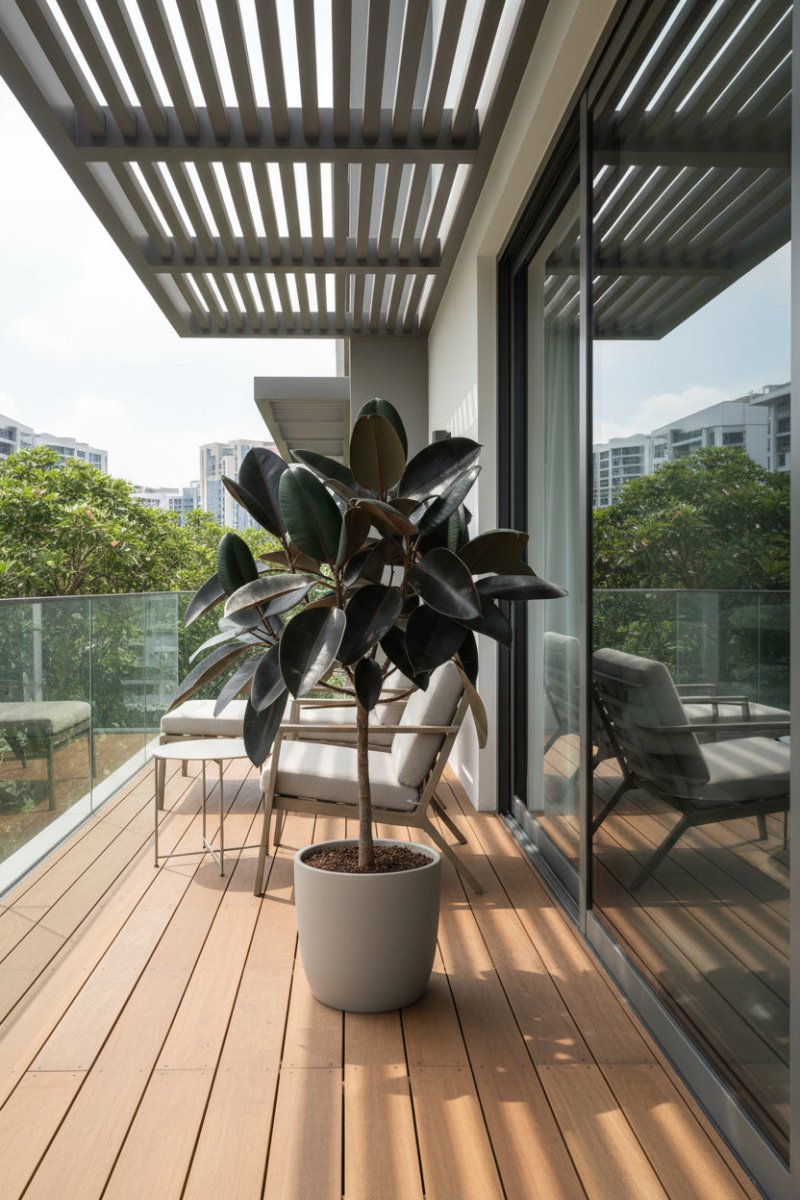
If your flat has a balcony, it is your best growing space — more light, natural air, and room for larger plants.
Best plants:
- Herbs and edibles
- Sun-loving tropicals
- Larger plants that need more light than indoor positions provide
Space-Saving Strategies
Go Vertical
- Tall plant stands — Multi-tier stands hold 3-5 plants in the footprint of one
- Wall-mounted planters — Use wall space instead of floor or surface space
- Hanging planters — Ceiling hooks or curtain rods support hanging pots
- Floating shelves — Dedicated plant shelves at different heights
Use Dead Space
- Top of wardrobes and cabinets
- Above the refrigerator
- Window sills (even narrow ones)
- Corners behind doors
- Above toilet cisterns (if bathroom has light)
Multi-Function Furniture
- A plant stand that doubles as a side table
- A bookshelf that integrates plants with books
- A room divider made of trailing plants on a shelving unit
Starting Smart

Start Small
Begin with 3-5 plants. Learn what works in your specific flat — your light, your watering habits, your climate control. Then expand.
Recommended starter collection for an HDB flat:
- 1. One Pothos (living room shelf)
- 2. One Snake Plant (bedroom corner)
- 3. One Aglaonema (living room table)
- 4. One herb pot (kitchen windowsill)
- 5. One Peperomia (desk or shelf)
Total budget: $80-$150 including pots.
Establish a Routine
Set a weekly watering day. Sunday mornings, for example. Walk through the flat, check each plant, water as needed, wipe dusty leaves, check for pests. This 15-20 minute routine keeps everything healthy.
Track What Works
Note which positions thrive and which struggle. If a plant declines in one spot, try another before giving up on the species. Often the issue is location, not care.
Common HDB Challenges
Limited Natural Light
Many HDB rooms have limited window exposure, especially if facing another block. Solutions:
- Choose low-light champions: Snake Plant, ZZ Plant, Pothos, Aglaonema
- Supplement with grow lights if you want to grow light-loving species
- Rotate plants between bright and dim positions periodically
Air Conditioning
AC reduces humidity and creates temperature cycles. Solutions:
- Choose AC-tolerant species
- Group plants together for shared humidity
- Use pebble trays
- Water slightly more frequently in heavily AC rooms
Pest Management
High-rise living reduces (but does not eliminate) pest risk. Fungus gnats, spider mites, and mealybugs can still appear. Inspect new plants before introducing them to your collection. Quarantine new arrivals for 1-2 weeks.
Shop Plants

Browse our indoor plant collection for HDB-friendly plants delivered across Singapore.
An HDB flat is not a limitation — it is a design constraint, and some of the most beautiful indoor gardens in Singapore are in 3-room and 4-room flats where every plant was chosen for a specific spot, every pot was selected to match the space, and every corner was considered. The key is working with your flat, not against it. Use the light you have. Go vertical where the floor is taken. Choose species that match your conditions rather than fighting to keep unsuitable plants alive. Start with five plants. Establish a routine. Watch them grow. Then add five more. Within a few months, your HDB flat has something it never had before — life in every room, green in every corner, and a feeling of being surrounded by growing, living things that no amount of furniture or renovation can replicate. That is an indoor garden. And it lives in an HDB flat, just like you.
Quick summary
Key Takeaways
- Understanding Your HDB
- Room-by-Room Guide
- Space-Saving Strategies
- Starting Smart
- Common HDB Challenges
- Shop Plants
Ready to bring some green into your home?
Browse 250+ hand-picked plants, curated for Singapore homes — delivered to your door.
Browse All Plants →








Comments
0 Comments
Leave a Comment