


















When and How to Fertilise Houseplants in Singapore | Tumbleweed Plants Singapore
Posted on April 09 2026
In this article

Fertilising is the plant care step most people either skip entirely or do incorrectly. Under-fertilised plants grow slowly and produce small, pale leaves. Over-fertilised plants develop burnt tips, damaged roots, and salt-crusted soil. The sweet spot — feeding the right amount at the right time — makes a visible difference in your plants' health and vigour.
This guide explains what fertiliser does, how to choose the right one, and how to feed your indoor plants without overdoing it.
Why Plants Need Fertiliser
In nature, plants receive nutrients from decomposing organic matter in the soil, rain, and the microbial ecosystem surrounding their roots. In a pot, the nutrient cycle is interrupted. The limited soil volume depletes over time, and there is no natural replenishment system.
Fertiliser replaces what the pot cannot provide — essential nutrients that fuel growth, flowering, root development, and overall plant health.
Understanding NPK

Every fertiliser label displays three numbers — for example, 10-10-10 or 20-20-20. These represent the NPK ratio:
N (Nitrogen) — Fuels leaf and stem growth. The most important nutrient for foliage plants. Nitrogen deficiency shows as yellowing of lower, older leaves (the plant cannibalises them to feed new growth).
P (Phosphorus) — Supports root development, flowering, and fruiting. Important for flowering plants like Anthurium, Peace Lily, and orchids.
K (Potassium) — Strengthens the plant's overall health, disease resistance, and water regulation. Supports cell function across the entire plant.
What Ratio to Use
Balanced (10-10-10 or 20-20-20): Equal parts of all three nutrients. The safest, most versatile choice for mixed collections of foliage houseplants.
Higher nitrogen (3-1-2 ratio): Best for foliage plants where leaf growth is the priority — Monstera, Philodendron, Pothos, ferns.
Higher phosphorus (bloom booster): Best for encouraging flowers — Anthurium, orchids, Peace Lily, Hoya, African Violet.
For most Singapore plant owners: A balanced 10-10-10 or 20-20-20 liquid fertiliser covers virtually all common houseplants. Do not overcomplicate it.
Types of Fertiliser
Liquid Fertiliser (Recommended for Most)
Mixed with water and applied during regular watering.
Pros: Easy to control dosage. Distributes evenly. Nutrients are immediately available. Most versatile for indoor plants.
Cons: Needs to be applied regularly (every two to four weeks). Can be over-applied if not diluted properly.
How to use: Dilute according to label instructions — then dilute further to half strength. Over-feeding is far more damaging than under-feeding. Apply to moist soil (never dry) during regular watering.
Slow-Release Granules
Small pellets mixed into or sprinkled on the soil surface that release nutrients gradually over weeks to months.
Pros: Feed once every three to six months. Set-and-forget convenience. Consistent, gradual nutrient delivery.
Cons: Harder to control exact dosage. Cannot be easily removed if over-applied. May release faster in Singapore's heat, increasing the risk of over-fertilisation.
How to use: Sprinkle the recommended amount (usually less is more) on the soil surface or mix into the top centimetre of soil. Water normally.
Organic Fertilisers
Derived from natural sources: compost, worm castings, fish emulsion, seaweed extract, bone meal.
Pros: Slow release. Improves soil structure and microbial health. Lower risk of chemical burn. Environmentally friendly.
Cons: Can smell (fish emulsion is particularly pungent). May attract fungus gnats. Nutrient content is less precisely controlled.
Best for: Outdoor plants, balcony gardens, and plant owners who prefer organic approaches.
Foliar Feeding
Diluted fertiliser sprayed directly onto leaves.
Pros: Nutrients absorbed directly through leaf stomata. Can address specific deficiencies quickly.
Cons: Limited effectiveness as a primary feeding method. Can cause leaf spotting if applied in direct sun. Risk of fungal issues on wet foliage.
Best for: A supplement to soil feeding, not a replacement. Useful for quick correction of micronutrient deficiencies.
When to Fertilise

In Singapore's Climate
Singapore lacks the distinct growing seasons of temperate climates. Most houseplants grow year-round in our warm conditions. This means:
- Active growth (most of the year): Fertilise regularly — every two to four weeks with liquid fertiliser, or as directed for slow-release.
- Slower periods: Some plants slow down slightly during the wettest months or when light decreases due to monsoon cloud cover. Reduce feeding frequency during these periods.
- After repotting: Do not fertilise for four to six weeks. Fresh soil contains nutrients, and disturbed roots are sensitive to fertiliser.
- Stressed plants: Do not fertilise a plant that is sick, wilting, or recovering from pest damage. Address the underlying problem first.
Time of Day
Fertilise in the morning or early afternoon when the plant is actively photosynthesising and metabolising. Evening feeding is less effectively absorbed.
Soil Moisture
Always fertilise moist soil — never dry soil. Fertiliser on dry roots causes chemical burn. Water normally first, then apply diluted fertiliser at the next watering (or water lightly before fertilising in the same session).
How Much to Fertilise
The Half-Strength Rule
Most fertiliser labels recommend dosages calibrated for outdoor plants in full sun with maximum growth rates. Indoor plants in lower light grow more slowly and need less nutrition.
Use half the label-recommended concentration. This single rule prevents the majority of fertiliser-related problems.
Less Is More
Under-fertilised plants grow slowly but remain healthy. Over-fertilised plants develop:
- Burnt, brown leaf tips and edges (the most obvious sign)
- White salt crust on the soil surface
- Wilting despite moist soil (root damage from salt concentration)
- Yellowing leaves
- Root burn (brown, damaged roots visible at repotting)
The consequences of over-feeding are worse and harder to fix than under-feeding. When in doubt, use less.
Flushing Soil

Every two to three months, flush accumulated fertiliser salts from the soil:
- Take the plant to the sink
- Water thoroughly with plain water — three to four times the pot volume
- Let all excess drain
- This dissolves and washes out salt buildup
Signs you need to flush:
- White or yellowish crust on the soil surface
- White deposits on the outside of terracotta pots
- Leaf tip burn despite appropriate watering and humidity
Plant-Specific Feeding Notes
| Plant | Feeding Frequency | Notes |
|---|---|---|
| Monstera, Philodendron | Every 2-3 weeks | Moderate feeders, respond well to balanced fertiliser |
| Snake Plant, ZZ Plant | Every 4-6 weeks | Very light feeders — over-fertilising is easy |
| Pothos, Aglaonema | Every 2-3 weeks | Moderate feeders |
| Calathea, ferns | Every 2-4 weeks | Sensitive to salt — use diluted fertiliser and flush regularly |
| Succulents | Every 4-6 weeks | Very light feeders — half-strength or less |
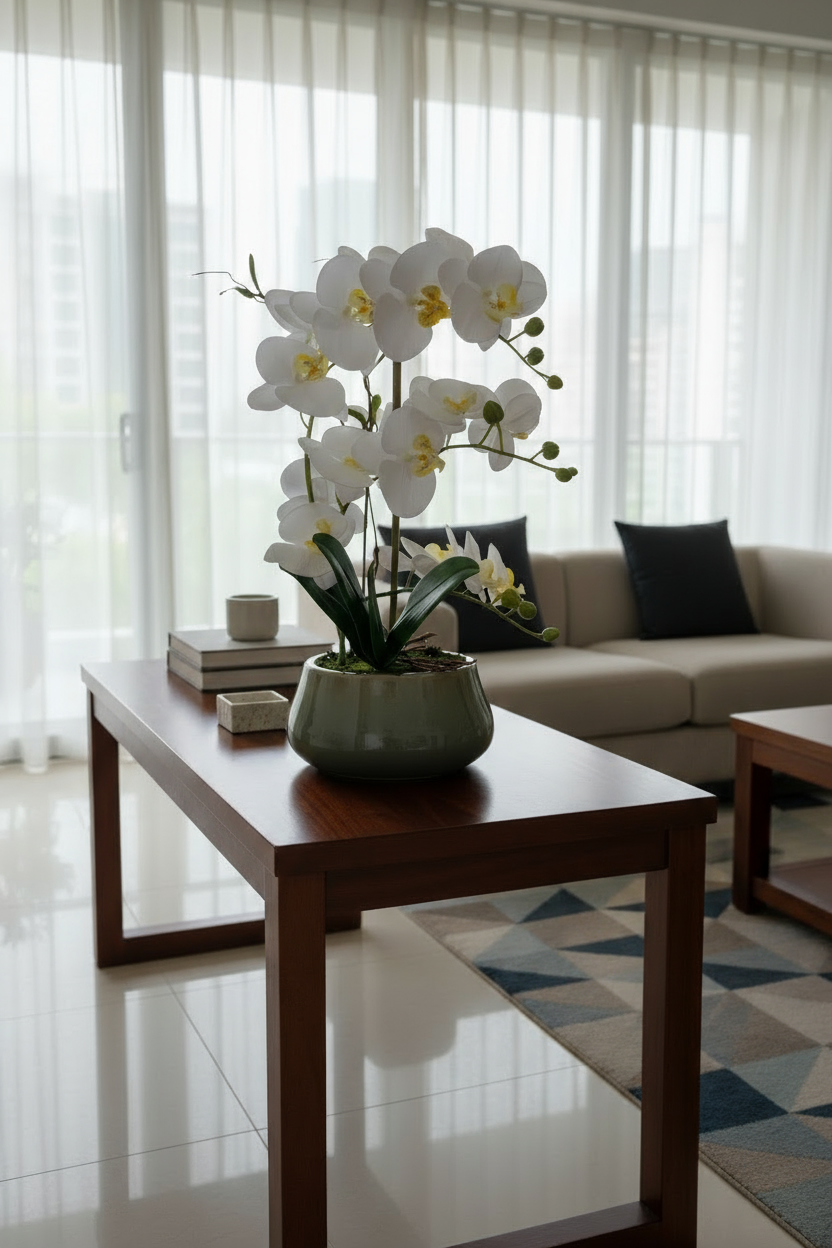
| Orchids | Every 2 weeks | Use orchid-specific fertiliser at quarter strength |
| Anthurium, Hoya | Every 2-3 weeks | Bloom booster during flowering encourages reblooming |
Common Mistakes
Fertilising Dry Soil
The number one mistake. Concentrated fertiliser on dry roots causes chemical burn. Always water first.
Using Full Strength
Indoor plants need less than outdoor plants. Half strength is the standard for houseplants.
Fertilising Sick Plants
A struggling plant does not need more food — it needs the underlying problem solved (light, water, pests). Fertiliser adds stress to an already stressed system.
Fertilising in Winter or Slow Periods
If your plant's growth has slowed, reduce or pause feeding. Unused fertiliser accumulates in the soil.
Never Flushing
Months of feeding without flushing creates a toxic salt concentration in the soil. Flush every two to three months.
Shop Plants
Browse our indoor plant collection — every plant ships in quality soil with adequate initial nutrients. Begin fertilising four to six weeks after purchase, using the guidelines above, to keep your plants growing vigorously in Singapore's tropical conditions.
Fertilising is not complicated. Half-strength balanced liquid fertiliser every two to three weeks during active growth, applied to moist soil, flushed every few months. That covers 90% of houseplants. The remaining 10% need minor adjustments — less for succulents and ZZ Plants, bloom booster for flowering species. Start simple, observe your plants, and adjust from there.
Quick summary
Key Takeaways
- Why Plants Need Fertiliser
- Understanding NPK
- Types of Fertiliser
- When to Fertilise
- How Much to Fertilise
- Flushing Soil
Ready to bring some green into your home?
Browse 250+ hand-picked plants, curated for Singapore homes — delivered to your door.
Browse All Plants →