















Pilea Peperomioides Care Guide for Singapore | Tumbleweed Plants Singapore
Posted on April 09 2026
In this article

Pilea peperomioides — the Chinese Money Plant, Pancake Plant, or UFO Plant — became the most Instagrammed houseplant of the late 2010s. Its perfectly round, coin-shaped leaves on thin, upright petioles give it a graphic, almost cartoon-like quality that photographs beautifully and suits modern interiors perfectly.
Beyond the aesthetic appeal, Pilea peperomioides is a genuinely easy houseplant. It grows fast in the right conditions, produces abundant pups (baby plants) that make propagation effortless, and communicates its needs clearly through its leaves. In Singapore's warm climate, it grows vigorously — though it does appreciate some attention to light and watering.
Why Pilea Is So Popular
The leaves. Perfectly round, bright green, coin-shaped leaves on long, thin petioles radiating from a central stem. There is nothing else quite like it in the houseplant world. Each leaf catches light differently, creating a dynamic, almost hovering quality.
Easy propagation. A healthy Pilea produces pups — small plantlets emerging from the soil around the mother plant or directly from the stem. These root easily and make perfect gifts or swaps.
Compact size. Most Pilea stay under 30cm tall and wide, making them ideal for desks, shelves, and windowsills where space is limited.
Non-toxic. Safe for cats, dogs, and children — a significant advantage over many popular houseplants.
Light

Light is the most important factor for a happy Pilea:
Bright indirect light — Optimal. The leaves grow flat and circular, the stem stays compact, and pup production is maximised. Near an east or north-facing window is ideal.
Some direct morning sun — Beneficial. One to two hours of gentle morning sun actually improves growth and leaf quality. Avoid intense afternoon sun.
Medium light — Acceptable but not ideal. The plant survives but may become leggy (elongated stem with wider spacing between leaves) and produce fewer pups.
Low light — Not recommended. Pilea becomes very leggy, leaves grow smaller, and the plant loses its characteristic compact, full appearance. The stem stretches and bends toward whatever light is available.
Rotate weekly. Pilea leans aggressively toward light. Rotate the pot a quarter turn each week to maintain an upright, balanced form. Without rotation, you will have a plant that grows at a 45-degree angle toward the window.
Watering
Pilea prefers a moderate, consistent moisture level:
Schedule in Singapore:
- Water when the top two to three centimetres of soil feel dry
- Typically every five to seven days in bright conditions
- Every seven to ten days in lower light or AC rooms
Technique:
- Water thoroughly until liquid drains from the bottom
- Empty the saucer within 30 minutes
- Room-temperature water
Pilea communicates clearly. When thirsty, the leaves droop slightly — they flatten downward rather than holding their usual upright angle. Water immediately and they perk up within hours.
Overwatering signs:
- Yellowing lower leaves
- Mushy stem base (serious — indicates rot)
- Black spots on leaves
- Consistently wet soil
Underwatering signs:
- Droopy, flattened leaves
- Curling leaf edges
- Dry, crispy lower leaves
Soil

Well-draining standard tropical mix:
- 60% potting soil
- 25% perlite
- 15% orchid bark or coco coir
Pilea does not like sitting in soggy soil. Good drainage is essential.
Humidity
Pilea tolerates moderate humidity (40-60%) — typical of Singapore's AC interiors. It is less humidity-demanding than many tropical plants.
In very dry AC environments, occasional brown leaf edges may appear. Group with other plants or use a pebble tray.
Fertilising
Moderate feeder:
- Balanced liquid fertiliser at half strength every two to three weeks during active growth
- Reduce during any slower periods
- Over-fertilising causes salt damage — flush soil every two to three months
Propagation: The Gift That Keeps Giving
Pilea's prolific pup production is one of its best features.
Soil Pups
Small plantlets emerge from the soil around the mother plant, growing from the root system:
- Wait until the pup has at least three to four leaves and is 5-8cm tall
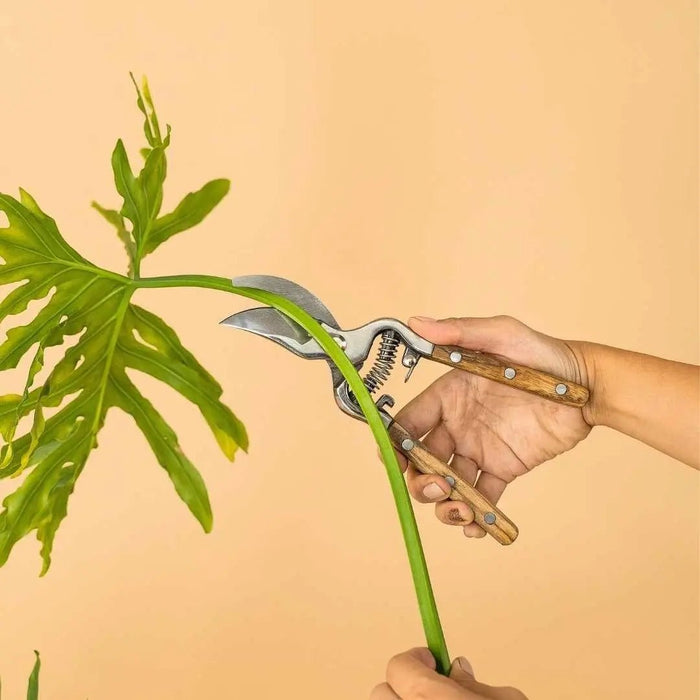
- Use a clean knife to separate the pup from the mother plant's root system — follow the connecting root and cut
- Pot the pup in a small pot with moist, well-draining soil
- Keep moist and in bright indirect light
- The pup establishes quickly — usually within one to two weeks
Stem Pups
Pups also sprout directly from the mother plant's stem:
- Wait until the pup has its own small root nub visible at its base
- Cut the pup from the stem with a clean blade
- Root in water (place the base in a small jar) or plant directly in moist soil
- Water-rooted pups develop visible roots in one to two weeks
Stem Cutting
If your Pilea has become tall and leggy, you can cut the top off and root it:
- Cut the main stem, leaving at least two to three nodes on the stump
- Place the top cutting in water or moist soil
- The stump will produce new pups from the remaining nodes
- The top cutting roots in two to four weeks
Common Problems
Leggy Growth
The most common Pilea issue — long, stretched stems with wide gaps between leaves.
Cause: Insufficient light. Pilea stretches toward whatever light is available.
Fix: Move to brighter indirect light. Rotate weekly. If severely leggy, consider the "chop and prop" method — cut the top, root it, and let the stump regrow.
Curling Leaves
Leaves curl inward, edges rolling toward the centre.
Causes:
- Underwatering — the most common cause. Water thoroughly.
- Too much direct light — move to indirect light.
- Root-bound — check if roots fill the pot. Repot if needed.
Dropping Lower Leaves
Some lower leaf loss is natural as the plant grows taller — it sheds older leaves. But excessive leaf drop indicates:
- Overwatering (if leaves are yellow and soft)
- Underwatering (if leaves are dry and crispy)
- Sudden environmental change (new location, temperature shift)
Brown Spots
- Sunburn — brown, dry patches on sun-facing leaves. Move to indirect light.
- Overwatering — dark, wet-looking spots. Reduce watering.
- Mineral deposits — if water splashes on leaves and dries, it can leave spots. Water at soil level.
Pests
- Mealybugs — check leaf axils and stem joints. Treat with isopropyl alcohol.
- Spider mites — fine webbing on leaf undersides. Increase humidity, treat with neem oil.
- Fungus gnats — small flies around the soil. Let soil dry more between waterings.
Styling Pilea
Pilea's graphic quality makes it a natural for modern and minimalist interiors:
- Desktop plant: A single Pilea in a white or concrete pot is the quintessential desk plant — photogenic, compact, and conversation-starting.
- Shelf display: Group a Pilea with a trailing plant and a book stack for a curated shelf vignette.
- Windowsill lineup: Multiple Pilea pups in matching small pots create a charming window display.
- Gift plant: Root a pup and pot it in a small decorative container — the most personal plant gift you can give.
Shop Pilea
Browse our indoor plant collection for Pilea and other compact, trendy houseplants. We deliver healthy plants across Singapore.
Pilea peperomioides is that rare plant — trendy enough for Instagram, easy enough for beginners, and generous enough to keep giving. Every pup it produces is a new plant to grow, a gift to share, or a swap to trade. Buy one Pilea and you will have a dozen within a year. That is not just a plant — it is a community builder.
Quick summary
Key Takeaways
- Why Pilea Is So Popular
- Light
- Watering
- Soil
- Humidity
- Fertilising
Ready to bring some green into your home?
Browse 250+ hand-picked plants, curated for Singapore homes — delivered to your door.
Browse All Plants →