














Rubber Plant Care Guide: Bold & Easy
Posted on April 16 2026
In this article
Target keyword: `rubber plant care` / `ficus elastica care` / `rubber tree plant`

Monthly search volume: ~20,000–28,000 combined
Intent: Informational + purchase intent
Pillar: C (Brand/Community — Plant of the Week)
Publish date: Week 5, Day 5
CTA: Link to rubber plant collection
Tags: plant of the week, rubber plant, ficus elastica, care guide, statement plants
---
Thumbnail image spec:
- Dimensions: 1200 × 630 px (Open Graph / blog card)
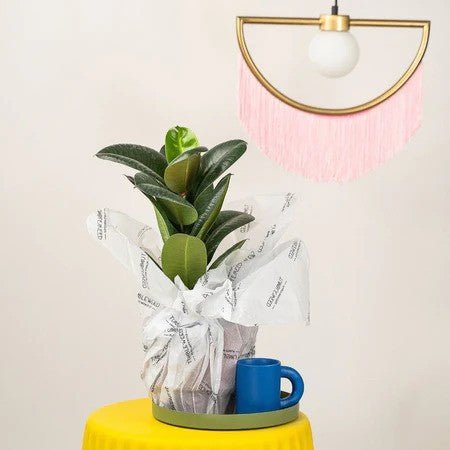
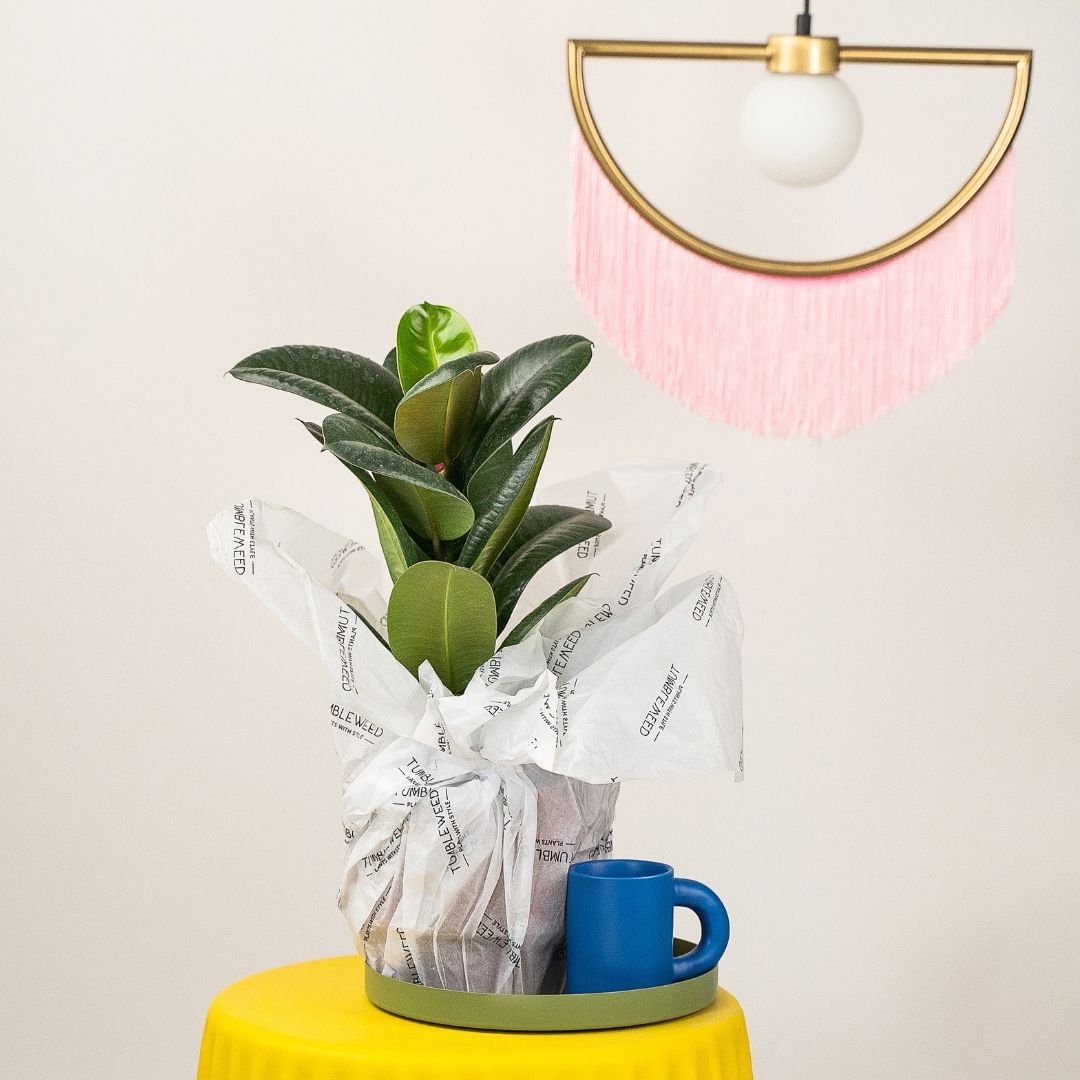
- Subject: Ficus elastica 'Burgundy' in a white ceramic pot, close-up on two large dark-red leaves with a bright red midrib, neutral light background
- Alt text: `Rubber plant (Ficus elastica 'Burgundy') in white pot — Tumbleweed Plants Singapore`
- File name: `rubber-plant-care-guide-tumbleweed-singapore.jpg`
- Source suggestion: Original product photo from Tumbleweed Plants inventory; or Unsplash search "ficus elastica burgundy"
---
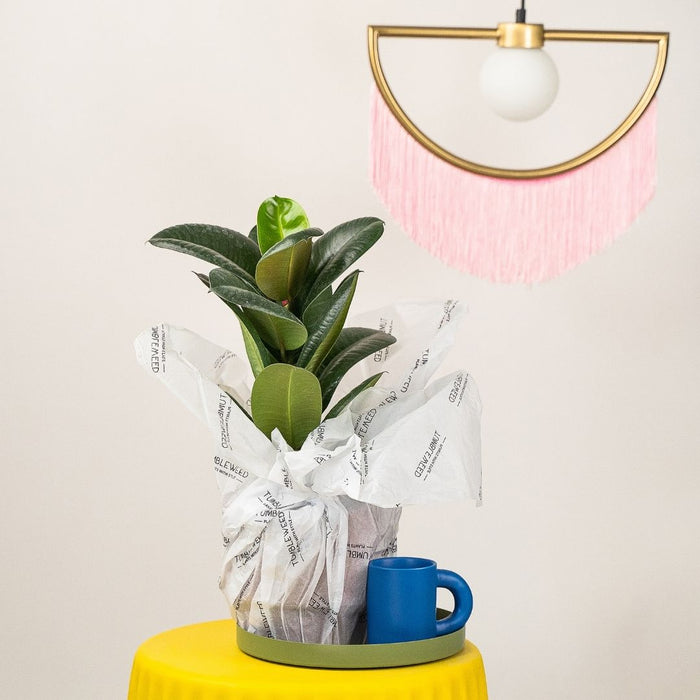
A Ficus elastica 'Tineke' thriving in a bright Singapore home. Photo: Tumbleweed Plants.
Every week we spotlight one plant from our collection — its story, what makes it special, and everything you need to know to grow it well.
This week: Rubber Plant (Ficus elastica)
> Singapore plant lovers — good news: Rubber trees are native to South and Southeast Asia, which means Singapore's year-round warmth and humidity are exactly what Ficus elastica evolved for. You've almost certainly walked past a rubber tree growing outdoors in a Singapore park or HDB landscaping — the species is used extensively in local street planting and garden design. The ornamental houseplant varieties (Burgundy, Tineke, Ruby) are simply more colourful cousins of the trees that once lined Bukit Timah Road.
---
The Plant That Does Everything the Fiddle Leaf Fig Does, Better
Ask anyone who has killed a fiddle leaf fig what they should have bought instead, and experienced plant people will give the same answer: a rubber plant.
The two plants occupy the same aesthetic niche — large, glossy, architectural leaves on a tree-form plant that makes a dramatic statement in a room. But where the fiddle leaf fig is famously temperamental, the rubber plant is forgiving. It tolerates less-than-perfect light, adapts to different watering schedules, and doesn't throw a tantrum when you move it.
It also comes in varieties that the fiddle leaf fig simply can't match: deep burgundy, cream-and-pink variegation, tricolor — some of the most dramatic foliage available in any houseplant.
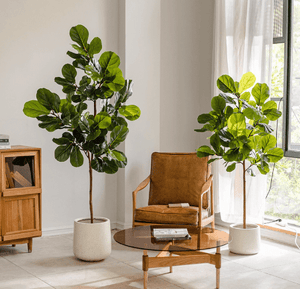
!Comparison image: rubber plant 'Burgundy' left, fiddle leaf fig right, both in similar white pots
Left: Rubber plant 'Burgundy'. Right: Fiddle leaf fig. Same drama, very different care requirements.
---
Rubber Plant Profile

| Feature | Details |
|---------|---------|
| Scientific name | Ficus elastica |
| Common names | Rubber plant, rubber tree, Indian rubber tree |
| Origin | South and Southeast Asia (India, Nepal, Indonesia) |
| Size | 2–10+ feet indoors depending on pot size and pruning |
| Light | Bright indirect — the brighter, the better for variegated types |
| Water | Every 1–2 weeks (less frequent in Singapore's warmth — check soil first) |
| Toxicity | Toxic to cats and dogs; sap irritates skin |
| Growth rate | Moderate — faster in bright light |
---
Why It's Named "Rubber Plant"
The milky white sap (latex) that seeps from cut leaves and stems was once commercially harvested as a source of natural rubber — before the rubber tree (Hevea brasiliensis) became the dominant commercial species. The sap is still present in modern houseplant specimens and can cause skin irritation in sensitive individuals. Wear gloves when pruning or repotting.
Singapore connection: The Ficus genus is closely related to the rubber trees you'll see lining Singapore roadsides and in Botanic Gardens plantings. Ficus elastica and Ficus benjamina (the weeping fig) are among the most common street trees in Singapore — a reminder that these plants are completely at home in our climate.
---
The Best Rubber Plant Varieties
!Variety comparison: four rubber plant varieties side by side — Robusta, Burgundy, Tineke, Ruby
Clockwise from top left: 'Robusta', 'Burgundy', 'Tineke', 'Ruby'. All available at Tumbleweed Plants.
Ficus elastica 'Robusta' — The classic. Large, deep green, paddle-shaped leaves with a red midrib. The most common variety in garden centers.
Ficus elastica 'Burgundy' — Nearly black-red leaves, some of the darkest foliage available in any houseplant. Striking against white walls. One of the most popular varieties.
Ficus elastica 'Tineke' — Green and cream variegation with pale pink flush on new growth. One of the most beautiful houseplant varieties available at an accessible care level.
Ficus elastica 'Ruby' — Bold pink, cream, and green variegation. More vivid than Tineke. Needs brighter light to maintain the pink color.
Ficus elastica 'Abidjan' — Very dark green with bright red midrib. More compact growth than Robusta.
---
Care Guide
Light
Rubber plants prefer bright indirect light but are more adaptable than most "bright light" plants. They'll tolerate medium light while still growing, though growth will be slower and variegated varieties may lose some of their color.
- Bright indirect (near east or south window): Ideal — fast growth, vivid color
- Medium indirect: Acceptable — slower growth, may lose some variegation intensity
- Low light: Not ideal — very slow growth, risk of leggy stems and small leaves
Variegated varieties (Tineke, Ruby): Need more light than solid green varieties to maintain their cream and pink coloration. If the variegation is fading, move to a brighter spot.
Singapore tip: North-facing HDB windows are typically too dim for variegated varieties. East-facing windows (morning sun) are ideal for Tineke and Ruby. South and west-facing windows can work with a sheer curtain to diffuse intense afternoon sun.
---
Watering
Water when the top 1–2 inches of soil are dry. Typically every 7–14 days in summer, every 14–21 days in winter.
Water thoroughly — until it drains from the bottom — then let dry before watering again.
Singapore tip: In our year-round warmth, rubber plants may dry out faster than UK or US care guides suggest — especially if near a window or fan. Check soil every 5–7 days rather than watering on a fixed schedule. The finger test is your most reliable tool.
Signs of overwatering: Yellow leaves, soft stems at the base, soggy soil
Signs of underwatering: Drooping leaves, very dry soil, smaller new leaves
Rubber plants are more tolerant of underwatering than overwatering. When in doubt, wait another few days.
---
Humidity and Temperature
- Ideal temperature: 60–80°F (16–27°C)
- Tolerates normal household humidity (30–50%)
- Keep away from cold drafts and air conditioning vents
Singapore tip: Singapore's ambient humidity (70–90% outdoors) means humidity is never a problem for rubber plants here. The only humidity concern is the opposite — if your plant is directly under an aircon unit blasting cold, dry air, move it at least 1 metre away. Singapore's consistent 25–32°C temperatures are ideal — no winter dormancy concerns.
Unlike the fiddle leaf fig, rubber plants can handle some temperature variation without dramatic leaf drop.
---
Soil and Repotting
Standard well-draining potting mix is suitable. Add 20% perlite for improved drainage.
Repot every 1–2 years in spring when roots are circling the pot bottom. Choose a pot 2 inches larger in diameter. Rubber plants can grow quite large — if you want to control the size, keep it slightly root-bound and in a smaller pot.
Singapore tip: Singapore's warmth means rubber plants may need repotting more frequently than in cooler climates — check roots every 12 months. Terracotta pots dry out faster in our heat, which can be an advantage or disadvantage depending on your watering habits.
---
Fertilizing
Feed once a month in spring and summer with a balanced liquid fertilizer at half-strength. Do not fertilize in fall or winter.
Singapore tip: As we don't have distinct winter seasons, rubber plants in Singapore continue slow growth year-round. You can fertilize lightly (quarter-strength) even in December–January, but the main feeding season is March–September when growth is most active.
---
Pruning and Shaping
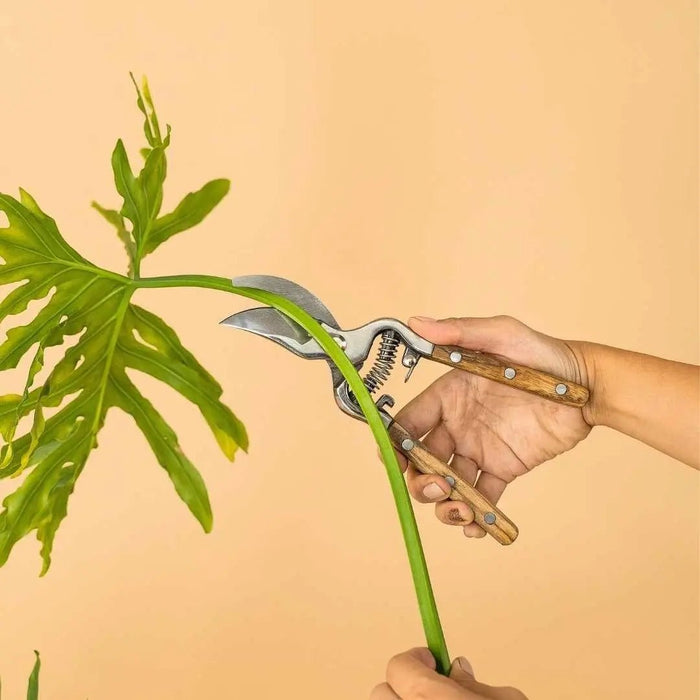
Rubber plants can be pruned to control height and encourage branching. Prune just above a leaf node to redirect growth. The plant will branch from below the cut, producing a bushier shape over time.
Caution: The milky latex sap that seeps from cuts is irritating to skin and eyes. Wipe cuts with a damp cloth or small piece of damp tissue after pruning. Wear gloves if you have sensitive skin.
!Pruning guide image: arrows showing correct cut above a leaf node on a rubber plant stem
Where to cut for branching: just above a leaf node. New growth will emerge below the cut.
---
Cleaning Leaves
The large, glossy leaves accumulate dust, which blocks light and photosynthesis. Wipe leaves monthly with a soft damp cloth to keep them clean and shiny. This also lets you inspect for pests.
---
Common Problems

Dropping leaves:
Could be overwatering (yellow leaves drop), underwatering (dry leaves drop), cold draft, or repotting stress. Identify which and address accordingly. Rubber plants are much less sensitive to location changes than fiddle leaf figs — some leaf drop when moved is normal and temporary.
Brown leaf edges:
Low humidity or underwatering. Increase watering frequency or add humidity (pebble tray, humidifier nearby). In Singapore, brown edges are almost always underwatering or aircon damage — not low humidity.
Yellow leaves:
Most commonly overwatering. Let soil dry out completely before watering again.
Fading variegation (Tineke, Ruby):
Insufficient light. Move to a brighter spot — in Singapore, try an east-facing window.
Leggy growth (long stems with few leaves):
Not enough light. Move closer to a window.
---
Rubber Plant vs. Fiddle Leaf Fig: At a Glance
| Feature | Rubber Plant | Fiddle Leaf Fig |
|---------|-------------|-----------------|
| Care difficulty | Easy | Challenging |
| Light sensitivity | Adaptable | High — needs bright, consistent light |
| Move sensitivity | Tolerant | Very sensitive — may drop all leaves |
| Draft sensitivity | Moderate | High |
| Watering flexibility | Forgiving | Must be consistent |
| Leaf drama | High | Very high |
| Varieties available | Many, including striking variegated types | Mostly solid green |
| Singapore suitability | Excellent — native climate | Good but fussier |
The honest verdict: most people should buy a rubber plant. Buy a fiddle leaf fig only if you have a bright, stable location and enjoy the challenge.
---
Growing Rubber Plants Outdoors in Singapore

One advantage of Singapore's climate: rubber plants can also be grown outdoors in sheltered spots — covered corridors, balconies with partial shade, or shaded garden areas. Outdoors, growth is significantly faster than indoors. Protect from direct harsh midday sun (11am–3pm) and heavy rain, which can waterlog soil if drainage is poor.
You may have noticed large Ficus elastica specimens growing in Singapore's parks, HDB green corridors, and nature reserves — plants that in other climates would be modest indoor specimens become impressive trees here. That's the potential of this species when given its preferred climate.
!Outdoor rubber plant growing in a Singapore HDB corridor or sheltered balcony
Rubber plants growing well on a sheltered Singapore balcony. Outdoors growth is significantly faster than indoors.
---
Shop Rubber Plants
Browse our rubber plant collection — we carry Robusta, Burgundy, Tineke, and Ruby varieties in multiple sizes.
Need it today? We offer same-day delivery across Singapore — order before noon and your rubber plant arrives the same afternoon.
---
Which rubber plant variety is your favorite? Burgundy and Tineke divide opinion sharply — tell us yours in the comments.
---
Next week's Plant of the Week: The ZZ Plant — the most indestructible houseplant money can buy.
---
Quick summary
Key Takeaways
- The Plant That Does Everything the Fiddle Leaf Fig Does, Better
- Rubber Plant Profile
- Why It's Named "Rubber Plant"
- The Best Rubber Plant Varieties
- Care Guide
- Common Problems
Ready to bring some green into your home?
Browse 250+ hand-picked plants, curated for Singapore homes — delivered to your door.
Browse All Plants →