


















Snake Plant Care Guide: Growing Sansevieria in Singapore
Posted on April 09 2026
In this article
# Snake Plant Care Guide: Growing Sansevieria in Singapore | Tumbleweed Plants Singapore

If there were a hall of fame for houseplants, the snake plant would be a first-ballot inductee. Known scientifically as Sansevieria (recently reclassified under Dracaena, though most of us still call it Sansevieria), this plant has earned its reputation as one of the hardiest, most forgiving indoor plants on the planet. In Singapore, where air-conditioned offices, dimly lit corridors, and irregular watering schedules are facts of life, the snake plant does not just survive — it thrives. Whether you are a serial plant killer looking for redemption or an experienced collector after a reliable workhorse, this guide will walk you through everything you need to know about snake plant care in Singapore.
Why Snake Plants Are Perfect for Singapore
Let us start with the obvious: Singapore's tropical climate suits snake plants beautifully. These plants originate from West Africa's dry, rocky habitats, so they are built to handle heat and can tolerate our humidity without complaint. But their real superpower is adaptability. They handle low light, survive weeks without water, and shrug off the dry air from your aircon unit. For a nation of busy professionals living in high-rise apartments, the snake plant is the ultimate set-and-forget houseplant.
Air Purification That Works While You Sleep
Like the peace lily, the snake plant featured in NASA's Clean Air Study for its ability to filter toxins including formaldehyde, benzene, and xylene. But here is what makes it unique: the snake plant is one of the few plants that converts carbon dioxide to oxygen at night (a process called Crassulacean Acid Metabolism, or CAM). This makes it an exceptional bedroom plant — quietly improving your air quality while you sleep.
Popular Snake Plant Varieties

One of the joys of collecting snake plants is the sheer range of varieties available. Here are the most popular ones you will find in Singapore:
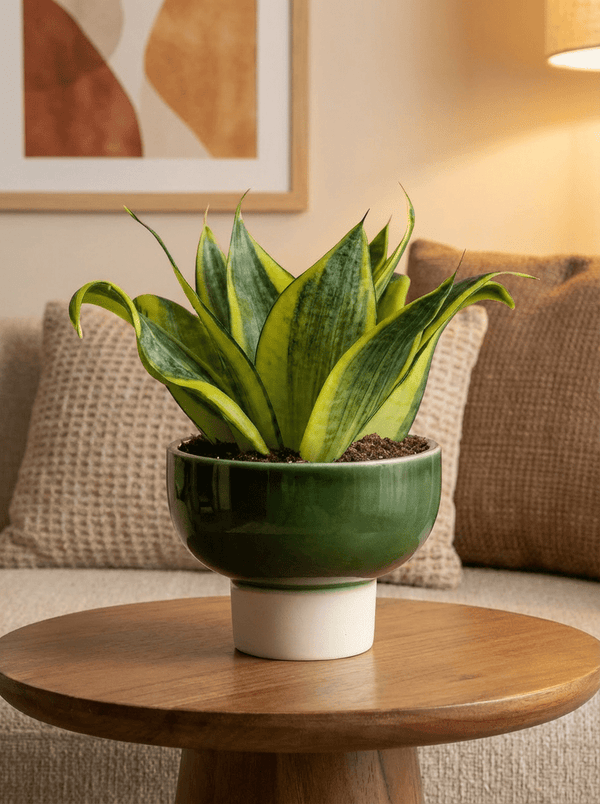
- Sansevieria trifasciata 'Laurentii': The classic. Tall, upright leaves with dark green horizontal bands and bright yellow edges. Can grow up to a metre tall indoors.
- Sansevieria trifasciata 'Moonshine': Broad, pale silvery-green leaves with subtle banding. A favourite among minimalist interior lovers.
- Sansevieria cylindrica: Round, tubular leaves that grow in a fan shape. Sometimes sold braided for a sculptural effect.
- Sansevieria 'Black Coral': Deep, dark green leaves with dramatic banding. Compact and architectural.
- Sansevieria trifasciata 'Hahnii' (Bird's Nest): A compact rosette that stays small — ideal for desks and bedside tables.
- Sansevieria 'Whale Fin' (S. masoniana): A single, broad, paddle-shaped leaf. Dramatic and unusual — for collectors who want something different.
Light Requirements
The snake plant's tolerance for low light is legendary, but understanding its light preferences will help you get the best growth.
The Full Spectrum
- Bright, indirect light: Optimal. This is where your snake plant will grow fastest and maintain the most vivid variegation (especially important for varieties like Laurentii, where insufficient light can cause the yellow edges to fade).
- Low to moderate light: Perfectly fine. Growth will be slower, and some colour intensity may diminish, but the plant will remain healthy.
- Direct sun: Tolerated for a few hours, especially morning sun. Avoid prolonged afternoon sun from west-facing windows in Singapore — it can scorch the leaves.
- No natural light (office fluorescents): Survives. The snake plant is one of the very few houseplants that can genuinely live under only artificial lighting. If your office cubicle gets no window light, this is your plant.
Singapore-Specific Light Tips
- HDB corridors and bomb shelters (converted to study rooms): Snake plants will do fine here. They are one of the only plants you can realistically keep in a room with no windows.
- Aircon bedrooms: The combination of low light and dry air is no problem. Just reduce watering frequency.
- Near windows with heavy curtains: Snake plants handle filtered light without fuss.
Watering: Less Is Genuinely More
If there is one rule for snake plant care, it is this: when in doubt, do not water. More snake plants die from overwatering than from any other cause. Their thick, succulent-like leaves store water, and their roots are highly susceptible to rot in soggy conditions.
A Practical Watering Schedule for Singapore
- Standard guideline: Water every 2-3 weeks, allowing the soil to dry out completely between waterings.
- Aircon rooms: Soil dries slightly faster. Check every 10-14 days.
- Outdoor balconies (sheltered from rain): Heat and wind speed up evaporation. Check weekly, but still let the top few centimetres of soil dry before watering.
- Rainy season (November-January): Humidity spikes and evaporation slows. Extend the gap between waterings. If your plant is outdoors, make sure rainwater does not pool in the pot.
How to Water Correctly
- Check the soil first. Stick your finger 3-5 cm into the soil. If it feels dry, water. If there is any moisture, wait.
- Water thoroughly but infrequently. Drench the soil until water drains from the bottom, then let it dry out completely. No sipping — the soak-and-dry method works best.
- Never let it sit in water. Empty the saucer after watering. Standing water is root rot waiting to happen.
- Avoid getting water in the leaf rosette. For bird's nest varieties and cylindrical types, water pooling between the leaves can cause rot. Water the soil directly.
Signs of Overwatering vs. Underwatering
| Symptom | Overwatering | Underwatering |
|---|---|---|
| Leaves | Soft, mushy, or yellowing at base | Wrinkling or curling inward |
| Soil | Stays wet, may smell foul | Bone dry, pulling away from pot edges |
| Roots | Brown, mushy, rotten | Dry but firm |
| Overall plant | Droopy, leaves may fall over | Leaves may look slightly deflated |
Soil and Potting
Snake plants need fast-draining soil. Sitting in dense, moisture-retentive potting mix is a recipe for root rot.
Ideal Soil Mix
- Option 1: A standard cactus and succulent mix. Available at most Singapore nurseries and garden centres.
- Option 2: Regular potting soil mixed with perlite or coarse sand at a 1:1 ratio.
- Option 3: Add pumice or orchid bark to increase drainage further.
Pot Choice
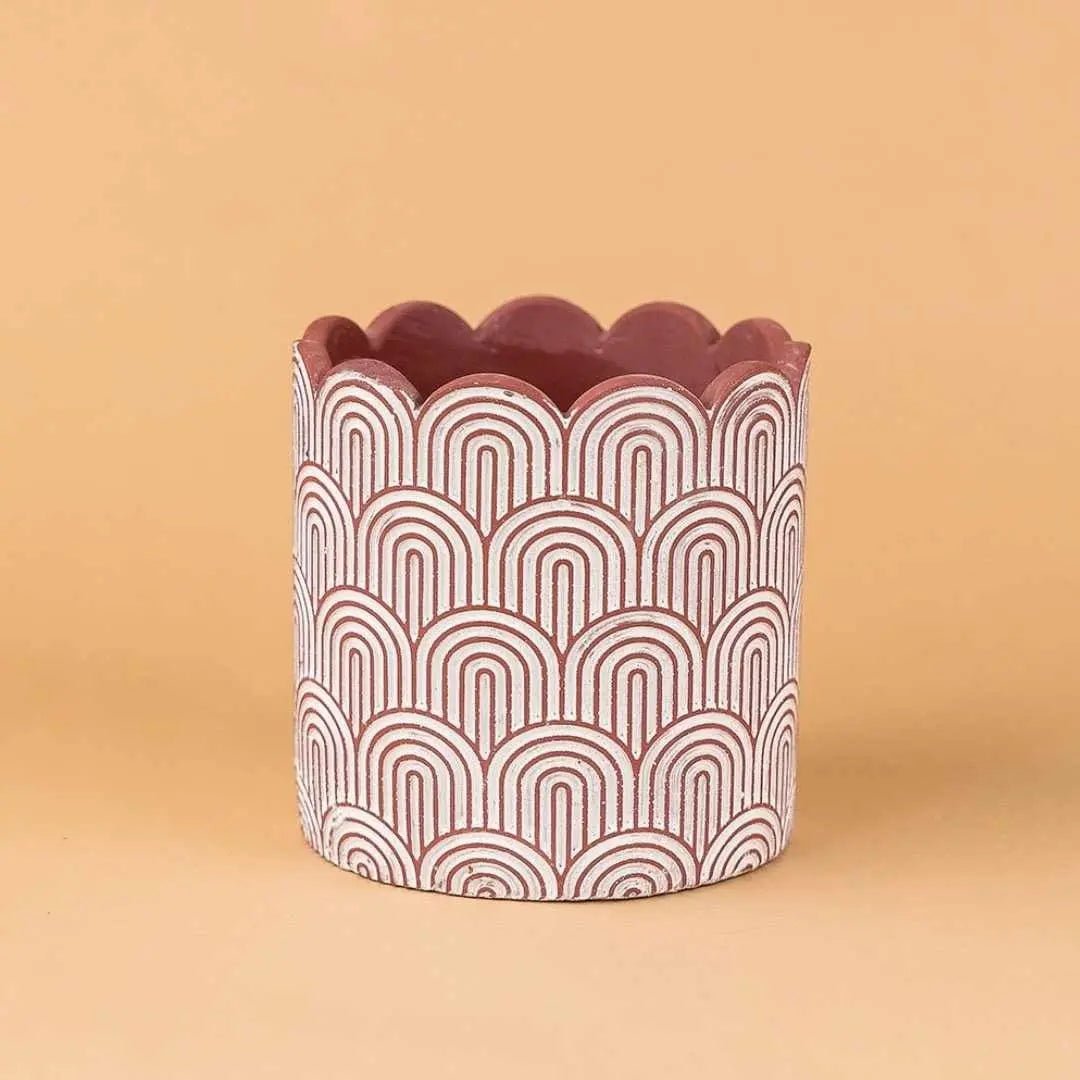
- Material: Terracotta is ideal — it is porous and wicks away excess moisture. Ceramic and plastic work too, but be more cautious with watering.
- Drainage holes: Non-negotiable. Never plant a snake plant in a pot without drainage.
- Size: Snake plants like being slightly root-bound. Choose a pot only marginally larger than the root ball when repotting. An oversized pot retains too much moisture.
Propagation
Snake plants are remarkably easy to propagate, making them a great plant to multiply and share.
Method 1: Division (Easiest)
- Remove the plant from its pot.
- Identify separate clumps or "pups" growing from the mother plant's rhizome.
- Use a clean, sharp knife to separate the pups, ensuring each division has roots attached.
- Pot each division in well-draining soil and water lightly.
- New growth should appear within a few weeks.
Method 2: Leaf Cuttings in Soil
- Cut a healthy leaf into 8-10 cm sections.
- Let the cuttings callous over for a day or two (important — this prevents rot).
- Insert each cutting about 2-3 cm deep into moist, well-draining soil, making sure the bottom end (the end that was closer to the soil originally) faces down. Snake plant cuttings are polar — they will not root if planted upside down.
- Place in bright, indirect light and water sparingly.
- Roots develop in 2-4 weeks; new growth appears in 1-3 months.
Important note: If you propagate a variegated variety (like Laurentii) via leaf cuttings, the new plant will likely lose its variegation and revert to solid green. To preserve variegation, propagate by division instead.
Method 3: Leaf Cuttings in Water
Place leaf sections in a jar of water, submerging only the bottom 2-3 cm, and change the water weekly. Roots appear in 2-4 weeks. Once roots are 3-5 cm long, transfer to soil. This method is slower than soil propagation but fun to watch on a windowsill.
Common Problems and Solutions
Mushy Leaves at the Base
Cause: Overwatering or root rot.
Solution: Remove the plant from its pot, trim away all rotten roots and affected leaves with a sterile blade, let the remaining healthy sections dry for a day, and repot in fresh, dry soil. Do not water for at least a week after repotting.
Brown, Dry Leaf Tips
Cause: Underwatering, very low humidity, or inconsistent watering.
Solution: Adjust your watering schedule. In Singapore's climate, this is relatively rare unless the plant is in a heavily air-conditioned room.
Leaves Falling Over or Splitting
Cause: Overwatering, insufficient light, or physical damage.
Solution: Ensure the plant is getting adequate light and that you are not watering too frequently. You can stake leaning leaves with bamboo supports while the plant recovers.
Pests
Snake plants are relatively pest-resistant, but mealybugs and spider mites can occasionally appear, especially in dry aircon environments.
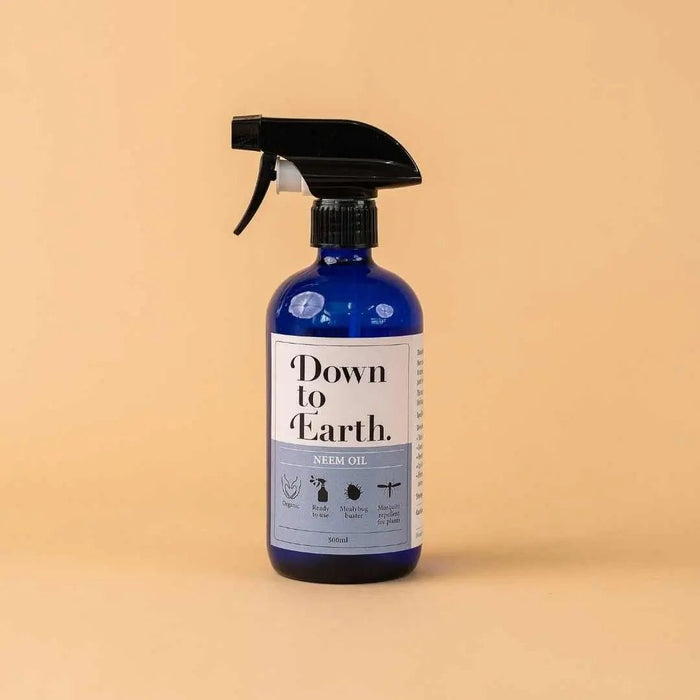
Solution: Wipe leaves with a damp cloth monthly. For infestations, apply neem oil diluted according to the product instructions. Isolate affected plants to prevent spread.
Fertilising
Snake plants are light feeders. Over-fertilising causes more problems than under-fertilising.
A Minimal Approach
- Frequency: Once every 2-3 months during the growing season.
- Type: A balanced liquid fertiliser (NPK 10-10-10) diluted to half strength.
- When to skip: If the plant is in very low light or if growth has naturally slowed. In Singapore, growth is fairly consistent year-round, but there is no harm in fertilising less during the monsoon months when light is reduced.
Snake Plants in Singapore Homes and Offices
Best Spots in Your HDB or Condo
- Bedroom: Excellent choice. The nighttime oxygen production and air purification make it an ideal bedside companion.
- Living room corner: A tall Laurentii or Moonshine in a statement pot anchors any corner beautifully.
- Bathroom: If your bathroom has a small window, the humidity and warmth create a spa-like pairing with a snake plant.
- Study or home office: Compact varieties like Hahnii fit perfectly on desks alongside your monitor.
- Entryway or shoe cabinet area: Low light? No problem. A snake plant greets your guests with zero effort.
In the Office
Snake plants are the ultimate office plant in Singapore. They survive weekend neglect, tolerate the relentless aircon, and do not need natural light. Place one on your desk, in the meeting room, or in the reception area. If you are looking for more options that handle the office environment well, explore our low-maintenance collection.
Final Thoughts
The snake plant asks for almost nothing and gives back more than most houseplants: cleaner air, architectural beauty, and the quiet satisfaction of keeping something alive with minimal effort. In Singapore's climate, it is genuinely difficult to kill one — you would have to try quite hard, usually by loving it too much with water.
Whether you are stocking your first HDB flat with greenery, looking for a plant that survives your office's arctic aircon, or hunting for a gift that anyone can keep alive, the snake plant is the answer. Start with one and you will likely end up with a collection — they are that easy, that attractive, and that satisfying to grow.
For more beginner-friendly and low-maintenance options for your Singapore home, check out our low-maintenance plants collection.
Quick summary
Key Takeaways
- Why Snake Plants Are Perfect for Singapore
- Popular Snake Plant Varieties
- Light Requirements
- Watering: Less Is Genuinely More
- Soil and Potting
- Propagation
Ready to bring some green into your home?
Browse 250+ hand-picked plants, curated for Singapore homes — delivered to your door.
Browse All Plants →