

















Spider Plant Care Guide for Singapore | Tumbleweed Plants Singapore
Posted on April 10 2026
In this article

The Spider Plant is the houseplant your grandmother had — and there is a reason it has been popular for over a century. It is one of the most forgiving, most productive, and most cheerful plants you can own. Its arching, ribbon-like leaves cascade from pots and baskets, and it regularly produces long stems (stolons) that dangle baby plantlets like ornaments on a living mobile.
In Singapore, the Spider Plant thrives without fuss. It handles our humidity, tolerates our temperature range, and grows happily in everything from bright windowsills to dim office corners. It is also one of the most effective air-purifying houseplants — NASA's Clean Air Study found it removes formaldehyde, xylene, and toluene from indoor air.
Varieties
Chlorophytum comosum 'Vittatum' — The classic. Green leaves with a central white stripe. The most commonly available Spider Plant.
Chlorophytum comosum 'Variegatum' — Reversed variegation: green centre with white leaf margins. Often called the Reverse Spider Plant. Slightly more decorative than 'Vittatum'.
Chlorophytum comosum 'Bonnie' — Compact variety with curled, twisted leaves. Fun and quirky — adds textural interest. Produces curly baby plantlets too.
Chlorophytum comosum (Solid Green) — All-green variety without variegation. The most vigorous grower and the most tolerant of low light.
Chlorophytum laxum 'Zebra Grass' — Broader leaves with prominent striping. Compact growth habit. Less common but attractive.
Light

Spider Plants are adaptable but have clear preferences:
Low light — Survives, but growth slows significantly. Variegated varieties may lose contrast, becoming more green. The solid green variety handles low light best.
Medium indirect light — The sweet spot. Good growth, maintained variegation, and regular production of baby plantlets.
Bright indirect light — Fastest growth and most prolific production of babies. Variegation is most vivid.
Direct sun — Tolerated briefly (morning sun is fine), but extended direct afternoon sun scorches the thin, delicate leaves, causing brown tips and bleached patches.
Best placement in Singapore: A bright room with filtered light. Near a window with sheer curtains. On a high shelf or in a hanging basket where the trailing babies can cascade freely.
Watering
Spider Plants store some water in their thick, tuberous roots, giving them moderate drought tolerance.
Schedule in Singapore:
- Water when the top 2-3cm of soil is dry
- Every 5-7 days in naturally ventilated rooms
- Every 7-10 days in air-conditioned rooms
Technique:
- Water thoroughly until it drains from the bottom
- Empty saucers promptly
- Allow the top soil to dry between waterings
Overwatering signs: Yellow leaves, mushy roots, and a waterlogged smell from the soil.
Underwatering signs: Pale or greying leaves, leaf tips turning brown and crispy, leaves becoming limp.
Water quality note: Spider Plants are sensitive to fluoride and chlorine in tap water — these cause brown leaf tips (the most common Spider Plant complaint). To reduce this:
- Let tap water sit overnight before using (chlorine evaporates)
- Use filtered water
- Collect rainwater
Soil

A standard well-draining mix works well:
- 60% potting mix
- 25% perlite
- 15% orchid bark or coco chips
Spider Plants are not fussy about soil, but good drainage prevents the tuberous roots from sitting in excess moisture.
Humidity
Spider Plants handle Singapore's humidity range without issue:
- 70-80% natural humidity — excellent
- 40-50% AC rooms — acceptable, though brown tips may appear more frequently in very dry conditions
Occasional misting in AC rooms helps but is not essential.
Temperature
Singapore's 24-32°C is within the ideal range. Spider Plants tolerate warmth well and only struggle below 10°C (not a concern in Singapore).
Fertilising
- Balanced liquid fertiliser at half strength every 4-6 weeks during active growth
- Reduce to every 8 weeks during slower periods
- Do not over-fertilise — excess salts contribute to brown leaf tips
- Flush the soil with plain water quarterly to clear salt buildup
Propagation
This is where Spider Plants shine — they are among the easiest plants to propagate, and they do most of the work themselves.
Baby Plantlets (Spiderettes)
Mature Spider Plants produce long stolons (runners) with baby plantlets at the tips. Each baby is a new plant ready to grow.
Method 1: Water rooting
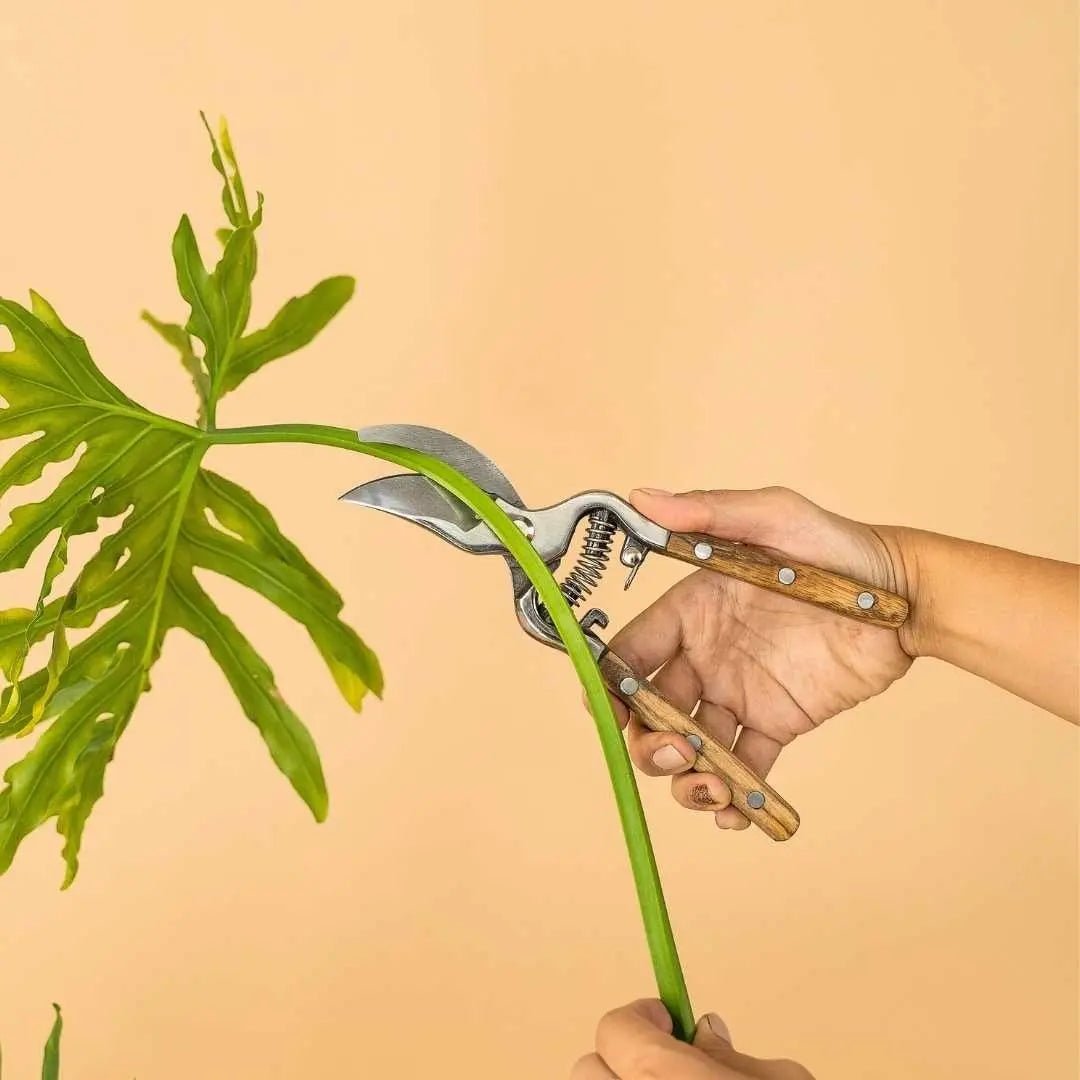
- Cut the baby plantlet from the stolon once it has small nubs or roots at its base
- Place in a jar of water with the base submerged
- Roots grow within 1-2 weeks
- Transfer to soil when roots are 3-5cm long
Method 2: Soil rooting (while attached)
- Place a small pot of moist soil next to the parent plant
- Pin the baby plantlet onto the soil surface (use a bent paper clip or small stone)
- Keep the soil moist
- Once rooted (2-3 weeks), cut the stolon connecting it to the parent
Method 3: Direct soil planting
- Cut the baby from the stolon
- Plant directly into moist soil, burying the base 1-2cm
- Keep moist for 2-3 weeks until established
Division
When repotting, separate large clumps into individual plants. Each division should have healthy roots and several leaves.
Propagation tip: Spider Plant babies make excellent gifts. Root several in small jars or pots and share with friends — a living gift that costs nothing.
Common Problems
Brown Leaf Tips
The single most common Spider Plant issue. Causes:
- Fluoride/chlorine in tap water — the primary culprit in Singapore
- Over-fertilising — salt buildup burns tips
- Low humidity — dry AC air dries tips
- Underwatering — prolonged drought dries leaf extremities
Fix: Switch to filtered or rested tap water. Reduce fertiliser. Trim brown tips at an angle for a natural appearance — trimmed tips may brown again slightly, which is normal.
Pale or Faded Leaves
Cause: Too much direct sun bleaches the leaves, or too little light fades variegation.
Fix: Move to bright indirect light. Avoid prolonged direct afternoon sun.
No Babies
Cause: Immature plant (wait until the plant is 1-2 years old) or insufficient light. Spider Plants also produce more babies when slightly root-bound — do not repot into too large a container.
Fix: Ensure bright indirect light and allow the plant to become somewhat root-bound.
Root Bound
Spider Plants grow thick, tuberous roots that fill pots quickly. Signs: roots pushing up from the soil surface, cracking plastic pots, or water running through without being absorbed.
Fix: Repot into a pot 2-3cm larger in diameter. Or divide the plant into multiple smaller plants.
Pests
Spider Plants are relatively pest-resistant. Occasional issues:
- Mealybugs — in leaf bases and between arching leaves. Treat with rubbing alcohol.
- Spider mites — more common in dry AC environments. Increase humidity, wash leaves.
- Scale — on leaf undersides. Scrape off and treat with neem oil.
Styling
The Spider Plant's arching, cascading form is best displayed where it can trail:
- Hanging basket — the classic display. Babies dangle freely, creating a living cascade
- High shelf — on top of a bookshelf or cabinet with leaves and babies trailing over the edge
- Macramé hanger — bohemian aesthetic with the plant as the centrepiece
- Bathroom shelf — humidity-loving and adds life to an often sterile room
- Office desk — compact varieties like 'Bonnie' stay manageable on a desk
Display tip: A mature Spider Plant with multiple trailing babies is one of the most visually dynamic houseplants. Give it room to display its babies — a high position where the stolons can cascade is ideal.
Is Spider Plant Toxic?
No. Spider Plants are non-toxic to cats, dogs, and children. This makes them one of the safest houseplants for homes with pets and young children.
Cat note: Cats are often attracted to Spider Plant leaves (mildly hallucinogenic to cats, similar to catnip). While non-toxic, excessive chewing can cause mild stomach upset. If your cat is a plant chewer, position the Spider Plant out of reach.
Shop Spider Plants
Browse our indoor plant collection for Spider Plants and other air-purifying houseplants delivered across Singapore.
The Spider Plant is the gift that keeps giving — literally. It grows, produces babies, and those babies grow and produce more babies. Within a year of owning one healthy Spider Plant, you can have a dozen. It cleans the air, fills hanging baskets with cascading green, and forgives nearly every care mistake you can make. If there is a single houseplant that earns its keep with minimal investment, the Spider Plant is it.
Quick summary
Key Takeaways
- Varieties
- Light
- Watering
- Soil
- Humidity
- Temperature
Ready to bring some green into your home?
Browse 250+ hand-picked plants, curated for Singapore homes — delivered to your door.
Browse All Plants →