















Tradescantia Care Guide for Singapore
Posted on April 09 2026
In this article

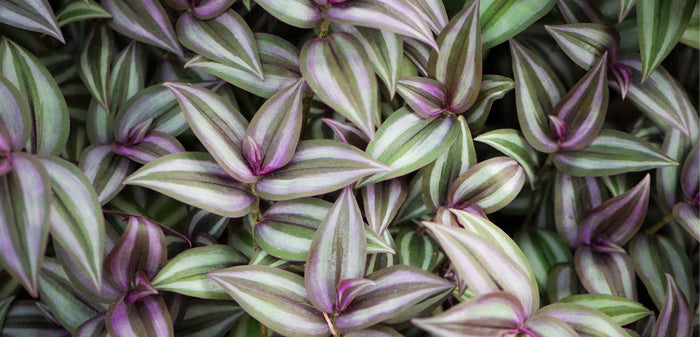
Tradescantia — commonly known as Wandering Dude, Inch Plant, or Spiderwort — is one of the fastest-growing, most colourful trailing houseplants available. While most trailing plants offer various shades of green, Tradescantia delivers purple, pink, silver, and even rainbow-striped foliage that cascades from shelves and hanging baskets in a vivid display.
In Singapore, Tradescantia grows with almost aggressive vigour. The warm temperatures and humidity fuel rapid growth that can turn a small cutting into a full, flowing plant within months. It is arguably the easiest plant to propagate, making it perfect for sharing, swapping, and filling multiple pots from a single mother plant.
Popular Varieties
Tradescantia zebrina
The most popular variety. Leaves are striped with silver and dark green on top, deep purple underneath. The metallic sheen catches light beautifully. Fast-growing and widely available.
Tradescantia pallida (Purple Heart)
Deep purple stems and leaves — one of the most intensely coloured houseplants available. Small pink flowers appear periodically. More upright than other varieties before eventually trailing.
Tradescantia fluminensis 'Lilac'
Soft lilac-pink and green variegation. More delicate colouring than zebrina. Fast-growing trailer.
Tradescantia nanouk
Compact growth with thick leaves striped in pink, white, green, and purple. More robust and less leggy than zebrina. Produces small pink flowers. A favourite for its dense, colourful growth.
Tradescantia spathacea (Oyster Plant / Moses-in-the-Cradle)
Rosette-forming rather than trailing. Sword-shaped green leaves with purple undersides. Unique small white flowers emerge from boat-shaped bracts. More suited to a pot than a hanging display.
Tradescantia sillamontana (White Velvet)
Covered in soft white hairs that give the plant a fuzzy, silvery appearance. Green and purple leaves underneath the velvet coating. More drought-tolerant due to the protective hairs.
Light

Light directly determines Tradescantia's colour intensity:
Bright indirect light — Optimal. Maximum colour saturation, most compact growth, densest foliage. The purples are deeper, the pinks more vivid, and the silver more metallic.
Some direct morning sun — Beneficial. One to two hours of gentle morning sun intensifies colour without burning. Many Tradescantia varieties handle more direct light than typical houseplants.
Medium light — Acceptable but colours fade. Green becomes more dominant, purple and pink tones wash out.
Low light — Survivable but not recommended. Colours fade dramatically, growth becomes very leggy (long gaps between leaves on the stem), and the plant loses its cascading fullness.
The colour rule: The brighter the light (indirect), the more colourful your Tradescantia. A Tradescantia nanouk in bright light is pink and purple. The same plant in a dim corner is mostly green.
Watering
Tradescantia prefers consistent moisture but is surprisingly forgiving.
Schedule in Singapore:
- Water when the top two centimetres of soil feel dry
- Every five to seven days in bright conditions
- Every seven to ten days in lower light
Technique:
- Water at the soil level — avoid getting water trapped in the leaf rosettes where it can cause rot
- Water thoroughly until it drains from the bottom
- Empty saucers promptly
Tradescantia is not as drought-tolerant as succulents, but it recovers quickly from brief dry spells. Overwatering (chronically wet soil) causes stem rot — the most common way to lose a Tradescantia.
Soil

A standard, well-draining tropical mix:
- 60% potting soil
- 25% perlite
- 15% orchid bark or coco coir
Tradescantia is not fussy about soil as long as drainage is adequate.
Humidity
Tradescantia appreciates moderate to high humidity (50-70%), which Singapore provides naturally. In air-conditioned rooms, the plant usually performs fine — it is less humidity-sensitive than Calathea or ferns.
Brown, crispy leaf edges in heavy AC may indicate low humidity. Group with other plants or use a pebble tray.
Fertilising

Moderate feeder during active growth (which in Singapore is nearly year-round):
- Balanced liquid fertiliser at half strength every two to three weeks
- Reduce in any slower periods
- Over-fertilising causes lanky, pale growth
Propagation
Tradescantia is one of the easiest houseplants to propagate — cuttings root in days.
Water Propagation
- Cut a stem section with at least two to three nodes (5-10cm length)
- Remove the lowest leaf or two
- Place in water with the nodes submerged
- Roots appear in three to seven days in Singapore's warmth — some of the fastest rooting of any houseplant
- Transfer to soil when roots reach 3-5cm, or grow permanently in water
Soil Propagation
- Take stem cuttings as above
- Insert directly into moist soil with at least one node buried
- Keep soil moist for the first week
- Roots establish in seven to fourteen days
The "Chop and Prop" Technique
When your Tradescantia becomes leggy (long stems with sparse leaves), cut the entire plant back to 5-10cm from the soil. Root the cut stems as new plants. The chopped mother plant will branch profusely from the cut points, growing back fuller than before.
Pro tip: Plant multiple rooted cuttings (five to ten) in the same pot for an instantly full, bushy display.
Pruning
Regular pruning is essential for maintaining a full, attractive Tradescantia. Without pruning:
- Stems grow long and leggy
- Lower sections lose leaves, becoming bare and stringy
- The plant looks thin and sparse
How to prune:
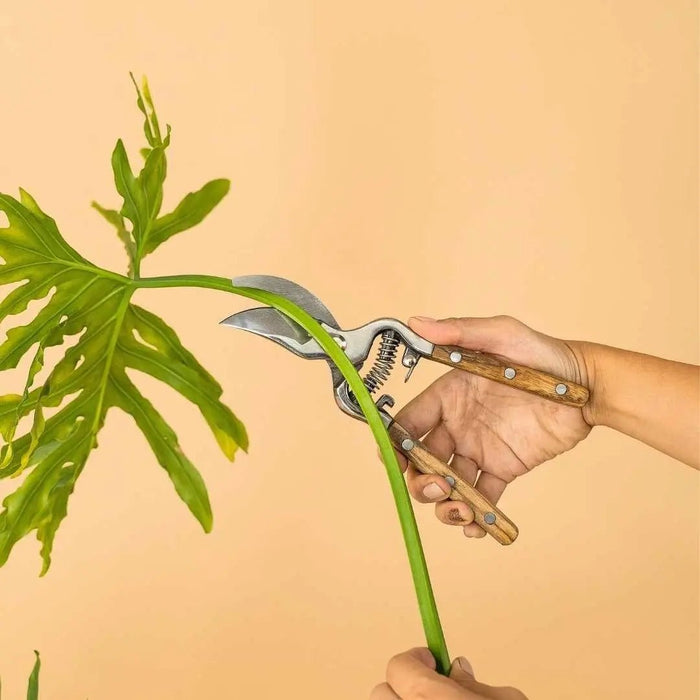
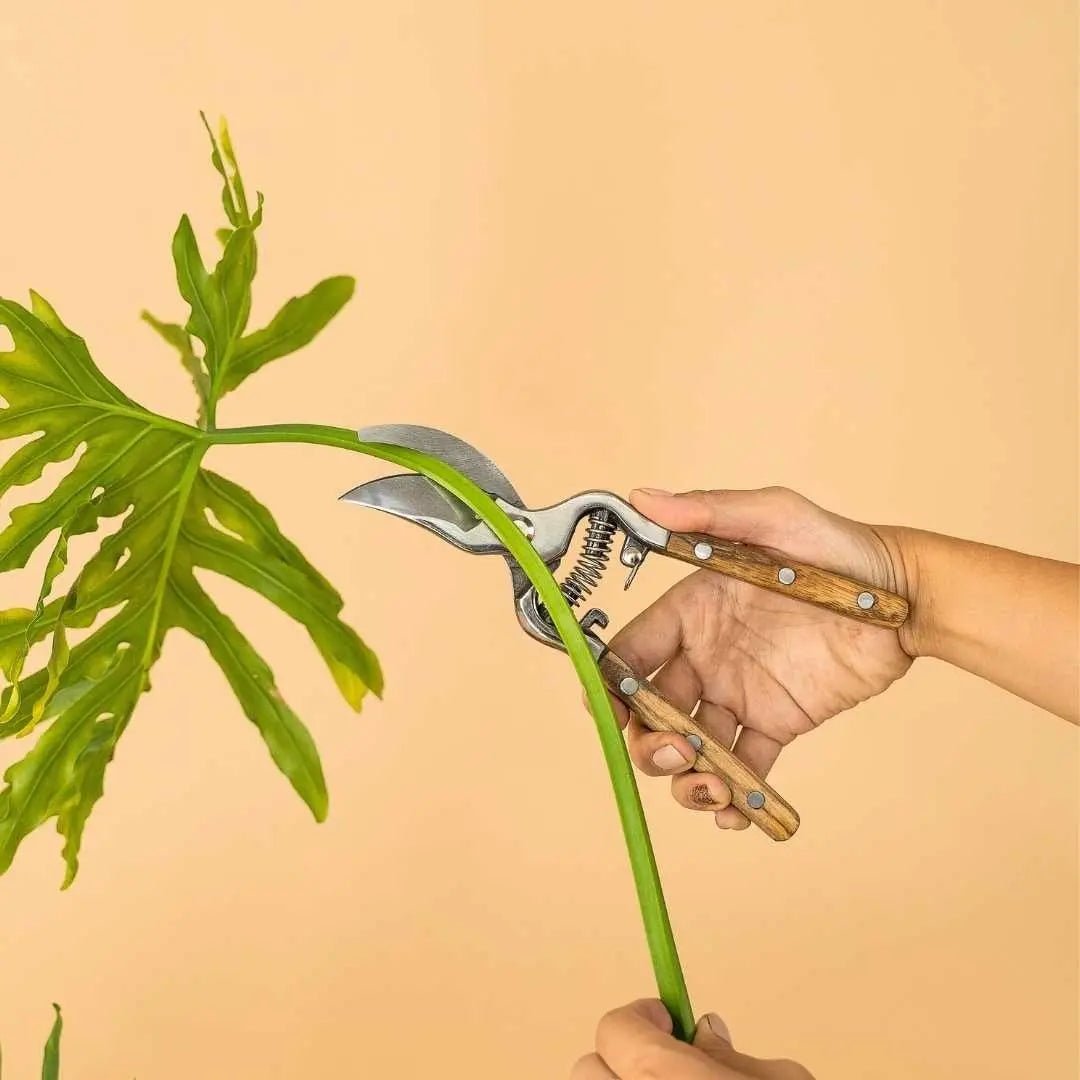
- Pinch or cut growing tips regularly to encourage branching
- Remove any bare or leggy stems at the base
- Trim the entire plant back by one-third to one-half when it becomes sparse
- Root all cuttings — never waste a Tradescantia cutting
Common Problems
Leggy, Sparse Growth
The most common issue. Causes:
- Insufficient light — move to a brighter spot
- Lack of pruning — Tradescantia needs regular pinching and trimming to stay bushy
- Natural ageing — older stems lose lower leaves over time. Prune and propagate.
Faded Colours
Insufficient light. Move to brighter indirect light or provide some direct morning sun.
Brown, Crispy Leaf Tips
- Low humidity (in heavy AC)
- Underwatering
- Salt buildup from fertiliser
Stem Rot
Mushy, blackened stems at the base. Caused by overwatering or poor drainage. Remove rotted sections, let healthy cuttings dry briefly, and re-root in fresh soil. Reduce watering frequency.
Pests
- Spider mites — the most common Tradescantia pest. Fine webbing and stippled leaves. Increase humidity, treat with neem oil.
- Mealybugs — cottony masses in leaf axils. Treat with isopropyl alcohol.
- Aphids — on new growth. Spray with insecticidal soap.
Is Tradescantia Toxic?
Tradescantia sap can cause skin irritation (contact dermatitis) in sensitive individuals and pets. While not severely toxic if ingested, it can cause mild oral irritation and digestive upset in cats and dogs. Handle with care and keep out of reach of pets that chew plants.
Styling Tradescantia
Tradescantia's cascading, colourful growth makes it one of the most visually impactful trailing plants:
- Hanging basket: The classic display. A full Tradescantia zebrina or nanouk cascading from a hanging planter is a showstopper.
- High shelf: Let the vines trail over a bookcase or kitchen shelf edge.
- Trailing from a tall stand: A mid-height plant stand allows the vines to flow to the floor.
- Mixed trailing display: Combine Tradescantia (colour) with Pothos (green) for contrasting cascades from adjacent hooks.
- Desk plant (nanouk): The more compact nanouk variety stays bushy enough for a desk or table display.
Shop Tradescantia
Browse our indoor plant collection for Tradescantia varieties and other colourful trailing plants. We deliver healthy plants across Singapore.
Tradescantia is the plant for people who want colour without complexity. It grows fast, propagates in days, and cascades in vivid purples and pinks that no other common houseplant can match. Give it bright light, regular water, and an occasional trim, and it will reward you with one of the most dynamic, eye-catching displays in indoor gardening.
Quick summary
Key Takeaways
- Popular Varieties
- Light
- Watering
- Soil
- Humidity
- Fertilising
Ready to bring some green into your home?
Browse 250+ hand-picked plants, curated for Singapore homes — delivered to your door.
Browse All Plants →