












Best Pet-Safe Indoor Plants for Singapore Homes
Posted on April 09 2026
In this article

For plant parents who are also pet parents, every new plant purchase comes with the same anxious Google search: "Is [plant name] toxic to cats?" or "Can dogs eat [plant name] leaves?" It is a valid concern — many popular houseplants contain compounds that can cause irritation, gastrointestinal distress, or worse if ingested by curious pets.
The good news is that plenty of beautiful, easy-care houseplants are completely safe for cats, dogs, and other common household pets. You do not need to choose between a green home and a safe one.
Understanding Plant Toxicity
Before diving into the safe list, a few important notes:
"Toxic" does not always mean "deadly." Most toxic houseplants cause mild to moderate symptoms — mouth irritation, drooling, vomiting, or diarrhea. Truly life-threatening plant poisonings from common houseplants are rare.
Toxicity is dose-dependent. A single nibble on a Pothos leaf usually causes nothing more than a sore mouth. Consuming large quantities is more dangerous but also less common — most pets taste a plant once and decide they do not like it.
Individual sensitivity varies. Some pets are more sensitive than others. Kittens and puppies are more vulnerable due to smaller body size and greater curiosity.
When in doubt, call a vet. If your pet ingests any plant material and shows symptoms (drooling, vomiting, lethargy), contact your veterinarian immediately.
Top 12 Pet-Safe Indoor Plants

1. Spider Plant (Chlorophytum comosum)
Pet safety: Non-toxic to cats and dogs.
The Spider Plant is one of the most popular pet-safe options. Its arching leaves and dangling babies are endlessly fascinating to cats — they love to bat at the plantlets. The plant tolerates this attention without harm to either party.
Care: Bright indirect light, water when top soil dries, tolerates AC. One of the easiest houseplants overall.
Styling: Hanging planter out of direct pet reach, or on a high shelf where the babies cascade.
2. Boston Fern (Nephrolepis exaltata)
Pet safety: Non-toxic to cats and dogs.
Boston Ferns are lush, dramatic, and completely safe for pets. Their feathery fronds add a tropical feel to any room.
Care: Indirect light, consistent moisture, high humidity. Bathrooms and kitchens are ideal locations in Singapore homes.
Styling: Hanging basket or elevated planter. The cascading fronds create a beautiful canopy effect.
3. Calathea / Goeppertia
Pet safety: Non-toxic to cats and dogs.
Calathea varieties — including Orbifolia, Medallion, Lancifolia (Rattlesnake Plant), and Makoyana (Peacock Plant) — are all pet-safe. Their stunning patterned leaves make them some of the most decorative non-toxic options available.
Care: Bright indirect light, consistent moisture, high humidity, filtered water. More demanding than some options but rewarding.
Styling: Floor or table display where the leaf patterns can be admired up close.
4. Peperomia
Pet safety: Non-toxic to cats and dogs.
The entire Peperomia genus is pet-safe. With over 1,000 species offering an incredible range of leaf shapes, textures, and colours — from the watermelon-patterned P. argyreia to the trailing P. prostrata (String of Turtles) — Peperomia is the gift that keeps giving for pet-owning plant lovers.
Care: Bright indirect light, allow soil to dry slightly between waterings. Compact and low-maintenance.
Styling: Desk plants, shelf displays, terrariums, and small groupings.
5. Parlour Palm (Chamaedorea elegans)
Pet safety: Non-toxic to cats and dogs.
The Parlour Palm brings a tropical, resort-like feel with its delicate, arching palm fronds. It has been a popular houseplant since the Victorian era — for good reason.
Care: Low to medium indirect light, water when top soil dries, tolerates low humidity. One of the most shade-tolerant palms.
Styling: Floor plant in a corner or beside furniture. The tropical silhouette works in almost any decor style.
6. African Violet (Saintpaulia)
Pet safety: Non-toxic to cats and dogs.
One of the few pet-safe flowering houseplants. African Violets produce clusters of purple, pink, blue, or white flowers almost year-round in the right conditions.
Care: Bright indirect light, water from below (bottom watering) to avoid leaf spotting, moderate humidity.
Styling: Windowsill displays, desk companions, or grouped in a decorative tray.
7. Cast Iron Plant (Aspidistra elatior)
Pet safety: Non-toxic to cats and dogs.
The Cast Iron Plant earned its name by surviving conditions that kill other plants — deep shade, drought, temperature extremes, and neglect. Its broad, dark-green leaves add a lush, tropical quality to any dark corner.
Care: Low to medium indirect light, infrequent watering, tolerates dry air. Practically indestructible.
Styling: Floor plant in corridors, bedrooms, or any low-light area.
8. Ponytail Palm (Beaucarnea recurvata)
Pet safety: Non-toxic to cats and dogs.
Not actually a palm — it is a succulent. The Ponytail Palm's swollen trunk base and cascading, curly leaves give it an unmistakable look that is both whimsical and architectural.
Care: Bright light, infrequent watering (the trunk stores water), well-draining soil. Treat it like a succulent.
Styling: Statement plant on a table or the floor. Its unusual form makes it a conversation starter.
9. Prayer Plant (Maranta leuconeura)
Pet safety: Non-toxic to cats and dogs.
Related to Calatheas, Prayer Plants display stunning leaf patterns and perform the same nyctinastic movement — leaves fold upward at night like hands in prayer.
Care: Bright indirect light, consistent moisture, high humidity. Similar care to Calathea but generally considered slightly more forgiving.
Styling: Tabletop display where you can observe the daily leaf movement.
10. Haworthia
Pet safety: Non-toxic to cats and dogs.
These small succulents — relatives of Aloe — feature striking geometric rosettes in shades of green, with translucent "windows" on some species that catch light beautifully.
Care: Bright indirect light, infrequent watering, well-draining succulent soil. Compact and low-maintenance.
Styling: Windowsill groupings, desk plants, or arranged with other succulents in a shallow dish.
11. Nerve Plant (Fittonia)
Pet safety: Non-toxic to cats and dogs.
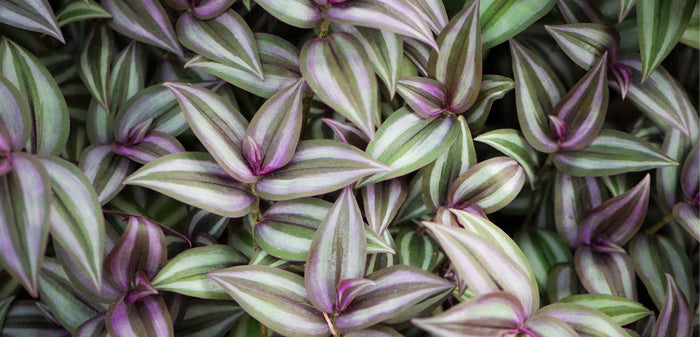
Fittonia's small leaves are covered in a network of striking veins in white, pink, or red. They are compact ground-cover plants that thrive in humid, low-light conditions.
Care: Low to medium indirect light, keep soil consistently moist, high humidity. Dramatic when thirsty (droops completely) but recovers fast.
Styling: Terrariums, desk plants, or grouped with other compact plants.
12. Money Tree (Pachira aquatica)
Pet safety: Non-toxic to cats and dogs.
The braided-trunk Money Tree is a popular choice in Singapore for its auspicious symbolism and easy care. It is also completely safe for pets.
Care: Bright indirect light, water when top soil dries, tolerates some neglect. The braided trunk adds visual interest even without leaves.
Styling: Floor or table plant. The braided form makes it a statement piece in any room.
Plants to Avoid with Pets
For reference, these popular houseplants are toxic to cats and/or dogs:
| Plant | Toxic Compound | Symptoms |
|---|---|---|
| Pothos | Calcium oxalate | Mouth irritation, drooling, vomiting |
| Philodendron | Calcium oxalate | Mouth irritation, drooling, difficulty swallowing |
| Monstera | Calcium oxalate | Mouth irritation, drooling, vomiting |
| Peace Lily | Calcium oxalate | Mouth irritation, vomiting, difficulty swallowing |
| Snake Plant | Saponins | Nausea, vomiting, diarrhea |
| Aloe Vera | Saponins | Vomiting, diarrhea, lethargy |
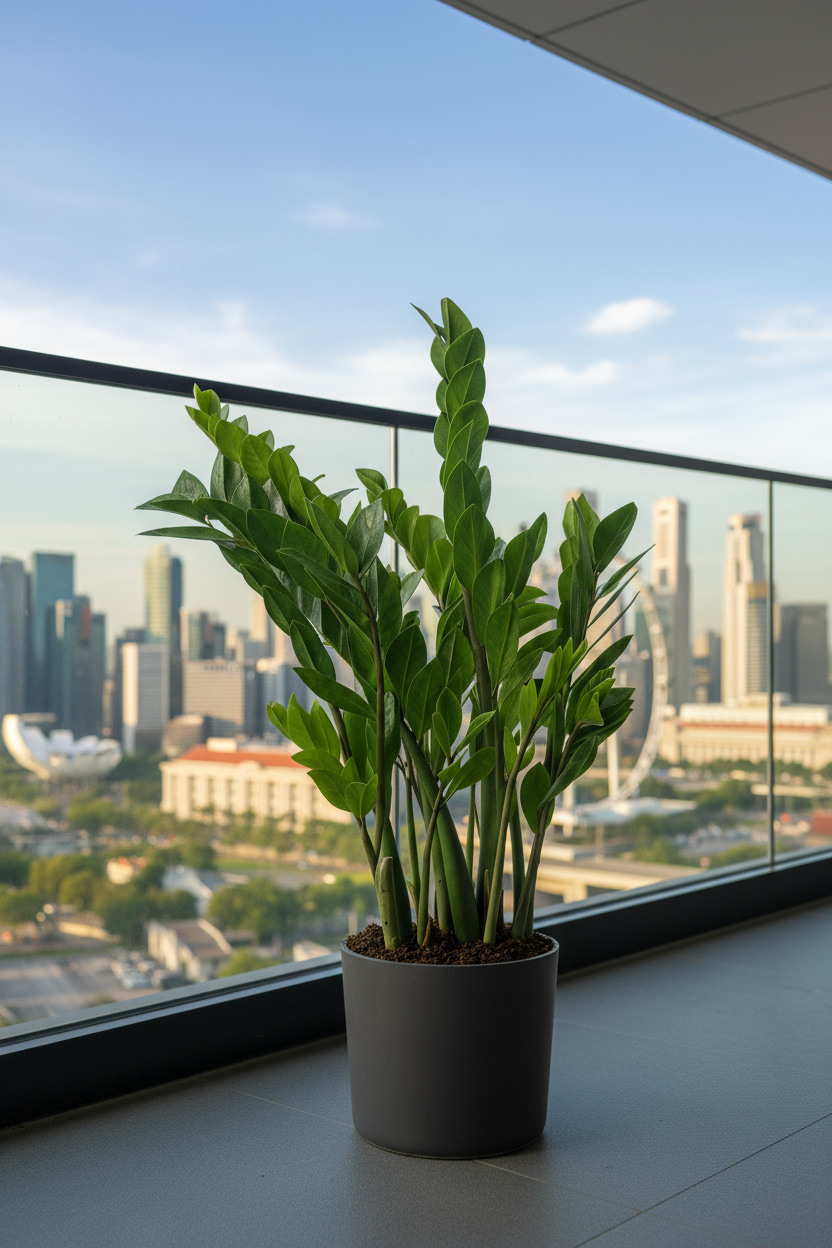
| ZZ Plant | Calcium oxalate | Mouth irritation, stomach upset |
| Dieffenbachia | Calcium oxalate | Severe mouth pain, swelling, difficulty breathing |
| Sago Palm | Cycasin | Highly toxic — liver failure, potentially fatal |
Important: Sago Palm is the most dangerous common houseplant for pets. Even small ingestions can be fatal. Never keep a Sago Palm in a home with dogs or cats.
Keeping Pets and Plants Coexisting

Even with pet-safe plants, some strategies help everyone get along:
Deterrents for Nibblers
- Place citrus peels on the soil surface — most cats dislike the scent
- Sprinkle cayenne pepper around the pot base
- Use commercial pet-deterrent sprays (non-toxic) on pot edges
- Provide cat grass as an approved chewing alternative
Strategic Placement
- Hang plants from the ceiling or high shelves
- Use plant stands that pets cannot climb
- Place plants in rooms that pets do not access
- Use closed terrariums for small plants — beautiful and completely pet-proof
Training
- Redirect pets when they approach plants
- Reward them for ignoring plants
- Consistency matters — intermittent correction is less effective than constant reinforcement
Shop Pet-Safe Plants
Browse our collection of pet-friendly indoor plants that are safe for your furry family members. We deliver healthy plants across Singapore — build a beautiful indoor garden without worrying about your pets' safety.
A home filled with plants and pets is the best of both worlds. With the right plant choices and a few smart placement strategies, your ferns, palms, and Calatheas can thrive alongside your cats and dogs — everyone sharing the same warm, green, living space.
Quick summary
Key Takeaways
- Understanding Plant Toxicity
- Top 12 Pet-Safe Indoor Plants
- Plants to Avoid with Pets
- Keeping Pets and Plants Coexisting
- Shop Pet-Safe Plants
Ready to bring some green into your home?
Browse 250+ hand-picked plants, curated for Singapore homes — delivered to your door.
Browse All Plants →