














Best Plants for Your Bedroom in Singapore | Tumbleweed Plants Singapore
Posted on April 13 2026
In this article

The bedroom is the most personal room in your home — and increasingly, Singaporeans are bringing plants into it. But the bedroom presents specific challenges: lower light (many HDB and condo bedrooms have only one window, sometimes small or partially blocked), air conditioning running through the night, and the practical question of whether sleeping with plants is safe.
This guide covers the best plants for Singapore bedrooms, addresses the myths, and gives you practical advice for making it work in HDB flats, condos, and rental rooms alike.
The Myth: Plants Steal Your Oxygen at Night
This concern comes up constantly. The logic: plants release oxygen during the day (photosynthesis) but consume oxygen at night (respiration). Therefore, sleeping with plants depletes your bedroom oxygen.
The reality: The amount of oxygen a houseplant consumes at night is negligible — far less than what a sleeping pet or a second person in the room would use. You would need hundreds of plants in an airtight room to notice any difference. A single Pothos on your nightstand has zero measurable impact on your oxygen levels.
Sleep soundly. The plants are not competing for your air.
Bedroom Conditions in Singapore

Understanding the typical Singapore bedroom helps with plant selection:
Light: Most HDB bedrooms have one window, often with curtains or blinds that reduce light further. Master bedrooms in condos may have better exposure, but many secondary bedrooms face corridors or are partially shaded. Expect low to medium indirect light.
Temperature: If you run AC at night (as most Singaporeans do), expect 22-25°C for 6-8 hours, then 28-32°C during the day when the room warms up. This temperature swing is significant.
Humidity: AC drops humidity to 50-60%, while non-AC periods bring it back to 70-80%. Plants in bedrooms experience daily humidity cycling.
Air circulation: Often limited, especially with windows closed during AC operation.
The Best Bedroom Plants
Snake Plant (Sansevieria)
Why it is the number one bedroom plant:
- Tolerates low light exceptionally well
- Survives temperature and humidity fluctuations without complaint
- Performs CAM photosynthesis — it actually releases oxygen at night (one of the few plants that does)
- Virtually impossible to kill through neglect
- Upright, architectural shape fits in narrow spaces beside furniture
Care: Water every 2-3 weeks. Wipe leaves occasionally. That is genuinely all.
Placement: On the floor beside the bed, on a nightstand, or on a windowsill. Works in any bedroom position.
Pothos (Epipremnum aureum)
Why it works:
- Extremely tolerant of low light
- Trails beautifully from a shelf or hanging position
- Handles AC temperature changes without stress
- Visual impact increases over time as the vines grow longer
- Easy propagation means you can create new plants from cuttings
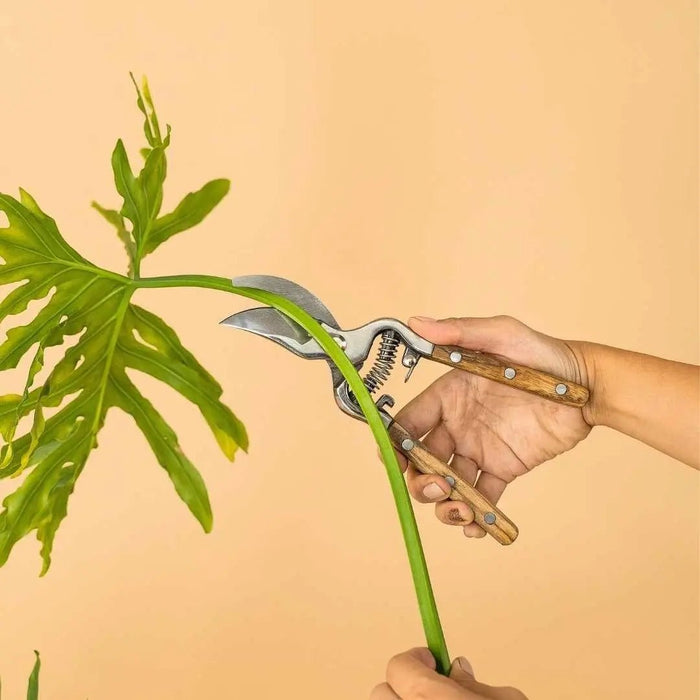
Care: Water weekly. Trim vines if they get too long.
Placement: On a high shelf where it can trail, on top of a wardrobe, or in a hanging planter near the window.
Peace Lily (Spathiphyllum)
Why it works:
- Thrives in low light — one of the few flowering plants that blooms in bedroom-level light
- White flowers add elegance without being overwhelming
- Communicates clearly when it needs water (leaves droop, then recover after watering)
- Known for air-purifying properties
Care: Water when the top soil is dry (every 5-7 days). Occasional misting appreciated in AC rooms.
Placement: On a desk or dresser where the white flowers can be enjoyed. Keep away from direct AC drafts.
ZZ Plant (Zamioculcas zamiifolia)
Why it works:
- Thrives in very low light — among the most shade-tolerant houseplants available
- Drought-tolerant — survives infrequent watering
- Glossy, dark leaves that always look healthy and clean
- Grows slowly, never outgrows its space unexpectedly
Care: Water every 2-3 weeks. Essentially maintenance-free.
Placement: Floor corner, dresser top, or windowsill. Works anywhere.
Aglaonema (Chinese Evergreen)
Why it works:
- Tolerates low to medium light
- Adds colour to the bedroom — pink, red, and silver varieties available
- Compact size suits bedside tables and dressers
- Handles AC conditions well
Care: Water weekly. Prefers consistent moisture but forgives occasional drying out.
Placement: Bedside table, desk, or windowsill where the colourful leaves can be appreciated.
Dracaena
Why it works:
- Multiple species and sizes available — from compact table plants to tall floor specimens
- Excellent low-light tolerance
- Architectural shape (upright, tree-like) adds structure to bedroom corners
- Tough and forgiving
Care: Water every 7-10 days. Sensitive to fluoride in water — if leaf tips brown, switch to filtered water.
Placement: Tall varieties in floor corners; compact varieties on surfaces.
Spider Plant (Chlorophytum comosum)
Why it works:
- Extremely adaptable to any light condition
- Produces babies (plantlets) that cascade from the mother plant — charming in a hanging planter
- Non-toxic to pets — safe for bedrooms where pets sleep too
- Air-purifying properties
Care: Water weekly. Tolerates neglect. Remove brown tips with scissors if they appear.
Placement: Hanging planter, high shelf, or windowsill.
Bedroom Plant Styling

The Nightstand Plant
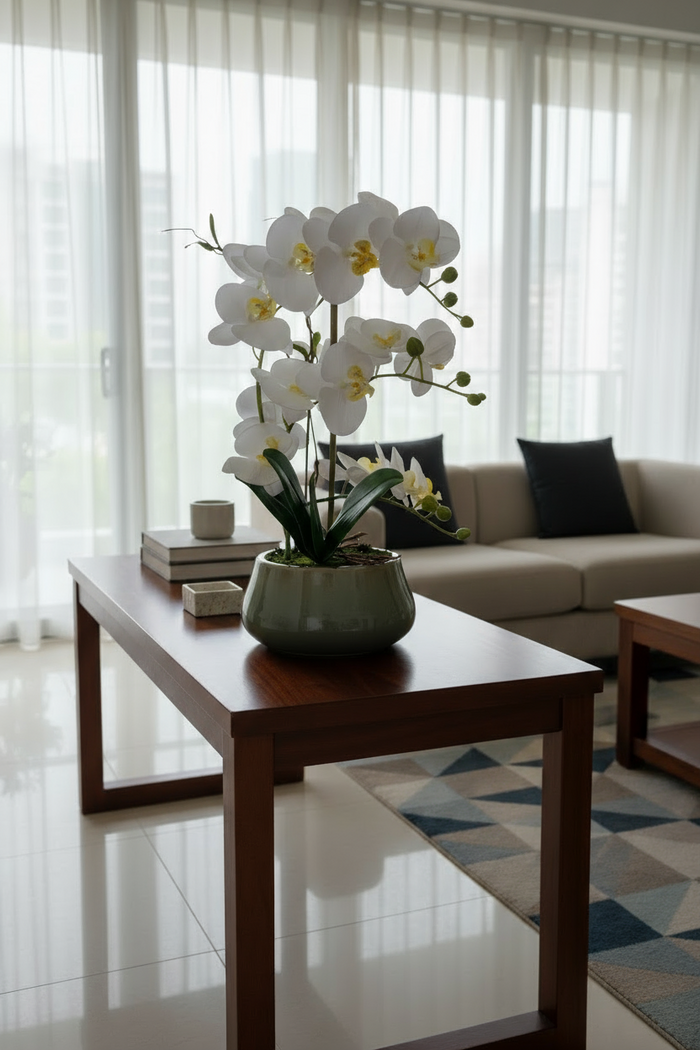
A single small plant on the nightstand — the first thing you see in the morning and the last thing at night. Best options: small Aglaonema, Peperomia, or small Snake Plant. Keep the pot proportional to the nightstand — not so large that it dominates the surface.
The Corner Statement
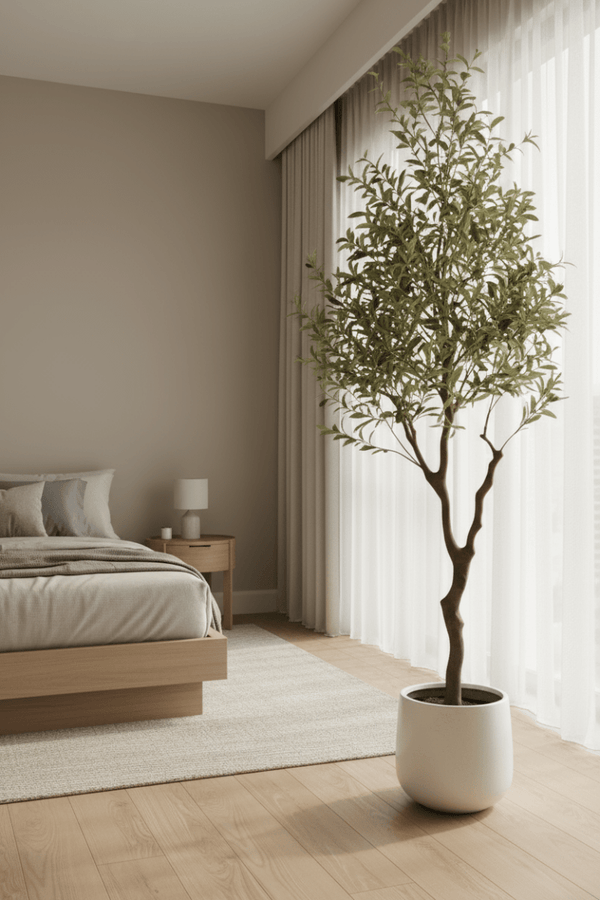
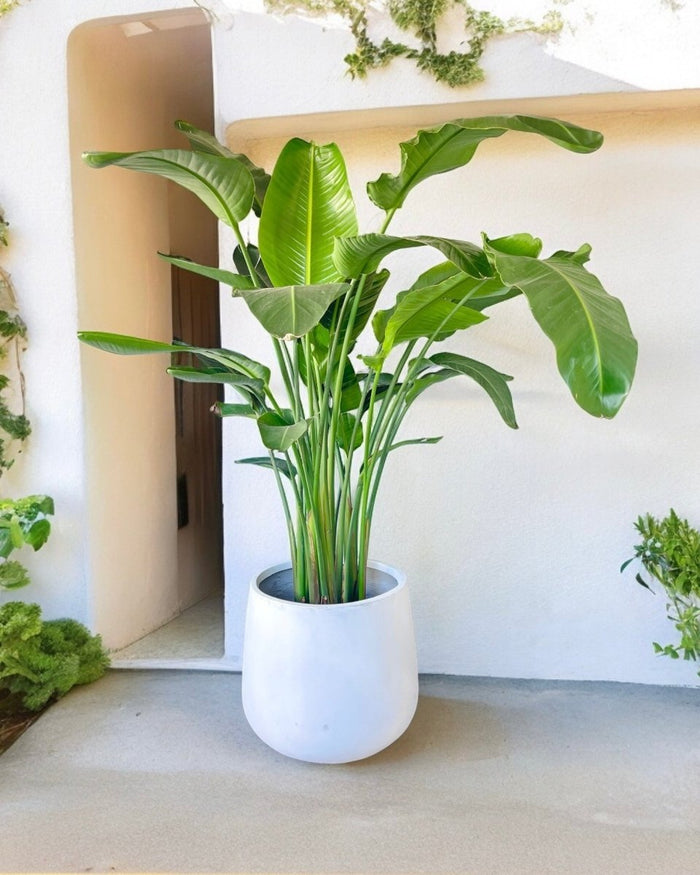
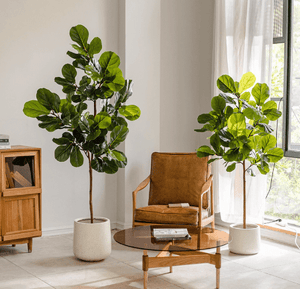
A tall plant in an empty corner transforms dead space into a design feature. Best options: tall Snake Plant, Dracaena, or large ZZ Plant. Use a quality floor planter that matches the bedroom aesthetic.
The Shelf Garden
A floating shelf or bookshelf with a small collection — mixing trailing plants (Pothos, String of Pearls) with upright ones (Snake Plant, Peperomia). This creates a layered, curated look without taking floor or furniture space.
The Window Garden
If your bedroom window gets decent light, use the windowsill as a mini garden. Line up 3-5 small plants in matching or coordinating pots. Best options: succulents (if the window is bright), Peperomia, small Calathea, or herbs like lavender (which may also promote relaxation).
AC Room Survival Tips
Since most Singapore bedrooms run AC overnight:
- 1. Position away from direct vents. The cold, dry air stream from AC units stresses plants. Place plants to the side, not directly below or in front of vents.
- 2. Group plants together. Multiple plants create a shared microclimate with slightly higher humidity than a single isolated plant.
- 3. Water slightly more frequently. AC dehumidifies the air, increasing water loss from both soil and leaves.
- 4. Choose tolerant species. Snake Plant, ZZ Plant, and Pothos handle AC cycling best. Avoid humidity-demanding plants like Ferns or Calathea in heavily air-conditioned bedrooms.
- 5. Pebble trays. Place pots on trays filled with pebbles and water — the evaporation creates localised humidity around the plant.
Common Mistakes

Too many plants, too fast. Start with one or two and see how they respond to your bedroom's specific conditions before building a collection.
Overwatering in low light. Bedroom plants use less water because they get less light and therefore photosynthesise less. Adjust your watering schedule accordingly — most bedroom plants need less water than the same species in a bright living room.
Forgetting about drainage. Water damage to nightstands and dressers is a real risk. Always use saucers, and empty them after watering. Self-watering pots are a good option for bedroom surfaces.
Placing pest-prone plants in bedrooms. You do not want to deal with spider mites or fungus gnats in your sleeping space. Choose robust, pest-resistant species.
Shop Bedroom Plants
Browse our indoor plant collection for bedroom-friendly plants delivered across Singapore.
Your bedroom deserves more than four walls and a mattress. A well-chosen plant adds life, colour, and a subtle sense of calm to the room where you start and end every day. In Singapore's HDB and condo bedrooms — with their modest windows, nightly AC cycles, and compact layouts — the right plant is one that handles low light, temperature swings, and occasional neglect without drama. A Snake Plant in the corner. A Pothos trailing from a shelf. A Peace Lily on the dresser, opening its white flower in the quiet of a room you are still sleeping in. These are not dramatic design gestures — they are small, living additions that make the most personal room in your home feel a little more alive.
Quick summary
Key Takeaways
- The Myth: Plants Steal Your Oxygen at Night
- Bedroom Conditions in Singapore
- The Best Bedroom Plants
- Bedroom Plant Styling
- AC Room Survival Tips
- Common Mistakes
Ready to bring some green into your home?
Browse 250+ hand-picked plants, curated for Singapore homes — delivered to your door.
Browse All Plants →