














How to Choose the Right Pot Size for Your Plant | Tumbleweed Plants Singapore
Posted on April 09 2026
In this article
Choosing the right pot size sounds simple — bigger pot means more room to grow, right? Not exactly. Pot sizing is one of the most common areas where plant owners go wrong, and the consequences can be severe: root rot from excess soil moisture, stunted growth from root stress, or a plant that stays waterlogged for weeks because the pot is three sizes too large.

The right pot size is not a guess — it is a decision based on the plant's current root system, its growth rate, and how its soil retains moisture. This guide explains how to get it right every time.
Why Pot Size Matters
Too Large
When a plant sits in a pot much larger than its root ball, the surrounding soil holds water that the roots cannot access. This excess moisture creates the perfect conditions for root rot, especially in Singapore's humid climate where soil already dries slowly.
What happens:
- Soil stays wet for 10+ days after watering
- Root rot develops in the unused wet soil at the pot's edges and bottom
- The plant looks wilted despite wet soil (because the roots are drowning)
- Fungus gnats appear (they breed in consistently moist soil)
Too Small
A pot that is too small constricts root growth, limits water and nutrient uptake, and can cause the plant to become root-bound.
What happens:
- Roots circle the inside of the pot with no room to expand
- Water runs straight through without being absorbed
- The plant dries out within 1-2 days of watering
- Growth slows or stops despite adequate light and fertiliser
- The plant becomes top-heavy and tips over
Just Right
The ideal pot is slightly larger than the root ball — enough room for one season of root growth without excessive unused soil.
The General Rule

When repotting, go up one pot size — approximately 2-5cm (1-2 inches) larger in diameter than the current pot.
This applies to most houseplants in most situations. It provides enough room for root expansion without creating a dangerously large volume of unused, moisture-holding soil.
Size Increments
| Current pot diameter | Next pot size |
|---|---|
| 8-10cm | 12-13cm |
| 12-13cm | 15-16cm |
| 15-16cm | 18-20cm |
| 18-20cm | 22-25cm |
| 25cm+ | 28-30cm |
Exceptions to the One-Size-Up Rule
Fast-Growing Plants
Some plants grow so rapidly that one size up barely lasts a season. For these, you can safely go two sizes up:
- Monstera deliciosa (fast-growing in good conditions)
- Pothos (rapid root and vine growth)
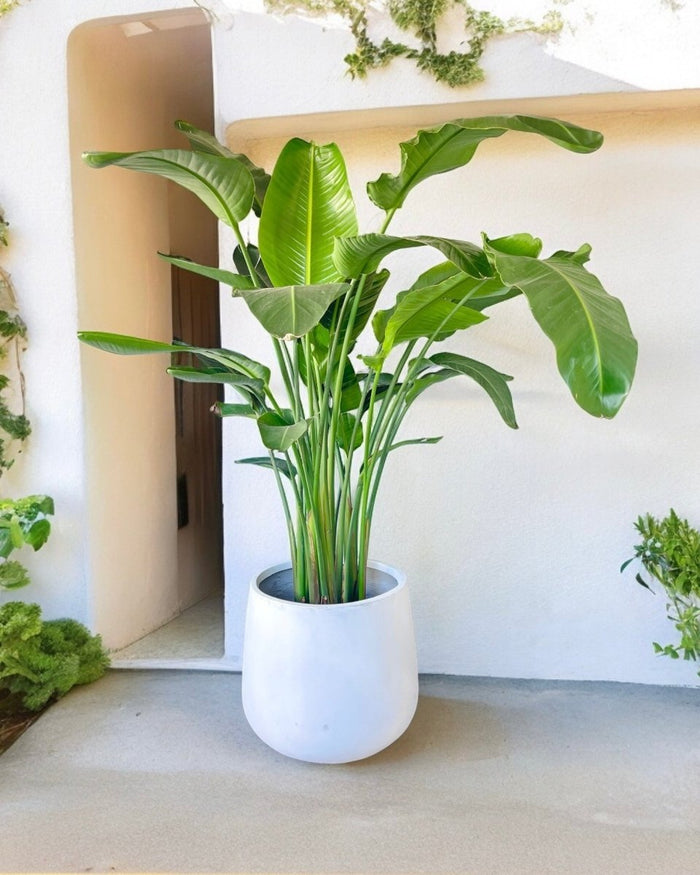
- Bird of Paradise (vigorous root expansion)
- Spider Plant (fills pots quickly)
Slow-Growing Plants
Conservative pot sizing is essential for plants that grow slowly — the excess soil stays wet too long:
- Succulents and cacti (go up only 1-2cm)
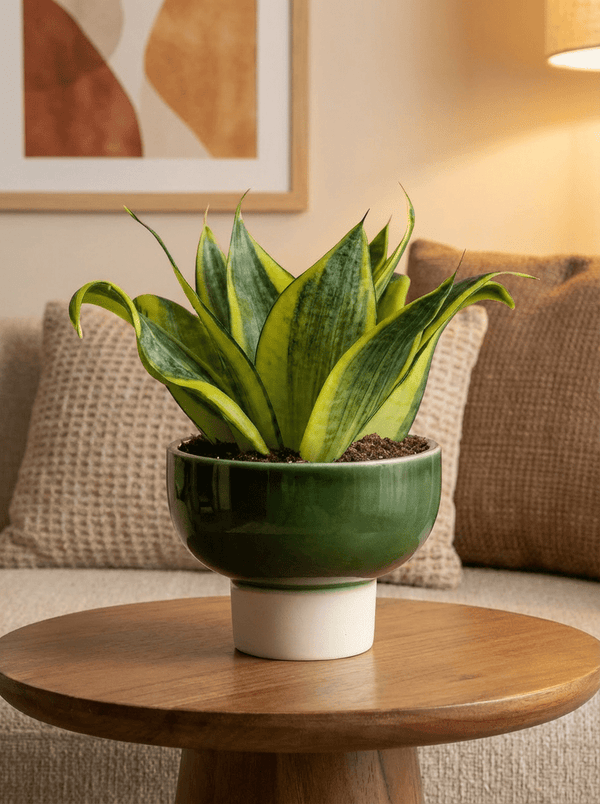
- Snake Plant (prefers being snug)
- ZZ Plant (slow root growth)
- Hoya (actually blooms better when slightly root-bound)
Plants That Prefer Being Root-Bound
Some plants perform better when slightly constrained:
- Hoya — blooms more readily when root-bound
- Peace Lily — flowers more when snug
- Snake Plant — produces pups (offsets) when slightly crowded
- Begonia — many species prefer tight quarters
For these, only repot when the plant is truly struggling (water runs straight through, roots are growing out of drainage holes).
Signs Your Plant Needs Repotting

Definite Signs (Repot Soon)
- Roots growing out of drainage holes — the root system has outgrown the pot
- Roots visible on the soil surface — circling or matting at the top
- Water runs straight through — the root mass is so dense that water cannot soak in
- Plant tips over easily — root-bound plants become top-heavy
- Growth has stalled — despite adequate light, water, and fertiliser
Maybe Signs (Investigate First)
- Plant dries out quickly — could be root-bound, or could be too much light or heat
- Yellow lower leaves — could be root stress, or could be overwatering, nutrient deficiency, or natural ageing
How to Assess the Root Ball
Before choosing a pot, gently remove the plant from its current pot and look at the roots:
Lightly root-bound: Roots circle the inner edge of the pot but soil is still visible. The plant has room for a few more months. Repot if you want, or wait.
Moderately root-bound: Roots form a dense mat around the pot shape. Little soil visible. Time to repot.
Severely root-bound: Solid mass of roots in the shape of the pot. Water runs through without soaking in. Roots may be growing out of drainage holes. Repot urgently.
Root rot present: Soft, brown, mushy roots. Do not size up — trim the dead roots and repot into the same size or smaller pot with fresh, well-draining soil.
Pot Depth: The Overlooked Dimension

Pot diameter gets all the attention, but depth matters too:
Shallow, wide pots — Best for plants with shallow root systems:
- Succulents and cacti
- String of Pearls and other trailing succulents
- Ferns
- Peperomia
Standard depth pots — Suitable for most houseplants:
- Monstera
- Philodendron
- Aglaonema
- Pothos
Deep pots — Best for plants with deep root systems or those that need stability:
- Snake Plant (tall varieties need a deep, stable base)
- Bird of Paradise
- Fiddle Leaf Fig
- Dracaena
Drainage Holes: Non-Negotiable
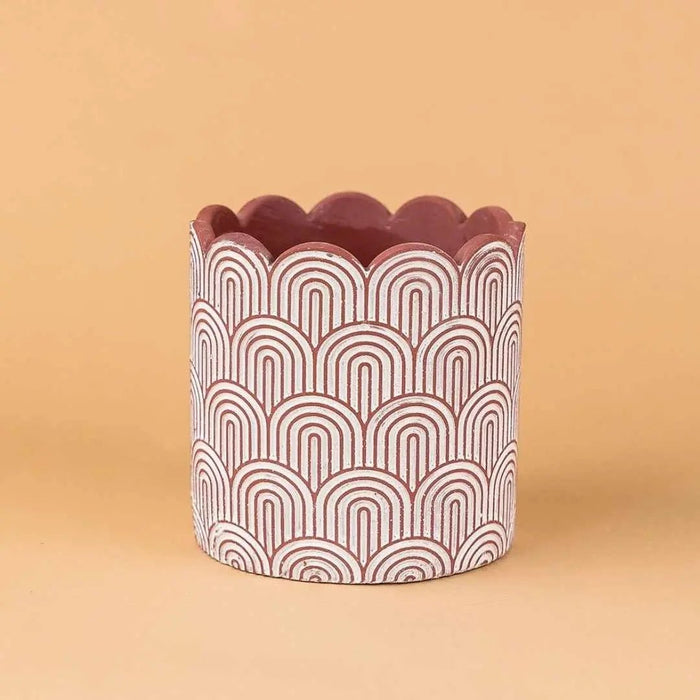
Regardless of pot size, drainage holes are essential. A perfectly sized pot without drainage is worse than a slightly oversized pot with drainage. If you fall in love with a decorative pot that has no holes, use it as a cache pot — place the plant in a plastic nursery pot with drainage inside the decorative pot.
Singapore-Specific Tips

Soil dries slower here. Singapore's 70-80% ambient humidity means soil retains moisture longer than in drier climates. This makes oversized pots even more dangerous. Err on the side of slightly smaller pots.
Terracotta helps. Terracotta's porous walls allow moisture to evaporate through the sides, compensating somewhat for Singapore's slow-drying conditions. If you tend to overwater, choose terracotta.
AC rooms change the equation. In heavily air-conditioned rooms where humidity drops to 40-50%, soil dries faster. Plants in AC rooms may tolerate slightly larger pots than the same plant in a naturally ventilated room.
Shop Plants and Pots
Browse our indoor plant collection for healthy plants in appropriate pot sizes. We deliver across Singapore with each plant in a well-sized nursery pot ready for your chosen planter.
Getting the pot size right is not glamorous, but it is foundational. Every watering decision, every soil choice, every drainage consideration connects back to the pot. Get it right, and plant care becomes straightforward. Get it wrong, and you spend months fighting symptoms of a problem that started the day you chose the wrong container.
Quick summary
Key Takeaways
- Why Pot Size Matters
- The General Rule
- Exceptions to the One-Size-Up Rule
- Signs Your Plant Needs Repotting
- How to Assess the Root Ball
- Pot Depth: The Overlooked Dimension
Ready to bring some green into your home?
Browse 250+ hand-picked plants, curated for Singapore homes — delivered to your door.
Browse All Plants →