
















How Plants Are Transforming Singapore Workspaces | Tumbleweed Plants Singapore
Posted on April 13 2026
In this article

Walk into any modern Singapore office — a tech startup in Lavender, a co-working space in Tanjong Pagar, a corporate headquarters in the CBD — and you will notice something that was rarely there a decade ago: plants. Not the token lobby orchid or the sad conference room ficus of the 1990s, but intentional, widespread greenery integrated into the workspace as a design and wellness strategy.
The workplace plant movement is not decoration. It is a response to research, employee expectations, and the growing understanding that the physical environment directly affects how people think, feel, and work.
The Research Behind Workplace Plants
Productivity
A landmark University of Exeter study found that enriching a lean office with plants increased productivity by 15%. Subsequent studies have confirmed and refined this finding — the effect is consistent across different types of work, office layouts, and climates.
The mechanism is not mysterious: plants reduce stress (lower cortisol), improve air quality perception, and create visual interest that reduces mental fatigue. Less fatigued, less stressed workers produce more.
Concentration and Attention
Research from the University of Melbourne showed that a 40-second break looking at a green rooftop (versus a concrete rooftop) significantly improved concentration on subsequent tasks. The "attention restoration" effect of natural elements — including indoor plants — is well-documented in environmental psychology.
In Singapore's demanding work culture, where long hours and intense focus are common, this restorative effect is particularly valuable.
Well-Being and Satisfaction
Multiple studies show that employees in offices with plants report higher job satisfaction, lower stress, and fewer sick days. A Human Spaces report found that offices with natural elements (plants, natural light, views of nature) saw a 15% increase in reported well-being and a 6% increase in productivity.
Noise Reduction
Larger plants and green walls provide modest but measurable noise absorption — particularly useful in open-plan offices, which dominate Singapore's commercial spaces. Plants absorb, diffract, and reflect sound waves, reducing the ambient noise that makes open plans fatiguing.
How Singapore Workspaces Are Using Plants

Co-Working Spaces
Singapore's co-working industry has embraced plants as a competitive differentiator. Spaces like WeWork, JustCo, and local operators use extensive planting to:
- Create visual boundaries between zones without walls
- Soften the industrial aesthetic (exposed concrete, metal, glass)
- Signal a modern, wellness-conscious culture to potential members
- Improve air quality in densely occupied spaces
The message is clear: a plant-filled workspace attracts talent and members more effectively than a sterile one.
Corporate Offices
Larger corporations are incorporating plants into workplace strategy through:
- Reception and lobby planting — First impressions for clients and visitors
- Breakout area greenery — Transforming rest areas into restorative environments
- Desk plants — Providing small plants for individual workstations
- Living walls — Vertical green installations as feature pieces
- Outdoor-indoor connections — Singapore's climate allows semi-outdoor spaces that blend with interior planting
Home Offices
The post-pandemic normalisation of hybrid and remote work has made the home office a permanent feature for many Singaporean professionals. Plants in the home office serve multiple functions:
- Create a visual boundary between "work" and "home" zones
- Improve the background for video calls (a bookshelf with plants is the most common professional video background)
- Provide the same productivity and stress-reduction benefits as office plants
- Make a small, dedicated workspace feel less claustrophobic
Best Plants for Singapore Workspaces
For Desks and Individual Workstations
Space is limited. The plant needs to be compact, tolerate air conditioning, and survive inconsistent care (weekends, holidays, forgetful owners).
Top picks:
- Aglaonema — Colourful, compact, tolerates low light and AC
- Peperomia — Small, interesting, and drought-tolerant
- Snake Plant (small varieties) — Essentially indestructible
- Pothos (small) — Trails attractively off a shelf, tolerates anything
- ZZ Plant (small) — Glossy, modern look with zero maintenance
For Common Areas and Meeting Rooms
More space available. Plants need to make a visual impact and tolerate variable conditions (doors opening and closing, AC cycling, irregular light).
Top picks:
- Monstera — Statement plant that signals a modern, design-conscious space
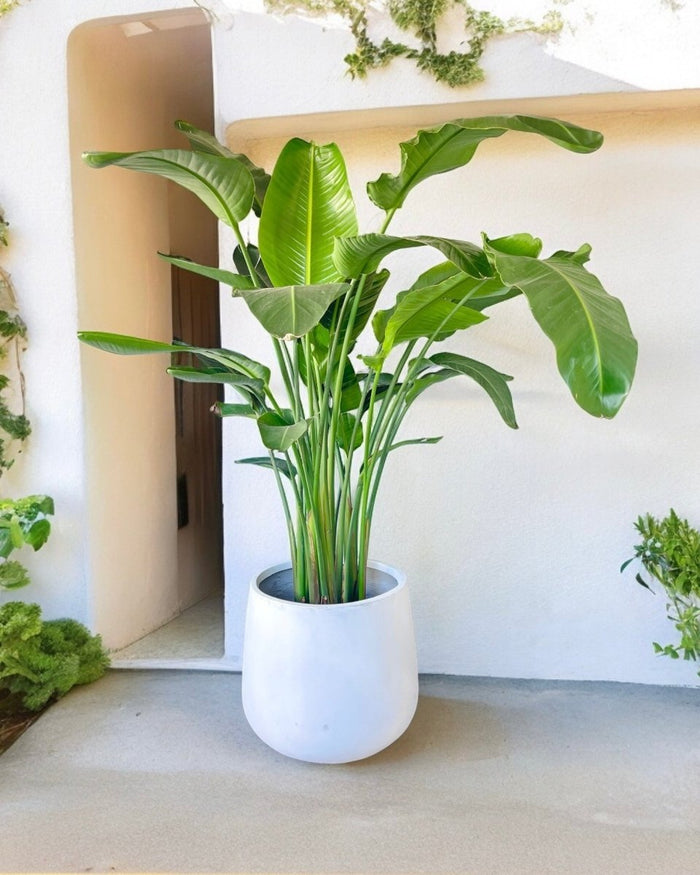
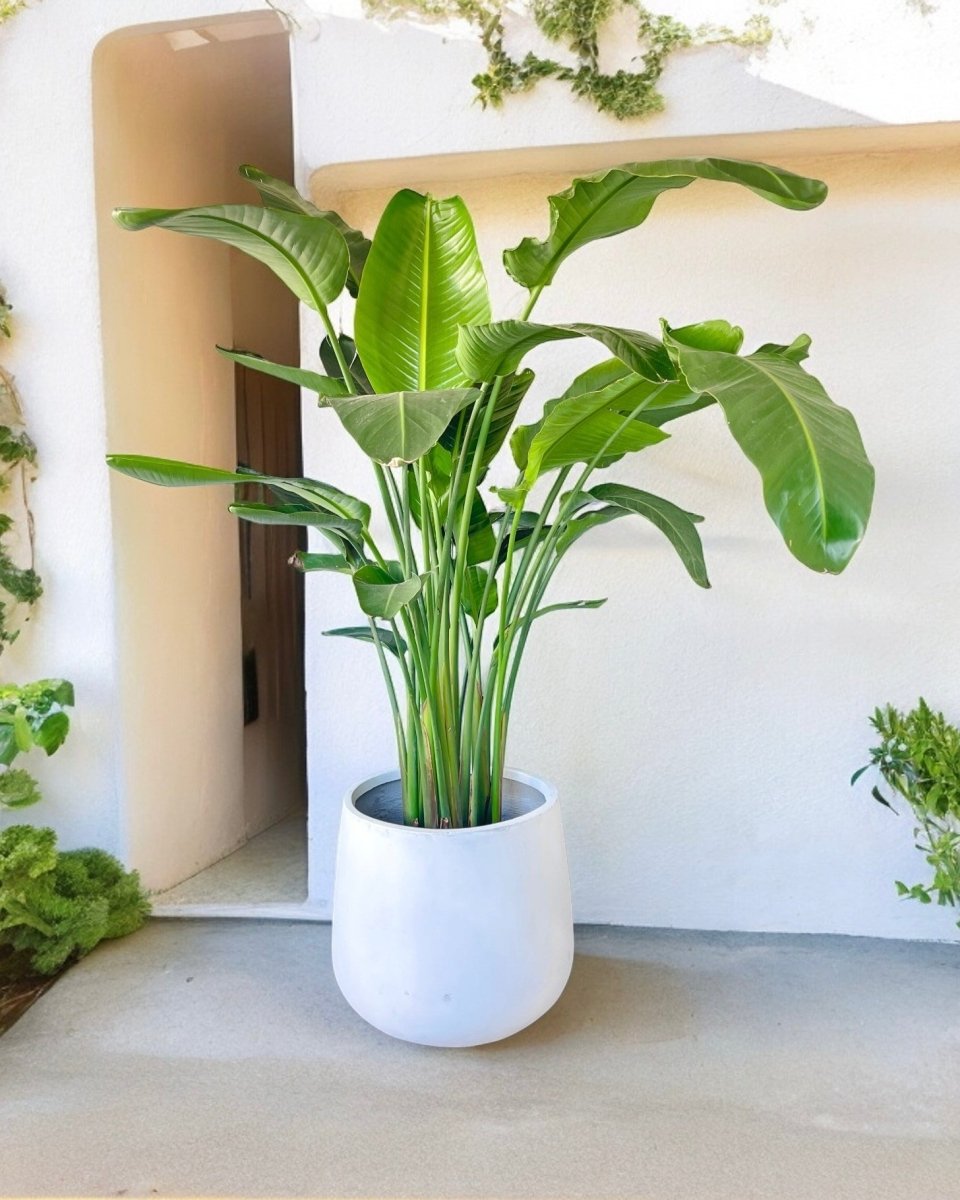
- Bird of Paradise — Tall, dramatic, fills empty corners
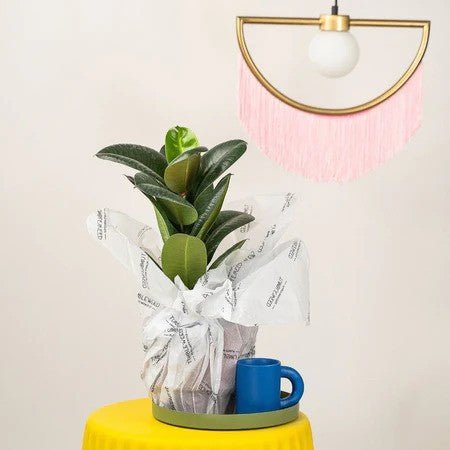
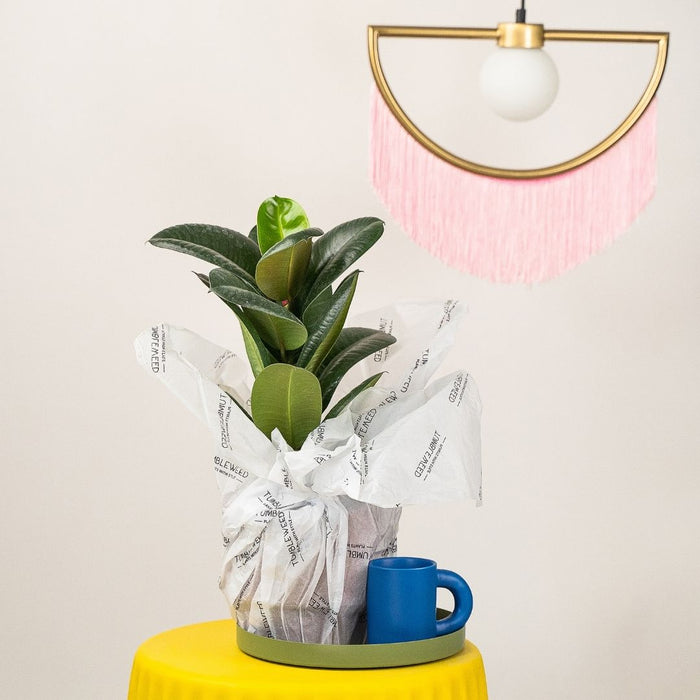
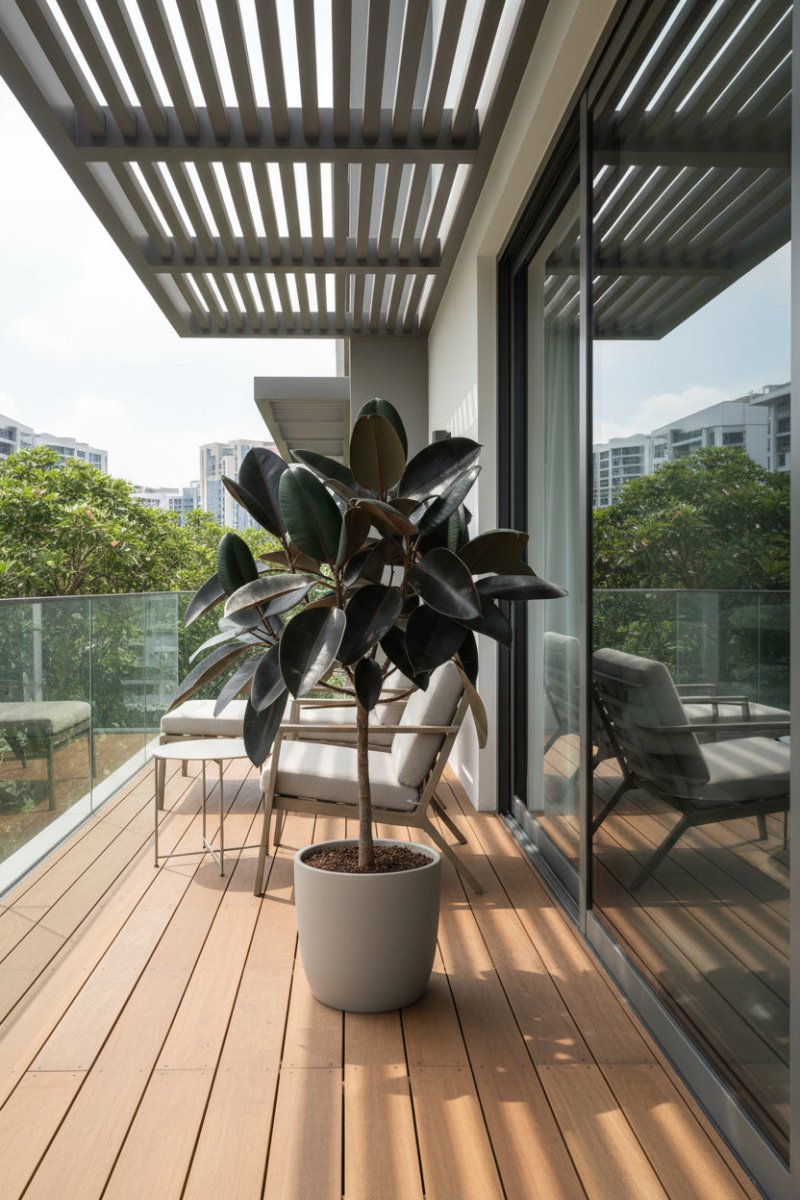
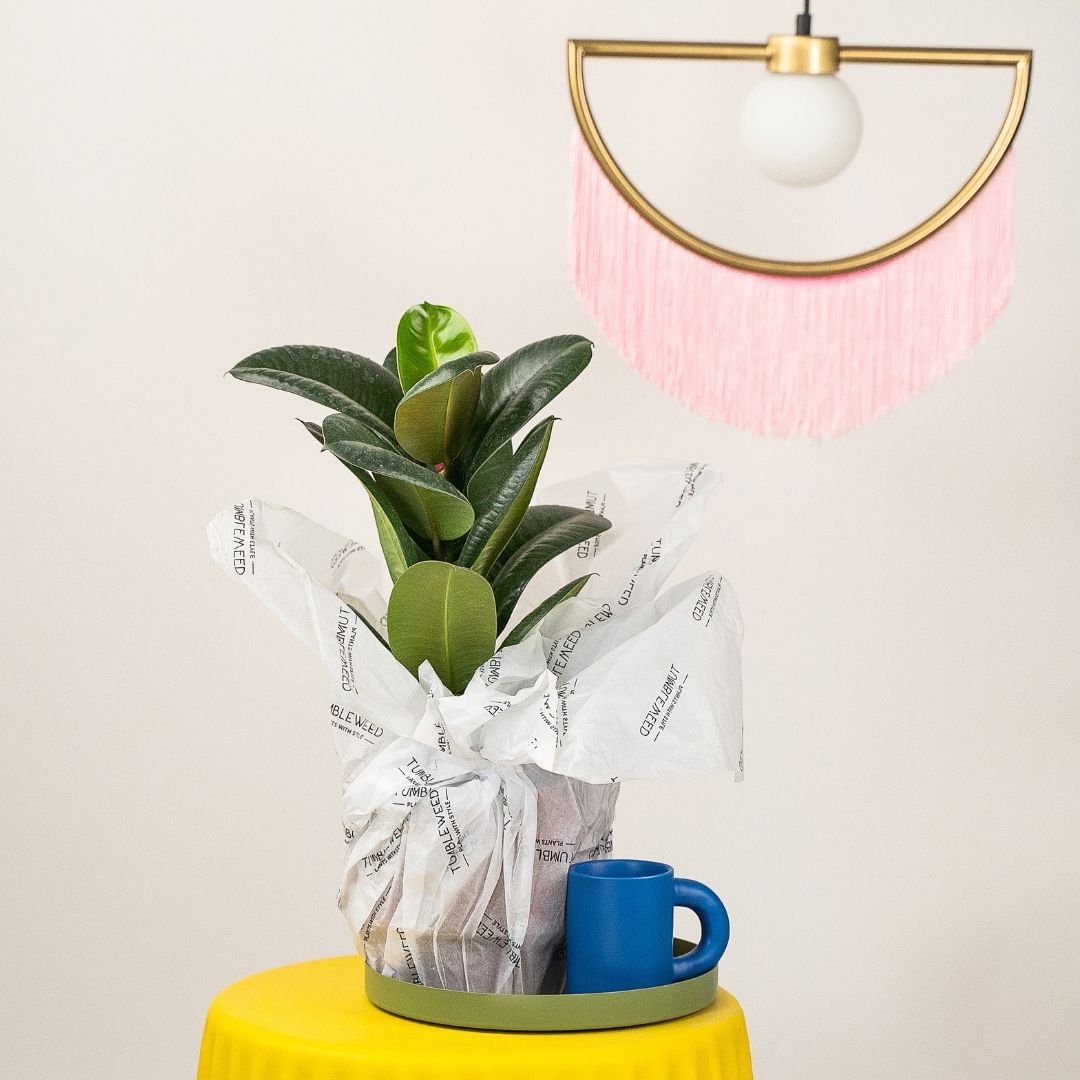
- Rubber Plant (Ficus elastica) — Upright, professional, and sturdy
- Dracaena — Various heights, tolerant of low light and AC
- Peace Lily — Elegant, flowers in low light, and has air-purifying associations
For Reception Areas
The plant represents the company. It needs to look premium, well-maintained, and intentional.
Top picks:
- Large Orchid arrangement — Classic, elegant, professional
- Fiddle Leaf Fig — Trendy and dramatic (but needs good light)
- Large Monstera in a premium planter — Modern and memorable
- Kentia Palm — The classic indoor palm for corporate settings
For Home Offices
The plant shares space with you for 8+ hours daily. Choose something you genuinely enjoy looking at, that fits your desk setup, and that handles your specific light and AC conditions.
Top picks:
- Pothos on a shelf above the monitor — Green in your peripheral vision without taking desk space
- Small Calathea — Interesting leaf patterns to look at during thinking breaks
- Snake Plant beside the desk — Architectural, vertical, and requires almost no attention
- Aglaonema on the desk — Colour and life at arm's reach
The Air-Conditioning Challenge

Singapore offices run air conditioning for 8-12 hours daily. This creates a challenging environment for plants:
Low humidity: AC systems remove moisture from the air, dropping humidity to 40-55% — below the comfort zone for many tropical plants.
Temperature fluctuations: Direct AC vents can create cold drafts. The temperature difference between AC hours and non-AC hours (nights, weekends) can stress plants.
Solutions:
- Choose AC-tolerant species (Snake Plant, ZZ, Aglaonema, Pothos)
- Position plants away from direct AC vents
- Group plants together to create a shared microclimate with higher humidity
- Use pebble trays under pots for passive humidity
- Water slightly more frequently in heavily air-conditioned spaces
Maintenance Considerations
Who Waters the Plants?
The biggest practical challenge in workplace planting. Options:
- Rostered responsibility — Team members take turns (works in small teams, fails in large offices)
- Dedicated person — Assign plant care to someone who enjoys it (common in smaller companies)
- Self-watering pots — Reduce watering frequency to every 2-3 weeks
- Professional plant care service — Outsource to a maintenance company (common in larger corporate settings)
- Weekend and holiday coverage — Choose drought-tolerant species that survive 2-3 days without water, or use self-watering solutions
Budget
Workplace plants are not expensive relative to other office amenities:
- Small desk plants: $15-$30 each
- Medium statement plants: $40-$80 each
- Large feature plants: $80-$200 each
- Professional maintenance: varies by scope
Compare this to the cost of office art, furniture upgrades, or wellness programmes — plants offer comparable benefits at a fraction of the cost.
Making It Work

The difference between a workplace that uses plants effectively and one where plants slowly die in the corner comes down to:
- 1. Choosing the right plants for the conditions — not what looks best in photos, but what thrives in your specific light, AC, and care situation
- 2. Assigning clear care responsibility — plants without an owner die
- 3. Matching ambition to commitment — start with a few hardy species, expand as you learn what works
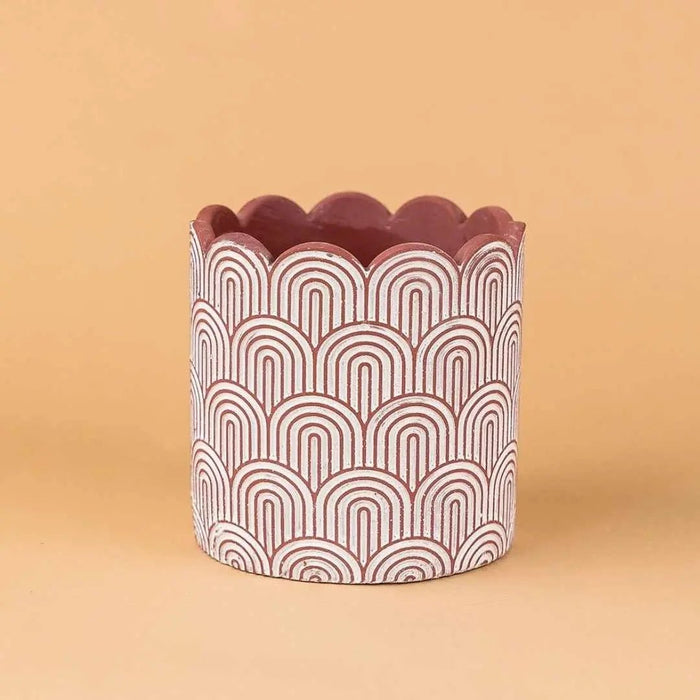
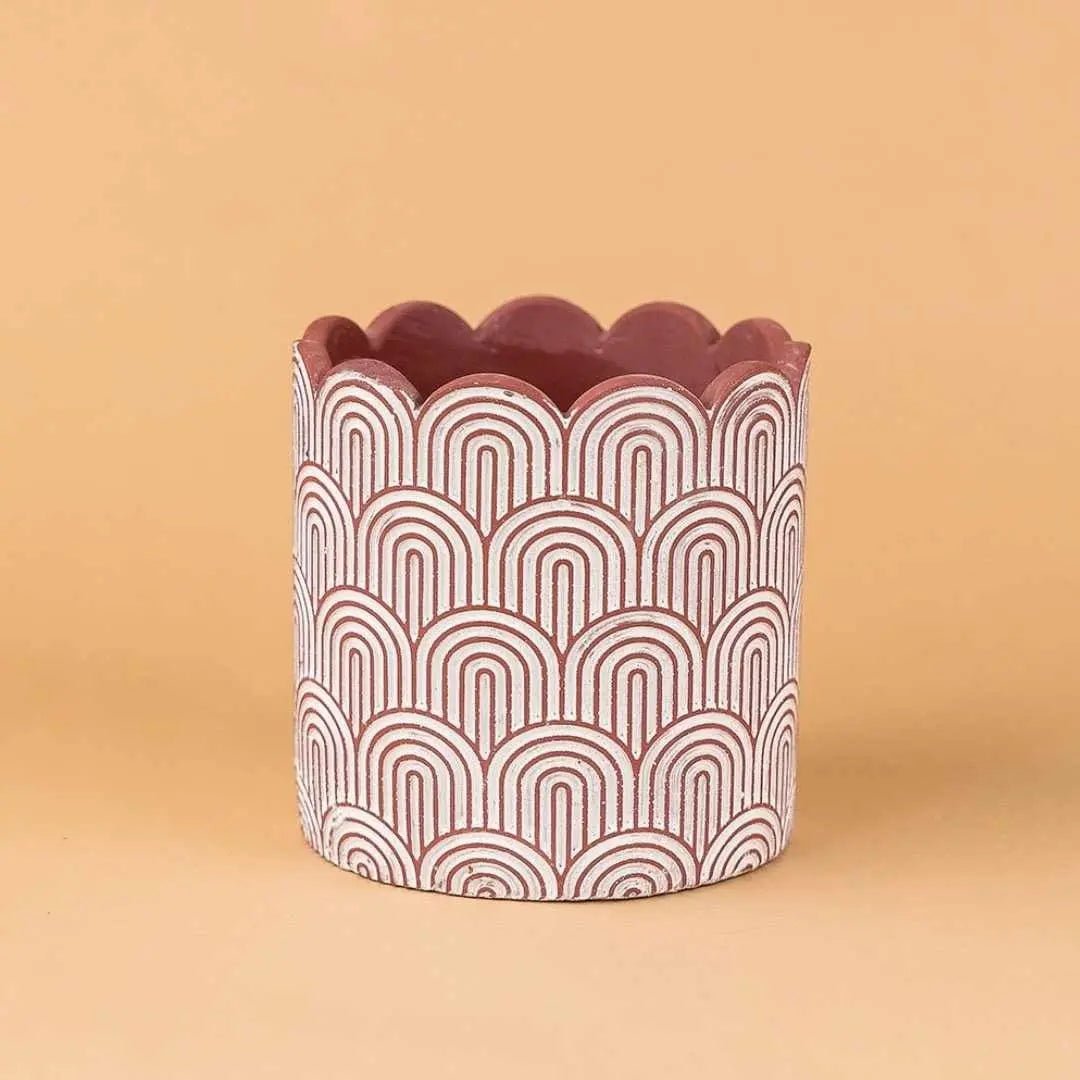
- 4. Investing in good pots — the pot determines 50% of the visual impact
Shop Office Plants
Browse our indoor plant collection for workspace-ready plants delivered across Singapore.
The sterile, grey office is a relic of a different era — one that treated workspaces as purely functional and workers as purely productive units. Singapore's modern workplaces understand that environment shapes performance, and that a few well-chosen plants deliver measurable returns in productivity, well-being, and talent attraction. Whether you are outfitting a 200-person office floor or just adding a Pothos to your WFH desk, the principle is the same: humans work better when surrounded by living things. The research says so. Your stressed, fatigued brain says so. And the plant on your desk, quietly photosynthesising while you finish that report, says so too.
Quick summary
Key Takeaways
- The Research Behind Workplace Plants
- How Singapore Workspaces Are Using Plants
- Best Plants for Singapore Workspaces
- The Air-Conditioning Challenge
- Maintenance Considerations
- Making It Work
Ready to bring some green into your home?
Browse 250+ hand-picked plants, curated for Singapore homes — delivered to your door.
Browse All Plants →









Comments
0 Comments
Leave a Comment