














How to Choose the Right Pot for Your Houseplant | Tumbleweed Plants Singapore
Posted on April 15 2026
In this article
The pot is half the equation. A healthy plant in the wrong pot looks wrong — and eventually becomes unhealthy. A well-matched pot makes a $20 plant look like a $60 purchase, provides the right growing conditions, and integrates the plant into your space as an intentional design choice rather than an afterthought.

Yet most people grab whatever pot is cheapest or closest. This guide covers everything you need to know about selecting pots for houseplants in Singapore — material, size, drainage, and style — so every repotting decision is a good one.
The Non-Negotiable: Drainage
Before anything else: your pot needs a drainage hole. This is not optional. Without drainage, excess water sits at the bottom of the pot, creating waterlogged conditions that lead to root rot — the number one killer of houseplants.
"But I saw a beautiful pot without drainage holes." Two options:
- 1. Use it as a cachepot — place your plant in a plain nursery pot with drainage, then set the nursery pot inside the decorative pot. Remove the nursery pot to water, let it drain, then return it.
- 2. Drill a drainage hole. Many ceramic pots can be drilled with a diamond-tipped drill bit. It takes 2 minutes and saves the plant's life.
The gravel layer myth: Adding a layer of gravel at the bottom of a pot without drainage does not solve the problem. It simply raises the saturated zone higher in the pot, bringing waterlogged soil closer to the roots. Always use actual drainage.
Pot Materials

Terracotta (Unglazed Clay)
Pros:
- Porous — allows air and moisture to pass through the walls, promoting healthy root aeration
- Helps prevent overwatering by wicking excess moisture
- Heavy — provides stability for top-heavy plants
- Classic, warm aesthetic that suits most plants and spaces
- Affordable
Cons:
- Dries out faster — requires more frequent watering in Singapore's heat
- Can develop white salt deposits on the exterior (mineral buildup — cosmetic, not harmful)
- Fragile — breaks if dropped
- Heavy — difficult to move when large
Best for: Plants prone to overwatering (succulents, Snake Plant, ZZ Plant, Peperomia), and anyone who tends to water too often.
Glazed Ceramic
Pros:
- Non-porous — retains moisture longer than terracotta
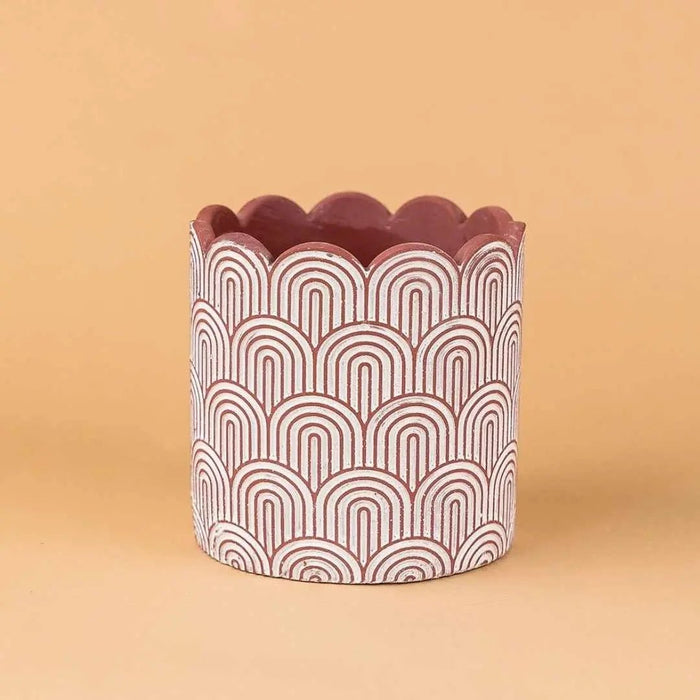
- Available in endless colours, patterns, and finishes
- Heavier — stable for tall plants
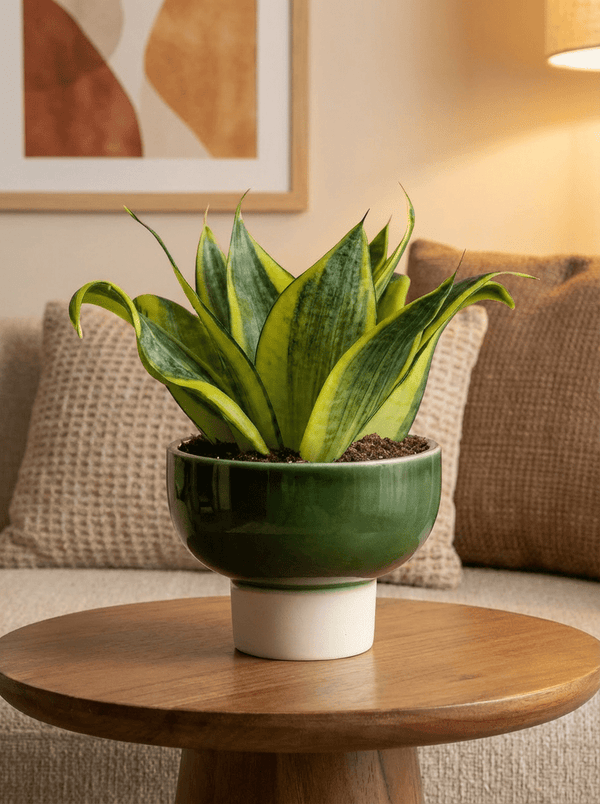
- Looks premium and polished
Cons:
- More expensive than terracotta
- Heavy — difficult to move in large sizes
- Fragile — breaks on impact
- Does not breathe — no air exchange through walls
Best for: Moisture-loving plants (Calathea, Ferns, Maranta), and plants in air-conditioned rooms where extra moisture retention is beneficial.
Plastic
Pros:
- Lightweight — easy to move and handle
- Inexpensive
- Non-porous — retains moisture well
- Durable — does not break easily
- Available in many colours and styles (though often less premium-looking)
Cons:
- Can look cheap if not chosen carefully
- No air circulation through walls
- Light weight can make tall plants top-heavy
- Degrades in direct sun over time (becomes brittle)
Best for: Large plants (easier to move), hanging plants (lighter weight), nursery growing, and budget-conscious setups. Modern matte-finish plastic pots can look very presentable.
Concrete / Cement
Pros:
- Very heavy — extremely stable
- Modern, minimalist aesthetic
- Porous (unfinished) — moderate breathability
- Durable and long-lasting
Cons:
- Extremely heavy — impractical for large sizes
- Can leach alkaline minerals into soil over time (line with plastic if concerned)
- Limited colour options (grey tones)
- Expensive for quality pieces
Best for: Floor plants where stability matters. Modern, industrial, or Scandinavian-inspired interiors.
Fiberglass / Resin
Pros:
- Lightweight despite large sizes
- Can mimic the look of concrete, stone, or ceramic
- Weather-resistant
- Available in very large sizes (for floor plants)
Cons:
- No breathability
- Can look artificial up close
- Variable quality
Best for: Large floor plants where weight is a concern. Balcony plants where portability matters.
Pot Size
The Right Size for Repotting
When repotting, choose a pot 2-5cm larger in diameter than the current pot. This gives the roots room to grow without leaving excessive wet soil around them.
Too large: Excess soil stays wet, leading to root rot. The plant also directs energy to root growth instead of foliage, resulting in slower visible growth.
Too small: Roots become cramped, leading to root-bound conditions — circling roots, slowed growth, and the plant drying out too quickly because there is not enough soil to hold moisture.
Signs It Is Time to Upsize
- Roots growing out of drainage holes
- Roots visible on the soil surface
- Plant drying out within 1-2 days of watering
- Top-heavy — plant tipping over
- Slowed growth despite good conditions
- Roots circling the inside of the pot when removed
When to Stay the Same Size
Some plants prefer being snug:
- Orchids — Prefer tight pots; oversized pots delay blooming
- Snake Plant — Tolerates crowding well
- Hoya — Blooms better when slightly root-bound
- Succulents — Prefer pots just slightly larger than the plant
Shape Matters

Standard (Width ≈ Height)
The most common shape. Suits most houseplants with standard root systems. Good drainage, adequate soil volume, proportional look.
Tall / Narrow
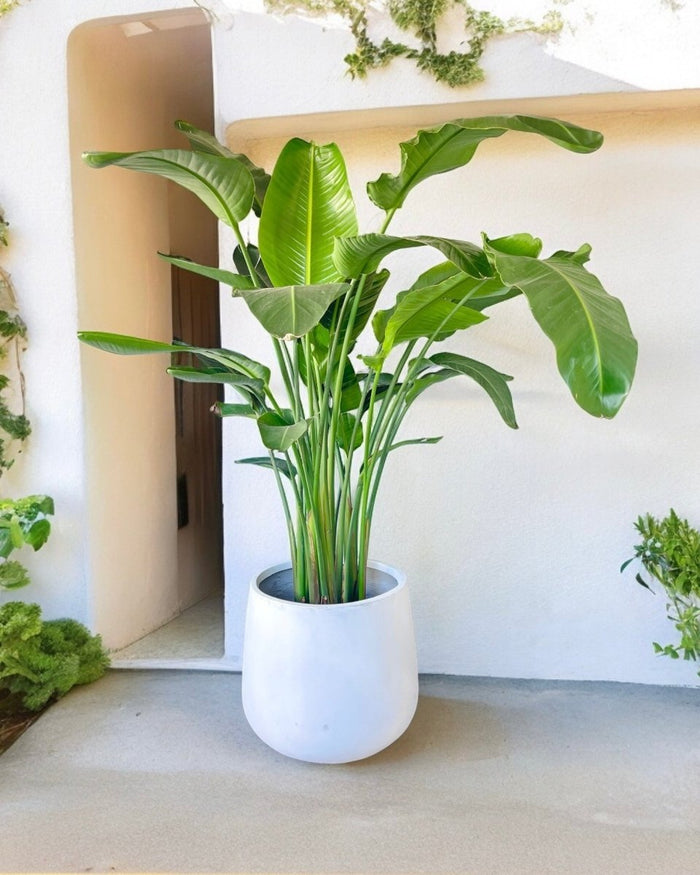
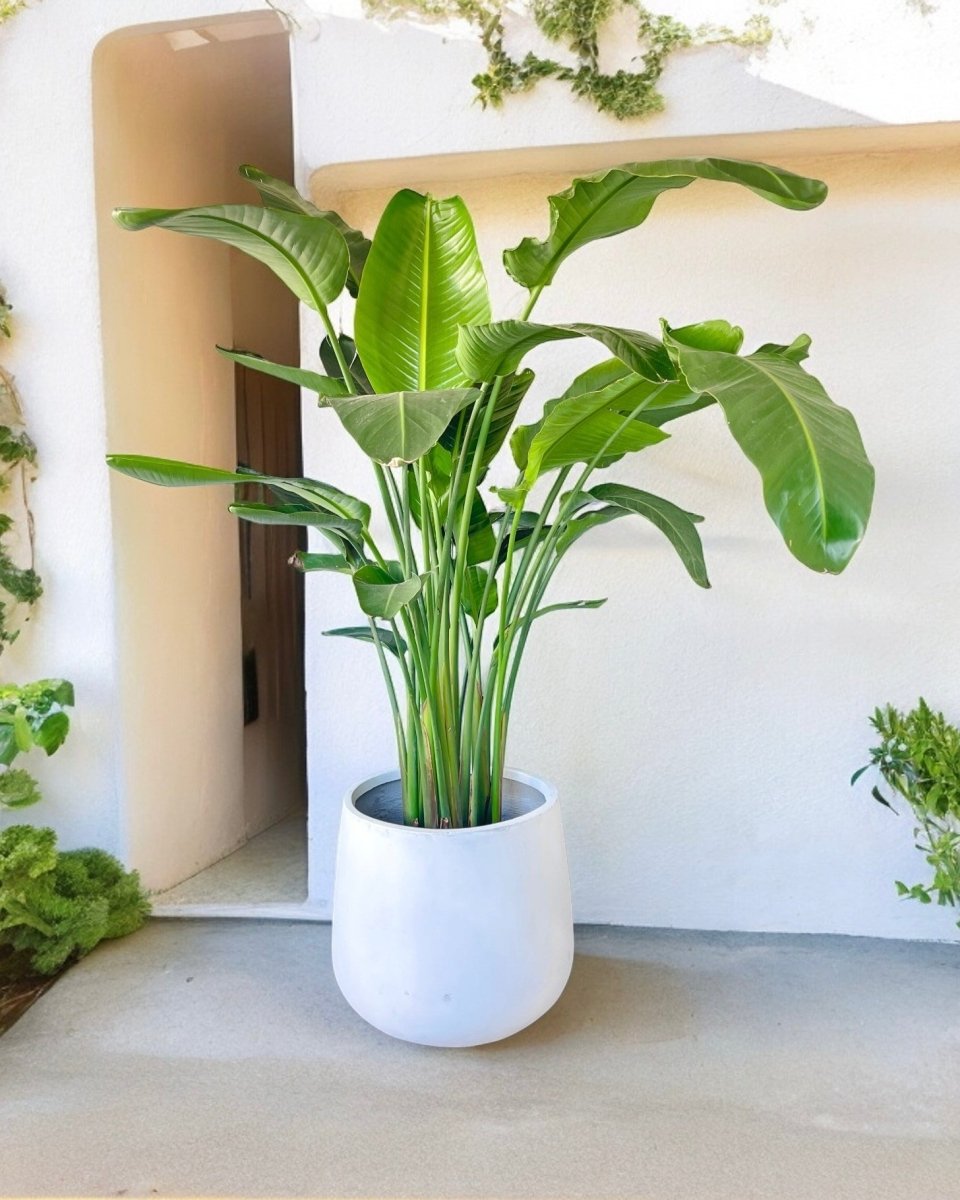
Good for deep-rooted plants (Dracaena, Snake Plant, Bird of Paradise). Looks modern and architectural. Less stable due to high centre of gravity.
Wide / Shallow
Good for shallow-rooted plants (Begonia, succulents, herb gardens). Creates a different aesthetic — more planter than pot. Better stability.
Hanging
For trailing plants (Pothos, String of Hearts, Spider Plant). Ensure secure hanging hardware and check weight capacity with wet soil.
Styling Your Pots
Cohesion Over Matching
Your pots do not need to be identical. But they should share a common thread: same colour family, same material, or same style. This creates a curated look that feels intentional.
Approaches:
- Monochrome: All white, all black, or all terracotta in various sizes and shapes
- Mixed materials, same tone: Terracotta, concrete, and matte ceramic all in warm, neutral tones
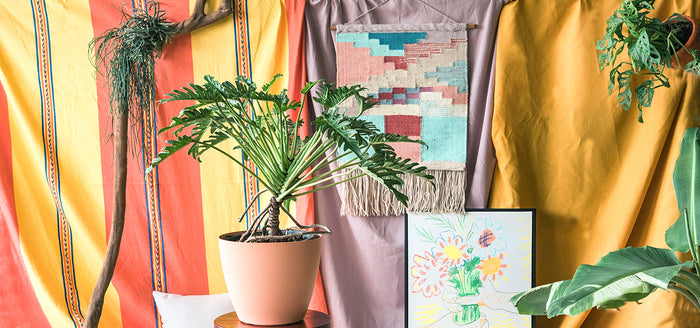
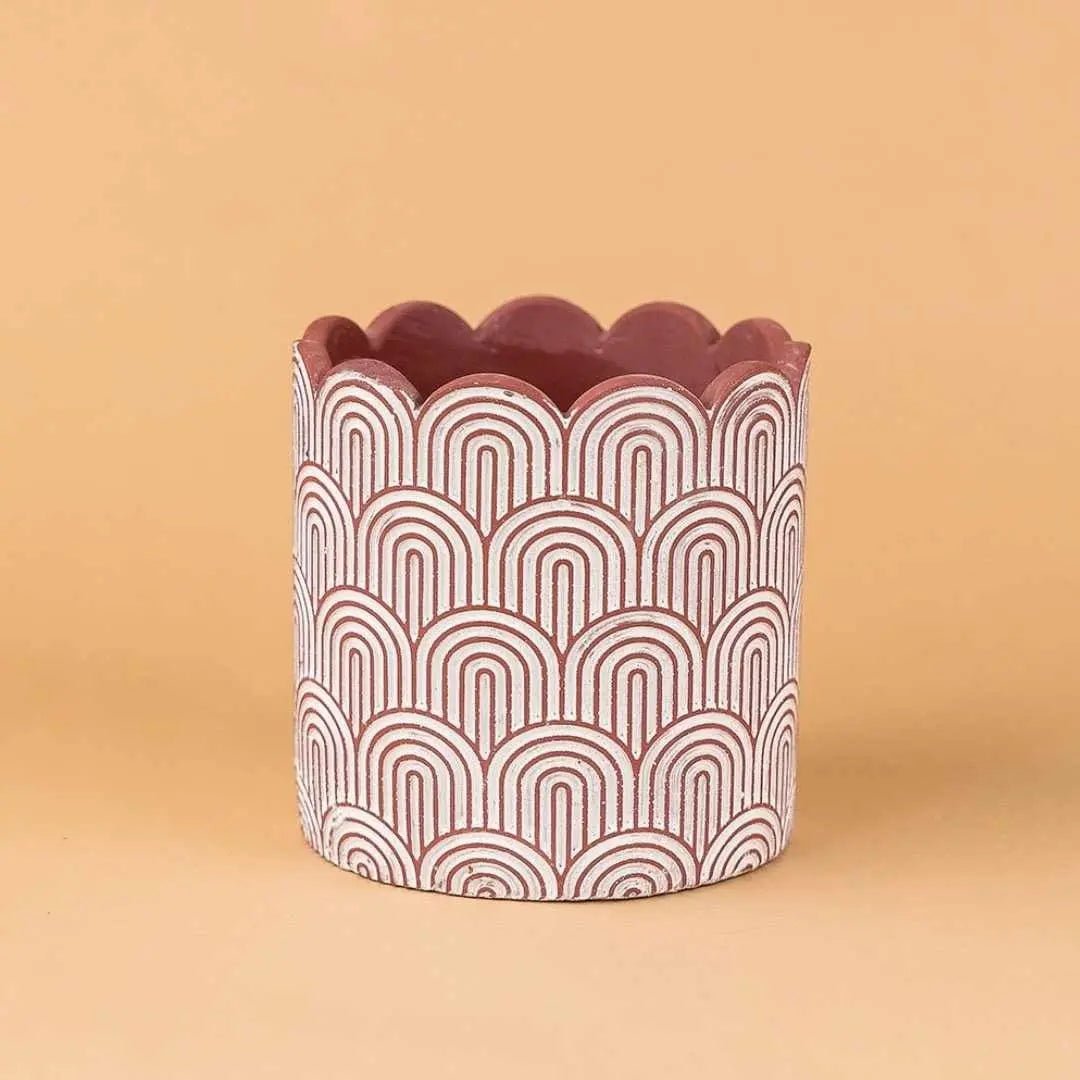
- Statement + neutral: One colourful or patterned pot as the star, all others in neutral tones
Pot-to-Plant Proportions
- The plant should be 1.5-2.5 times the height of the pot for upright plants
- Trailing plants can exceed this — the trails extend the visual mass below the pot
- The pot should look proportional — not so large it dwarfs the plant, not so small it looks unstable
Saucers
Always use saucers under pots on furniture or floors:
- Match the saucer material and colour to the pot
- Ensure the saucer is large enough to catch all drainage
- Empty saucers 30 minutes after watering
Singapore-Specific Considerations

Humidity and Evaporation
In Singapore's humidity, soil in non-porous pots (glazed ceramic, plastic) dries significantly slower than in temperate climates. If you tend to overwater, terracotta is your friend. If your plants are in AC rooms (lower humidity), non-porous pots help retain moisture.
Weight on HDB Floors and Shelves
Large concrete or ceramic pots filled with soil are heavy. Consider weight limits for shelves, and use protective mats under heavy pots to prevent scratching HDB vinyl or tile floors.
Outdoor / Balcony
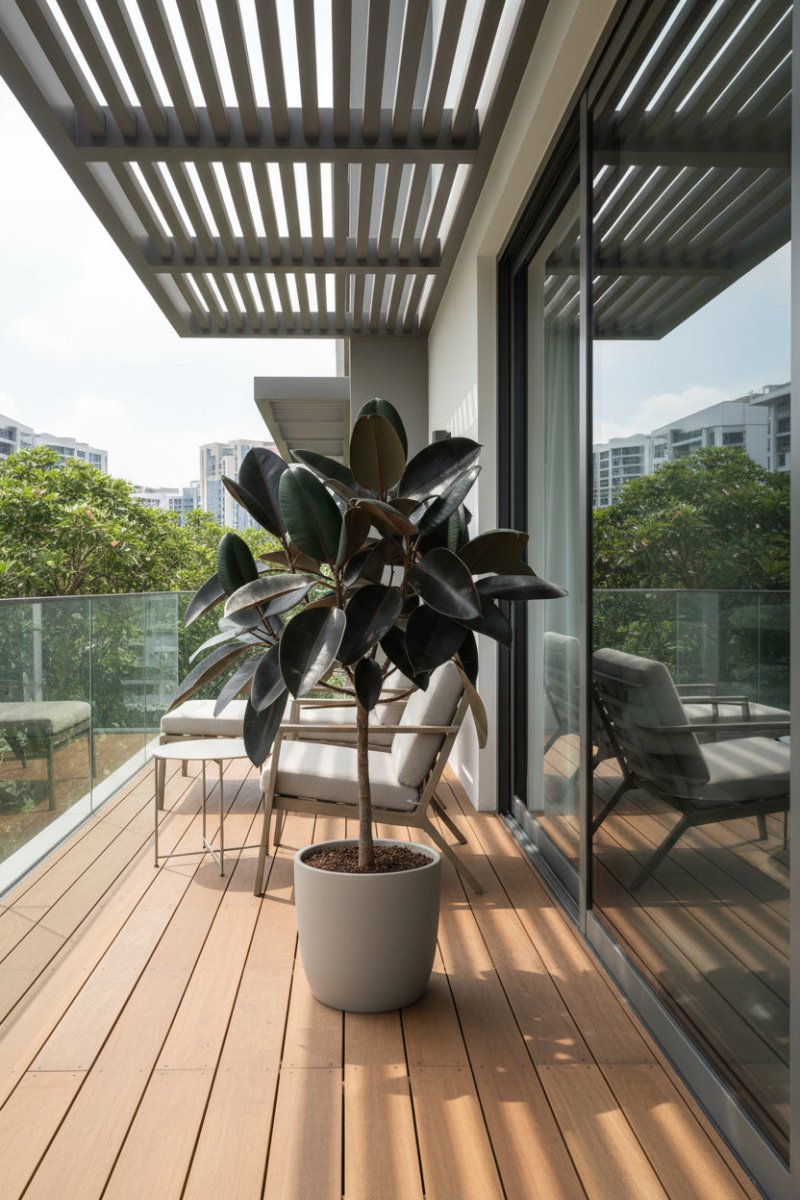
For balcony plants, choose materials that withstand rain, sun, and heat: fibreglass, heavy-duty plastic, or glazed ceramic. Unfinished terracotta can degrade faster with constant rain exposure.
Shop Plants
Browse our indoor plant collection for plants delivered across Singapore — ready to be paired with the perfect pot.
The right pot is not an afterthought — it is a decision that affects your plant's health, your room's aesthetic, and your watering routine. In Singapore, where humidity slows drying and AC accelerates it, the pot material directly influences how often you water. Where HDB and condo living means every surface counts, the pot style determines whether the plant enhances or clutters the space. Take five minutes to think about it: Does the pot drain? Is it the right size? Does it suit the plant's needs and your room's look? Those five minutes save weeks of dealing with overwatered roots, undersized pots, and plants that look like they do not belong. The plant is half the equation. The pot is the other half. Get both right, and the combination is worth far more than the sum of its parts.
Quick summary
Key Takeaways
- The Non-Negotiable: Drainage
- Pot Materials
- Pot Size
- Shape Matters
- Styling Your Pots
- Singapore-Specific Considerations
Ready to bring some green into your home?
Browse 250+ hand-picked plants, curated for Singapore homes — delivered to your door.
Browse All Plants →