














Bird Of Paradise Plant Care: Complete Care Guide
Posted on April 16 2026
In this article
- The Plant That Changes a Room
- Two Species Worth Knowing
- Bird of Paradise Profile
- Light: The Non-Negotiable
- Watering
- The Leaf Split: Normal or Damage?
- Humidity and Temperature
- Soil, Pot, and Repotting
- Getting Flowers Indoors in Singapore
- Common Problems
- Is It Pet-Safe?
- Who This Plant Is For
- Shop Bird of Paradise
Tags: plant of the week, bird of paradise, strelitzia, care guide, statement plants, floor plants

Thumbnail image spec (1200×628px):
A large Strelitzia nicolai floor plant in a well-lit modern Singapore living room, ideally an HDB or condo setting. Alt text: "Bird of paradise plant indoors — Strelitzia care guide from Tumbleweed Plants Singapore". Source suggestions: Unsplash (search "strelitzia nicolai indoor"), your own product photography.
---
The bird of paradise is the statement plant that transforms a room — architectural, tropical, and genuinely impressive when given the right conditions.
Every week we spotlight one plant from our collection — its story, what makes it special, and everything you need to know to grow it well.
This week: Bird of Paradise (Strelitzia reginae and Strelitzia nicolai)
---
The Plant That Changes a Room
When people imagine what they want their home to feel like — lush, warm, alive, like somewhere they'd actually want to spend time — the bird of paradise is often the plant doing the work in the reference photo.
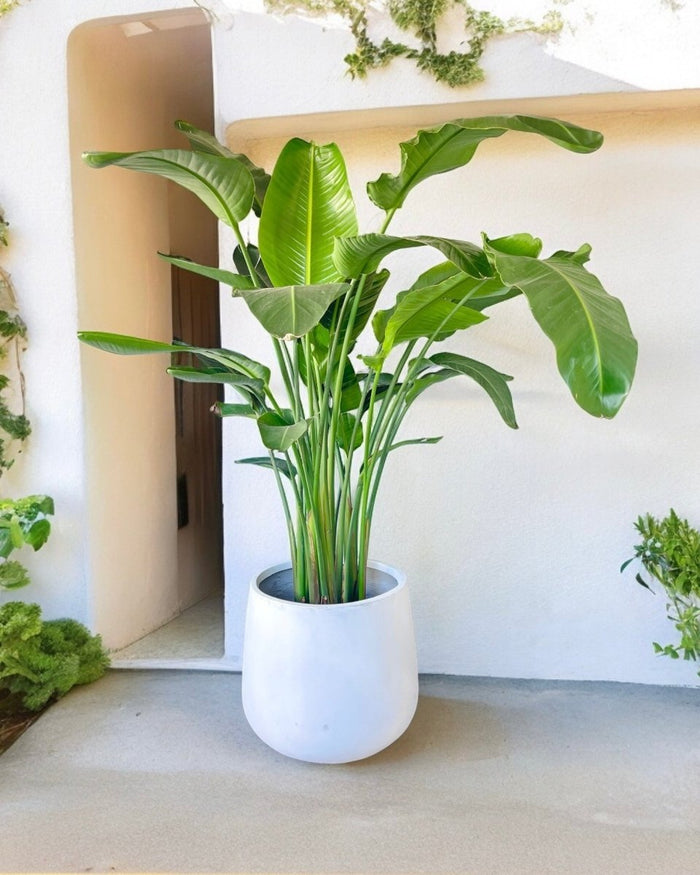
Those large, paddle-shaped leaves rising on tall stems create what interior designers call "vertical drama" — a plant that occupies space in a way that makes a room feel genuinely different. Not just decorated, but alive in a different register.
The bird of paradise earns this reputation. It demands bright light that many indoor spaces can't provide. But when you have the right conditions, few houseplants deliver as much visual return.
Singapore advantage: Strelitzia originates from South Africa's warm, sunny coastal climate. Singapore's year-round heat is genuinely close to the bird of paradise's native conditions. This plant thrives outdoors in Singapore gardens, covered balconies, and bright indoor spaces — it's one of the few "impressive" plants that genuinely feels at home in our climate.
---
Two Species Worth Knowing
Strelitzia reginae — The classic bird of paradise. Named for its extraordinary orange and blue flowers that look precisely like an exotic bird in flight. Compact at 1.2–1.5 m tall. Flowers reliably in Singapore's outdoor conditions; can flower indoors with strong light. Deep blue-green paddle leaves.
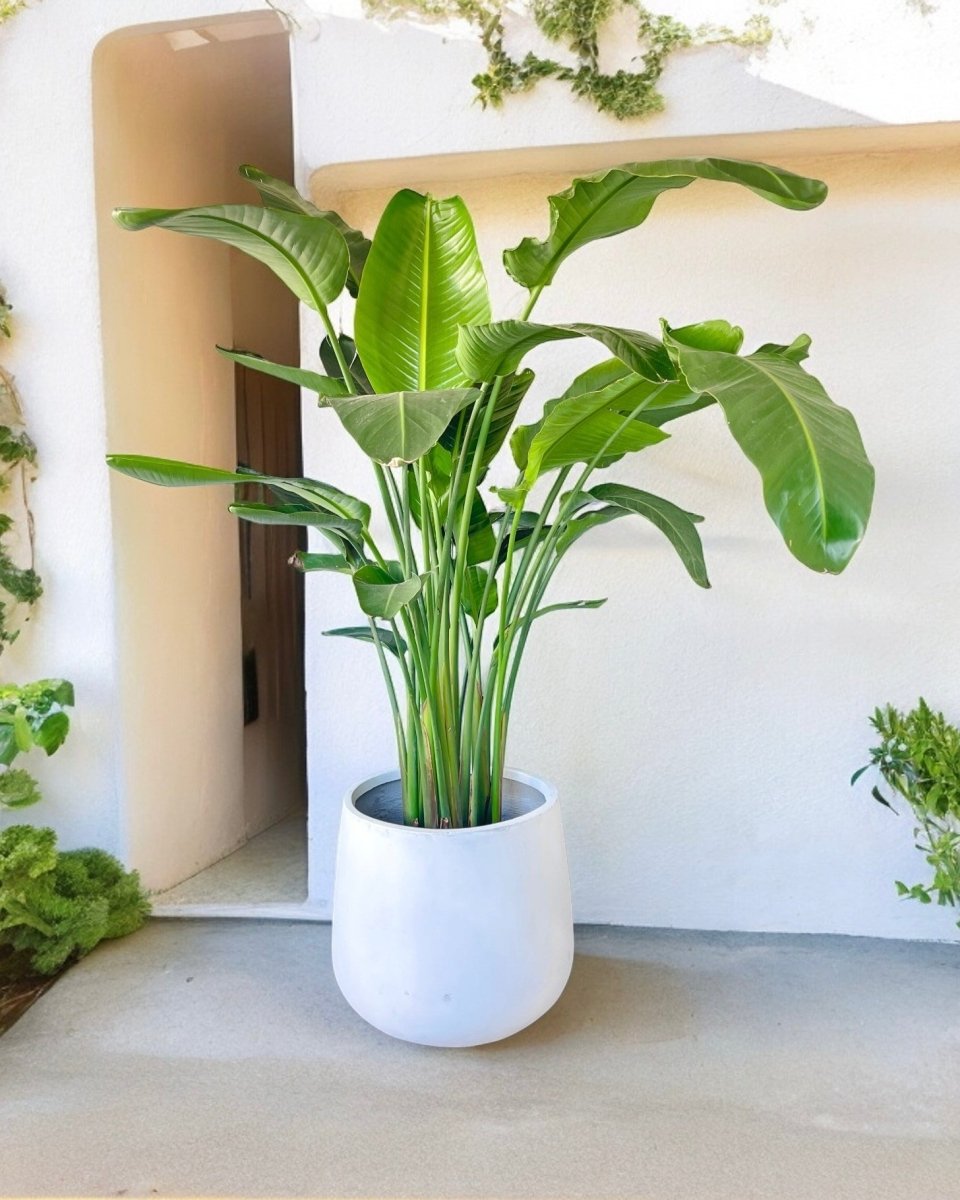
Strelitzia nicolai (White Bird of Paradise) — The dramatic floor plant of modern interiors. Grows to 1.8–2.4+ m indoors, with leaves that can span 60–90 cm. White and pale blue flowers on mature plants in good light. The species you see in almost every Singapore interior design magazine feature.
Both are commonly sold as "bird of paradise" — check the label if the distinction matters to you. For most people buying a floor plant, S. nicolai is the intended purchase.
---
Bird of Paradise Profile
| Feature | S. reginae | S. nicolai |
|---------|--------------|--------------|
| Common name | Orange Bird of Paradise | White Bird of Paradise |
| Origin | South Africa | South Africa |
| Indoor height | 1.2–1.5 m | 1.8–2.4+ m |
| Light need | Bright to very bright | Bright to very bright |
| Water | Every 7–14 days; top 5 cm dry first | Every 7–14 days; top 5 cm dry first |
| Humidity | Tolerates normal household levels | Tolerates normal household levels |
| Temperature | 18–30°C; minimum 10°C | 18–30°C; minimum 10°C |
| Toxicity | Mildly toxic to cats and dogs | Mildly toxic to cats and dogs |
| Flowers indoors? | Yes, with strong light + maturity | Rarely (needs ideal conditions) |
| Singapore suitability | Excellent outdoors; good indoors | Excellent — ideal for bright interiors |
---
Light: The Non-Negotiable

Bird of paradise plants need more light than most houseplants. They come from the sunny, semi-arid coastal regions of South Africa — their natural light environment is intense.
Indoors:
- Ideal: Large south or west-facing window with 4–6 hours of direct or near-direct sun
- Acceptable: Very bright indirect light near large windows (some direct morning sun)
- Not enough: Medium or low indirect light — the plant will survive for a while but growth will be very slow, no flowers, and leaves may become smaller
Singapore guidance by setting:
| Setting | Assessment |
|---------|------------|
| Outdoor garden (full sun) | Excellent — this is where S. reginae flowers prolifically |
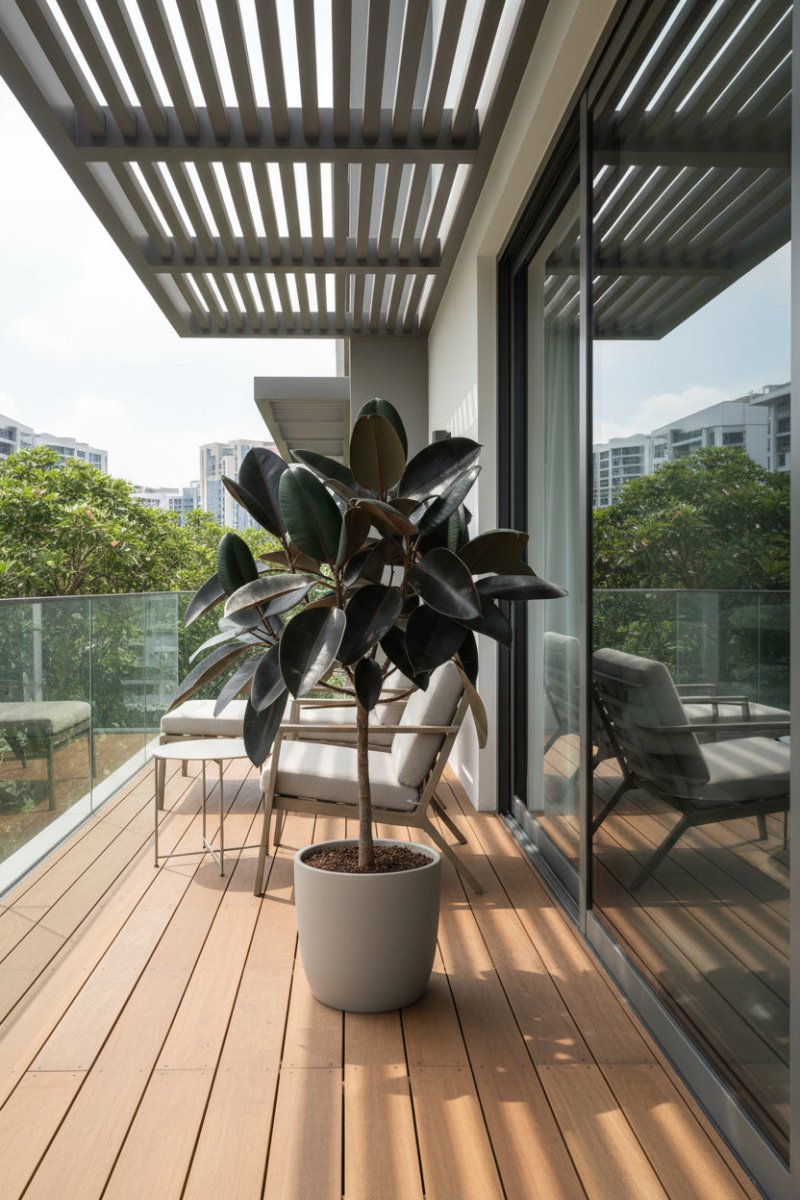
| Covered balcony, bright | Very good — ideal for S. nicolai |
| Bright HDB window (east or west) | Good — adequate for steady growth |
| Corridor-facing HDB window | Marginal — plant will survive but grow slowly |
| Interior room away from windows | Not suitable — choose a monstera or rubber plant instead |
The honest test: If you can comfortably read a book without turning on a light in the spot you're considering, it's probably not bright enough for a bird of paradise.
---
Watering
Water when the top 5 cm of soil are dry. In Singapore's heat, this is typically every 7–14 days indoors. Plants in bright outdoor positions may need watering every 4–7 days in dry weather.
Water thoroughly — until it runs from drainage holes. Empty the saucer.
Singapore monsoon note: During heavy monsoon months, reduce watering — outdoor plants may not need supplemental watering at all when rainfall is consistent. Indoor plants in lower light will use even less water. Always check before watering.
Bird of paradise are more tolerant of underwatering than overwatering. They're from a region with distinct wet and dry seasons; periodic dry spells are familiar to them.
Signs of underwatering: Leaf edges curling inward, soil very dry, older leaves yellowing at tips
Signs of overwatering: Yellow leaves throughout, soggy soil, mushy stems at base
---
The Leaf Split: Normal or Damage?

One of the most common bird of paradise questions: the leaves split naturally along the sides. Many owners assume this is damage — torn by cats, wind, or mishandling.
Natural leaf splitting on a bird of paradise — this is healthy and evolved, not damage.
It isn't. Leaf splitting is natural and evolved. In the plant's native habitat, splitting allows wind to pass through large leaves without breaking them. In Singapore's occasional strong winds (especially during storms), this adaptation is genuinely useful. Perfectly intact, unsplit leaves on a mature bird of paradise are actually unusual.
---
Humidity and Temperature
Bird of paradise are from coastal South Africa and tolerate a wide humidity range — which makes them excellent for Singapore homes, even air-conditioned ones.
Temperature:
- Comfortable range: 18–30°C (Singapore's year-round temperature is ideal)
- Can tolerate brief periods to 10°C but won't like it
- Keep away from direct air-con vents (cold drafts can cause brown leaf edges)
Singapore outdoor placement: Bird of paradise grows beautifully in Singapore gardens and covered outdoor spaces. In full outdoor sun, S. reginae will flower; S. nicolai will grow rapidly and impressively. Protect from the most intense afternoon sun if the plant shows leaf bleaching.
---
Soil, Pot, and Repotting

Standard well-draining potting mix. Add 20–30% perlite for improved drainage.
Pot size matters: Bird of paradise actually prefer being slightly root-bound — slightly cramped conditions can encourage flowering in S. reginae. Don't rush to upsize the pot. When roots are clearly circling the bottom or pushing up through the soil, it's time to repot (1–2 inches larger).
Weight: A mature bird of paradise in a large pot is heavy. Consider pot material and placement carefully — a plant that needs moving to a balcony during monsoon and back indoors afterwards should be in a lighter pot or on a trolley.
---
Getting Flowers Indoors in Singapore
S. reginae (the orange-flowered species) will flower with:
- Very bright light (some direct sun — outdoor or strong window position)
- Age — plants typically need to be 3–5+ years old
- Root-bound conditions (don't repot too often)
- Patience
In Singapore's consistently warm climate (no cold winter to stress the plant into flowering mode), patience is particularly important. Some Singapore growers report that S. reginae flowers more reliably in outdoor or covered balcony positions than in air-conditioned interiors.
S. nicolai rarely flowers indoors anywhere — its blooms are a bonus on very mature plants in ideal outdoor conditions.
---
Common Problems
Brown leaf tips and edges:
Low humidity (in heavily air-conditioned rooms) or inconsistent watering. Increase watering consistency and move away from direct air-con flow.
Yellow leaves:
Overwatering most commonly. Also: natural aging of lower leaves (normal on mature plants).
Slow or no growth:
Insufficient light. This is by far the most common reason. Move to a brighter position or outdoors.
Drooping leaves:
Underwatering, root-bound conditions, or transplant shock after repotting.
No flowers (S. reginae):
Plant too young, insufficient light, or recently repotted. Be patient — flowers develop over years. Try an outdoor or covered balcony position for better results in Singapore.
---
Is It Pet-Safe?
Bird of paradise is mildly toxic to cats and dogs — ingestion causes mild nausea and vomiting. The toxicity is low but present. Keep out of reach of pets who chew plants. If you need a large-format plant that's pet-safe, consider a pet-friendly alternative from our collection — areca palm and bamboo palm offer a similar tropical aesthetic without toxicity concerns.
---
Who This Plant Is For
Perfect for you if:
- You have a large bright room with a strong south or west-facing window, or an outdoor/balcony space
- You want a floor plant that genuinely changes the feel of a space
- You're willing to commit to its light requirements
- You have the floor space for a 1–1.5 m spread at maturity
- You're in Singapore — our climate is naturally suited to this plant
Consider alternatives if:
- Your home has limited natural light — choose a monstera or rubber plant instead
- You have pets who chew plants — consider a non-toxic palm
- You don't have floor space for a large plant
---
Shop Bird of Paradise
Browse our full plant collection at Tumbleweed Plants — we carry both S. reginae and S. nicolai in multiple sizes, from small specimens to established floor plants.
Need it delivered today? We offer same-day plant delivery across Singapore.
---
Quick summary
Key Takeaways
- The Plant That Changes a Room
- Two Species Worth Knowing
- Bird of Paradise Profile
- Light: The Non-Negotiable
- Watering
- The Leaf Split: Normal or Damage?
Ready to bring some green into your home?
Browse 250+ hand-picked plants, curated for Singapore homes — delivered to your door.
Browse All Plants →