















Calathea Care Guide for Singapore | Tumbleweed Plants Singapore
Posted on April 09 2026
In this article
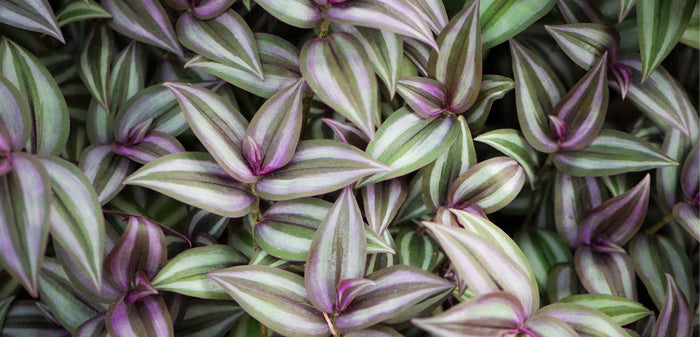
Calathea — now reclassified under Goeppertia for most species — is the plant genus that inspires both obsession and frustration in equal measure. The leaves are extraordinary: intricate patterns of green, purple, pink, and white that look hand-painted. Some varieties fold their leaves upward at night and open them in the morning, a behaviour called nyctinasty that earns them the common name "prayer plants." They are undeniably beautiful.

They are also demanding. Calathea has a reputation for being difficult, and that reputation is earned. Brown leaf edges, curling, crispy tips, and dramatic leaf drop are common complaints. But Singapore's naturally high humidity gives us a significant advantage over growers in drier climates. With the right approach, Calathea can thrive here — you just need to understand what they want.
Popular Varieties
Calathea orbifolia — Large, round leaves with silver and green stripes. One of the most stunning houseplants available. Also one of the more forgiving Calatheas.
Calathea ornata (Pinstripe Calathea) — Dark green leaves with delicate pink pinstripes. Compact and elegant.
Calathea medallion — Round leaves with a dramatic medallion pattern in green and purple. The underside is deep burgundy.
Calathea lancifolia (Rattlesnake Plant) — Long, wavy-edged leaves with dark green spots on a light green background. One of the easier Calatheas.
Calathea makoyana (Peacock Plant) — Translucent leaves with dark green ovals that resemble peacock feathers. Needs higher humidity than most.
Calathea roseopicta 'Dottie' — Near-black leaves with bright pink outlines. Dramatic and Instagram-worthy.
Light

Calathea evolved on the forest floor beneath dense canopy — they are adapted to filtered, dappled light. This makes them excellent for Singapore homes with limited direct sun.
Medium indirect light — Optimal. Bright enough to maintain leaf patterns but without the intensity that bleaches or scorches them.
Low light — Tolerated better than by most plants with colourful foliage. Growth slows and patterns may become less vivid, but the plant survives.
Bright indirect light — Fine, as long as no direct sun hits the leaves. Some varieties (orbifolia, lancifolia) handle brighter conditions better than others.
Direct sunlight — Avoid completely. Even brief direct sun can bleach the leaf patterns and cause brown, crispy patches. This includes morning sun if it is intense.
Watering
The trickiest aspect of Calathea care. They want consistently moist soil — not wet, not dry, but moist. Think of a wrung-out sponge.
Schedule in Singapore:
- Water when the top 2-3cm of soil starts to feel dry
- Typically every 5 to 10 days depending on conditions
- More frequently in bright or ventilated conditions; less in AC rooms
Water quality matters. Calatheas are sensitive to minerals, chlorine, and fluoride in tap water. Singapore's tap water is relatively clean but can still cause brown leaf tips over time.
Solutions:
- Let tap water sit overnight to allow chlorine to dissipate
- Use filtered water (a basic carbon filter is sufficient)
- Collect rainwater (free and ideal for Calatheas)
- Avoid softened water (high in sodium)
Overwatering signs: Yellow leaves, mushy stems, sour-smelling soil, root rot.
Underwatering signs: Curling leaves, dry and crispy edges, drooping.
Humidity

This is where Singapore gives us an edge. Calatheas need 50-70% humidity minimum, and most Singapore homes sit at 70-80% naturally. In non-AC rooms, humidity is rarely a problem.
In air-conditioned rooms: Humidity drops to 40-50%, which is borderline. Solutions:
- Group Calatheas together (creates a micro-humid environment)
- Place on a pebble tray with water
- Use a humidifier in the room
- Move to a room with less AC exposure (bathroom, kitchen)
Never mist directly on leaves. While misting temporarily increases humidity, water sitting on Calathea leaves can cause fungal spots and bacterial issues.
Soil
Well-draining but moisture-retentive — the Goldilocks of soil mixes:
- 50% quality potting mix (peat or coco coir based)
- 25% perlite (for drainage and aeration)
- 25% orchid bark or coco chips (for structure and drainage)
Avoid pure peat mixes that compact and become hydrophobic. Avoid very chunky, fast-draining mixes designed for succulents — Calathea needs more moisture retention than that.
Temperature

Calatheas prefer stable temperatures between 18-30°C. Singapore's outdoor temperatures are ideal. The risk comes from AC:
- Cold drafts from AC vents can cause leaf curling and brown edges
- Temperature fluctuations (AC cycling on and off) stress the plant
- Position Calatheas away from direct AC airflow
Fertilising
Light to moderate feeding:
- Balanced liquid fertiliser at half strength every 4-6 weeks
- Over-fertilising causes salt buildup that damages sensitive roots
- Flush the soil with plain water every few months to remove accumulated salts
- If using filtered water, you may need to fertilise slightly more often (filtered water removes some beneficial minerals)
Common Problems
Brown Leaf Tips
The most common Calathea complaint. Causes:
- Low humidity — most likely in AC rooms
- Tap water minerals — switch to filtered or rain water
- Over-fertilising — reduce fertiliser frequency
- Underwatering — check watering consistency
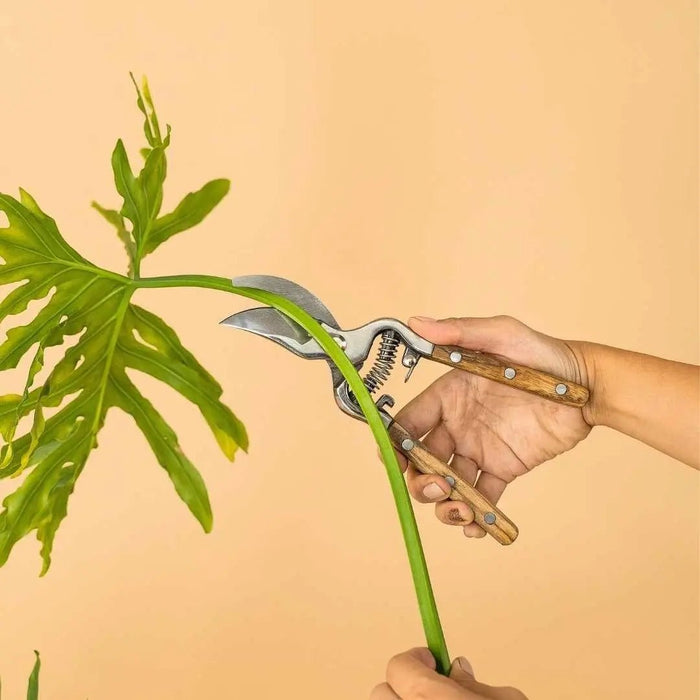
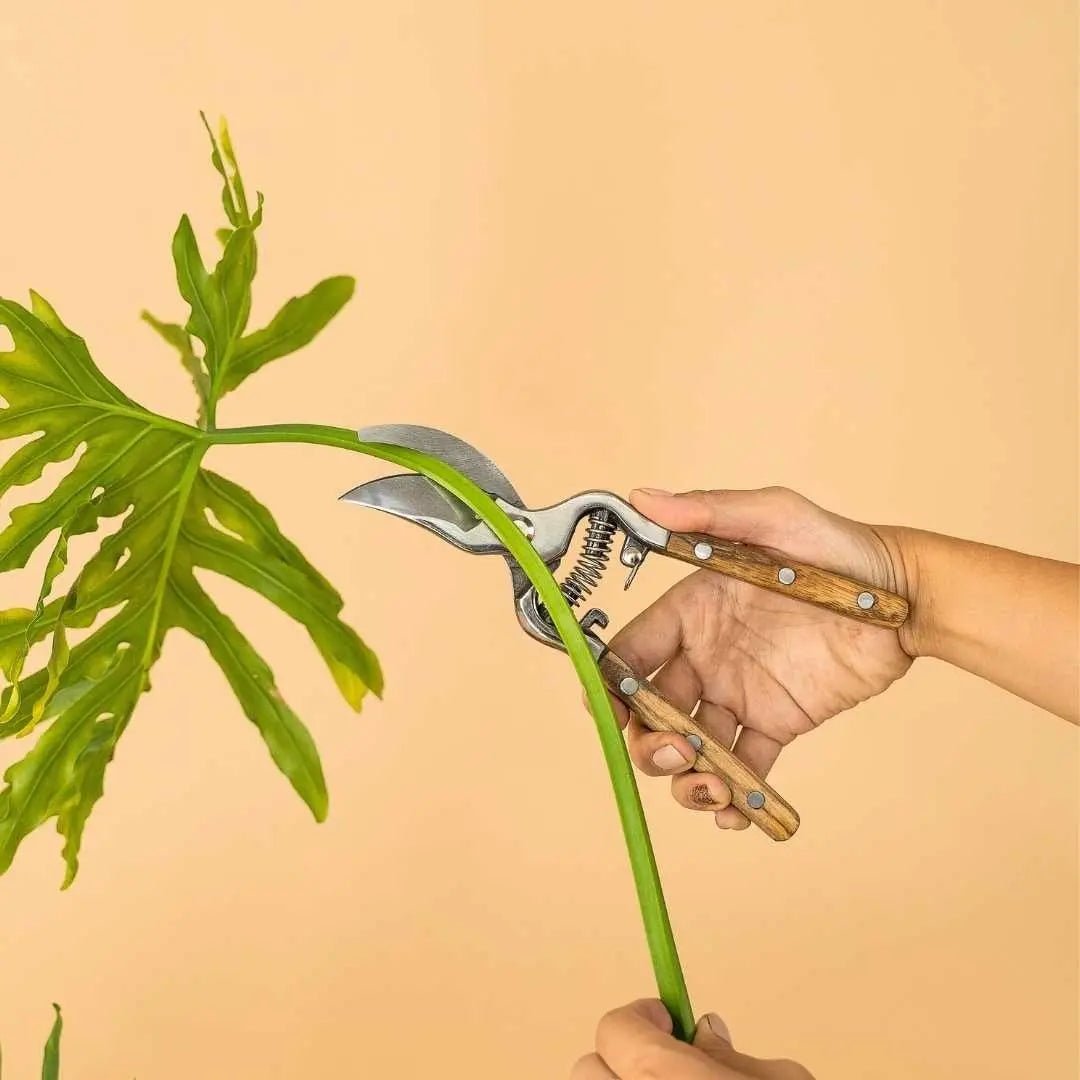
The honest truth: Some degree of brown tipping is nearly unavoidable with Calathea, even with perfect care. Trim brown tips with clean scissors if they bother you, cutting at an angle to mimic the natural leaf shape.
Curling Leaves
Usually underwatering or low humidity. Check soil moisture first — if dry, water thoroughly. If soil is moist, humidity is likely the issue.
Yellowing Leaves
Occasional yellow lower leaves are normal (the plant sheds old foliage). Multiple yellow leaves suggest overwatering or root rot. Check the roots if more than two leaves yellow simultaneously.
Leaf Loss
Calathea can drop leaves dramatically in response to stress — moving, repotting, sudden temperature or humidity changes. Give it time to acclimate (2-4 weeks) before making further changes.
Pests
- Spider mites — the most common Calathea pest, especially in dry, AC rooms. Look for tiny dots and fine webbing on leaf undersides. Treat with insecticidal soap and increase humidity.
- Mealybugs — white cottony clusters at leaf joints. Remove with rubbing alcohol.
- Thrips — tiny, slender insects that cause silvery streaks on leaves. Treat with neem oil or insecticidal soap.
The Nyctinasty Response
One of Calathea's most fascinating features: the leaves move throughout the day. In the morning, leaves open flat to maximise light capture. In the evening, they fold upward, revealing their colourful undersides. This movement is driven by changes in turgor pressure in a hinge-like joint (pulvinus) at the base of each leaf, regulated by the plant's internal circadian clock.
If your Calathea stops moving, it is stressed — usually from inconsistent watering or light. A plant that resumes its daily opening and closing is a plant that is happy.
Styling
Calatheas are natural feature plants — their leaf patterns deserve to be seen up close:
- Coffee table or side table — where the intricate patterns can be admired
- Bathroom — the humidity is ideal and the tropical look fits
- Bedroom — away from AC draft, on a nightstand or dresser
- Grouped display — several Calathea varieties together create a stunning tropical corner
Shop Calatheas
Browse our Calathea collection and indoor plant collection for healthy Calatheas delivered across Singapore.
Calathea rewards the attentive grower. It asks for more than a Snake Plant or ZZ Plant — more careful watering, better water quality, more humidity awareness. But what it gives back is unmatched: living art that changes through the day, responds to your care, and turns a quiet corner into something genuinely beautiful. If you are willing to pay attention, Calathea pays you back with interest.
Quick summary
Key Takeaways
- Popular Varieties
- Light
- Watering
- Humidity
- Soil
- Temperature
Ready to bring some green into your home?
Browse 250+ hand-picked plants, curated for Singapore homes — delivered to your door.
Browse All Plants →