















How to Bottom Water Your Houseplants | Tumbleweed Plants Singapore
Posted on April 13 2026
In this article

Most people water their plants from the top — pour water onto the soil surface and let it drain through. It works, and it is the standard method for good reason. But there is another approach that solves several common problems at once: bottom watering.
Bottom watering means placing your pot in a tray, saucer, or basin of water and letting the soil absorb moisture upward through the drainage holes via capillary action. The water travels from the bottom of the pot to the top, saturating the soil evenly and thoroughly.
It sounds simple — and it is. But understanding when to use it, how to do it properly, and which plants benefit most makes the difference between a genuinely useful technique and a wasted effort.
How Bottom Watering Works
The Science: Capillary Action
Soil is made up of particles with tiny spaces (pores) between them. Water naturally moves through these pores via capillary action — the same force that makes water climb up a paper towel when you dip the edge in water. When you place a pot with drainage holes in water, the soil draws moisture upward through the entire root zone.
This process is slower than top watering but more thorough. Every particle of soil gets uniformly moist, with no dry pockets left behind.
Step-by-Step: How to Bottom Water

What You Need
- A tray, saucer, basin, or container larger than the pot base
- Room-temperature water
- A pot with drainage holes (essential — bottom watering does not work without drainage holes)
- 20-30 minutes
The Process
- 1. Fill the container with 2-5cm of room-temperature water, depending on the pot size.
- 2. Place the pot in the water. Ensure the water level reaches the lower portion of the pot but does not overflow onto the soil surface.
- 3. Wait. Let the plant sit for 20-30 minutes. The soil will gradually absorb water upward.
- 4. Check the soil surface. When the top layer of soil feels moist, the process is complete. For larger pots, this may take longer.
- 5. Remove the pot from the water. Let it drain completely — tip it slightly if needed to release excess water from the drainage holes.
- 6. Discard remaining water. Do not leave the plant sitting in water indefinitely.
How to Know It Worked
After bottom watering:
- The soil surface should feel evenly moist (not dry patches alternating with wet)
- The pot should feel noticeably heavier than before
- If you insert a finger or a wooden skewer into the soil, it should come out consistently moist at all levels
When to Use Bottom Watering
Hydrophobic Soil
This is the number one reason to bottom water. If your soil has dried out completely, it can become hydrophobic — water poured on top runs straight through the gaps between the soil and the pot wall, draining out the bottom without actually wetting the root ball. You see water coming out the drainage holes and think the plant has been watered, but the roots are still bone dry.
Signs of hydrophobic soil:
- Water runs through the pot unusually fast
- The soil has pulled away from the pot edges, creating gaps
- The plant still shows underwatering symptoms despite regular top watering
- The soil surface repels water instead of absorbing it
Bottom watering solves this completely — capillary action rehydrates the soil from within, regardless of surface tension issues.
Plants Sensitive to Wet Foliage
Some plants develop fungal problems or leaf spots when water gets on their leaves during top watering. Bottom watering keeps all moisture at the soil level.
Plants that benefit:
- African Violets (water on leaves causes spots)
- Begonia rex (leaf wetness promotes powdery mildew)
- Calathea (leaf spots from hard water deposits)
- Cyclamen (crown rot from water in the centre)
- Succulents (water trapped in rosettes causes rot)
Consistent Moisture Delivery
Bottom watering produces more uniform soil moisture than top watering, which tends to saturate the top layer heavily while leaving the bottom drier (unless you water until thorough drain-through). For plants that prefer even moisture throughout the root zone, bottom watering delivers.
Small Pots That Dry Out Quickly
Small pots (10cm or less) dry out fast in Singapore's heat. Top watering often runs through before the soil absorbs much. Bottom watering ensures small pots get properly saturated.
When NOT to Bottom Water

Every Single Time
Bottom watering exclusively can lead to mineral salt buildup in the top layer of soil. When you always water from the bottom, salts from fertiliser and tap water accumulate at the soil surface (where the water evaporates) instead of being flushed downward.
Solution: Alternate between bottom watering and top watering. Every 3-4 waterings, do a thorough top water that flushes salts through and out the drainage holes.
Very Large Pots
Pots larger than 25-30cm diameter take a very long time to bottom water — sometimes an hour or more. The process becomes impractical. For large pots, thorough top watering with adequate drain-through is more efficient.
Pots Without Drainage Holes
Bottom watering requires drainage holes. If your pot has no holes, this method does not work (and you have a more fundamental watering challenge to address).
Recently Repotted Plants
Freshly repotted plants in new, loose soil benefit from a thorough top watering to settle the soil around the roots. Bottom watering does not provide the settling effect. Water from the top for the first watering after repotting, then switch to bottom watering if desired.
Plant-Specific Recommendations
Plants That Love Bottom Watering
- African Violets — The standard watering method for this plant. Keeps leaves dry.
- Succulents and Cacti — Ensures thorough root zone saturation without wetting the crown.
- Peperomia — Compact root system benefits from even moisture delivery.
- String of Pearls / String of Hearts — Top watering tends to miss the roots in dense trailing growth. Bottom watering saturates the root zone directly.
- Calathea — Even moisture without leaf contact.
Plants Where It Does Not Matter Much
- Monstera — Large pots, robust root system. Top watering is fine.
- Pothos — Extremely adaptable. Either method works.
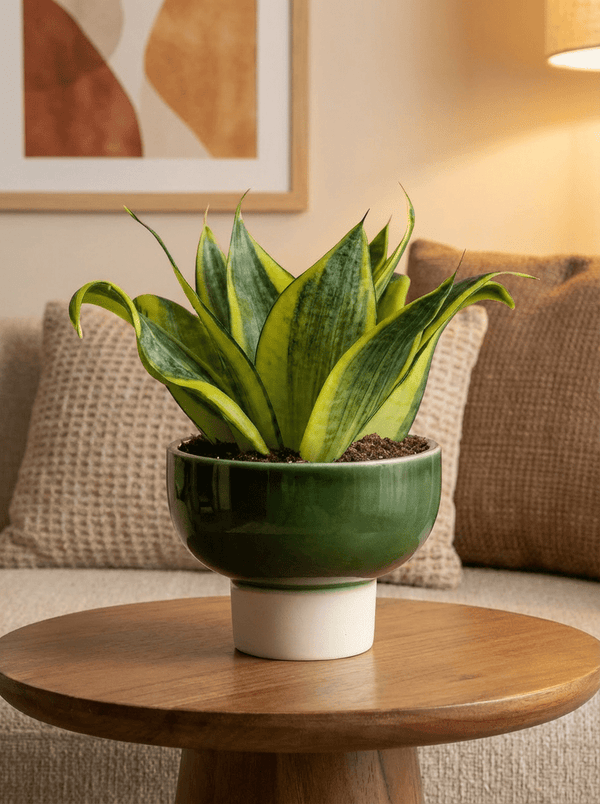
- Snake Plant — Prefers to dry out between waterings. Either method works, but ensure complete drainage after.
- Philodendron — Top or bottom, either is effective.
Common Mistakes

Leaving Plants in Water Too Long
Bottom watering is a 20-30 minute process, not an overnight soak. Leaving plants in standing water for hours or overnight leads to waterlogged soil and root rot — the opposite of what you want.
Not Checking Completion
Just setting a timer is not enough. Check that the soil surface is actually moist before removing. Different soil mixes, pot sizes, and dryness levels change absorption time. Large pots with very dry soil may need 45 minutes. Small pots in moderately dry soil may be done in 10 minutes.
Using Cold Water
Room-temperature water only. Cold water shocks roots and slows absorption. In Singapore, tap water is typically around 27-30°C, which is fine.
Forgetting to Flush
If you exclusively bottom water for months, mineral salts accumulate in the upper soil. Every 3-4 waterings, switch to a thorough top-down watering to flush accumulated salts through and out the drainage holes.
Too Much Water in the Tray
You only need 2-5cm of water. Filling the tray to the brim or submerging the pot up to the soil line is excessive and can cause waterlogging.
Setting Up a Bottom Watering Station
If you have multiple small to medium plants, set up a dedicated station:
- 1. Use a large, shallow tray or baking dish — big enough for multiple pots at once
- 2. Fill with water to a consistent level
- 3. Place all your small pots in the tray simultaneously
- 4. Set a timer for 20-30 minutes
- 5. Remove all pots and let them drain on a rack or towel
- 6. Dump the remaining water
This makes bottom watering efficient for a whole collection, not just individual plants.
Shop Plants
Browse our indoor plant collection for plants delivered across Singapore.
Bottom watering is not a replacement for top watering — it is a complement. The best watering practice alternates between both methods, using each where it works best. Bottom water when the soil is hydrophobic, when you want even moisture distribution, or when you need to keep foliage dry. Top water to flush salts, to settle repotted soil, or when bottom watering is impractical for the pot size. In Singapore, where heat and humidity create fast-drying conditions for small pots and slow-drying conditions for large ones, having both techniques in your toolkit means your plants get watered properly every time — not just watered, but actually hydrated from root to surface, exactly the way the soil was designed to deliver it.
Quick summary
Key Takeaways
- How Bottom Watering Works
- Step-by-Step: How to Bottom Water
- When to Use Bottom Watering
- When NOT to Bottom Water
- Plant-Specific Recommendations
- Common Mistakes
Ready to bring some green into your home?
Browse 250+ hand-picked plants, curated for Singapore homes — delivered to your door.
Browse All Plants →