




















How to Clean Houseplant Leaves in Singapore | Tumbleweed Plants Singapore
Posted on April 13 2026
In this article

Dust settles on everything in Singapore — your furniture, your shelves, and your plant leaves. But unlike furniture, dusty plant leaves are not just an aesthetic problem. That layer of dust actively harms your plants by blocking the light they need for photosynthesis and clogging the stomata (tiny pores) they use to breathe and regulate moisture.
In Singapore's humid, urban environment, plant leaves collect a combination of dust, hard water mineral deposits, and sometimes a sticky residue from pests or air pollution. Cleaning them is not optional maintenance — it is essential plant care.
Why Clean Leaves Matter
Light Absorption
Plants photosynthesise through their leaves. A layer of dust reduces the amount of light reaching the leaf surface, effectively putting your plant in lower light conditions than you intended. A dusty Monstera sitting in bright indirect light might be receiving the equivalent of medium or low light once the dust is factored in.
Gas Exchange
Stomata — the microscopic pores on leaf surfaces — need to open and close freely to regulate gas exchange (CO2 in, oxygen out) and transpiration (water vapour release). Dust and residue can block these pores, reducing the plant's ability to breathe and regulate its internal moisture.
Pest Detection
Clean leaves make pest infestations immediately visible. Spider mites, mealybugs, scale, and thrips are easier to spot on clean, shiny foliage than on dusty, dull leaves. Regular cleaning doubles as a regular inspection.
Aesthetics
This one is obvious but worth stating: clean leaves look dramatically better. The difference between a dusty Philodendron and a freshly wiped one is striking — the colour is richer, the sheen is natural, and the plant looks healthier because it is healthier.
How Often to Clean

In Singapore's conditions:
- Every 2-4 weeks for most houseplants
- Weekly for plants near windows (more dust accumulation)
- After any renovation, construction, or deep cleaning in the home (major dust events)
- Whenever leaves look visibly dull or dusty
Plants in air-conditioned rooms may accumulate dust faster because the recirculated air carries fine particles. Plants near open windows collect outdoor dust and pollution.
Cleaning Methods
Method 1: Damp Cloth Wipe
Best for: Large-leaved plants — Monstera, Philodendron, Rubber Plant, Bird of Paradise, Aglaonema.
How to:
- 1. Use a soft, lint-free cloth (microfibre works well)
- 2. Dampen with room-temperature water
- 3. Support each leaf from underneath with one hand
- 4. Wipe gently from the base of the leaf to the tip, following the natural direction
- 5. Wipe both the top and underside of each leaf
- 6. Rinse and re-dampen the cloth as it collects dust
Tips:
- Never use cold water — room temperature only
- Do not press hard enough to damage the leaf
- Supporting from underneath prevents snapping the petiole
- Always wipe the underside too — pests often hide there
Method 2: Shower Rinse
Best for: Medium-sized plants that can be moved to the bathroom — Pothos, Peperomia, Ferns, Spider Plants, Calathea.
How to:
- 1. Place the plant in the shower or bathtub
- 2. Use lukewarm, gentle water pressure
- 3. Rinse the foliage thoroughly, rotating the plant
- 4. Let excess water drain completely before returning to its spot
- 5. Avoid leaving plants in direct sun or AC draft immediately after — let them air dry naturally
Tips:
- This also flushes the soil, removing mineral salt buildup
- Cover the soil surface with your hand or a plastic bag if you want to avoid overwatering
- Not suitable for plants sensitive to wet leaves (like Begonia rex or African Violets)
Method 3: Soft Brush Dusting
Best for: Fuzzy or textured leaves that should not get wet — African Violets, some Begonias, Succulents.
How to:
- 1. Use a soft-bristle paintbrush, makeup brush, or dedicated plant brush
- 2. Gently brush dust from each leaf, working from base to tip
- 3. Brush into the crevices where leaves meet stems
Tips:
- This is the only appropriate method for fuzzy-leaved plants
- A soft toothbrush works for getting into tight spots
- Do this over a sheet of newspaper to catch falling dust
Method 4: Compressed Air
Best for: Dense, small-leaved plants where individual wiping is impractical — Ferns, Selaginella, small-leaved trailing plants.
How to:
- 1. Use a can of compressed air (available at electronics shops) or a gentle air blower
- 2. Hold nozzle at a distance — do not blast directly at close range
- 3. Work systematically across the plant
Tips:
- Hold the can upright to avoid propellant spray
- This is a quick solution but does not remove sticky residue — follow up with a wipe if needed
Dealing with Hard Water Stains

Singapore's tap water is treated and generally safe for plants, but it can leave mineral deposits — white, chalky spots on leaves that do not wipe off easily with plain water.
Solutions:
- Diluted vinegar: Mix 1 part white vinegar to 10 parts water. Wipe affected leaves. Rinse with plain water after.
- Lemon juice: A few drops of lemon juice in water works similarly. Wipe and rinse.
- Filtered water prevention: Use filtered or distilled water for misting and wiping to prevent future deposits.
- Rainwater: Collect and use rainwater — naturally soft and mineral-free.
What NOT to Use
Leaf Shine Products
Commercial leaf shine sprays create an artificial, unnaturally glossy appearance and can clog stomata — the exact opposite of what you are trying to achieve. They look impressive for a day but ultimately harm the plant.
Mayonnaise or Cooking Oil
An old home remedy that creates a greasy film, attracts more dust, and can promote fungal growth in Singapore's humidity. Do not use it.
Milk
Sometimes recommended online, but in Singapore's warmth, milk residue can sour and smell, and may promote bacterial growth.
Harsh Soaps or Detergents
These can damage leaf cells and strip natural protective coatings. If you must use soap (for pest treatment), use a purpose-made horticultural soap at the correct dilution.
Plant-Specific Considerations

Waxy Leaves (Rubber Plant, Hoya)
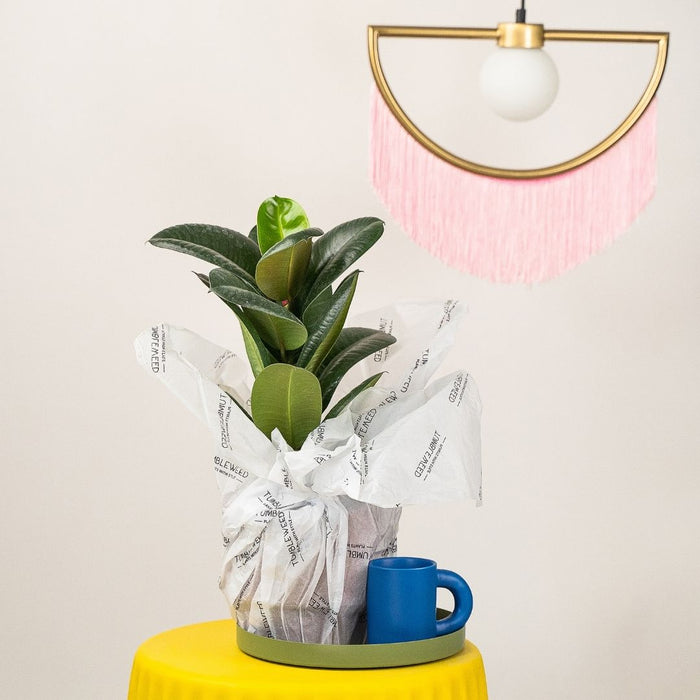
Damp cloth wipe. These leaves clean up beautifully and naturally have a subtle sheen.
Thin, Delicate Leaves (Calathea, Ferns)
Shower rinse is gentlest. If wiping, use the lightest possible touch — these leaves tear easily.
Variegated Leaves (Pothos, Monstera varieties)
Clean especially carefully — variegated sections may be more delicate than green areas. Standard damp cloth method works.
Succulents and Cacti
Soft brush only. Many succulents have a natural powdery coating (farina) that protects against sun — wiping removes this protective layer permanently.
Fuzzy Leaves (African Violet, Begonia)
Dry brush only. Water on fuzzy leaves causes spots and potential rot.
A Cleaning Routine
Build leaf cleaning into your regular plant care schedule:
Weekly quick check: While watering, glance at leaves for dust, spots, or pests.
Bi-weekly wipe: Every other watering session, do a thorough wipe of your large-leaved plants.
Monthly deep clean: Once a month, give all plants a shower rinse or comprehensive wipe, including undersides.
Seasonal reset: Every 3-4 months, inspect all plants for hard water stains, clean pots and saucers, and prune any dead or yellowing leaves during the clean.
The Payoff
The difference between cleaned and uncleaned plant collections is visible within days. Cleaned leaves are brighter, more vibrant, and more responsive to light. Growth improves because photosynthesis is more efficient. Pest problems are caught earlier because you are physically inspecting every leaf during cleaning.
Shop Plants
Browse our indoor plant collection for plants delivered across Singapore.
Clean leaves are not a cosmetic luxury — they are a fundamental part of plant care that most people overlook. Your plants are working hard to photosynthesise, breathe, and grow in your home. The least you can do is keep their solar panels clean. A five-minute wipe-down every two weeks gives your plants measurably better growing conditions and gives you a collection that looks as healthy as it actually is. And in Singapore, where dust, humidity, and hard water are constant companions, regular leaf cleaning is the simple habit that separates struggling plants from thriving ones.
Quick summary
Key Takeaways
- Why Clean Leaves Matter
- How Often to Clean
- Cleaning Methods
- Dealing with Hard Water Stains
- What NOT to Use
- Plant-Specific Considerations
Ready to bring some green into your home?
Browse 250+ hand-picked plants, curated for Singapore homes — delivered to your door.
Browse All Plants →