






















Root Rot: How to Diagnose It, Treat It, and Save Your Plant
Posted on April 17 2026
In this article

---
Root rot is the leading cause of houseplant death — and the frustrating thing is that by the time most people notice something is wrong, the damage has often been building for weeks. The signs are subtle at first, then suddenly catastrophic.
The good news: root rot can be treated if caught in time. And once you understand what causes it and how to recognise it early, prevention becomes straightforward.
Singapore-specific note: In Singapore year-round warmth (28–33 degrees C), organic matter in potting soil breaks down faster than in temperate climates, and pathogenic fungi thrive in our humidity. This means root rot can progress more quickly here — early detection is even more important.
---
What Is Root Rot?
Root rot is a condition in which plant roots decay — usually caused by a combination of:
- Overwatering — soil that stays consistently wet deprives roots of oxygen
- Poor drainage — waterlogged soil with no exit path for excess moisture
- Fungal pathogens — *Phytophthora*, *Pythium*, *Fusarium*, and other water molds thrive in wet anaerobic conditions and attack stressed roots
Roots need both moisture AND oxygen. When soil is consistently saturated, the air pockets that roots depend on fill with water. Roots suffocate and die, then pathogenic fungi colonise the dead and dying tissue, spreading the rot.
The result is a progressive loss of root function: the plant can no longer absorb water or nutrients effectively, even though the soil is wet — which is why classic root rot looks paradoxically like a drought-stressed plant sitting in soggy soil.
---
Early Warning Signs (Before It Is Severe)

Root rot often begins silently. The first visible signs are easy to miss or misattribute:
Yellowing leaves — particularly lower, older leaves yellowing faster than normal. Yellow leaves are non-specific (they can indicate many problems) but in combination with consistently moist soil, they are a warning.
Wilting or drooping despite wet soil — the plant looks underwatered but the soil is moist. This is a classic root rot signal: roots that can no longer function to deliver water, regardless of soil moisture.
Slower-than-expected growth — a plant that should be actively growing but is not producing new leaves may have compromised roots. In Singapore where growth is year-round, a suddenly stalled plant warrants investigation.
Musty or sour smell from the soil — healthy soil should smell earthy and neutral. A sour, fermented, or musty smell indicates anaerobic decomposition — rotting organic matter and pathogenic activity.
---
Confirming Root Rot: Unpot and Inspect
If you suspect root rot, the only way to confirm it is to unpot the plant and look at the roots.
Healthy roots: White to cream, firm, turgid. Smell earthy and neutral.
Rotted roots: Brown to black, soft, mushy, often with a slimy texture. May smell sour or foul. Pull away easily from the root ball.
If you see both healthy and rotted roots, the plant can likely be saved. If virtually all roots are rotted, the plant is critically stressed and may not recover — but it is still worth attempting treatment.
---
Treatment: Step-by-Step

Step 1: Prepare your workspace
Lay down newspaper or a tarp. Have the following ready:
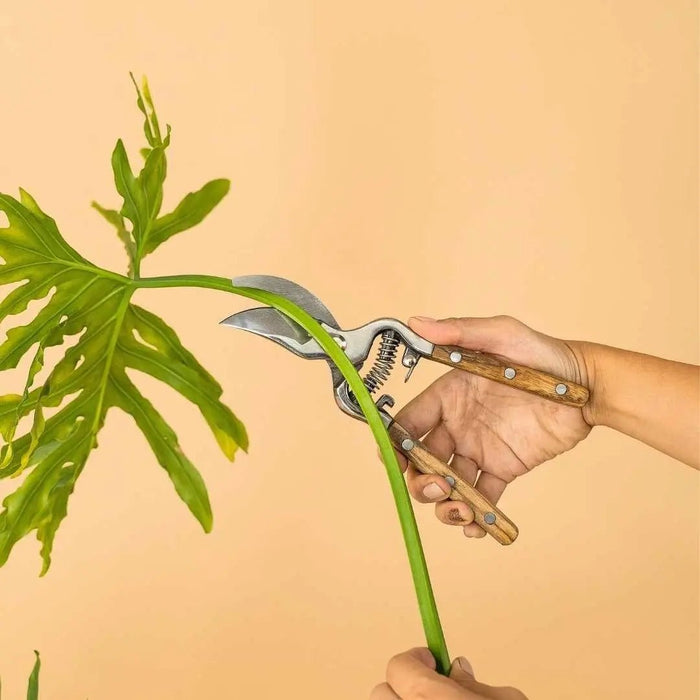
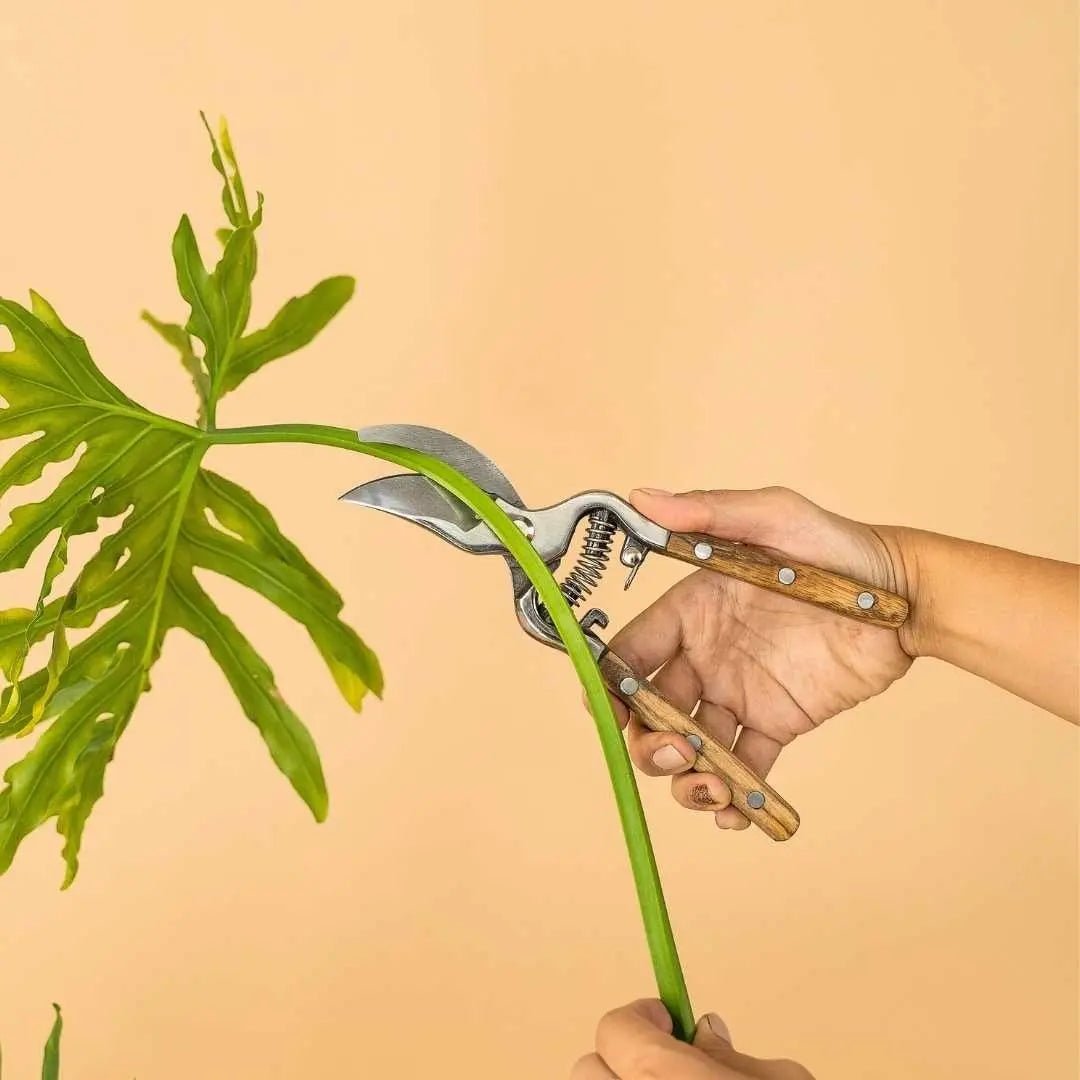
- Clean scissors or pruning shears (sterilise with 70% isopropyl alcohol)
- Fresh, well-draining potting mix (see recipe below)
- A clean pot with drainage holes — slightly smaller than the current pot if root mass has been significantly reduced
- Optional: rooting hormone powder or hydrogen peroxide solution
Step 2: Remove all soil
Shake and gently rinse the roots under lukewarm water to remove as much of the old potting mix as possible. Inspect every root as you work.
Step 3: Prune all rotted roots
Using sterilised scissors, cut away every brown, black, or mushy root section. Cut back to healthy white tissue. If a root is questionable (slightly discoloured but still firm), err on the side of removing it — leaving marginal tissue can allow rot to continue.
Be thorough. Missing even a small amount of rot allows pathogens to continue spreading.
After cutting, re-sterilise your scissors between cuts if practical, or at minimum between plants.
Step 4: Treat the remaining roots (optional but effective)
Two options:
Hydrogen peroxide soak: Mix 1 part 3% hydrogen peroxide with 5 parts water. Submerge the root ball for 5–10 minutes. The fizzing reaction kills remaining pathogens and oxygenates the root zone.
Rooting hormone: Dust the cut root ends with rooting hormone powder. This encourages new root generation from the trimmed ends and contains some fungicidal compounds.
Step 5: Let the roots air dry
Place the plant somewhere with good airflow for 1–4 hours. Allowing the cut root ends to callous slightly reduces the risk of re-infection. In Singapore heat and humidity, keep the plant in an air-conditioned room during this step to prevent the cut ends from staying moist.
Step 6: Repot in fresh, dry mix
Use a well-draining potting mix:
- 60% quality potting mix
- 30% perlite
- 10% orchid bark
Do not reuse the old potting mix — it is contaminated with pathogenic spores.
Choose a pot only slightly larger than the remaining root mass. A large pot with extensive empty soil around small roots will stay wet too long — ironically recreating conditions for re-infection.
Step 7: Withhold water for 3–5 days
Do not water immediately after repotting. Allow the cut root ends to callous fully. The plant has reduced root mass and will not be able to absorb much water anyway — the goal is a dry, oxygenated environment that supports new root growth.
After 3–5 days, water lightly — not a full thorough soak, just enough to moisten the root zone.
---
Recovery Expectations
Recovery depends on how much healthy root remains:
If 50%+ healthy roots remain: Good prognosis. Expect wilting or some leaf drop for 1–2 weeks as the plant adjusts. New root growth should begin within 2–4 weeks. In Singapore warmth, recovery often proceeds faster than in temperate climates.
If less than 50% healthy roots remain: Moderate prognosis. The plant will struggle for several weeks. Reduce leaf mass (prune back some stems) to reduce the water demand that the depleted root system cannot fully meet.
If almost no healthy roots remain: Poor prognosis, but worth attempting. Consider taking stem cuttings to propagate before attempting to save the original plant — at minimum you preserve the genetics.
---
Prevention: The Better Strategy

Root rot is almost entirely preventable:
1. Use well-draining soil. Standard potting mix alone is borderline for most tropical plants — amend with 20–30% perlite minimum. For succulents and cacti, use a specific fast-draining mix.
2. Use pots with drainage holes. Always. No exceptions. No "I will be careful" — decorative pots without drainage holes lead to root rot.
3. Water when the plant needs it, not on a schedule. Check soil moisture before every watering. The finger test or a moisture meter eliminates guessing.
4. Empty saucers after watering. Water pooling under the pot keeps the drainage zone saturated. Empty saucers within 30 minutes.
5. Choose the right pot size. Pots significantly larger than the root mass hold excess wet soil around the roots. Repot in increments of 1–2 inches.
6. Provide adequate light. Low-light plants use water more slowly. A plant in low light receiving the same amount of water as a plant in bright light will stay wet much longer — and is far more susceptible to root rot.
7. Singapore-specific tip: In our tropical heat, organic potting mix breaks down faster than in temperate climates. Repot into fresh mix every 1–2 years even if the plant seems healthy — old compacted mix loses drainage over time and becomes a root rot risk.
---
The best root rot treatment is prevention. Shop our fast-draining potting mixes at Tumbleweed Plants Singapore — amended with perlite and bark for optimal drainage — and our selection of pots with quality drainage holes in every size. Available for islandwide delivery.
---
Quick summary
Key Takeaways
- What Is Root Rot?
- Early Warning Signs (Before It Is Severe)
- Confirming Root Rot: Unpot and Inspect
- Treatment: Step-by-Step
- Recovery Expectations
- Prevention: The Better Strategy
Ready to bring some green into your home?
Browse 250+ hand-picked plants, curated for Singapore homes — delivered to your door.
Browse All Plants →